


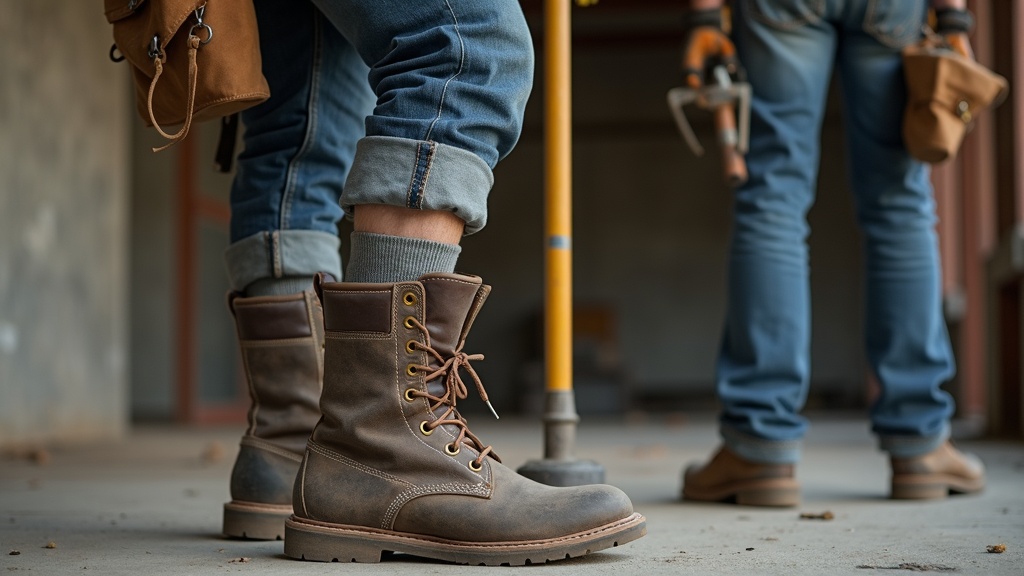
A 60-pound tool belt does more damage to your lower body than most guys realize. The weight pulls your pants down, shifts your hips, and puts every step you take under more load. Your socks are the last line between that pressure and your skin.
Most workers grab whatever's in the six-pack at the hardware store. That's usually a mistake. The wrong sock height, the wrong material, the wrong cushioning zone, and you're dealing with boot bite, blisters, and legs that feel like concrete by 2 p.m. Here's what actually works.
Key points at a glance
- Sock height matters: over-the-calf socks prevent boot shaft bite and keep fabric from bunching under belt pressure.
- Wool beats cotton on sweaty, all-day construction sites. Cotton stays wet. Wool manages moisture and temperature.
- Cushioning zones need to match your boot type: heavy work boots need targeted heel and shin padding, not uniform thickness.
- Tool belt weight increases friction against your lower leg, so a sock that slips down is a blister waiting to happen.
- For sweaty feet, look for merino wool or moisture-wicking synthetic blends with ventilation channels, not thick cotton.
- Red flags to skip: thin toe seams, low nylon content, no reinforced heel, and any sock labeled "crew" for a tall boot job.
What a tall work sock actually does for you
Why Sock Height Actually Matters When You're Wearing a Tool Belt
A heavy tool belt shifts your center of gravity. You're walking differently, your stride is shorter, and your lower leg is pressing harder against the boot shaft with each step. A short sock bunches at the ankle right where that friction is highest.
Over-the-calf socks, also called tall or extra tall work socks, cover the shin and stay above the boot top. That means no exposed skin against rough leather, no ring of red skin at the end of the day, and no fabric rolling down into a ridge under your arch.
What Happens to Your Legs and Feet After 10 Hours in a Tool Belt
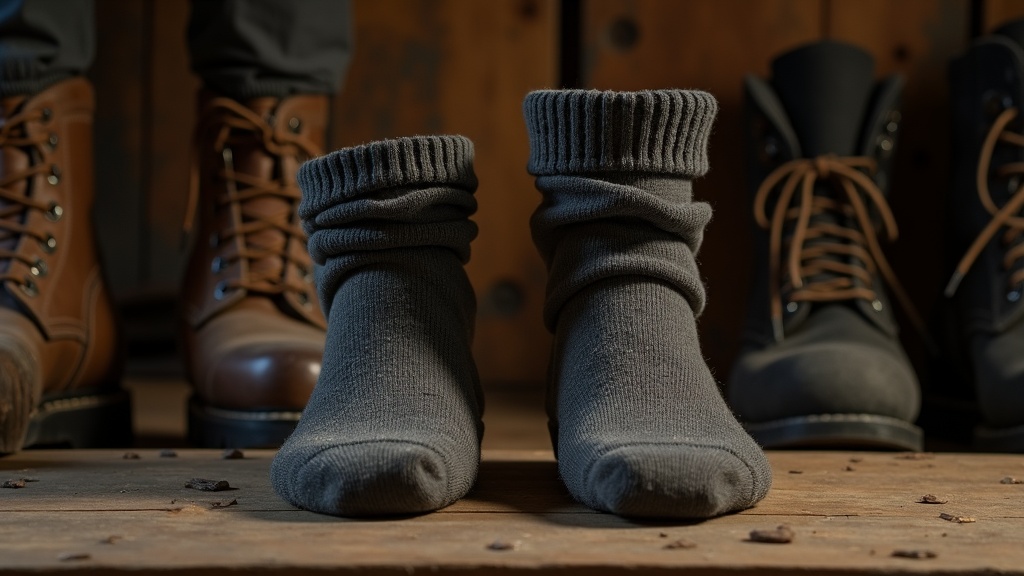
By hour four, your feet have already sweated through a poorly chosen sock. By hour eight, any sock that isn't gripping your calf has slid into a wad near your heel.
The real damage is cumulative. Blisters on the back of the heel, raw spots on the shin, swollen ankles from poor circulation restricted by a sock that's too tight or too loose. None of that shows up on day one. It builds until you're limping by Thursday.
Did you know?
The average construction worker takes between 8,000 and 12,000 steps per shift. Each step in a heavy work boot puts 1.5 to 2 times your body weight on the heel. That's why heel cushioning in a work sock isn't a luxury, it's structural support for your foot over thousands of repetitions.
The 4 Things a Good Tall Work Sock Has to Do
1. Stay up
No exceptions. If it doesn't have a proper elastic band at the calf that holds tension all day, it's not a work sock for your situation. Look for reinforced elastic channels, not just a ribbed cuff.
2. Manage sweat
Construction sites are hot, physically demanding environments. Your feet can produce up to half a pint of sweat per day. A sock that traps that moisture against your skin causes blisters and fungal issues. You need wicking, not just absorbency.
3. Cushion the right spots
Heel, ball of foot, and shin. Those are the three pressure zones in a heavy work boot with a tool belt. A sock padded everywhere is just thick and hot. Targeted cushioning does the job without the bulk.
4. Survive the wash
A good pair of thick socks for work boots should hold its shape after 50 washes. The cushioning shouldn't flatten in month two. Check the nylon and spandex content. Low nylon means it breaks down fast.
Best Tall Work Socks for Heavy Tool Belts: Honest Picks by Trade
- Carpenters and framers: Darn Tough Hiker Boot Sock in merino wool. Takes abuse, stays up, handles sweat well in warm weather.
- Concrete and masonry workers: Thorlos Experia or their work-specific padded boot sock. Maximum cushioning for hard surface work, no slippage.
- Electricians and HVAC: Wigwam Ironman or Farm & Ranch over-the-calf. Medium cushion, strong elastic, breathes well in confined crawl spaces.
- Roofers in summer: Farm to Feet light merino OTC or any lightweight merino blend. Merino keeps feet cooler than synthetic at the same sock height.
- Cold weather framing: Smartwool PhD Work Heavy over-the-calf. Rated for cold, keeps cushioning even when wet from snow or rain.
Wool vs. Synthetic vs. Cotton: Which Material Holds Up on a Real Jobsite
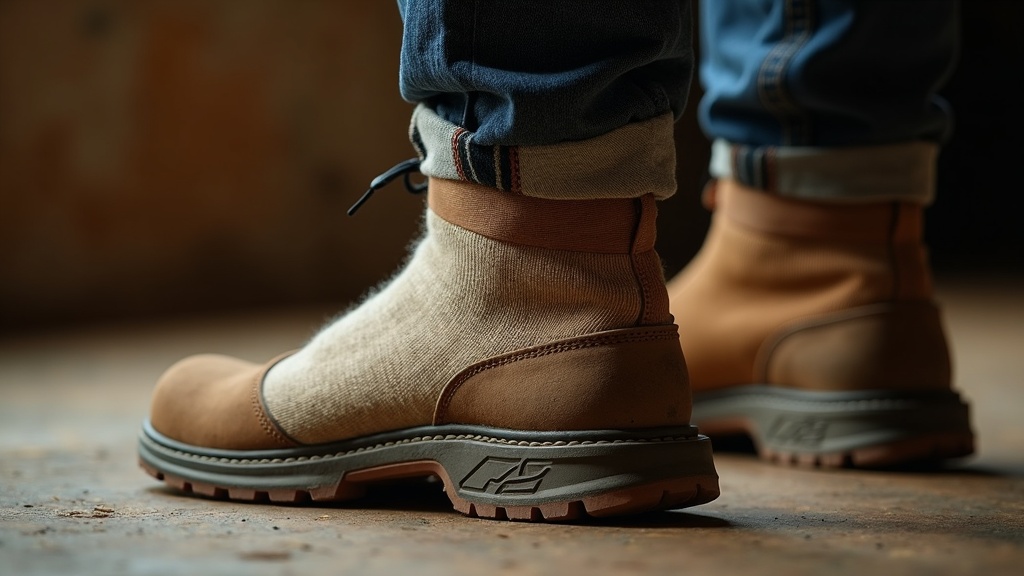
This is the question that matters most and it has a real answer, not a vague "it depends."
| Material | Moisture Management | Durability | Best For |
|---|---|---|---|
| Merino Wool | Excellent, stays warm when wet | Good (better with nylon blend) | Cold sites, sweaty feet, year-round |
| Synthetic (polyester/nylon) | Very good wicking, dries fast | Excellent, holds shape longest | Hot weather, high-sweat trades |
| Cotton | Poor, retains moisture | Low, breaks down quickly | Not recommended for full shifts |
| Wool/Synthetic blend | Excellent, best of both | Excellent, nylon adds longevity | Best all-around for construction |
| Cotton/Poly blend | Mediocre, still holds some moisture | Moderate | Light-duty or warm dry conditions only |
Bottom line: a merino and nylon blend at 60/40 or higher wool content is the best heavy duty work sock material for most construction workers. It handles sweat, keeps temperature regulated, and doesn't fall apart in three months.
How High Should Your Work Socks Actually Be?
For anyone wearing a boot with a shaft over 6 inches, you need at least an over-the-calf fit. That means the sock reaches just below the knee, covering the full boot shaft contact area and then some.
Extra tall work socks for heavy tool belt construction use go even higher, sitting at mid-calf with a firmer grip band. If your boots are 8 inches or taller, that extra height matters. It keeps the sock from slipping down into the boot no matter how your stride shifts under load.
Did you know?
OSHA does not mandate specific sock requirements on construction sites, but podiatric research published by the American Podiatric Medical Association links crew-length socks worn with tall work boots to a measurably higher rate of heel blisters and Achilles irritation versus over-the-calf socks in the same boot type.
Best Work Socks for Sweaty Feet on the Jobsite
Sweaty feet aren't just uncomfortable. Wet skin inside a boot blisters faster, fungal infections spread, and by August in a southern state, it's a daily problem for almost every crew on site.
The fix isn't buying thicker socks. It's buying socks with active moisture channels: ventilation zones woven across the top of the foot and arch area that move air while you walk. Combine that with merino or moisture-wicking synthetic fiber and you've solved most of the problem.
- Look for: mesh or open-knit panels across the instep, moisture-wicking fiber content above 50%, and a sock that lists "temperature regulation" not just "cushioning."
- Avoid: full-terry construction socks with zero ventilation zones. They're warm in winter but miserable in summer.
- Bonus tip: rotate two pairs per day if you're doing 12-hour shifts in heat. Let the morning pair dry out completely before using it again.
What to Avoid: Red Flags That Tell You a Sock Won't Last
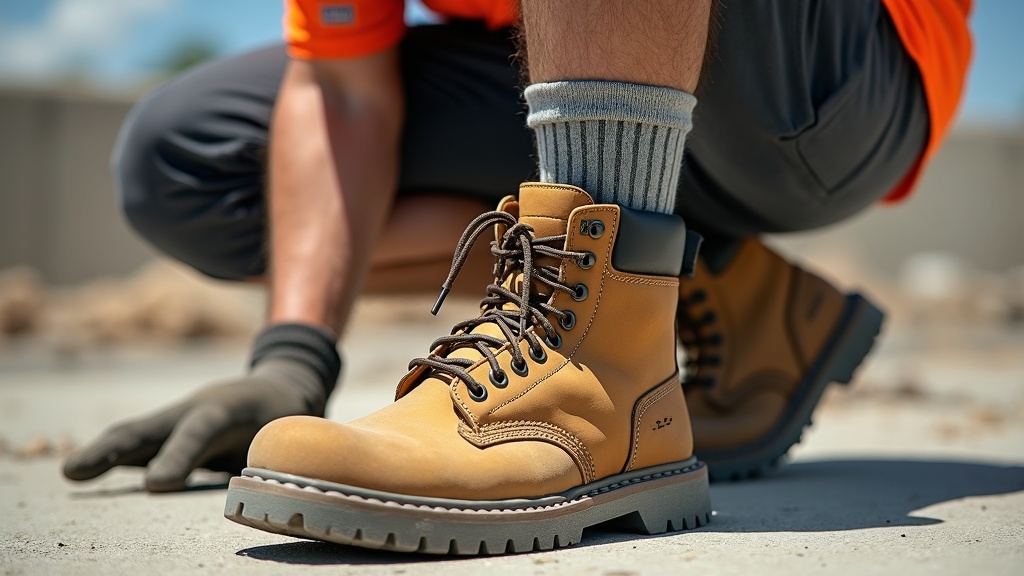
- Cotton content over 50%: will hold sweat, break down fast, and bunch up in the boot within a few weeks.
- No listed nylon percentage: nylon is what holds the shape of the elastic and the sock body through hundreds of washes. No nylon, no durability.
- Flat toe seam on a reinforced boot sock: thick seams inside steel-toed boots create pressure points that turn into blisters on long shifts.
- "Crew" cut sold as a work sock: a crew sock ends at the ankle. It won't stay up in a 6-inch or taller boot no matter what the label says.
- Uniform thickness top to bottom: real heavy duty work socks for men have strategic cushioning, not just a uniformly thick knit. Uniform thickness means hot feet and no targeted protection.
- Price under $3 a pair: you get what you pay for. A good pair of tall over-the-calf work socks runs $12 to $25. That's less than a lunch. Buy them right once instead of replacing cheap pairs every few weeks.
Pick Your Pair and Stop Thinking About Your Feet
The whole point of good socks is that you stop noticing them. You put them on at 5 a.m. and you don't think about your feet again until you're back in the truck.
Here's a quick decision guide. If you run hot and sweat a lot, go merino blend, medium weight, with a ventilation panel. If you're in cold weather or on hard concrete all day, go heavyweight merino with targeted heel and shin padding. If you're on your feet constantly moving between levels and ladders, a reinforced nylon-wool over-the-calf with a firm calf band is your best call.
Buy two or three pairs of the same sock. Rotate them. Wash them cold, hang to dry. That's the whole maintenance plan. Do that and a good pair of tall work socks for heavy tool belts construction use will last you a full season or more without losing their shape, cushion, or grip.
