


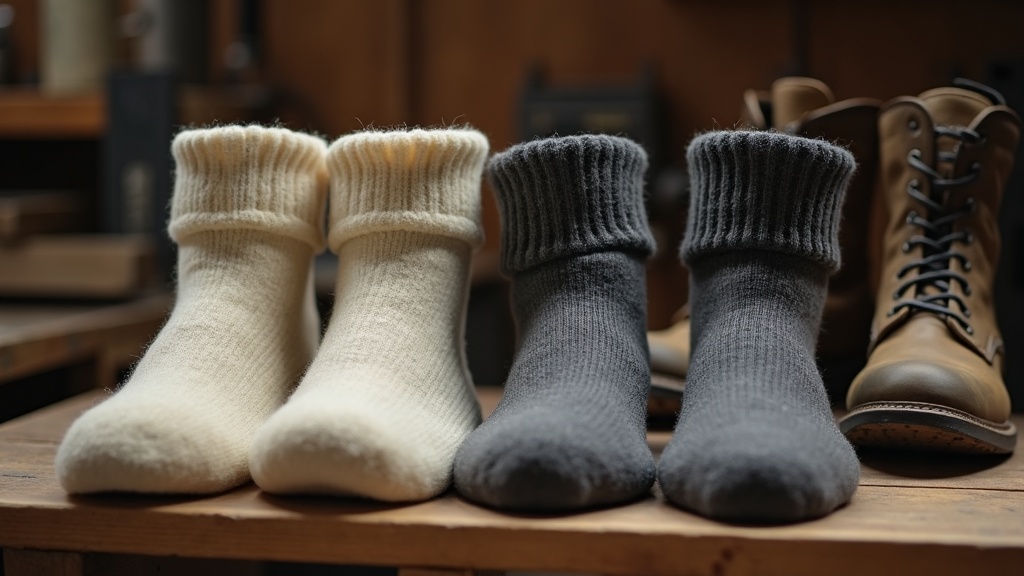
You pull on a pair of socks before a ten-hour shift and you're not thinking about fiber microns. You're thinking about your feet making it through the day without blisters, wet spots, or a smell that clears the break room. The sock has one job, and most of them fail it within three months.
Alpaca wool work socks have been gaining serious ground on merino, especially among tradesmen who've burned through too many pairs that pill, thin out, or fall apart at the heel. But "alpaca is better" is not always true. Here's what the fibers actually do, where each one wins, and how to stop wasting money on the wrong pair.
Key points at a glance
- Merino edges out alpaca on abrasion resistance when high-grade nylon is not in the blend.
- Alpaca runs warmer and handles moisture just as well, making it the stronger pick for cold jobsites.
- Neither fiber is great at durability on its own: the blend matters more than the headline fiber.
- Alpaca socks cost more upfront but often deliver a lower cost per wear when blended correctly.
- For tradesmen who sweat heavily, merino's finer crimp manages odor slightly better across daily use.
- Check the label for at least 15-20% nylon in any wool work sock before handing over your money.
What this guide covers for you
The Short Answer: Which Fiber Actually Holds Up on the Job
Merino is the more proven workhorse for abrasion resistance. Its finer, scalier fiber structure locks into a tighter weave, and decades of outdoor gear data back that up. Alpaca is softer, warmer, and surprisingly moisture-capable, but raw alpaca fiber is smoother and offers less grip in the yarn structure, which can translate to faster wear at high-friction points like the heel and ball of the foot.
That said, the gap narrows significantly when both socks include a reinforcing nylon content of 15% or higher. At that point, what separates them is not durability so much as warmth, price, and how your feet run hot or cold.
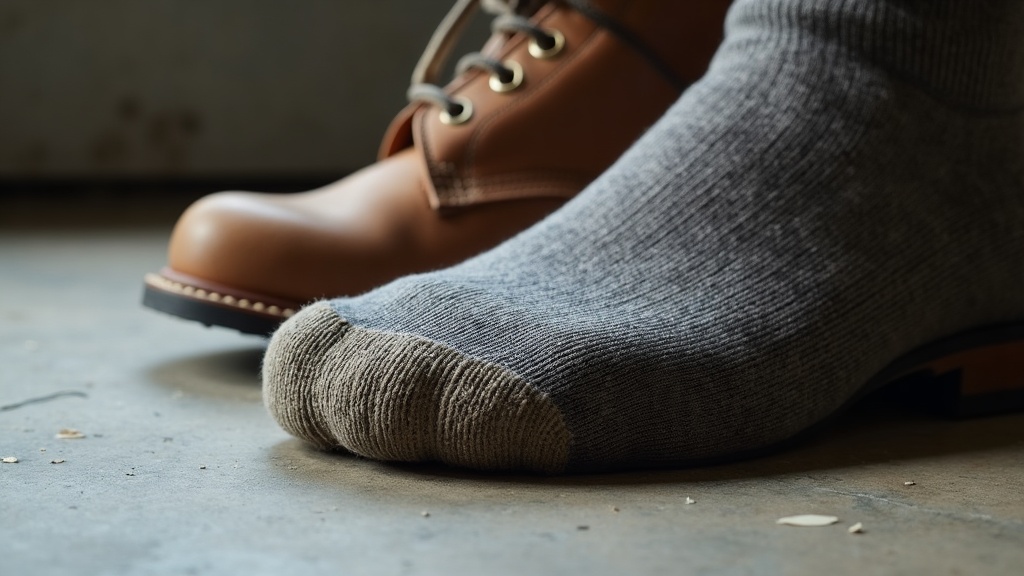
What Makes Alpaca Wool Different From Merino (And Why It Matters for Work)
Merino comes from fine-wool sheep breeds and has a fiber diameter typically between 15 and 24 microns. That fine crimp gives it stretch, resilience, and excellent moisture-wicking through capillary action. It's also naturally odor-resistant because of its protein structure.
Alpaca fiber, from the fleece of South American alpacas, runs 18 to 30 microns depending on the grade, but its hollow shaft is the big difference. That hollow core traps more dead air, making alpaca measurably warmer per ounce than merino. It also contains no lanolin, which matters if you have a wool sensitivity.
The key structural differences at a glance
- Merino: fine crimp, high scaliness, strong moisture transport, excellent next-to-skin feel
- Alpaca: hollow fiber shaft, superior warmth-to-weight, no lanolin, slightly less stretch
- Both: naturally odor-resistant, temperature-regulating, biodegradable
Did you know?
Alpaca fiber's hollow medullary canal gives it a warmth-to-weight ratio roughly three times higher than sheep's wool, according to fiber studies from the Peruvian National Camelid Research Center. That's why a lighter-weight alpaca sock can outperform a heavier merino sock in cold-weather insulation tests.
Durability Head-to-Head: Where Merino Wins, Where Alpaca Surprises You
On raw fiber abrasion tests, merino outperforms alpaca. The scaly surface of merino fibers interlocks better during spinning, producing a yarn that resists mechanical wear from boot liners and rough insoles more effectively.
But alpaca surprises people in a few specific areas. It resists pilling better than many mid-grade merino blends, partly because the longer staple length reduces the loose fiber ends that ball up over time. And because alpaca fiber has less elasticity, alpaca socks tend to hold their shape across more wash cycles without the waistband or cuff going slack.
| Performance Factor | Merino Wool | Alpaca Wool |
|---|---|---|
| Abrasion resistance | Strong (with nylon blend) | Moderate (needs nylon support) |
| Pill resistance | Moderate (depends on grade) | Good (longer staple helps) |
| Warmth per ounce | Good | Excellent |
| Moisture wicking | Excellent | Very good |
| Odor control | Excellent | Good |
| Shape retention | Good | Very good |
Heat, Sweat, and Stink: How Each Wool Handles a Full Shift
Merino has a well-earned reputation for odor control. The protein structure of merino fiber binds to odor-causing ammonia molecules and holds them until the sock is washed. For guys who run hot and sweat hard, merino is the safer daily driver.
Alpaca manages moisture competently but it is not quite in the same league for odor suppression over a long shift. Where it outperforms merino is on cold jobsites: a concrete slab in January, an open-air steel structure, a refrigerated warehouse. If your feet are cold before 9 AM, alpaca is worth the premium.
The Blended Sock Question: Why Pure Alpaca or Pure Merino Is Rarely the Whole Story
A sock that is 100% any natural fiber is a sock that will not last long in a work boot. Full stop. The nylon in a quality work sock is not a cost-cutting move, it's structural engineering. Without it, even the best merino or alpaca wears through at the heel in a matter of weeks under daily use.
Most quality wool work socks land somewhere in the range of 50 to 75% wool fiber, 15 to 25% nylon, and a small percentage of spandex or elastane for fit. Some blends mix alpaca and merino together, which gives you warmth from the alpaca and superior moisture management from the merino. Those hybrid blends are often the best option for year-round tradesmen.
Did you know?
Nylon's contribution to sock durability is not linear. Research on textile blends shows that moving from 10% to 20% nylon content can nearly double the abrasion resistance of a wool sock, while only marginally affecting warmth and moisture performance.
Price vs. Cost Per Wear: Which One Is Actually Worth Your Money
A decent pair of merino work socks runs $20 to $30. Alpaca work socks typically start at $25 and can push past $40 for quality blends. That gap stings at checkout.
The math changes when you count wears. A $14 cotton-poly work sock that lasts 40 wears costs you 35 cents a wear. A $30 merino-nylon sock that goes 150 wears costs you 20 cents a wear. A well-blended alpaca sock at $35 that holds up for 180 wears? Under 20 cents. The expensive sock usually wins the real-money math, provided the blend is right and you're not machine-drying them on high heat every time.
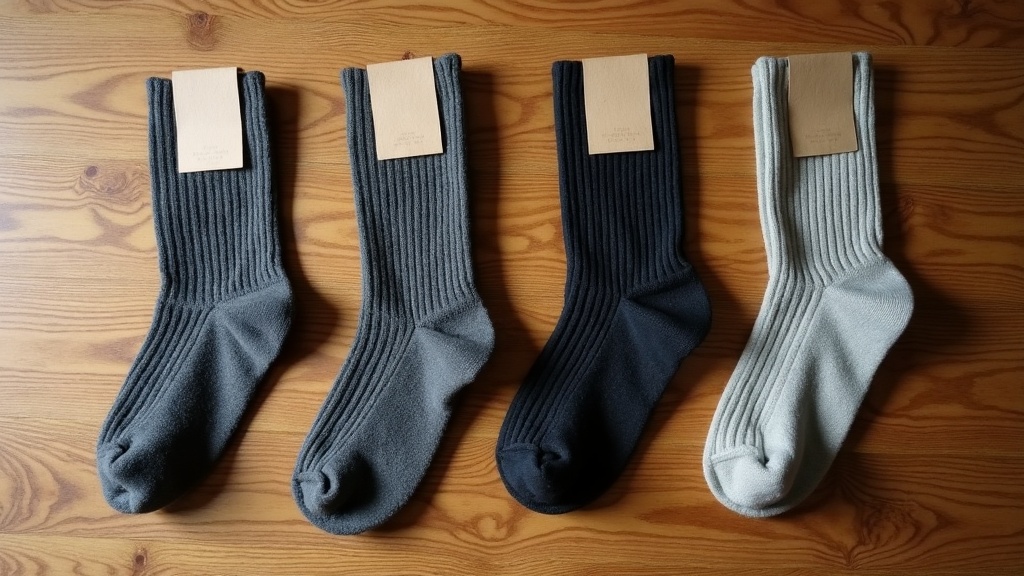
Who Should Buy Alpaca Work Socks and Who Should Stick With Merino
Go with alpaca if:
- You work in cold environments year-round (outdoor construction, refrigerated facilities, early-morning agriculture)
- You have a lanolin sensitivity that makes most wool socks itch
- You want the warmest work socks for winter jobsite conditions without going to a heavyweight boot sock
- You've tried merino and found it loses cushion at the ball of the foot faster than you'd like
Stick with merino if:
- You sweat heavily and odor management is a top priority
- You work in variable temperatures where overheating is as much a risk as cold
- You want the widest selection of brands and blends (merino work socks dominate the market right now)
- You are a construction worker logging miles on rough concrete and abrasion resistance is your first criterion
What to Look for on the Label Before You Buy Any Wool Work Sock
The label is where socks tell the truth. Here is what to check before anything else.
- Wool content 50% or higher: below that, you're mostly buying marketing
- Nylon 15-20% minimum: this is non-negotiable for work socks that take real abuse
- Fiber grade on alpaca: look for "fine" or "superfine" alpaca (under 22 microns) for next-to-skin comfort
- Merino micron count: 18.5 microns or lower for non-itchy, all-day wear
- Reinforced heel and toe: should be listed explicitly, not implied
- Care instructions: machine wash cool is realistic; dry clean only is a red flag for work socks
Brands that are vague about fiber percentages or grade are usually hiding something. The best wool work socks for tradesmen are made by companies that put exact numbers on the tag. If the label just says "wool blend," put it back on the shelf.
Your buying checklist
- Know your main job condition: cold and dry, warm and sweaty, or variable
- Set a minimum of 15% nylon as a hard rule and don't bend it
- Buy one pair before committing to a six-pack
- Wash cold, hang dry or tumble on low, and your wool socks will last
- Track how many months a pair goes before it thins out, so you have real data next time you buy
