


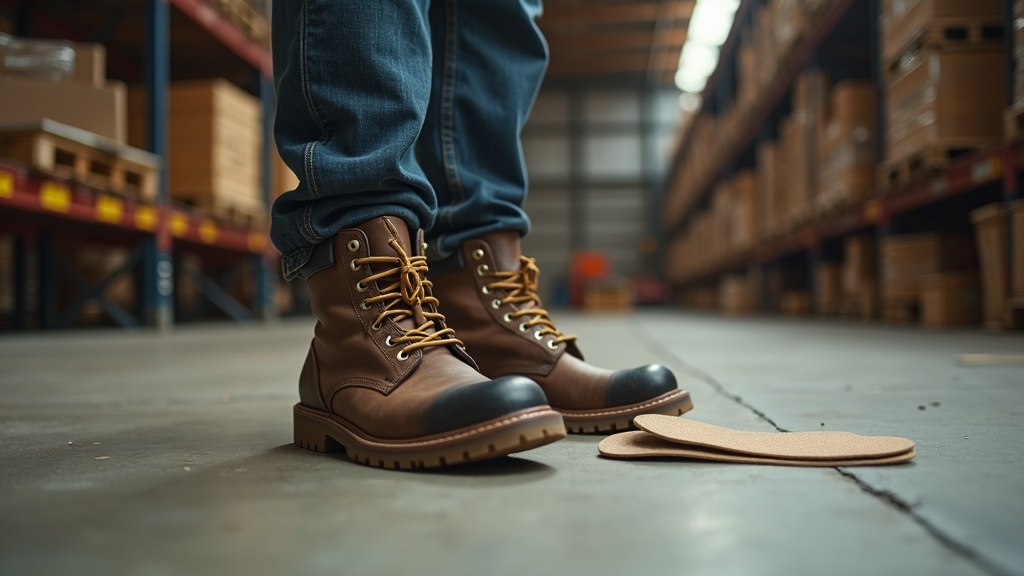
Eight hours on concrete is not the same as eight hours on your feet. The floor does not give. Your joints do. By hour six, your arches are taking a beating that adds up shift after shift, year after year.
The right arch support insoles for warehouse work can change that math. Not eliminate the fatigue, but cut it down enough that you walk to your car instead of limping. Here is what actually works, what to skip, and why most factory-floor feet hurt for reasons that are fixable.
Key points at a glance
- Concrete has zero give, so your insole has to absorb what the floor refuses to.
- Arch support type matters: flat-footed workers and high-arch workers need different builds.
- For steel-toe boots, you need a thinner, firmer insole that fits the tight toe box.
- Women's feet have a different load pattern, so gender-specific cuts are worth the look.
- Most insoles fail not from wear but from compression, replacing them every 6 months is the rule.
- Price does not always predict performance: a $30 insole can outlast a $70 one on concrete.
What a good warehouse insole does for you
Why Your Feet Are Wrecked by Quitting Time (And What's Actually Causing It)
Concrete is the hardest surface a human body regularly works on. Unlike asphalt or even tile, it has no measurable flex. Every step sends that impact straight up through your heel, into your plantar fascia, your ankle, your knee.
The plantar fascia, the band of tissue running the length of your foot's bottom, is designed to act like a spring. On natural ground, it compresses and rebounds. On concrete, it just compresses. Repeat that 10,000 times per shift and you get plantar fasciitis, heel spurs, and arch fatigue that does not stay at work.
Most work boot insoles that come stock from the factory are flat foam pads. They are there to prevent blisters on day one, not to protect your body over a 10-year career. Swapping them out is not optional if you are on your feet all day.
What to Look for in Arch Support Insoles for Warehouse Work
Not every insole marketed to workers is worth the packaging. Here are the criteria that actually move the needle.
Arch type match
A medium-arch insole on a flat foot will sit wrong and cause pressure points. Know your arch before you buy. Wet-foot test on cardboard: flat print means low arch, a narrow waist means high arch, middle ground is neutral.
Shell stiffness
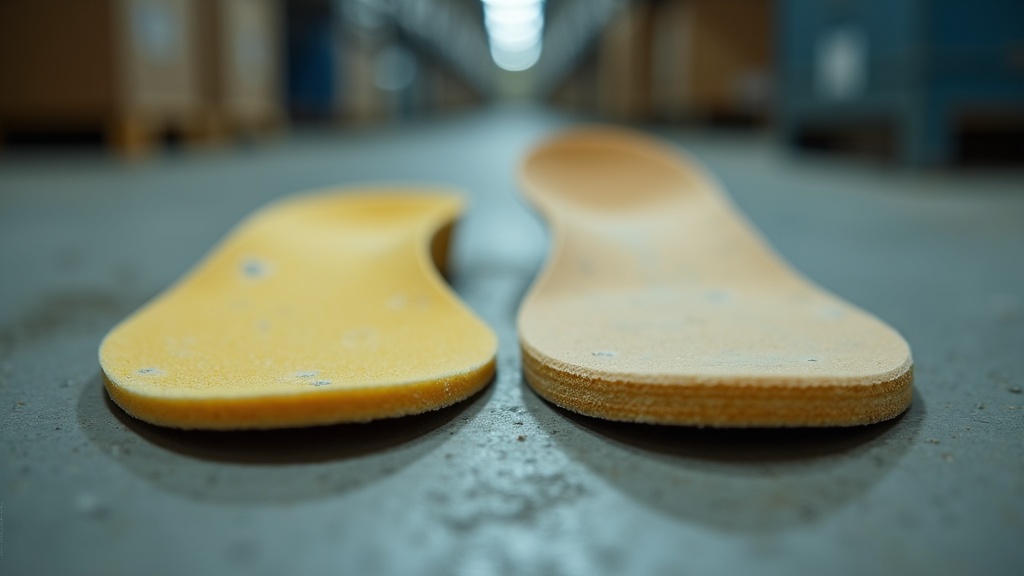
For long standing shifts, you want a semi-rigid or rigid shell, not pure foam. Foam alone compresses within weeks. A plastic or fiberglass base holds your arch in position for months.
Top layer material
- Memory foam: comfortable on day one, loses its shape fast on concrete
- EVA foam: good balance of cushion and durability, lighter weight
- Gel pads: great for heel and ball-of-foot shock, heavier but long-lasting
- Polyurethane: the most durable, found in heavy duty insoles for warehouse workers, less squishy but holds up
Heel cup depth
A deep heel cup (at least 16mm) cradles your calcaneus and stops your heel from pronating outward on uneven loading. This is the single most overlooked spec in budget insoles.
Read also: Sock Cushioning for Standing Jobs: Honest Comparison
Did you know?
The average warehouse worker walks between 7 and 12 miles per shift, according to logistics industry time-motion studies. That is comparable to completing a half-marathon five days a week, every week, on concrete.
Do Arch Support Insoles Actually Work? Straight Answer Here
Yes, with conditions. They reduce impact load, slow arch fatigue, and support proper alignment. A 2017 study in Applied Ergonomics found that cushioned insoles reduced lower-limb muscle fatigue in workers on hard floors by a measurable margin.
They do not cure plantar fasciitis once it is bad. If you are already limping in the morning, see a podiatrist first, then come back to insoles as part of the fix, not the whole fix.
They also do not make bad boots good. An insole cannot save a boot that fits wrong. Fit your boot first, then optimize with the insole.
The Best Arch Support Insoles for Warehouse Work, Ranked by Real-World Use
These are not sponsored rankings. These are the options that come up repeatedly among workers who actually wear them on 10-hour shifts.
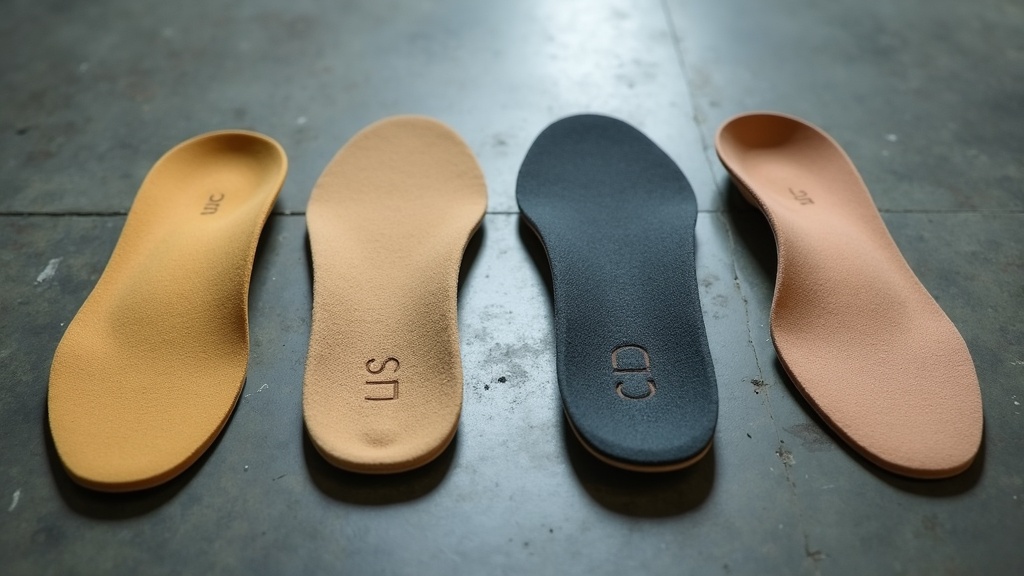
Superfeet GREEN
The standard everyone gets compared to. High-arch biomechanical shell, deep heel cup, organic foam top coat. Holds its shape for 12+ months of daily use. The go-to for workers with medium to high arches. Runs firm, which some people need a week to adjust to.
Timberland PRO Anti-Fatigue
Specifically engineered for best insoles for work boots on concrete. The inverted cone geometry technology in the heel actually returns energy on each step. Slimmer profile than Superfeet, which matters in tighter boots.
Powerstep Pinnacle
Double-layer EVA foam with a semi-rigid arch shell. One of the best best work boot insoles for standing all day options for workers with plantar fasciitis history. Softer than Superfeet but more structured than pure foam aftermarket insoles.
Dr. Scholl's Work Insoles
The budget pick that still delivers. Reinforced arch, decent heel pad. Will not last as long as Superfeet, but at half the price and available at every Walmart in the country, they are worth stocking two pairs and rotating them.
| Insole | Best For | Durability | Price Range |
|---|---|---|---|
| Superfeet GREEN | Medium/high arch, heavy daily use | 12+ months | $50, $55 |
| Timberland PRO Anti-Fatigue | Concrete floors, energy return | 10, 12 months | $35, $45 |
| Powerstep Pinnacle | Plantar fasciitis history, softer feel | 8, 10 months | $40, $50 |
| Superfeet BERRY (Women's) | Women's arch shape, narrower heel | 10, 12 months | $50, $55 |
| Dr. Scholl's Work | Budget, rotating pairs | 4, 6 months | $18, $25 |
Women's Arch Support Insoles for Warehouse Work: What's Different and What to Get
Women's feet are not just smaller men's feet. The arch position relative to heel length differs, the Q-angle of the knee puts different rotational force through the foot, and the heel is proportionally narrower. A men's insole in a women's boot will sit off-center and create new problems.
For women's arch support insoles for warehouse work, look for: a narrower heel cup, a slightly more forward arch placement, and length sizing that does not require aggressive trimming at the toe.
- Superfeet BERRY: purpose-built for women's foot geometry, same firm shell as the GREEN, solid 10-hour shift performer
- Powerstep Maxx Women's: extra heel cushion, works well in women's steel-toe boots where the toe box is already compressing the front of the foot
- Sof Sole Women's Athlete: more cushion-forward, good for walkers who are on the move versus stationary standers
Read also: Merino Wool Socks for Work: 5 Reasons They're Worth It
Best Insoles for Work Boots on Concrete: Materials That Don't Quit on You
The material question is where most buyers get it wrong. They read "gel" and think it means better, or they buy memory foam because it feels good in the store.
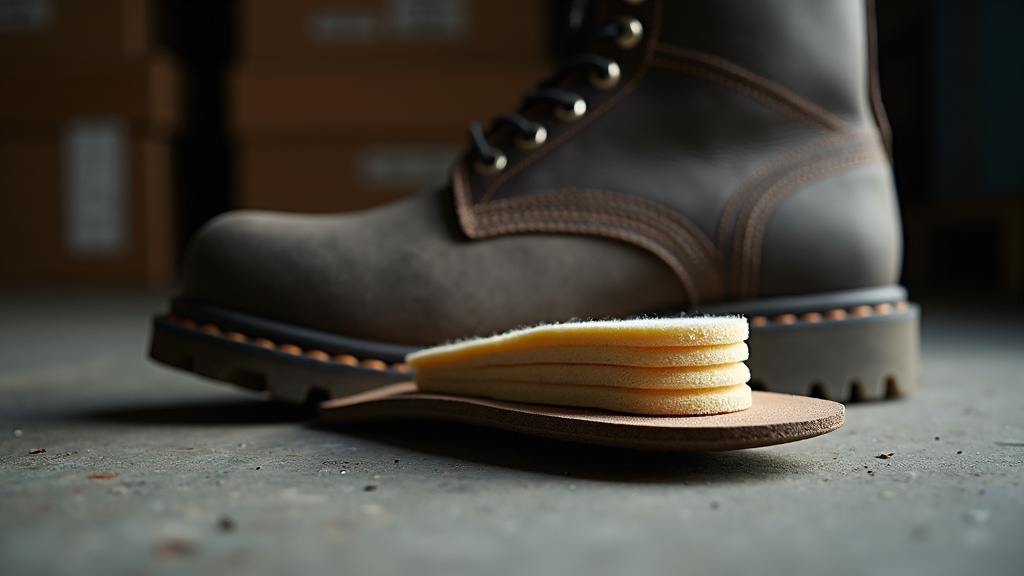
On concrete specifically, polyurethane and EVA over a rigid shell are the long-game materials. Gel is good for shock, but it migrates over time and can create uneven spots. Memory foam bottoms out under sustained load within weeks.
Did you know?
EVA foam loses roughly 40% of its cushioning thickness after 500 hours of use. For a worker doing 10-hour shifts five days a week, that is less than three months before the insole is effectively flat, even if it does not look worn out.
For insoles for steel-toe boots specifically, the toe box is already tighter and harder. You need an insole that is no thicker than 4, 5mm at the forefoot or you will cramp your toes. Superfeet trim-to-fit options and Timberland PRO both handle this well.
How to Make Your Insoles Last the Full Shift (and Longer)
You can buy the best insole on the market and trash it in 60 days with bad habits. Here is the short version of making them last.
- Rotate two pairs. Let one air out while you wear the other. Foam and PU recover better when they have 12+ hours off.
- Air them out every night. Pull them from the boot, stand them up, do not cram them back in while wet. Moisture breaks down adhesive layers and accelerates foam compression.
- Replace on schedule, not on feel. By the time your insole feels flat, it has been underperforming for weeks. Set a 6-month calendar reminder.
- Match insole to boot, not to brand. A $50 insole in a boot that fits badly is still a bad setup. The insole only works when it is seated flush against the full footbed.
Read also: Merino Wool Socks for Work: 5 Reasons They're Worth It
What Workers Are Saying on Reddit and in the Break Room
On r/Warehouseman and r/OSHA, the same names come up: Superfeet GREEN, Timberland PRO, and Powerstep. The recurring complaint about cheap insoles is not comfort on day one. It is how fast they die.
One thread on r/AmazonFC summed it up cleanly: "Spent $18 on Dr. Scholl's, replaced them every 2 months. Switched to Superfeet at $50, replaced them once a year. Same annual cost, way better support." The math is real.
Workers with wide feet flag that Superfeet GREEN runs narrow at the forefoot for some foot shapes, and recommend going up half a size before trimming. Women on 12-hour DC shifts consistently rate the BERRY higher than any unisex option they tried.
The bottom line before you buy
Know your arch type. Match the shell stiffness to how much standing versus walking you do. If you are in steel-toes, check the forefoot thickness. Buy two pairs if you can. And replace them on a calendar, not when they feel done.
