


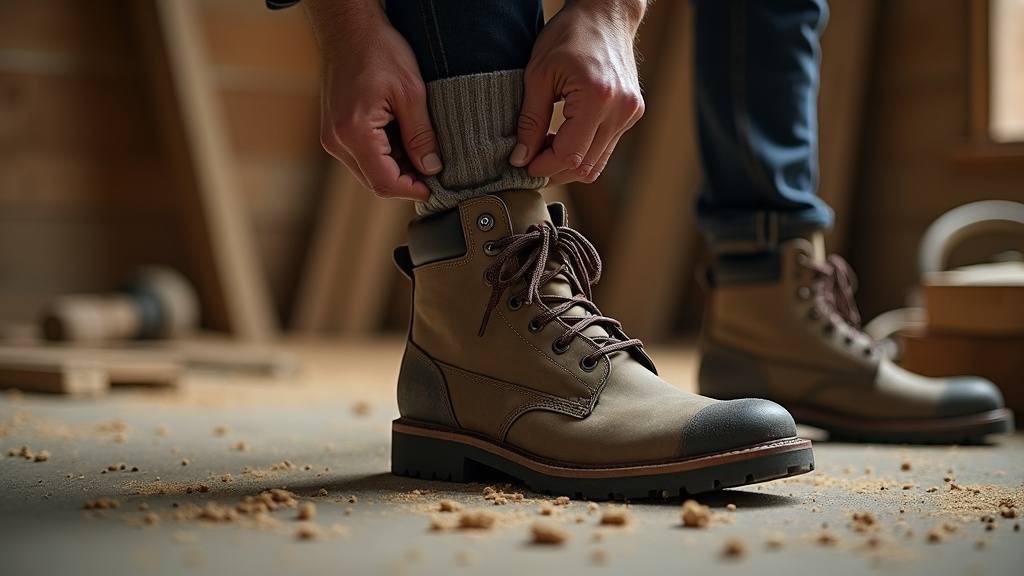
Your feet take a beating every single shift. Eight, ten, twelve hours on concrete, gravel, or scaffolding, and the only thing standing between you and a miserable walk back to the truck is what you stuffed into your boots that morning.
Most guys grab whatever cotton socks are on sale. That works right up until it doesn't: blisters by noon, sweat-soaked by two, and a smell that clears the locker room. Merino wool socks for work fix all three, and then some. Here's why they're worth a serious look.
Key points at a glance
- Merino wool moves moisture away from skin far faster than cotton, keeping feet dry during long shifts.
- The fiber regulates temperature in both summer heat and winter cold, so one sock works year-round.
- Natural antimicrobial properties let you wear the same pair two or three days before odor becomes an issue.
- The fine crimp in merino fibers cushions friction points and dramatically reduces blisters.
- Quality merino work socks outlast cotton by years when cared for correctly.
- The higher upfront cost pays off quickly in comfort, durability, and fewer replacement purchases.
Why Merino Wool Belongs on the Jobsite
What Makes Merino Wool Different From Your Average Sock
Regular wool itches because the fibers are thick and coarse. Merino comes from a specific breed of sheep, and the fibers are much finer, typically under 20 microns. Fine enough that most people don't feel any scratch at all against bare skin.
The fiber also has a natural crimp structure that creates tiny air pockets. Those pockets trap heat when it's cold and release excess warmth when it's hot. Cotton does neither. Synthetics do one or the other, not both.

Reason 1, They Keep Your Feet Dry Without a Plastic Feeling
Merino wool can absorb up to 35% of its own weight in moisture before it starts to feel wet against your skin. Cotton hits its limit fast and turns into a soggy mess. Synthetics wick quickly but leave your foot sitting in a clammy microclimate inside the boot.
For guys standing all day, that moisture management is everything. Wet feet cause friction. Friction causes blisters. Blisters slow you down or knock you out for days. Merino keeps that chain from starting in the first place.
This is also why merino wool socks work well in insulated work boots. The boot traps heat, feet sweat, and cotton turns into a problem fast. Merino keeps pulling that moisture away from the skin and releasing it.
Read also: How to Wash Merino Wool Socks Without Wrecking Them
Did you know?
Merino wool can absorb moisture vapor before it even turns to liquid sweat, which means your foot feels dry even when the fiber is technically working hard. Cotton has no such mechanism; it just gets wet and stays wet.
Reason 2, They Work in Summer Heat and Winter Cold
Most guys keep a drawer full of thin summer socks and a separate pile of heavy winter socks. Merino cuts that in half. A mid-weight merino sock handles most of the year for outdoor trades work.
In summer, the moisture management and natural breathability keep your feet from cooking. In winter, the air pockets in the fiber structure hold in warmth. It's not magic, it's just physics. The fiber responds to what your body is doing.
Wool socks for hot weather work sounds backward until you realize Bedouin nomads have worn wool in desert conditions for centuries. A 17-micron merino sock in July is not the same thing as your grandfather's itchy hunting sock in December.
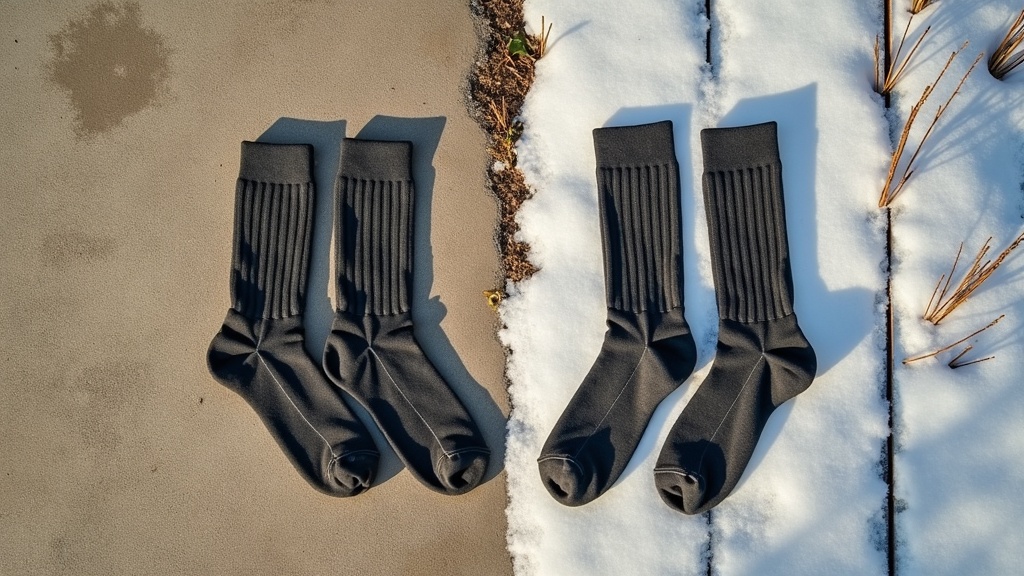
Reason 3, You Can Wear Them Two or Three Days Running Without the Stench
This one surprises most people the first time they experience it. Merino wool has a natural antimicrobial property tied to its lanolin content and the structure of the fiber itself. Bacteria that cause odor have a harder time colonizing wool than they do cotton or synthetic material.
In practice, that means you can pull the same pair of merino socks on for a second shift without your boots turning into a biological hazard. Three days is realistic for lighter work. Two days is the norm on a hot, demanding job.
That also matters for travel, hunting seasons, or any situation where laundry access is limited. You're not cutting corners, the sock genuinely hasn't gone bad yet.
Reason 4, They Cut Down on Blisters and Hot Spots
Blisters come from friction, and friction comes from skin rubbing against a surface repeatedly. A well-constructed merino sock reduces that in two ways: the fiber is soft enough not to create harsh contact points, and it wicks moisture so the skin isn't softened and fragile.
Many merino work socks also add targeted cushioning at the heel and ball of the foot without creating bulk elsewhere. That matters a lot when you're breaking in new boots or working uneven terrain.
For diabetics, this is more than comfort. Foot health is a genuine medical concern, and anything that reduces friction, keeps skin dry, and avoids pressure points matters. Merino checks every one of those boxes. Always confirm with your doctor, but the properties of the fiber line up well with diabetic foot care guidelines.
Did you know?
Studies from the International Wool Textile Organisation have shown that wool-rich socks can reduce blister incidence by up to 40% compared to cotton or synthetic socks in prolonged walking tests.
Reason 5, They Hold Up Shift After Shift Without Falling Apart
Merino on its own is soft but not bulletproof. That's why the best merino work socks blend in a small percentage of nylon, typically 15 to 20%. The nylon handles the abrasion zones at heel and toe. The merino handles everything else.
A quality pair built this way will outlast five or six pairs of budget cotton socks. The math on that makes the $20 to $30 price tag look a lot less painful.
The key is how you wash them. Cold or warm water, gentle cycle, no fabric softener. Lay flat to dry. Skip the hot dryer. That's all it takes to get years out of a pair.
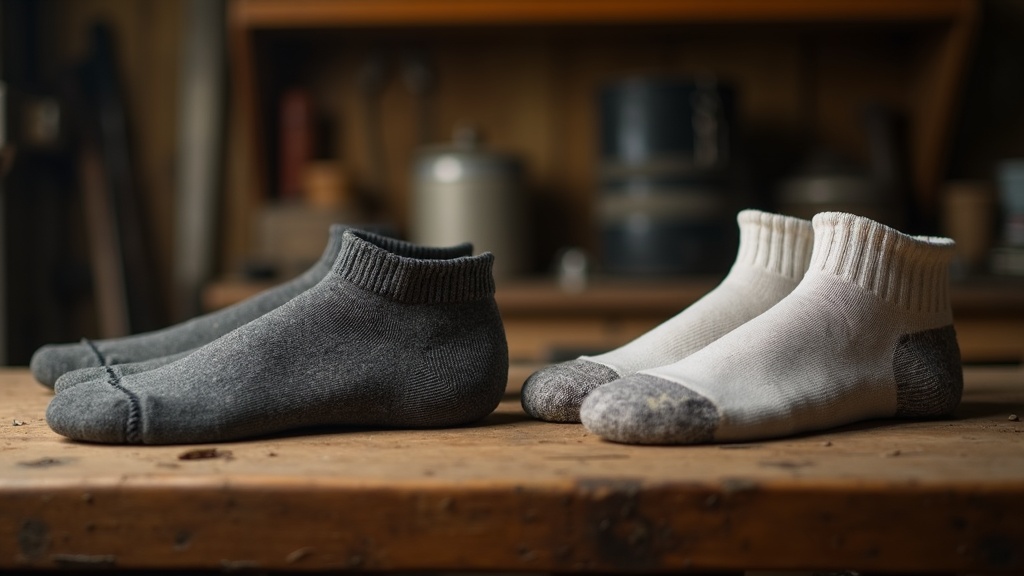
Are Merino Wool Socks Worth the Price for Trades Workers
A six-pack of cotton crew socks runs about $12. One pair of quality merino work socks runs $20 to $30. That gap is real, and it's fair to ask if it's worth it.
Here's how the numbers actually shake out. Cotton socks last maybe six months with daily wear before the heels go thin. A merino pair, treated right, goes two to three years. You also need fewer pairs because of the multiple-wear capability. Four merino pairs can cover what would take eight or ten cotton pairs to match in rotation.
| Feature | Cotton Work Socks | Merino Wool Work Socks | Synthetic Blend Socks |
|---|---|---|---|
| Moisture wicking | Poor (holds moisture) | Excellent (absorbs then releases) | Good (surface wicking only) |
| Temperature regulation | None | Both warm and cool | Warm or cool, not both |
| Odor resistance | Wash after every wear | 2 to 3 wears before washing | 1 to 2 wears max |
| Blister reduction | Low | High | Moderate |
| Lifespan (daily wear) | 4 to 6 months | 2 to 3 years | 1 to 2 years |
| Price per pair | $2 to $4 | $20 to $30 | $10 to $18 |
What to Look For When Buying Merino Wool Work Socks
Not every sock labeled merino is worth buying. Watch for these specifics before you hand over your money.
- Merino content: Look for at least 60% merino wool. Below that, you lose most of the benefits.
- Nylon reinforcement: 15 to 25% nylon in the heel and toe adds durability without compromising comfort.
- Micron count: 18 to 21 microns is the sweet spot for work use. Below 18 is softer but less durable. Above 21 starts to itch.
- Cushioning zone: Targeted padding at the heel and ball matters for all-day wear, especially in hard-soled boots.
- Height: Crew or over-the-calf for boot work. No-show socks and work boots are a bad combination.
- Brand transparency: Good brands list the fiber content and micron count on the label. If they don't, pass.
Read also: Moisture Wicking Insoles for Sweaty Feet on Construction Sites
Your Next Move
Start with two pairs. Rotate them through a full week of work. Wash them right, cold water, lay flat. Give them a fair trial against whatever you're wearing now.
If your feet don't feel better after two weeks, go back to cotton. But most guys don't go back. Once you've done a ten-hour pour day without a hot spot or a soggy heel, it's hard to settle for less.
Your boots are already doing their job. Give your socks a chance to do theirs.
