


You spent real money on those merino wool socks. Whether it's a pair of Smartwool hiking socks or a set you picked up for long days on your feet, shrinking them down to doll size in one wrong wash cycle is an expensive lesson nobody wants to learn twice.
The good news: washing merino wool socks is not complicated once you know the two or three things that actually matter. Get those right, and a good pair can last you years.
Key points at a glance
- Cold water and a gentle cycle are your two non-negotiables, whether by hand or machine.
- Wool-specific detergent protects the fiber structure. Regular detergent strips it.
- The dryer is the number-one killer of merino socks. Air dry flat instead.
- Merino wool resists odor naturally, so you don't need to wash after every single wear.
- To disinfect without damage, use a diluted white vinegar soak, not hot water or bleach.
- Wool blend socks follow the same rules as pure merino, just slightly more forgiving.
What this guide does for your socks
Why Merino Wool Socks Need a Different Approach Than Cotton
Cotton doesn't care much what you do to it. Merino wool does. The fiber is made of tiny overlapping scales, and heat plus agitation causes those scales to lock together permanently, which is how you get a sock that could fit a 10-year-old after one bad cycle.
Merino also reacts badly to alkaline detergents. Most standard laundry detergents are alkaline enough to break down the protein structure of the wool over time, leaving it thin, scratchy, and prone to holes.
Machine Washing Merino Wool Socks (The Right Way, Step by Step)
Yes, you can machine wash merino wool socks. Most modern merino socks are designed for it. The trick is controlling the variables.
Step-by-step for the washing machine
- Turn socks inside out to protect the outer surface and reduce pilling.
- Use a mesh laundry bag. It limits friction between the socks and other clothes.
- Set the machine to a wool or delicate cycle with cold water (60°F / 15°C or below).
- Use a wool-specific detergent such as Eucalan, Woolite, or the Smartwool-recommended options. One cap. Don't overdo it.
- Skip the fabric softener. It coats the fiber and kills the natural moisture-wicking properties.
- Low or no spin. High spin cycles stress the fibers. If your machine lets you set spin speed, drop it.
Did you know?
Merino wool fiber is roughly one-third the diameter of human hair, around 17 to 24 microns depending on the grade. That's why it's soft against skin, and why mechanical stress from a rough wash cycle does real damage at a level you can't see until it's too late.
How to Hand Wash Merino Wool Socks When You Need to Go Careful
If a pair is particularly expensive, or you're on a trip without access to a gentle machine, hand washing takes five minutes and removes any risk of machine-related damage.
Hand wash process
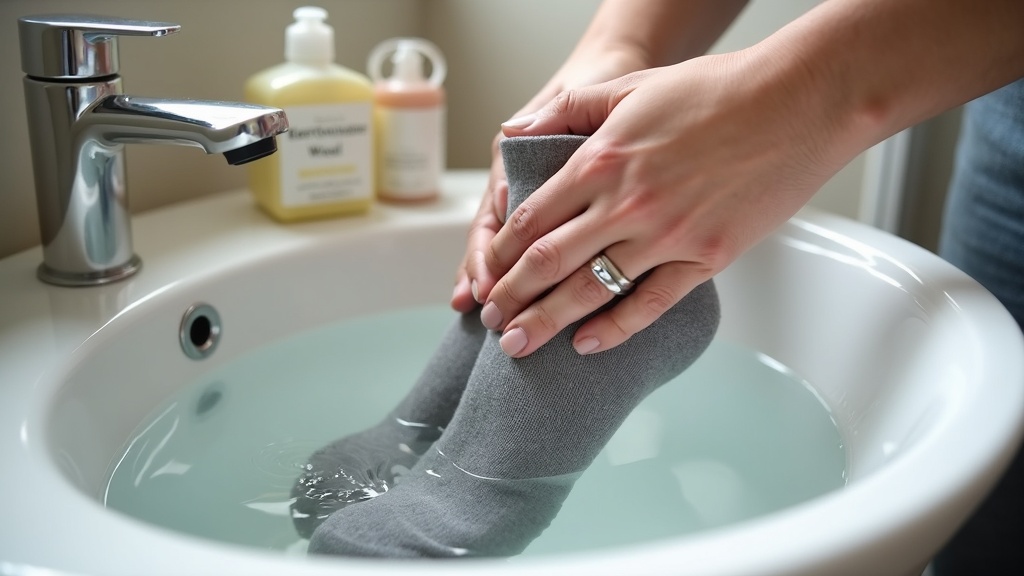
- Fill a sink or small basin with cold water. Not lukewarm. Cold.
- Add a small amount of wool wash, no more than a teaspoon.
- Submerge the socks and gently squeeze the water through the fabric. No wringing, no scrubbing, no twisting.
- Let them soak for 5 to 10 minutes.
- Rinse under cold running water until the water runs clear.
- To remove excess water, press the socks flat against the sink basin. Or roll them gently in a clean dry towel and press down.
Can Merino Wool Socks Go in the Dryer?
Short answer: no. Even a low-heat setting creates enough heat and tumbling action to felt the fibers. One cycle in the dryer can shrink a size 12 sock down enough that it won't fit past your heel.
Lay them flat on a clean towel or a drying rack. Shape them back to their original form with your hands while they're still damp. They'll be dry in a few hours at room temperature, faster if there's airflow.
Some Smartwool socks and other performance merino products have updated labels allowing low-heat tumble dry. If yours says that explicitly on the tag, you can try it once. Otherwise, don't risk it.
| Method | Safe for Merino? | Notes |
|---|---|---|
| Cold machine wash, gentle cycle | Yes | Use mesh bag and wool detergent |
| Hot machine wash | No | Will shrink and felt the fiber |
| Hand wash in cold water | Yes | Safest option for expensive pairs |
| Tumble dry, high heat | No | Immediate and irreversible damage |
| Tumble dry, low heat | Only if tag allows it | Check label. When in doubt, air dry. |
| Flat air dry | Yes | Best method every time |
How Often Should You Actually Wash Merino Wool Socks?
This is where merino earns its price tag. The fiber naturally resists odor because of a compound called lanolin and the way wool absorbs moisture vapor rather than sitting wet against your skin. Bacteria, which cause most foot odor, have less to feed on.
For everyday wear: every two to three uses is reasonable. For hard physical work or hiking: wash after each use. For light office or travel wear: some people go four or five wears without any smell issue. Use your nose. It won't lie to you.
Did you know?
Studies conducted by the Woolmark Company found that merino wool garments can be worn multiple times between washes without detectable odor, outperforming synthetic fabrics like polyester that required washing after a single wear. Less washing also means less wear on the fiber itself.
How to Disinfect Wool Socks Without Destroying Them
Hot water kills bacteria. But hot water also destroys merino wool. So you need another approach when you actually need to disinfect, say after a foot infection, heavy blister-related sweating, or a long muddy day.
Safe disinfecting options
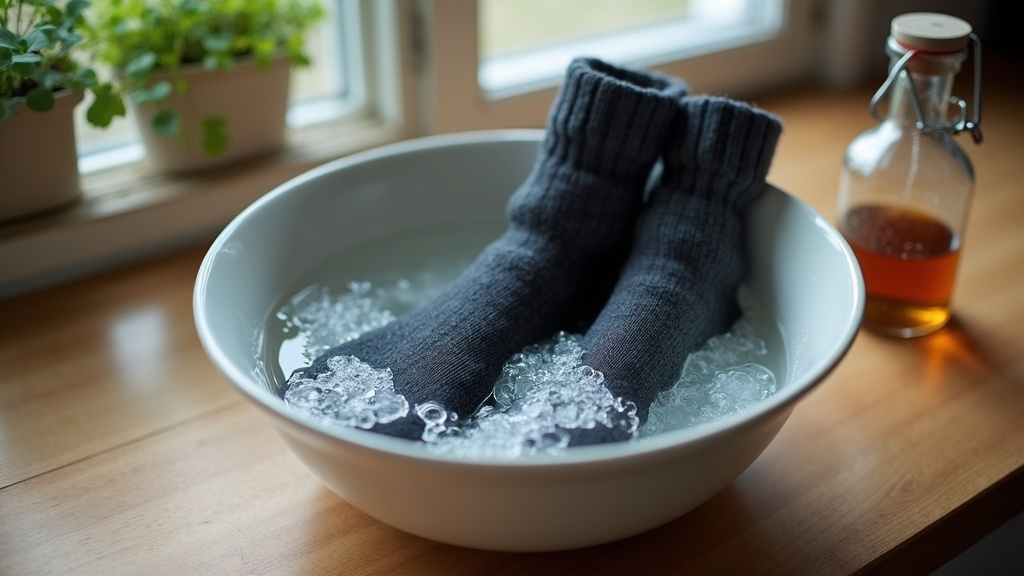
- White vinegar soak: Add half a cup of white vinegar to a basin of cold water. Soak the socks for 30 minutes. Vinegar is mildly acidic, kills a broad range of bacteria and fungi, and won't damage wool fiber. Rinse well afterward.
- Tea tree oil: A few drops in your wash water adds antimicrobial action. Don't overdo it. Three to five drops is enough for a basin.
- Wool-safe laundry sanitizers: A few products on the market are specifically formulated for low-temperature sanitizing. Check the label says safe for wool before using.
Never use bleach on merino wool. Never. Bleach destroys the protein structure of wool completely and permanently.
Common Mistakes That Shrink and Destroy Merino Socks
Most ruined pairs of merino socks come down to the same handful of errors. Here's what to stop doing.
- Hot water, any temperature above lukewarm. The single biggest culprit.
- Washing with regular detergent. Most household detergents are too harsh for wool protein.
- Tumble drying without checking the label. Even "low" heat on a machine running hot is enough to cause shrinkage.
- Wringing or twisting to squeeze out water. This stretches and distorts the fibers while they're at their most vulnerable.
- Hanging wet socks to dry. The weight of the water pulls the wet fiber down and deforms the sock's shape. Always dry flat.
- Washing with items that have zippers or velcro. These snag and tear the merino surface. Mesh bag solves this.
Washing Wool Blend Socks: Same Rules or Different?
Most wool blend socks mix merino with nylon, polyester, or spandex. The synthetic content adds durability and stretch recovery. The merino is still in there though, and it still needs gentle treatment.
Follow the same cold water, gentle cycle, wool detergent approach. The blend gives you a little more forgiveness if the spin cycle runs faster than intended, but heat is still your enemy even in a blended sock. The nylon won't shrink. The merino will. You'll end up with a lumpy, distorted sock that doesn't wear right.
Your Quick-Reference Wash Routine
Tape this to your laundry room wall if you have to. It covers every situation.
- Cold water, always. Never warm, never hot.
- Wool-specific detergent. Half the amount you'd use for regular laundry.
- Gentle or wool cycle on the machine, or hand wash with light squeezing.
- No wringing. Press or roll in a towel to remove water.
- Lay flat to dry. Shape while damp. Done.
- For disinfecting: 30-minute cold vinegar soak before washing.
- Check the tag before using any heat. If the tag doesn't say dryer-safe, skip it.
Treat them right and a quality pair of merino socks will outlast three or four pairs of cheap cotton ones. That's not a promise. That's just what good material does when you don't abuse it.
