


You clock out and your legs feel like you poured concrete into them. Ankles swollen, feet throbbing, calves tight enough to cramp in the night. That's not just soreness. That's circulation paying the price for eight to twelve hours on hard floors.
Compression socks fix a real problem. But the market is cluttered with thin drugstore tubes dressed up in marketing language. This guide cuts through the noise and tells you exactly what to buy, why it works, and how to make it last.
Key points at a glance
- Standing all day pushes blood and fluid down into your lower legs. Compression socks counteract that with gentle, graduated pressure.
- 20-30 mmHg is the sweet spot for most trades workers. It's firm enough to work, mild enough to wear all shift.
- Knee-high graduated compression socks outperform ankle socks and calf sleeves for full-day standing jobs.
- Fabric matters as much as compression level: look for nylon-spandex blends with cushioned soles for durability on hard floors.
- Most compression socks die early from one of three avoidable mistakes covered in this guide.
- Proper sizing is non-negotiable. A sock that fits wrong delivers zero benefit and might make things worse.
What Good Compression Socks Do for You
Why Your Legs Are Wrecked by Quitting Time (and What's Actually Happening)
Your calf muscles act as a pump. Every step squeezes blood back up toward your heart. But when you're standing still on a concrete slab, that pump barely fires. Blood and fluid pool in the lower leg.
The result: edema (swelling), aching calves, tired feet, and over years, damaged vein walls. Electricians, plumbers, nurses, retail workers, line cooks, and construction laborers all deal with this. It's not weakness. It's physics.
Do You Actually Need Compression Socks, or Is This Hype?
If you stand more than six hours a day on hard surfaces, compression socks are not a luxury. They are basic maintenance for your legs.
You don't need a doctor's note for 15-20 or 20-30 mmHg socks. Those are over-the-counter grades used by athletes and workers alike. If your legs swell visibly every day or you have diagnosed venous insufficiency, a conversation with your doctor before sizing up to 30-40 mmHg makes sense.
Did you know?
A 2014 study published in the Journal of Vascular Surgery found that workers who wore graduated compression stockings during long standing shifts reported a 40% reduction in leg fatigue and a measurable decrease in end-of-day leg volume compared to a control group wearing regular socks.
mmHg Levels Explained in Plain English: What Number Is Right for Your Job?
mmHg stands for millimeters of mercury, the same unit used to measure blood pressure. It tells you how much squeeze the sock applies at the ankle.
- 10-15 mmHg: Light travel socks. Fine for a flight, useless on a jobsite.
- 15-20 mmHg: Mild support. Good starting point if you've never worn compression before or have light fatigue.
- 20-30 mmHg: The worker's zone. This is what most electricians, plumbers, and construction trades wear. Firm enough to move fluid, comfortable enough for a ten-hour shift.
- 30-40 mmHg: Medical grade. For diagnosed venous disease or post-surgical use. Consult a doctor first.
For most standing jobs, 20-30 mmHg compression socks are the answer. That's where this guide focuses.
Check out our guide: Are Work Boots Bad for Walking — Or Is It Just the Wrong Pair?
Knee-High vs. Ankle vs. Calf Sleeves: Which Length Does the Work?
Ankle compression socks barely reach the calf and miss most of the pooling zone. They're better than nothing, but not by much for all-day standing.
Knee-high graduated compression socks are the standard for a reason. They apply the most pressure at the ankle (say, 20 mmHg) and taper off as they rise toward the knee (around 12-15 mmHg). That gradient is what physically pushes blood upward.
Calf sleeves leave your foot uncovered, which works for some runners but creates friction problems inside a heavy boot. Stick with full knee-highs for trades work.
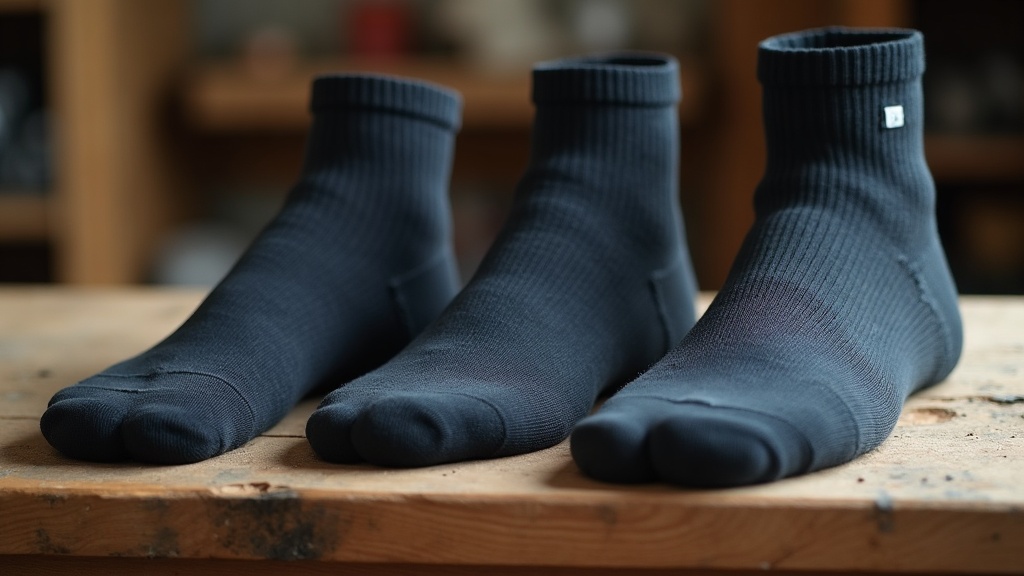
What to Look for in a Work-Grade Compression Sock (Fabric, Cushioning, Durability)
Fabric blend
The best compression socks for workers combine nylon and spandex (sometimes called elastane or Lycra). Nylon holds up to daily washing and boot friction. Spandex maintains the compression gradient over time. All-cotton socks stretch out within weeks and lose their compression. Avoid them.
Cushioning zones
Look for reinforced cushioning at the heel and ball of the foot. On concrete, that extra padding is the difference between surviving a double shift and limping to the truck.
Moisture wicking
Your feet sweat. A lot. Socks with moisture-wicking fibers (polyester or merino wool blends) pull that sweat away from the skin and reduce blister risk inside a hot boot.
| Fabric | Compression Hold | Moisture Wicking | Best For |
|---|---|---|---|
| Nylon + Spandex | Excellent, long-lasting | Good | Daily work use, most trades |
| Merino Wool + Nylon | Very good | Excellent, odor-resistant | Outdoor work, variable temps |
| Polyester + Spandex | Good | Very good | Budget picks, hot environments |
| Cotton + Spandex | Fades fast (6-8 weeks) | Poor | Avoid for jobsite use |
| Copper-Infused Nylon | Good | Good | Odor control, light antimicrobial benefit |
The 3 Mistakes That Kill Most Compression Socks Before Their Time
1. Putting them in a hot dryer
Heat destroys elastane fibers. Every hot cycle shortens the sock's life and loosens the compression. Air dry them. Every time. No exceptions.
2. Buying the wrong size
Compression socks are sized by calf circumference and sometimes ankle circumference, not shoe size alone. Measure both before you order. A sock that's too tight cuts off circulation. Too loose and you're just wearing a regular sock at double the price.
3. Rotating only one pair
Elastic needs time to recover between wears. Buy at least two or three pairs and rotate them. They'll each last three to six months of daily use instead of burning out in six weeks.
Did you know?
The compression in a graduated sock degrades significantly after roughly 30 machine wash cycles if dried on high heat. Air drying can extend effective compression life to 150+ washes, according to textile testing data from major hosiery manufacturers.
Best Compression Socks for Standing Jobs: Honest Picks at Different Price Points
These aren't affiliate filler. These are brands that show up repeatedly in trades worker forums and hold up to the daily grind.
Under $20 per pair
Copper Fit Energy: Decent nylon-spandex build, 20-30 mmHg, available at most hardware and big-box stores. Not the most durable but a solid entry point. Buy two pairs and rotate.
$20-35 per pair
CEP Compression Work Socks: German-made, true graduated compression with reinforced toe and heel boxes. A favorite among nurses and construction foremen. The sizing chart is accurate. Follow it.
Sockwell Elevation Firm: Merino wool blend, 20-30 mmHg, outstanding moisture control for workers in hot or outdoor conditions. Worth every cent if you sweat heavily.
$35+ per pair (worth it for daily wearers)
Sigvaris Traverse: Medical-grade construction, reinforced foot bed, designed specifically for workers on hard surfaces. If your legs swell significantly every day, this is where you land. They're built to last over a year with proper care.
Check out our guide: The Best Merino Work Socks for Long Days on the Job Site
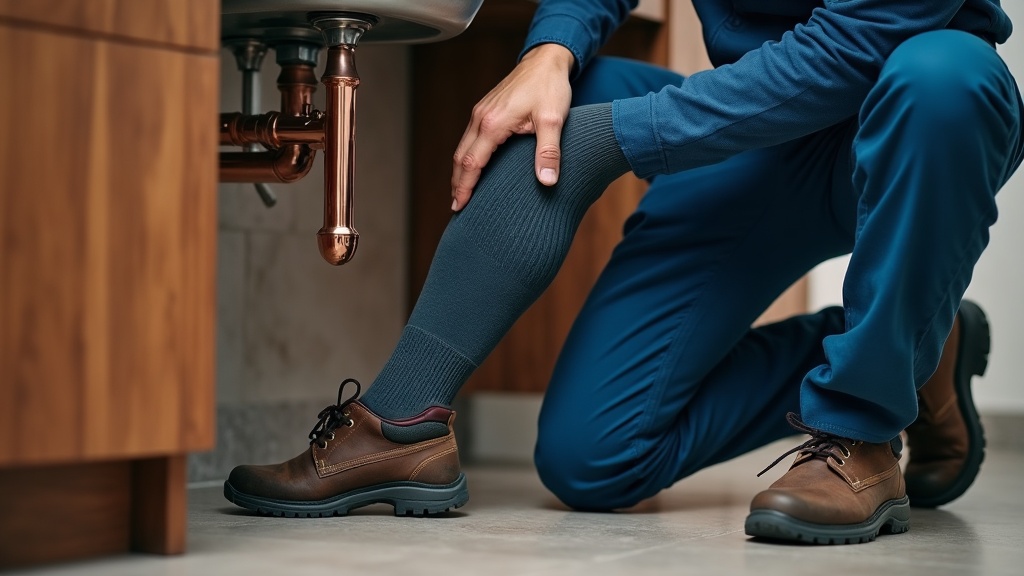
How to Put Them On, When to Wear Them, and How to Make Them Last
Put them on first thing in the morning, before your legs have had a chance to swell. Trying to pull a 20-30 mmHg sock over a swollen ankle mid-afternoon is a frustrating fight you will lose.
Putting them on right
- Turn the sock inside out down to the heel pocket.
- Slide your foot in, heel seated fully in the pocket.
- Roll the sock up your leg without bunching. Bunching creates pressure points.
- No creases. Smooth it from ankle to knee.
When to take them off
At the end of your shift, or after roughly ten to twelve hours. Sleeping in them is not necessary and can feel uncomfortable. Your legs recover fine overnight without them.
Washing and care
- Machine wash cold on a gentle cycle.
- Use mild detergent. Skip fabric softener (it coats fibers and kills elasticity).
- Air dry only. Hang them or lay flat. No dryer.
- Inspect monthly for stretched-out bands or thinning at the heel. Replace when the elastic gives.
Three pairs rotated through a proper wash routine will outlast six pairs thrown in a hot dryer. That's not a small thing when you're spending $25 to $40 a pair.
Your legs carry you through every shift. Compression socks are a $25-40 investment that pays back in less pain, less swelling, and fewer long-term vein problems. Measure right, buy two or three pairs, air dry them, and put them on before your feet swell. That's the whole playbook.
