


Your boots can cost $200 and still wreck your feet by noon — if the socks underneath aren't right. Most tradespeople upgrade their footwear and forget about what goes between skin and leather. Merino work socks fix that. They regulate temperature, wick moisture, and hold up through shifts that would shred a standard cotton pair. Here's what the science backs up, and the five options worth putting in your work bag.
Why Merino Wool Outperforms Cotton on the Job Site

Cotton absorbs sweat and holds it. That moisture sits against your skin all day, which is exactly how blisters and fungal infections start. A study published in the Journal of the Textile Institute found that merino wool absorbed 35% less moisture than cotton during prolonged physical activity — and dried significantly faster. That matters for anyone who's on their feet 8 to 10 hours straight.
Merino fiber is also naturally temperature-regulating. It keeps you warm in cold conditions and releases heat when you're working hard in summer. That's not marketing — it's the structure of the fiber itself, which can absorb up to 30% of its weight in moisture without feeling wet against the skin.
One more thing worth knowing: merino wool contains lanolin, a natural antibacterial agent. That's why a quality pair of merino work socks can be worn multiple times between washes without developing the kind of odor a cotton sock produces after a single shift.
Check out our article on: How to Make Work Boots More Comfortable: 7 Proven Tips That Actually Work
5 Merino Work Socks Worth Buying
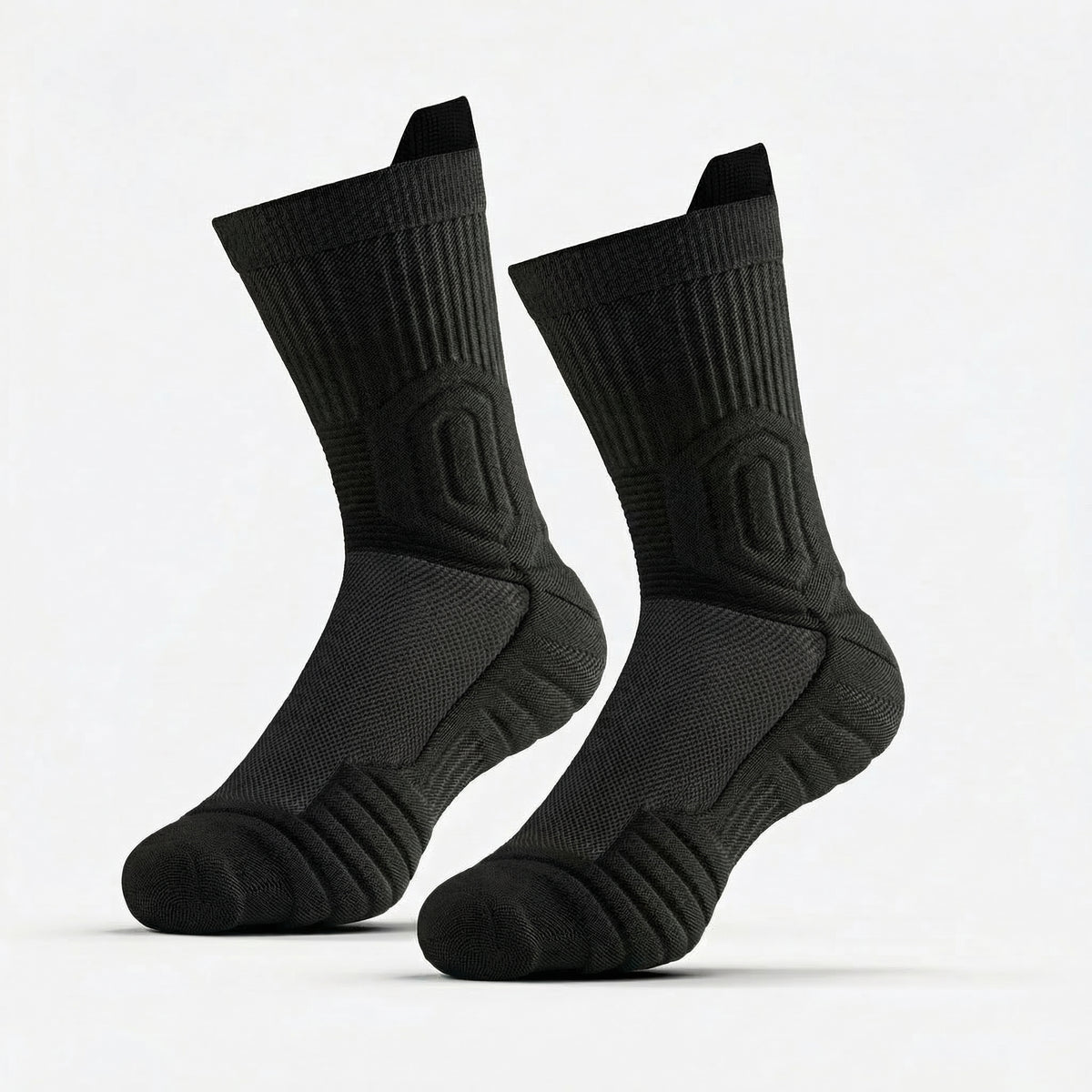
1. Tradesman Socks 2026 — Mason's Flagship Work Sock
Built specifically for tradespeople, the Tradesman Socks 2026 combine a reinforced heel and toe with a merino blend that handles friction from heavy boots. The cushioning sits where it matters — underfoot and at the ankle — without adding bulk inside a safety boot. If you're wearing steel-toed footwear all day, this is the pair to start with.
2. Breathable Work Socks 5-Pack — For High-Output Days
Hot weather and physical work are a rough combination. These socks prioritize airflow without sacrificing the structure a workday demands. The 5-pack format makes sense for anyone who goes through socks fast — cheaper per pair, and you always have a clean set ready.
Worth noting: ventilation zones are engineered into the arch and upper foot, not just added as a marketing claim.
Shop the Breathable Work Socks 5-Pack
3. Atlas Crew Socks 2-Pairs — The Everyday Workhorse
The Atlas Crew sits at the intersection of comfort and durability. Crew height gives you extra coverage at the ankle, which matters if you're pulling on work boots repeatedly or working in environments where debris gets inside footwear. The 2-pair format is practical for anyone who wants a rotation without buying a full multi-pack.
4. Warming Work Socks 5-Pack — Cold Site Conditions
A 2021 study by the University of Calgary found that foot temperature directly affects worker productivity and error rates in cold environments — with significant drops in performance when feet stayed cold for more than 45 minutes.
These socks address that. The thermal layer is built into the construction, not added as a loose liner, so the warmth stays consistent across a full shift. The 5-pack means you've got the whole week covered.
Shop the Warming Work Socks 5-Pack
5. Nordwarm Heated Socks — For Extreme Cold
For workers operating in genuinely harsh winter conditions — outdoor construction, utility work, logging — standard insulation isn't always enough. The Nordwarm Heated Socks add active heating for days when the temperature doesn't cooperate.
This isn't a pair for everyday use. But if you've ever lost feeling in your toes on a February job site, you know exactly what these are for.
Shop the Nordwarm Heated Socks

How to Pick the Right Pair?
A few quick rules:
Match the sock to the season. The Breathable 5-Pack for summer, the Warming 5-Pack for winter, and the Tradesman or Atlas year-round. Don't wear a thermal sock in July.
Check the fit inside your boot. A sock that bunches at the toe or rides down at the heel causes blisters faster than any other factor. Good merino work socks should stay put without cutting off circulation.
Think about wash frequency. If you're washing after every shift, any pair works fine. If you're trying to get two to three wears out of a pair — which merino allows — prioritize the odor-resistance of a higher-percentage merino blend.
Check out our article on: Aluminum Toe vs Composite Toe Work Boots: Which One Should You Buy?
The Bottom Line
Most foot problems on the job site come down to moisture management. Merino work socks solve that — and they do it across temperatures, shift lengths, and conditions that would wear out a cotton pair in weeks. The five options above cover the range from everyday use to extreme cold, so there's a right answer regardless of what your workday actually looks like.
Start with the Tradesman Socks 2026 if you're not sure where to begin. They're built for the specific demands of heavy boot use — and that covers most tradespeople reading this.
See the full Mason work socks range
FAQ: Merino Work Socks
What are Merino socks good for?
Merino socks are good for any situation where your feet are under sustained stress — long shifts, variable temperatures, or environments where moisture builds up inside footwear. The fiber regulates temperature naturally, which means it keeps feet warm in cold conditions and helps release heat when you're exerting yourself in warmer weather. It also wicks sweat away from the skin faster than cotton, which reduces friction and the risk of blisters. For tradespeople, the added benefit is odor resistance: merino contains lanolin, a natural antibacterial compound, so the socks stay fresher longer between washes.
Is merino wool good for work?
Yes, and it's genuinely one of the better materials available for physically demanding jobs. Cotton absorbs and retains moisture — that's fine for a desk setup, but it creates problems when you're moving, sweating, and wearing closed footwear all day. Merino manages moisture actively, pulling it away from skin before it has a chance to cause irritation. It's also more durable than its softness suggests: the fiber has a natural crimp that gives it elasticity and resistance to compression, which matters in a cushioned work sock that takes impact all day. The main trade-off is price — merino costs more upfront — but most workers who switch report getting significantly more wear out of each pair.
Can 100% merino wool be washed?
Yes, but with a caveat on method. Pure merino can be machine washed on a gentle or wool cycle with cold water. High heat — either in the wash or the dryer — is what causes shrinkage and felting. Most merino work socks from quality brands are treated to be machine-washable without the usual wool handling concerns, but it's worth checking the label. Air drying is the safest option and extends the life of the sock. Avoid fabric softener, which can coat the fiber and reduce its natural moisture-wicking properties.
