


Knowing how to make work boots more comfortable is not a minor detail — it's a occupational health issue. A study published in the Journal of Foot and Ankle Research found that workers who experience foot discomfort lose an average of 22 minutes of productive time per day. Over a year, that's nearly two full working weeks. The good news: most comfort problems are fixable without buying new boots. These 7 tips go from the simplest fix to the most structural — start where you are.
Quick Comfort Audit
Before applying any fix, spend 60 seconds answering these four questions. They'll point you directly to the right solution.
|
Question |
If yes → go to |
|
Do your boots feel stiff and rigid? |
Tips 4 & 5 |
|
Do you feel hotspots or rubbing on specific areas? |
Tips 6 & 7 |
|
Does pain build up gradually through the day? |
Tips 2 & 3 |
|
Did you just get these boots? |
Tip 4 first |
Skip the guesswork — target the fix that matches your situation.
The 7 Proven Tips to Make Work Boots More Comfortable
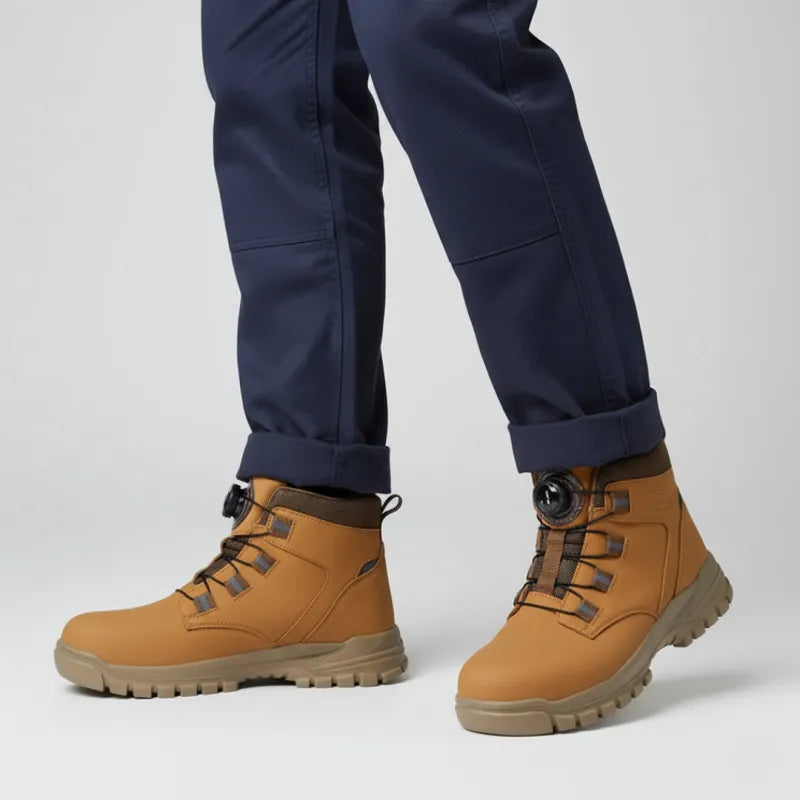
Discover expert tips for making your work boots more comfortable
1. Master Your Lacing Technique
Most workers lace their boots the same way every day without questioning it — and pay the price. Lacing too tight across the instep compresses tendons and restricts blood flow. Too loose at the ankle and your heel lifts with every step, creating friction. Gap lacing — skipping one eyelet at the instep — relieves top-of-foot pressure instantly. For heel slippage, use a heel lock lace by looping through the top two eyelets before tying. Two minutes of adjustment, immediate results.
2. Upgrade Your Insoles
The factory insole inside your boot is almost always a flat piece of compressed foam — functional enough to pass quality control, not enough to support a full shift. A quality arch-supporting aftermarket insole redistributes pressure across the entire foot, reducing strain on the heel and ball. Workers with plantar fasciitis or arch pain typically feel a difference within the first day. Budget $20 to $40 for a decent pair — it's the highest return-on-investment fix on this list.
3. Wear the Right Socks
Thin cotton socks inside heavy work boots are a recipe for blisters and fatigue. Cotton absorbs moisture and stays wet, increasing friction against the skin. Switch to moisture-wicking work socks — merino wool or synthetic blends — with cushioning at the heel and ball of the foot. Sock height matters too: crew-length socks prevent the boot collar from rubbing directly against your ankle. This single change can eliminate hotspots that no amount of boot conditioning will fix.

4. Break Them In Properly
New boots are stiff because the materials — leather, reinforced toe box, rigid outsole — haven't yet conformed to your foot shape. Forcing a full shift on day one is the most common mistake workers make. The correct protocol: wear new boots for 2 to 3 hours per day during the first week, progressively increasing wear time. Flex the boot manually before wearing — bend it forward and backward by hand. This accelerates the break-in without damaging the structure.
5. Condition the Leather
Leather stiffens with use, especially in cold or dry conditions. A good leather conditioner softens the material at a fiber level, restoring flexibility and reducing the pressure points that cause rubbing. Apply a thin layer with a cloth, let it absorb overnight, and buff lightly in the morning. Do this once a month for maintenance, and immediately after any exposure to heavy rain or mud. Conditioning also significantly extends the life of the boot — a $10 investment that protects a $100+ purchase.
6. Use Moleskin or Blister Pads
If the pain is localized — a specific spot on your heel, the side of your little toe, or the back of your ankle — general solutions won't fix it. Moleskin pads cut to size and applied directly to the friction zone create a protective barrier between skin and boot. They stay in place through a full shift and can be stacked for extra thickness. This is the most targeted, lowest-cost fix available and works regardless of boot brand or model.
7. Stretch Tight Spots
If your boot feels too narrow at the toe box or tight across the ball of the foot, stretching is a legitimate solution. A boot stretcher — a wooden or plastic device inserted overnight — can widen the boot by up to half a size without damaging the material. For targeted spots, apply a small amount of boot stretch spray to the tight area, then wear the boots with thick socks for 30 minutes while the leather is still damp. Repeat over several days for a permanent result.
Check out this guide: Best Mens Work Boots Winter for Warmth & Safety | Top Picks
Free Fixes vs. Worth-the-Investment
Not every comfort problem requires spending money. Here's an honest breakdown of what costs nothing versus what's worth budgeting for.
|
Fix |
Cost |
Impact |
|
Relace your boots correctly |
Free |
Immediate |
|
Break-in protocol |
Free |
High — within 1-2 weeks |
|
Stretch tight spots manually |
Free |
Moderate |
|
Moleskin / blister pads |
~$5 |
High on targeted pain |
|
Moisture-wicking work socks |
~$15 |
High — within first wear |
|
Aftermarket arch-support insole |
~$20-$40 |
Very high — within days |
|
Leather conditioner |
~$10 |
High — ongoing |
Start with the free fixes tonight. If pain persists after one week of consistent adjustments, move down the investment column. Most workers find that combining proper lacing, the right socks, and a quality insole solves 80% of comfort issues without replacing their boots.
When No Tip Will Save Your Boots
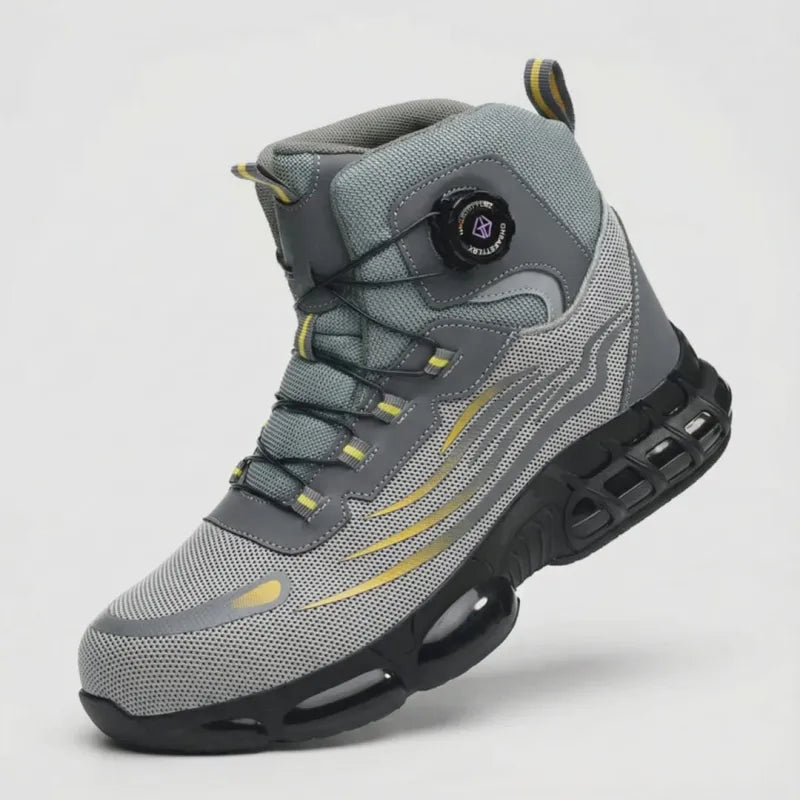
Sometimes the boot itself is the problem. If you've worked through every fix above and still finish every shift in pain, look for these warning signs:
- The outsole is worn unevenly — your gait and posture are now compensating
- The midsole feels completely flat with zero rebound when pressed
- The upper shows cracking or permanent deformation around the toe box or heel
- The boots are over 12 months of daily heavy use old
At that point, no insole or conditioning will restore what the structure has lost. The smarter move is a replacement built for comfort from the ground up. Mason's best work boots are engineered to solve the root causes of discomfort — not mask them:
- ATLAS S3 Pro ($128): composite toe, flexible outsole, superior arch support. Best for workers dealing with weight fatigue and sole pain across long shifts.
- STRIDE S1 Pro ($85): slip-on steel toe, wide fit, cushioned insole. The right call for workers with side-of-foot pressure and instep discomfort.
- POLAR S3 Pro ($142): fully insulated, shock-absorbing midsole, winter-rated. Ideal for outdoor workers battling heel pain in cold or wet conditions.
Every pair is designed to make work boots more comfortable from day one — not after a painful two-week break-in. Explore Mason's full collection.

Your Feet Deserve Better Than Just Getting Through the Shift
Discomfort in work boots is not a badge of honor — it's a solvable problem. Whether you fix your lacing tonight or invest in a proper insole this week, every step you take toward comfort is a step toward better performance, fewer injuries, and longer-lasting boots.
Frequently Asked Questions
How long does it take for work boots to become comfortable?
Most boots require 1 to 2 weeks of progressive break-in — 2 to 3 hours of wear per day — before the materials fully conform to your foot shape. Leather conditioner and manual flexing can cut that timeline significantly.
Can insoles really make work boots more comfortable?
Yes — and dramatically so. A quality arch-supporting insole is consistently the single most effective upgrade for workers experiencing heel, arch, or ball-of-foot pain. Most users report noticeable relief within the first shift of wearing one.
Is it worth buying new work boots if mine still look fine?
Appearance is misleading. A boot that looks intact can have a completely collapsed midsole offering zero shock absorption. If pain persists despite all fixes, internal structure failure is the likely cause — and no external fix will solve it.
