


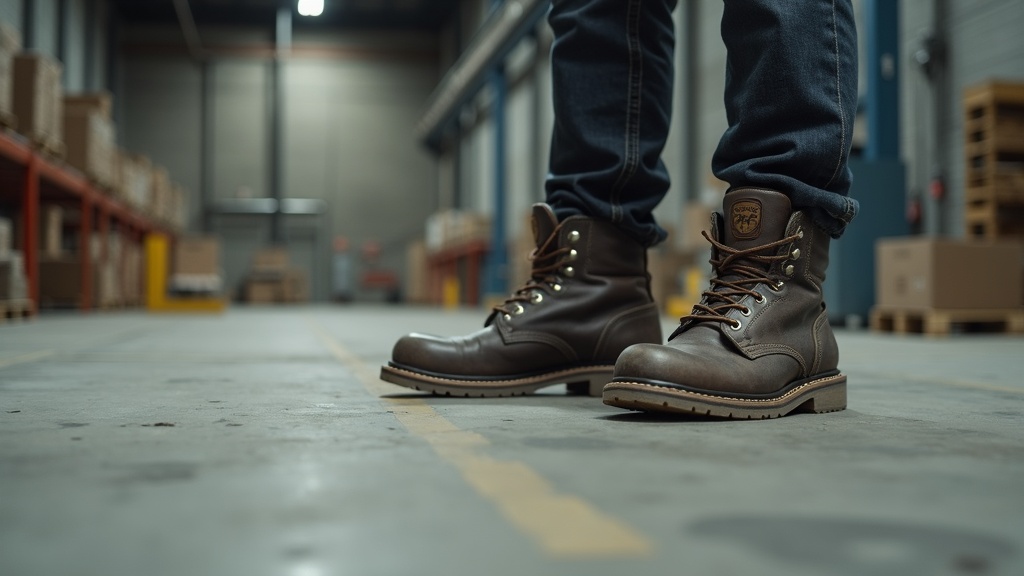
Your feet take the worst of it. Eight, ten, twelve hours on concrete, tile, or asphalt, and by hour five you're not thinking about the job anymore. You're thinking about your feet. The right sock cushioning changes that. The wrong one just moves the problem around.
This is a straight comparison, no brand loyalty, no sponsored puff. Just what works by cushioning level, material, and trade, so you can make a smarter call the next time you're standing at a rack of work socks.
Key points at a glance
- Cushioning level matters more than brand name. Match the level to your floor and your shift length.
- Merino wool outperforms cotton and most synthetics for all-day standing, especially in sweaty or temperature-variable conditions.
- Compression adds value on shifts over eight hours but the wrong pressure level can cause more harm than good.
- Boot fit and sock thickness must be calibrated together or you lose the cushioning benefit entirely.
- Heavy cushioning is not always better. On thin-soled boots or hot environments, it can backfire fast.
- Price point does not guarantee performance. Some mid-range socks beat premium ones on durability.
What good cushioning actually gives you
Why Cushioning Actually Matters on Concrete and Hard Floors
Concrete does not flex. Every step you take transfers the full shock load straight through your foot. Over the course of a ten-hour shift, that's thousands of impacts with zero give from the surface.
The sock is your last line of defense between your foot and that impact. The insole helps. The boot midsole helps. But neither one wraps around the heel and arch the way a well-built sock does.
Plantar fasciitis, heel bruising, and metatarsal stress are common in trades where workers stand on hard floors. Proper sock cushioning for standing jobs doesn't prevent all of that, but it significantly slows the accumulation of damage over a career.
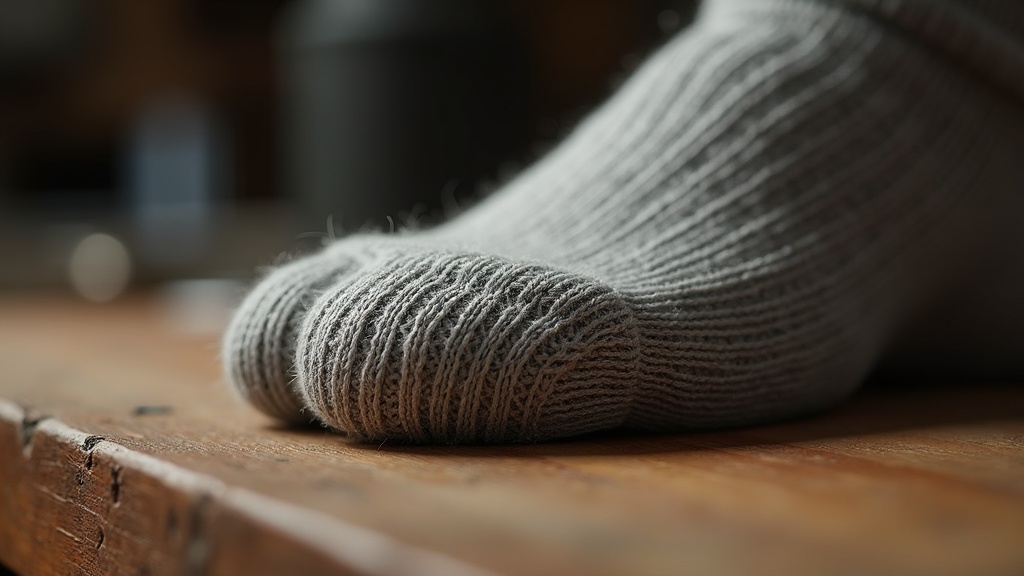
The Four Cushioning Levels Explained (Light, Medium, Heavy, Padded)
Light cushioning
Thin profile, works well inside slim work shoes or composite-toe sneaker-style boots. Good for warm environments. Not suited for concrete shifts over six hours.
Medium cushioning
The most versatile level. Enough padding for a full eight-hour shift on hard floors without adding so much bulk that it tightens the boot fit. This is the sweet spot for most warehouse and light construction workers.
Heavy cushioning
Built for cold climates and rough terrain. Ideal for outdoor construction in winter. Can cause foot problems if your boot is already a snug fit, since the extra volume compresses blood flow to the toes.
Padded / Reinforced zones
Some socks offer targeted padding only at the heel and ball, keeping the arch thin. This is a smart design for workers who need precise foot feel (electricians on ladders, for example) but still want impact protection where it counts.
Did you know?
According to research published by the American Orthopaedic Foot and Ankle Society, workers who stand on hard floors for more than six hours a day are 3.5 times more likely to develop plantar fasciitis than those with padded surface contact. Sock cushioning reduces peak plantar pressure measurably, even when compared to added insoles alone.
Cushioning Materials Side by Side: Merino Wool vs. Synthetic vs. Cotton
The fiber you wear determines how the sock behaves across a full shift, not just the first hour. Here's a direct comparison of what each material does for standing jobs.
| Material | Moisture Management | Cushion Longevity | Best For |
|---|---|---|---|
| Merino wool | Excellent, wicks and regulates temp | High, fiber doesn't mat as fast | Year-round, multi-hour shifts |
| Synthetic (nylon/polyester blend) | Good, dries faster than wool | Medium, padding compresses over time | Hot environments, budget rotation |
| Cotton | Poor, holds moisture against skin | Low, mats flat within months | Light office or non-standing use only |
| Wool/synthetic blend | Very good, best of both | High, nylon adds structural durability | Most trade environments, best overall value |
| Bamboo blend | Good, naturally antimicrobial | Medium, softer but less rugged | Sensitive skin, light-duty standing |
Bottom line on materials: merino wool work socks cost more upfront but last longer and perform better across a full day. A wool/synthetic blend gives you durability on top of the comfort. Cotton has no place in a standing job sock drawer.
Do Cushioned Socks Really Make a Difference? Straight Answer
Yes. But only when you match the sock to the conditions. A cushioned sock that's soaked through by hour three is worse than a thin dry sock, because wet fabric creates friction and blisters faster.
The difference is most noticeable in the heel. That's where concrete impact concentrates. A quality cushioned sock absorbs roughly 25 to 40 percent of heel strike shock that would otherwise travel up the foot and into the ankle.
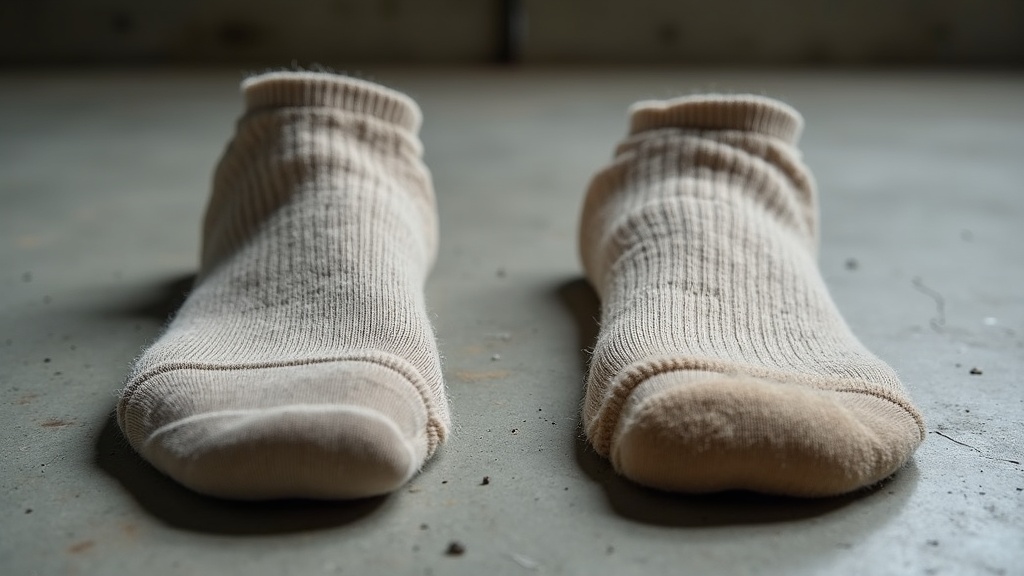
When to Add Compression to Your Cushioning (and What Level to Choose)
Compression socks for standing jobs serve a different function than cushioning. Compression manages blood pooling in the lower legs. Cushioning absorbs impact. You want both on long shifts.
- 8 to 15 mmHg: Mild compression. Good for most standing workers as a daily wear option. Reduces swelling without feeling restrictive.
- 15 to 20 mmHg: Moderate. Ideal for workers on shift eight hours or more, especially those with a history of varicose veins or ankle swelling.
- 20 to 30 mmHg: Medical-grade. Only use this level if a doctor has recommended it. Too much for everyday work use without a specific condition.
Look for socks that combine compression in the ankle and arch with cushion padding in the heel and ball. These exist and they're worth the extra few dollars per pair.
Did you know?
The legs contain about 70 percent of the body's total blood volume at any given time during standing. After four hours of static standing, lower leg swelling can increase foot volume by up to 10 percent, which is enough to change how a boot fits and where it creates pressure points.
Top Socks by Trade: What Works for Electricians, Warehouse Crews, and Construction
Electricians
Need precise foot feel on ladders and confined spaces. Go with medium cushioning and targeted heel/ball padding only. Avoid bulky full-cushion designs that reduce tactile feedback on rungs.
Warehouse and logistics crews
High step count, often on epoxy or concrete. Best socks for standing all day in this context: medium to heavy cushioning with compression at 15 to 20 mmHg, wool/synthetic blend. You're covering mileage, not just standing still.
Construction and concrete work
Temperature swings, outdoor exposure, heavy boots. Merino wool work socks or thick wool blends in heavy cushioning. Moisture management is critical here because wet feet inside a steel-toe boot on a cold pour is a fast way to get frostbite or serious blisters.
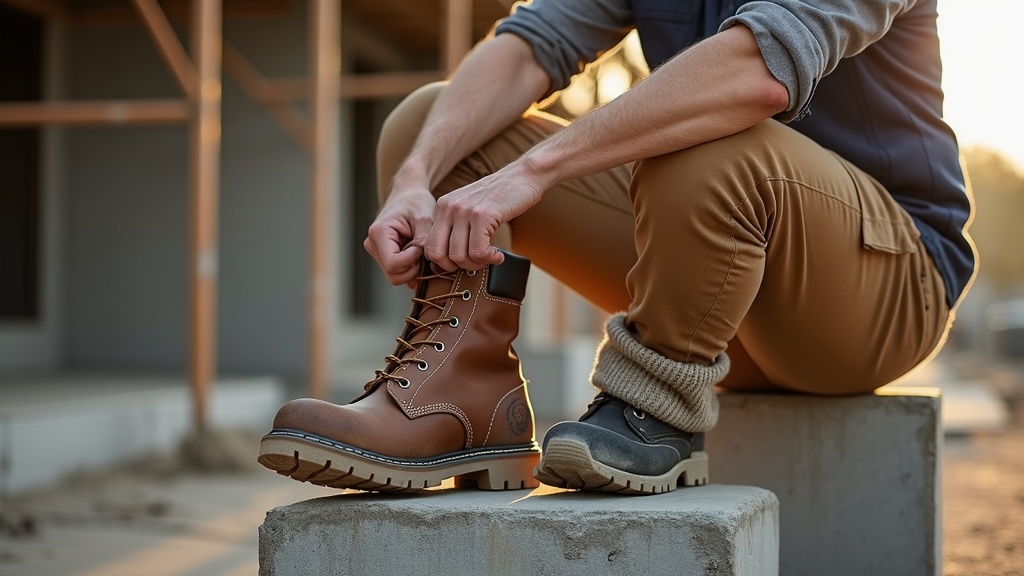
What to Avoid: Red Flags That Kill a Sock Before Lunch
- High cotton content (above 40 percent): Holds sweat, breaks down cushioning fast, causes blisters.
- Flat seam marketed as "seamless" but still visible inside: That ridge hits the toe box of a steel-toe boot and becomes a hotspot by midday.
- No reinforced heel or toe: Without this, the sock wears through in the highest-friction zones within weeks.
- One-size-fits-all on a thick sock: Sizing matters more as thickness increases. A too-large thick sock bunches. A too-small one cuts off circulation.
- Cushioning only in the arch: The arch rarely needs padding. The heel and ball of the foot take the impact. Arch-only cushion is a marketing trick, not functional design.
Best Value Picks vs. Premium Picks: Where to Spend and Where to Save
You don't need to spend premium on every pair in your rotation. But you do need at least a few premium pairs for your longest and hardest shifts.
Where to spend
Merino wool work socks for shifts over eight hours and for cold-weather outdoor work. The per-pair cost is higher, but a quality merino sock lasts two to three times longer than a budget cotton blend. Cost per wear comes out lower.
Where to save
Short shifts under five hours, warm-weather work where a lighter synthetic does the job, and rotation filler pairs. A solid mid-tier wool/synthetic blend at $8 to $12 per pair handles those conditions without draining your wallet.
Rule of thumb: own four to six pairs total, two premium for hard days, two to four mid-range for the rest. Rotate them so no single pair gets hammered daily.
How to Match Cushioning to Your Boot Fit and Shift Length
This is where most workers go wrong. They buy the right sock and wear it in the wrong boot. A thick cushioned sock inside a snug boot creates pressure that negates the cushioning entirely and cuts off circulation to the toes.
Before committing to a cushioning level, put the sock on and slide your foot into the boot. You should be able to wiggle all five toes freely. Your heel should lock in without slipping. If either of those fails, you need a different combination.
- Short shift (under 5 hours): Light to medium cushioning, any well-fitted boot.
- Standard shift (6 to 9 hours): Medium cushioning, boot fitted with that sock thickness in mind.
- Long shift (10 hours or more): Medium to heavy cushioning with compression, half-size up on the boot if needed, merino wool or blend preferred.
Get that combination right and you'll notice the difference by the end of the first shift. Your feet will still be tired. That's just the job. But the deep heel ache and burning ball-of-foot pain that shows up by hour seven? That's the part cushioning fixes.
