


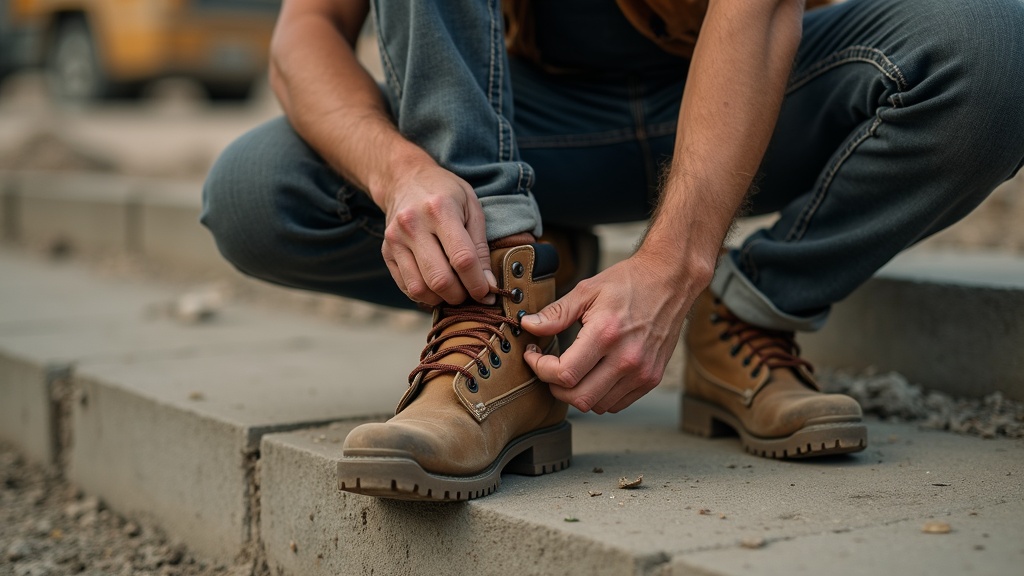
You've been on your feet since six. By lunch, your boots smell like a locker room. You're not imagining it, and it's not just sweat. The right pair of socks changes that equation completely.
This guide cuts through the marketing noise and tells you exactly which antibacterial work socks are worth pulling out your wallet for, and why most of them aren't.
Key points at a glance
- Foot odor comes from bacteria eating sweat, not from sweat itself. The sock material either feeds that process or stops it.
- Silver fiber, copper-infused nylon, and merino wool each fight bacteria differently. One of them fits your job better than the others.
- A good antibacterial work sock genuinely reduces odor over a full shift. The cheap ones lose that ability after a dozen washes.
- Cushioning, seamless toes, and moisture-wicking construction matter as much as the antimicrobial treatment.
- Expect to pay $15, $30 per pair for something that actually lasts. A pair that survives 200 washes is cheaper per wear than budget socks.
- Red flags to avoid: vague claims, no listed treatment method, and thin heel/toe construction on a so-called work sock.
What a Real Work Sock Does For You
Why Your Feet Stink by Noon (And Why It's Not Just Sweat)
Sweat itself has almost no smell. The odor comes from bacteria on your skin, specifically Staphylococcus epidermidis and Brevibacterium, breaking down the proteins and fatty acids in that sweat. Your boot is a sealed, warm, humid environment. That's a perfect incubator.
The average foot has about 250,000 sweat glands and can produce half a pint of moisture on a hard work day. Trap all of that in a synthetic sock inside a steel-toe boot and you've built a bacteria hotel.
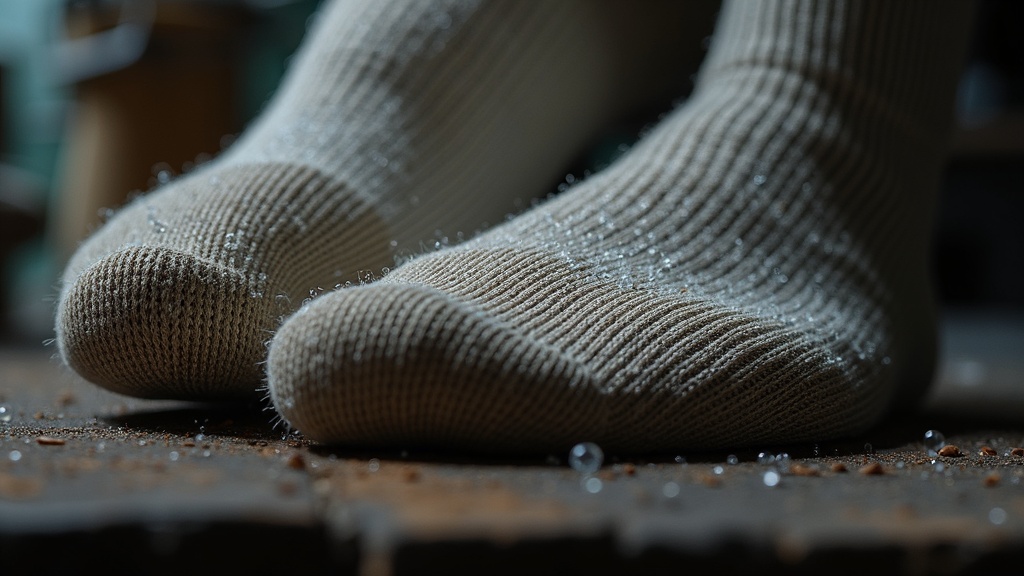
Cotton makes it worse. It absorbs moisture and holds it right against your foot, exactly where bacteria want it. A sock that doesn't move moisture away is doing half the job at best.
Do Antibacterial Socks Actually Work, or Is It Just Marketing?
Short answer: yes, when the treatment is real and properly applied. Longer answer: it depends entirely on what's inside the sock and how it was manufactured.
The FTC and ASTM have test standards (AATCC 100, ISO 20743) that measure how well a fabric inhibits bacterial growth. Any brand worth trusting should be able to point you to third-party test results. If they can't, that's your answer.
Did you know?
Studies published in the Journal of Applied Microbiology found that silver-treated textiles can reduce bacterial counts by over 99.9% under controlled conditions. The real-world number inside a sweaty boot is lower, but the effect is still significant and measurable across a full shift.
The treatment also has to survive washing. Some antimicrobial finishes are sprayed on after the sock is knitted. Those wash out fast. Treatments that are embedded in the fiber itself, or are part of the yarn, last far longer.
The Three Technologies That Matter: Silver, Copper, and Merino Wool
Silver fiber
Silver ions disrupt the cell membrane of bacteria, preventing reproduction. Brands like Darn Tough and Wigwam use silver-infused yarns that hold up through hundreds of washes. It's the most clinically studied option and the one most proven in occupational settings.
Copper-infused nylon
Copper oxide works similarly to silver and has strong antifungal properties too, which matters if you're dealing with athlete's foot alongside odor. Copper Compression and Copper Fit use this approach. The tradeoff: copper-infused socks can feel stiffer and don't always wick as well as merino blends.
Merino wool
Merino doesn't kill bacteria the way silver does, but its fiber structure naturally resists microbial growth and regulates temperature in a way no synthetic can match. It's also the most comfortable option for all-day standing. Smartwool and Darn Tough merino socks can be worn multiple days before odor becomes an issue, something no cotton sock can claim.
| Technology | How It Works | Best For | Wash Durability |
|---|---|---|---|
| Silver fiber | Ion-based cell membrane disruption | Heavy sweaters, long shifts | High (if yarn-embedded) |
| Copper-infused nylon | Ion disruption + antifungal | Trades workers prone to foot fungus | Medium-High |
| Merino wool | Natural fiber structure resists bacteria | All-day comfort, temperature regulation | Very high (inherent property) |
| Spray-on antimicrobial finish | Surface chemical treatment | Budget options, short-term use | Low (fades after ~20 washes) |
What to Look For Before You Buy (Fabric, Construction, Fit)
Fabric composition
Look for merino wool, nylon, or polyester blends with an embedded treatment. Avoid anything with more than 20% cotton in a work sock. Cotton is your enemy when you're generating heat and sweat inside a boot.
Cushioning zones
Full-cushion socks are great for concrete floors. Light-cushion works better if your boots are already snug. Heel and toe reinforcement is non-negotiable for anyone using their feet on rough terrain, ladders, or steel platforms.
Height and compression
Over-the-calf socks stay in place inside tall work boots and protect your shin from boot-top rubbing. Crew height is fine for most work boots. A sock that bunches or slips is a blister waiting to happen.
Best Antibacterial Work Socks Worth Your Money in 2026
Darn Tough Vermont Work Socks (Merino + Nylon)
Made in Vermont with a lifetime guarantee. The merino-nylon blend holds up to punishing use, doesn't shrink, and naturally resists odor without a treatment that fades. Best overall pick for trades workers who stand all day.
Wigwam F6049 Silver Socks
Silver yarn woven into the knit, not sprayed on. Wigwam has been making work socks for over a century and their silver-treated line performs well in independent lab tests. Good cushioning for concrete environments.
Smartwool PhD Work Heavy Cushion
Pricier than the others, but the mesh ventilation zones and graduated cushioning are purpose-built for the guy who's on uneven ground all shift. The antimicrobial performance of merino at 18-micron fineness means less itch, too.
Copper Fit Energy Crew Socks
The most affordable entry point for copper-ion technology. They're not as durable as Darn Tough, but for someone testing the waters on antimicrobial socks, these are a low-risk starting point with real antifungal benefit.
Did you know?
Darn Tough's lifetime guarantee is unconditional. If the sock wears out or develops a hole at any point, you mail it back and they replace it, no questions asked. Over five years, a $25 pair that gets replaced twice costs you nothing extra. A $5 budget pack replaced every two months costs you $30 a year.
Red Flags: Socks That Talk Big and Fall Apart Fast
- "Odor-resistant" with no stated technology. That's a marketing word, not a material property.
- Thin knit with a padded label photo. The photo shows cushioning. The sock ships flat as paper.
- 100% polyester construction. Polyester alone wicks moisture but holds odor like a sponge once bacteria colonize it.
- No country of manufacture listed. Sock quality control varies enormously. Brands that hide the source are often hiding the construction too.
- "Antimicrobial" without referencing silver, copper, zinc, or merino. What's actually in it? If they won't say, assume nothing.
How Long Do Antibacterial Work Socks Last, and Are They Worth the Price?
A quality merino or silver-fiber work sock holds its antimicrobial performance for 100 to 200 wash cycles when cared for properly. Wash in cold water, skip the fabric softener (it clogs the fiber and kills moisture-wicking ability), and air dry when possible.
At five days a week wear, 200 washes equals roughly 40 weeks of daily use. A $22 pair from Darn Tough over 40 weeks works out to about $0.55 a day. A $6 pack of three that falls apart in eight weeks? That's $0.37 a day, and your feet still smell and your heels are blistered.
The math usually favors the quality sock. The comfort argument isn't even close.
Your Buying Checklist Before You Order
Run through these before you add to cart:
- Does the listing name the antimicrobial technology (silver, copper, merino)? If not, skip it.
- Is the treatment in the yarn or just a surface finish? Check the product description or contact the brand directly.
- Does the sock have reinforced heel and toe? Check the spec sheet, not just the lifestyle photo.
- What's the fabric blend? Anything over 20% cotton disqualifies it as a serious work sock.
- Is there a warranty or satisfaction guarantee? Brands that stand behind their construction say so clearly.
- Does it come in your actual boot height? Crew for most lace boots, over-the-calf for tall loggers or lineman boots.
