


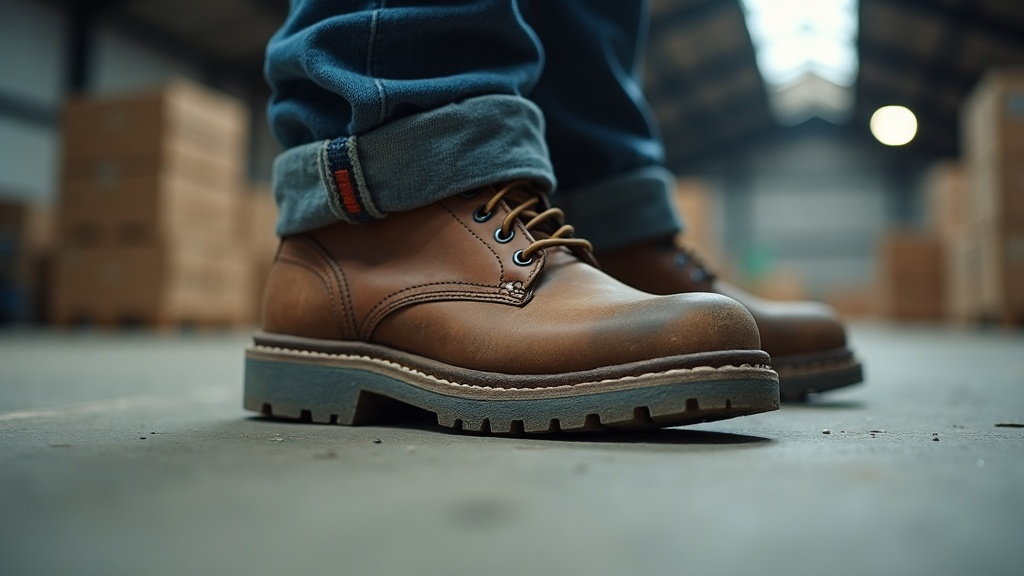
You've been on your feet for twenty years. The pain used to stop at the end of the shift. Now it follows you home, wakes you up in the morning, and makes the first steps out of bed feel like walking on broken glass. That's not just wear and tear. That's your arches giving out.
Arch collapse in working adults is real, it's progressive, and most guys ignore it until the damage is already serious. Here's what's actually happening inside your foot, and what you can do about it before it takes you off the job.
Key points at a glance
- Arch collapse in adults is mostly driven by a failing posterior tibial tendon, not just genetics.
- Concrete floors, long shifts, and extra body weight dramatically speed up the collapse.
- Flat feet do get worse with age, but the rate depends heavily on what you do every day.
- Pain that moves into your ankle, knee, or lower back means the problem has already spread.
- Supportive insoles, targeted exercises, and the right boot can slow or stop the progression.
- Surgery is a last resort, but ignoring the problem long enough can make it your only option.
What this article does for you
Why Your Arches Are Collapsing and It's Not Just Bad Luck
The arch in your foot is held up by a combination of bones, ligaments, and one key tendon: the posterior tibial tendon. It runs along the inside of your ankle and acts like a cable keeping the arch from flattening under your weight.
When that tendon gets overloaded repeatedly, it starts to fray, weaken, and eventually fail. The condition is called posterior tibial tendon dysfunction (PTTD), and it's the leading cause of adult acquired flatfoot. It doesn't happen overnight. It's a slow grind.
Genetics matter, yes. If you were born with low arches or ligament laxity, you're starting behind the line. But the job, the hours, and the surfaces you work on are what determine how fast things fall apart.
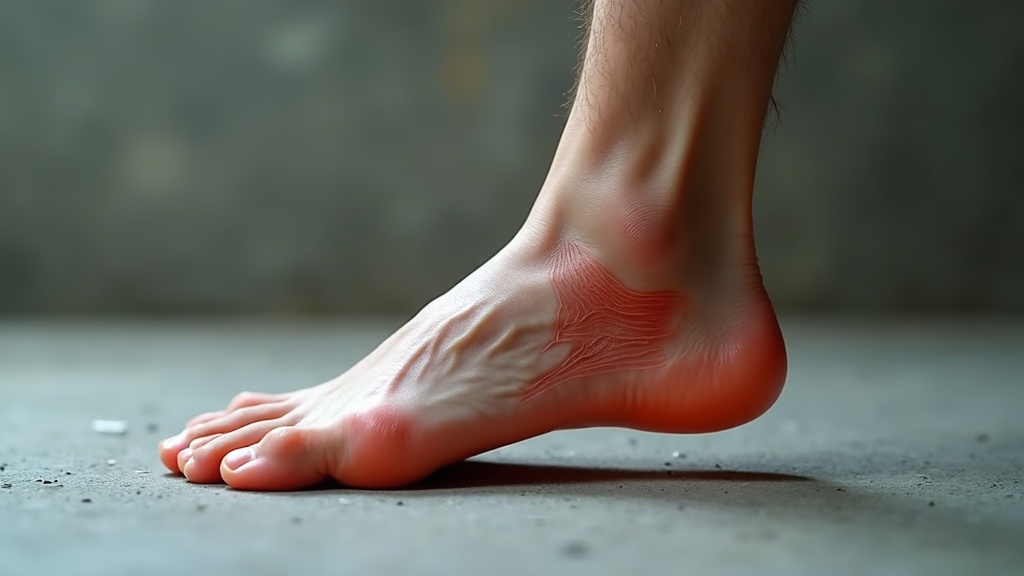
How a Full Shift on Concrete Speeds Up Arch Collapse
Concrete has zero give. Every step you take on it sends a shockwave straight up through your foot. Do that 8,000 to 12,000 steps a day, five days a week, for years, and the cumulative stress on that tendon is enormous.
Add steel-toed boots with thin, rigid footbeds, and you've got a recipe for disaster. Most work boots are built for protection, not arch support. The boot keeps your toes safe from a falling wrench. It does nothing for the tendon pulling apart on the inside of your ankle.
Standing in one spot is actually worse than walking. Static loading concentrates pressure in the same spot for hours. Warehouse workers, assembly line operators, and machine operators often develop collapsed arch pain faster than guys who move around more.
Did you know?
A 180-pound person walking on concrete for an 8-hour shift puts roughly 1,440 tons of cumulative force through their feet over the course of the day. That's based on average step count and body weight calculations used in occupational health studies.
Do Flat Feet Get Worse With Age? Here's the Honest Answer
Yes. Flat feet do get worse over time, especially if you're on the job every day. The posterior tibial tendon loses elasticity and strength as you age, the same way every connective tissue in your body does.
After 40, the tendon's ability to repair micro-tears between shifts starts to slow down. You're accumulating damage faster than your body can fix it. That's why a guy who had "a little flatness" at 30 is walking with a serious limp at 52.
Weight gain, which often comes with age and desk-adjacent habits outside of work, multiplies the problem. Every extra 10 pounds adds roughly 20 to 30 pounds of extra force on each foot with each step.
Warning Signs Your Arches Are Giving Out (Don't Ignore These)
Most guys push through the early signs because they don't look dramatic. By the time it gets dramatic, you've got real structural damage.
- Inner ankle pain that gets worse as the day goes on, not better
- The arch visibly flattening or disappearing when you stand
- Shoes wearing down faster on the inner edge of the sole
- Knee pain on the same side, especially on the inner knee
- Calf tightness and Achilles soreness that won't go away
- Trouble standing on your toes on one foot
- Pain that starts in the foot but spreads to the hip or lower back
That last one, the pain radiating up the chain, means your gait has already compensated enough to stress joints that should have nothing to do with your feet.

What Happens If You Let Collapsed Arches Go Untreated
PTTD progresses in four stages. In stage one, you've got tendon inflammation and mild pain. In stage four, the subtalar joint has collapsed and the deformity is fixed, meaning it won't correct even without weight on it. Surgery at stage four is extensive: joint fusion, bone grafts, long recovery.
Stage two is where most working men are when they finally see a doctor. The tendon is partially torn, the arch is visibly flat when standing, but it still corrects when you sit down. This stage is still very treatable without surgery.
Ignore it past stage two, and you're looking at arthritis in the ankle and midfoot, permanent deformity, and the real possibility of not being able to return to physical work.
Did you know?
According to the American Orthopaedic Foot and Ankle Society, posterior tibial tendon dysfunction affects up to 10% of the adult population, with women over 40 at highest risk, but male manual workers are a significantly underdiagnosed group.
Can You Actually Fix Flat Feet as an Adult, or Just Manage Them?
Straight answer: if the tendon is still functional, you can slow or stop the progression significantly. You won't rebuild an arch from scratch without surgery. But you can take a stage one or early stage two situation and keep it there for years, even decades.
If the arch is already rigid and flat with no flexibility left, management is the goal: keeping you mobile, out of pain, and on the job. That's still worth fighting for.
What does not work: ignoring it, switching to "softer" shoes without real support, and stretching alone without addressing load and footwear.
What Genuinely Helps: Footwear, Insoles, and Exercises That Work
Insoles: the fastest win
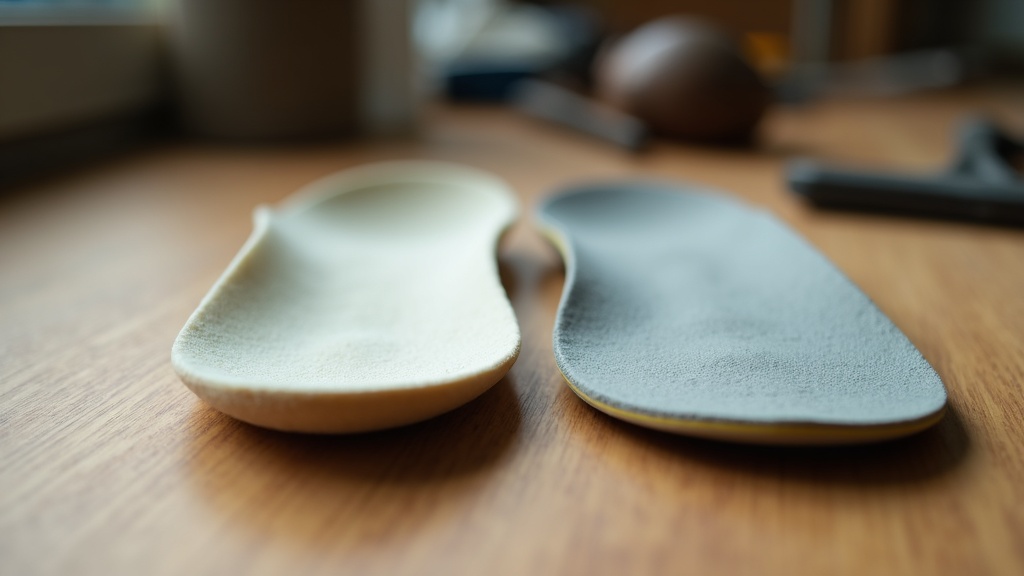
A quality orthotic insole takes load off the posterior tibial tendon by supporting the arch from below. Over-the-counter options like Superfeet GREEN or Powerstep Pinnacle work well for stage one. Custom orthotics from a podiatrist are worth the cost at stage two.
Look for a deep heel cup and rigid or semi-rigid arch support. Gel insoles feel nice but do almost nothing to support collapsing arches.
Work boots: what to actually look for
Your boot needs a stiff shank (the piece between the insole and outsole that limits midfoot flex), a wide toe box to let your foot spread naturally, and a heel counter firm enough to control rearfoot motion. Lace-up ankle support matters. Slip-ons don't cut it for workers with flat feet.
Exercises that reduce strain on the tendon
- Calf raises on a step: single-leg eccentric lowering, 3 sets of 15 daily. This is the number one rehab exercise for PTTD.
- Towel scrunches: pick up a towel with your toes for 2 minutes. Builds intrinsic foot muscle strength.
- Tibialis posterior resistance band work: loop a band around your forefoot, invert the foot against resistance, 3 sets of 20.
- Plantar fascia stretch: first thing in the morning before your first step. Reduces the sharp morning pain significantly.
| Option | Best for | Cost range | Limitations |
|---|---|---|---|
| OTC rigid insoles (Superfeet, Powerstep) | Stage 1, mild collapse | $30, $55 | Not customized to your foot shape |
| Custom orthotics (podiatrist) | Stage 2, significant PTTD | $300, $600 | Requires appointment, may not be covered |
| Supportive work boot with stiff shank | All stages, daily wear | $120, $280 | Adds weight, may not suit all job sites |
| UNLV brace / Arizona AFO brace | Stage 2, 3, severe cases | $150, $400 | Bulky, fits only in certain boots |
| Physical therapy (targeted program) | All stages, long-term fix | Varies by insurance | Requires consistency and time |
When It's Time to See a Doctor and What They'll Actually Do
See a podiatrist or orthopedic foot specialist if: your pain has lasted more than six weeks despite supportive footwear, you can't stand on your toes on the bad side, or your ankle feels like it's rolling inward when you walk.
The doctor will likely take weight-bearing X-rays to assess how far the arch has collapsed, and possibly an MRI to look at the tendon directly. From there, treatment depends on stage.
Non-surgical options
- Custom orthotics and bracing
- A supervised physical therapy program
- A walking boot for 6 to 8 weeks to rest the tendon at stage two
- Anti-inflammatory medication short-term (not a fix, just a tool)
Surgical options (stage 3, 4)
- Tendon transfer: a nearby tendon is rerouted to do the job the posterior tibial tendon can no longer do
- Calcaneal osteotomy: a bone cut to realign the heel and take pressure off the tendon
- Joint fusion: reserved for rigid, arthritic deformity at stage four
Recovery from reconstructive surgery runs 9 to 12 months for a return to physical work. That's a long time off the job. Catch it early, and you avoid that entirely.
What to do starting this week
You don't need to wait for a doctor's appointment to start helping yourself. Here's a short list of moves that cost little and pay off fast:
- Replace your boot insoles with a rigid arch support. Do it this week, not next month.
- Start single-leg calf raises every morning. Ten minutes. That's it.
- Check your boot soles. If the inner edge is worn down more than the outer, you're overpronating and need better motion control.
- Lose weight if you're carrying extra. Even 15 pounds makes a measurable difference in tendon load.
- If your shift involves long static standing, request an anti-fatigue mat. Most employers will provide one if you ask directly.
Your feet put in the same hours you do. Treat them accordingly, and they'll carry you a lot further.
