


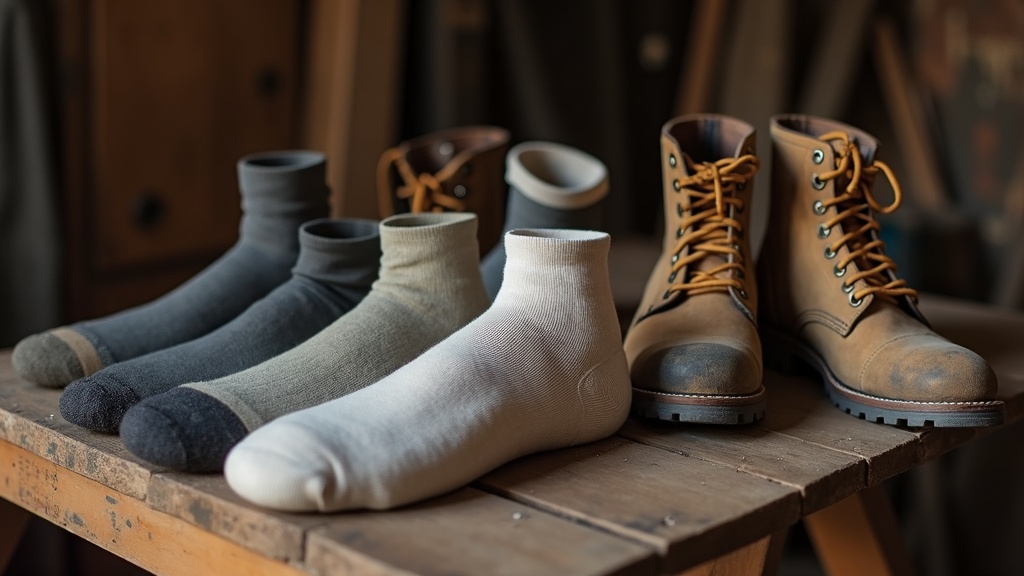
Your socks take more abuse than any other piece of gear you own. Twelve hours in steel-toed boots, concrete dust, sweat, and repetitive friction, and most socks give up inside six months.
We put cotton and bamboo work socks through three months of hard daily use on actual job sites. No lab. No controlled conditions. Just the kind of punishment your feet deal with every week. Here's what held up and what didn't.
Key points at a glance
- Bamboo socks handle moisture and odor better than cotton across long shifts.
- Standard cotton work socks begin pilling and thinning noticeably by week 8 under daily hard use.
- Bamboo blends wear faster at the heel and toe than a reinforced cotton construction.
- Cost per wear favors bamboo if the socks are washed correctly, but they are less forgiving of hot dryer cycles.
- For trades workers, a bamboo-cotton blend outperforms either pure material on its own.
What This Test Covers
What We Actually Tested (No Lab Coats, Just Jobsite Miles)
The test ran from January through March across three workers: a framing carpenter, an HVAC tech, and a concrete finisher. All three rotated between bamboo blend socks and standard cotton work socks of comparable price ranges, about $6 to $8 a pair for cotton and $10 to $14 a pair for bamboo.
Each person wore their socks five days a week in steel-toed boots, washed them in the same household machine on warm, and line-dried the bamboo while machine-drying the cotton. We photographed heel and toe wear at the four-week, eight-week, and twelve-week marks.
How Cotton Work Socks Hold Up After 3 Months of Hard Use
Cotton is the default choice for a reason. It's cheap, it's everywhere, and it feels fine on day one. The problem shows up around week six.
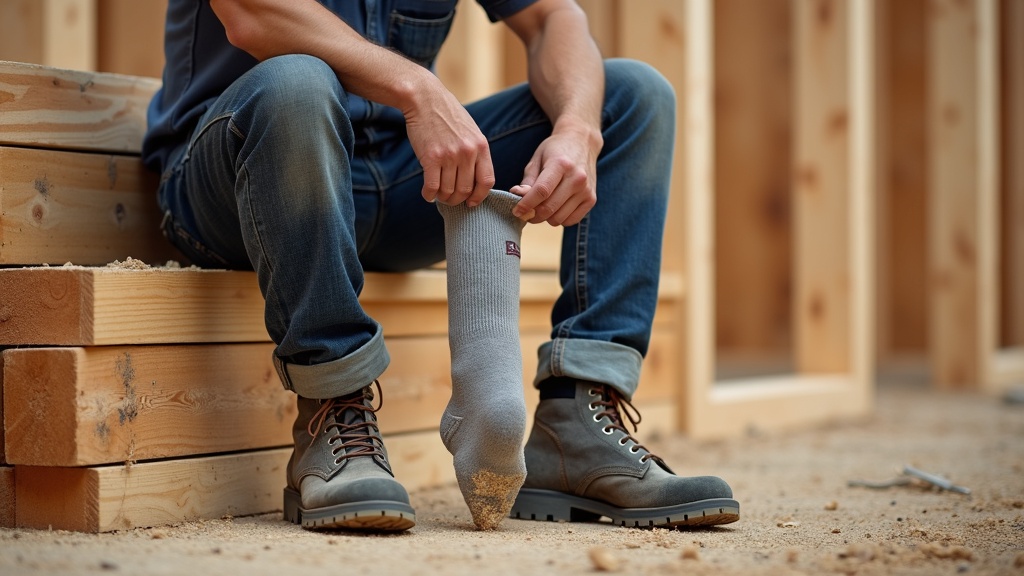
By week eight, all three testers reported visible thinning at the heel pad on their cotton pairs. The HVAC tech, who does a lot of ladder and crawlspace work, had a small hole forming by week ten. Pilling along the toe box was consistent across all cotton socks by the twelve-week mark.
Cotton also holds sweat. After a hot half-day, cotton socks were noticeably damp and stayed that way. That moisture sitting against your skin all afternoon is where blisters and hot spots start.
Did you know?
Cotton can absorb up to 27 times its weight in water and releases moisture slowly. For a work sock sealed inside a boot for eight hours, that means prolonged skin contact with a wet fabric surface, which accelerates friction-related wear on both the sock and your skin.
How Bamboo Work Socks Perform When the Shift Gets Long
Bamboo fiber moves moisture away from your skin faster than cotton. All three testers noticed drier feet by mid-afternoon compared to their cotton days. The concrete finisher, who works in consistently warm conditions, said the difference was obvious within the first week.
Odor control was the clearest win for bamboo. Bamboo fiber contains a natural antimicrobial agent called bamboo kun, which slows bacterial growth. After a full ten-hour shift, the bamboo socks came off with significantly less odor than the cotton pairs worn under identical conditions.
Structural integrity at eight weeks was strong across the bamboo pairs. No holes, minimal pilling. The fabric still felt close to new at the toe and arch.
Head-to-Head: Durability, Moisture, Odor, and Cost Per Wear
| Category | Cotton Work Socks | Bamboo Work Socks |
|---|---|---|
| Heel/toe durability | Thins by week 8 | Holds well to week 10 |
| Moisture control | Absorbs and holds sweat | Wicks and dries faster |
| Odor after long shift | Strong by hour 8 | Noticeably lower |
| Upfront cost per pair | $6 to $8 | $10 to $14 |
| Wash tolerance | Machine wash and dry, no issues | Needs gentle cycle or line dry |
| Estimated lifespan (hard use) | 3 to 4 months | 4 to 6 months (if washed right) |
The Real Disadvantages of Bamboo Socks Nobody Talks About
Bamboo socks have a problem that review sites don't like to mention: they're fragile in the laundry. Toss them in a hot dryer consistently and the fibers break down fast. Two of our testers ran their bamboo socks through a standard dryer cycle at high heat for the last four weeks of the test. Pilling accelerated sharply, and one pair developed a small heel hole by week eleven, not from wear, but from heat damage.
The second issue is reinforcement. Budget bamboo socks often skip nylon reinforcement at the heel and toe. On a jobsite where your heel is grinding inside a leather boot all day, that matters. Always check the label for a nylon or spandex blend at high-stress points.
- High-heat drying degrades bamboo fiber significantly faster than cotton
- Pure bamboo socks without heel reinforcement fail earlier than reinforced cotton
- Bamboo blends are less widely available in heavy-cushion versions suited for boots
- Some workers find bamboo socks less padded underfoot compared to thick cotton work socks
Did you know?
Most "bamboo" socks on the market are actually made from bamboo viscose (also called bamboo rayon), a chemically processed fiber. The softness and moisture-wicking properties remain, but the manufacturing process strips much of the raw bamboo's natural tensile strength, which is why reinforcement blends matter so much for durability.
What Material Actually Lasts Longest on Your Feet
Neither pure cotton nor pure bamboo is the right answer for trades work. The longest-lasting work socks combine bamboo viscose or merino wool with a nylon reinforcement at the heel and toe, plus a spandex band for fit retention.
When you compare bamboo socks vs merino wool work socks for trades use, merino edges bamboo slightly on raw durability and temperature regulation, but costs significantly more. A good merino-nylon blend sock can run $20 to $30 a pair. Bamboo blends in the $12 to $15 range come close on performance for most workers who aren't doing extreme cold-weather outdoor work.
Which Sock Is Worth Your Hard-Earned Dollar
If you're buying socks in bulk and throwing them in the dryer without thinking about it, stick with a quality reinforced cotton work sock. Danner, Carhartt, and Dickies all make cotton-heavy blends with solid heel reinforcement that hold up fine for three to four months of daily use at a low per-pair cost.
If you sweat heavily, work in hot environments, or deal with foot odor issues, bamboo or a bamboo-cotton blend is worth the extra few dollars per pair. Treat them right in the wash and they outlast cotton by a meaningful margin.
The cost per wear math works out close when you account for lifespan. A $13 bamboo sock lasting six months beats a $7 cotton sock lasting three months and needing replacement.
Our Pick for Trades Workers Who Need Both Comfort and Longevity
The sweet spot for most trades workers is a sock built like this: 60 to 70% bamboo viscose, 20 to 25% nylon, 5 to 10% spandex. That blend gives you the moisture and odor control of bamboo with the structural durability of nylon reinforcement and a fit that doesn't sag inside the boot by noon.
Look for medium to heavy cushion at the heel and toe specifically, not a uniform thin sock. Your heel is taking the impact and the friction. That's where cheap socks fail first, and that's where you want the extra material working for you.
- Best for moisture-heavy trades (HVAC, roofing, concrete): Bamboo blend with nylon heel reinforcement
- Best for cold-weather outdoor work: Merino wool blend with cushion sole
- Best for budget-conscious bulk buyers: Reinforced cotton with terry cushion heel
- Best overall cost-per-wear: Bamboo-nylon blend, washed cool and line dried
Bottom line: buy for your conditions, not just the price tag. A sock that costs twice as much but lasts twice as long and keeps your feet drier is a better deal. Your feet carry you through every shift. Spend the extra three dollars.
