



You board a 10-hour flight, squeeze into your seat, and by hour six your ankles look like they belong to someone twice your age. That's not just discomfort. That's your circulation telling you it's losing the fight against gravity and cabin pressure at 35,000 feet.
The right compression socks fix that. Not every pair on Amazon for $9.99, but the ones built to actually do a job. Here's what works, what doesn't, and what's worth your money.
Key points at a glance
- 15-20 mmHg works for most healthy travelers; go 20-30 mmHg if you're on long hauls over 8 hours or have circulation issues.
- Put them on before you leave the house, not at the gate after your feet are already swollen.
- Graduated compression (tighter at the ankle, looser up the calf) is the only kind worth buying for flights.
- Merino wool and nylon blends outlast cheap polyester socks by months of regular washing.
- Affordable options under $20 a pair can absolutely get the job done if you know what specs to check.
- Fit is everything: a sock with the wrong calf circumference does nothing, no matter the compression rating.
What Good Travel Compression Socks Do For You
Why Your Legs Take a Beating on Long Flights (And What Compression Actually Does)
Cabin pressure in a commercial aircraft runs around 6,000 to 8,000 feet of altitude equivalent. At that pressure, your blood vessels relax slightly and fluid leaks into surrounding tissue. Your legs, hanging down with minimal movement for hours, bear the worst of it.
The calf muscle normally acts as a pump. Every step you take squeezes blood back up toward your heart. Sit still for eight hours and that pump stops working. Blood pools. Ankles swell. In serious cases, a clot forms. That's deep vein thrombosis (DVT), and it's not rare on long hauls.
Compression socks counter this by applying external pressure that does the job your calf muscle isn't doing. They push fluid back up, keep the veins narrower, and maintain blood velocity even when you're sitting like a statue in seat 34B.
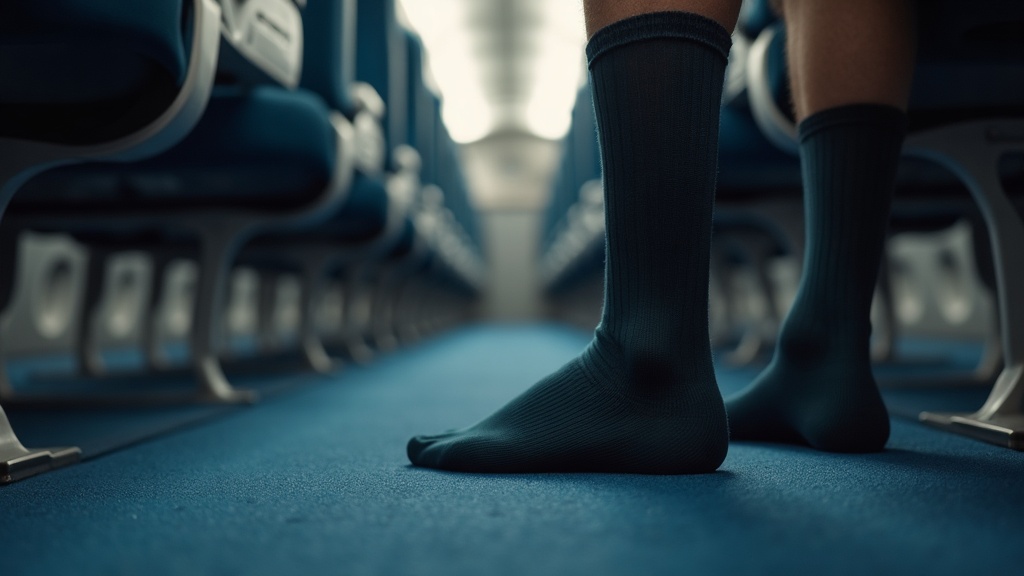
What Level of Compression Do You Need for Flying: 15-20 vs. 20-30 mmHg
mmHg stands for millimeters of mercury, the same unit used to measure blood pressure. It tells you how hard the sock squeezes.
15-20 mmHg: The Everyday Travel Level
This is the right call for most healthy passengers on flights of any length. Enough pressure to prevent swelling, comfortable enough to wear all day without cutting off circulation. You don't need a doctor's note to buy these.
20-30 mmHg: For Long Hauls and Higher Risk
This is the go-to compression level for flights over 8 hours, passengers with varicose veins, history of blood clots, or jobs that already hammer their legs (construction, healthcare, warehouse work). If you're shopping for 20-30 mmHg compression socks for travel, confirm the fit is right before you wear them for 12 hours straight.
Did you know?
A 2016 Cochrane review of 10 randomized trials found that compression stockings significantly reduced the incidence of symptomless deep vein thrombosis in airline passengers on flights of 7 hours or more. The risk drop was substantial, not marginal.
Best Compression Socks for Flying Long Distance: Top Picks for Men and Women
These aren't sponsored rankings. They're based on compression accuracy, durability, and real-world comfort across full travel days.
Top Picks for Men
- Sockwell Elevation Graduated Compression Socks: Merino wool blend, 15-20 mmHg, holds compression after 50+ washes. Built wide enough for athletic calves without cutting in.
- CEP Compression Run Socks: Precise 20-30 mmHg, used by athletes and construction workers alike. Durable nylon construction, no-slip heel cup. Pricier but they last.
- Physix Gear Sport Compression Socks: Budget pick under $15 a pair. 20-30 mmHg, moisture-wicking nylon, decent sizing chart. Not as precise as medical-grade but solid for occasional flyers.
Top Picks for Women
- Comrad Knee High Compression Socks: 15-20 mmHg, made from a nylon-spandex blend with a reinforced toe box. Slim profile that fits inside most shoes. Strong reviews from flight nurses.
- Bombas Compression Socks: 15-20 mmHg, honeycomb arch support, seamless toe. Slightly more expensive but one of the most comfortable options for 10+ hour wear.
- Truform Travel Compression Socks: FDA-registered, 15-20 mmHg, affordable at around $12-15. Available in wide calf sizes, which most brands still ignore.
How to Pick the Right Fit Without Wasting Money
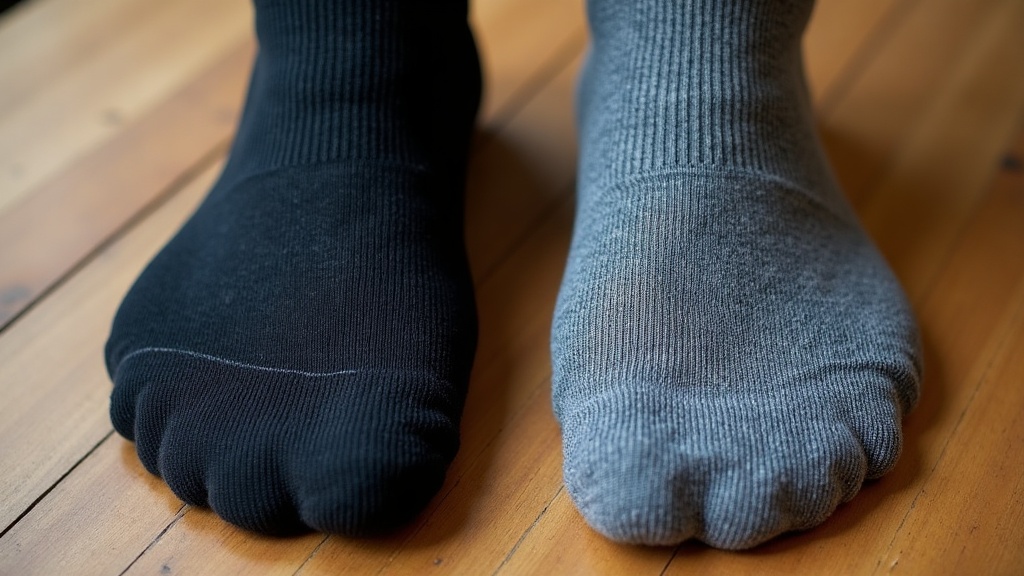
The most common mistake: buying based on shoe size. Compression socks size off your calf circumference and ankle circumference, not your shoe. Every brand worth buying includes a sizing chart. Use it.
Measure your calf at its widest point mid-morning, after you've been on your feet for an hour. That's your real number. Wide-calf options start around 16-18 inches. If you're above that range, most standard socks will cut in and defeat the purpose entirely.
| Material | Best For | Durability | Price Range |
|---|---|---|---|
| Merino Wool Blend | Long hauls, temperature swings, odor control | High (1-2 years with proper care) | $25-$55 |
| Nylon/Spandex | Athletic fit, lightweight, warmer climates | Medium (6-12 months heavy use) | $12-$35 |
| Cotton Blend | Casual travel, not ideal for compression | Low (stretches out fast) | $8-$20 |
| Copper-infused Nylon | Odor resistance on multi-day trips | Medium (fade over time) | $15-$30 |
| Medical-grade Knit | Precise 20-30 mmHg, clinical use | High with gentle washing | $20-$50 |
When to Put On Compression Socks Before Your Flight
Put them on first thing in the morning, before your legs have had a chance to swell. That means before you get out of bed if possible, definitely before you walk through the airport.
Most people wait until they're already at the gate with puffy ankles. At that point, the sock is fighting an uphill battle. The whole point is prevention, not recovery. Once swelling sets in, the sock has to work twice as hard to do half the job.
If your flight departs in the afternoon, put the socks on within an hour of leaving your house. Keep them on through the entire flight and for an hour after landing until you're moving around normally again.
Did you know?
The American Heart Association notes that sitting still for more than 4 hours, whether on a plane, a bus, or at a desk, is enough to significantly slow venous blood flow in the legs. Compression socks are one of the few non-pharmaceutical ways to counteract that effect without needing to stand up every 20 minutes.
Red Flags: What to Avoid When Buying Compression Socks for Travel
The market is flooded with cheap knockoffs that call themselves compression socks but apply zero graduated pressure. Here's how to spot them fast.
- No mmHg rating listed: If the product page doesn't give you a specific mmHg range, skip it. That's a fashion sock with a marketing budget.
- One-size-fits-all: Compression only works when it fits correctly. Universal sizing is a shortcut that doesn't deliver real results.
- Uniform pressure top to bottom: Real compression socks are graduated. Tightest at the ankle, looser at the calf. If the label doesn't mention graduated or graduated compression, it's a pass.
- 100% cotton: Cotton absorbs moisture and loses its stretch quickly. A compression sock made of cotton will be baggy within a few hours of wear.
- No return policy: Sizing is tricky. Any brand worth buying lets you exchange if the fit is wrong.
Where to Buy Compression Socks for Flying Without Getting Ripped Off
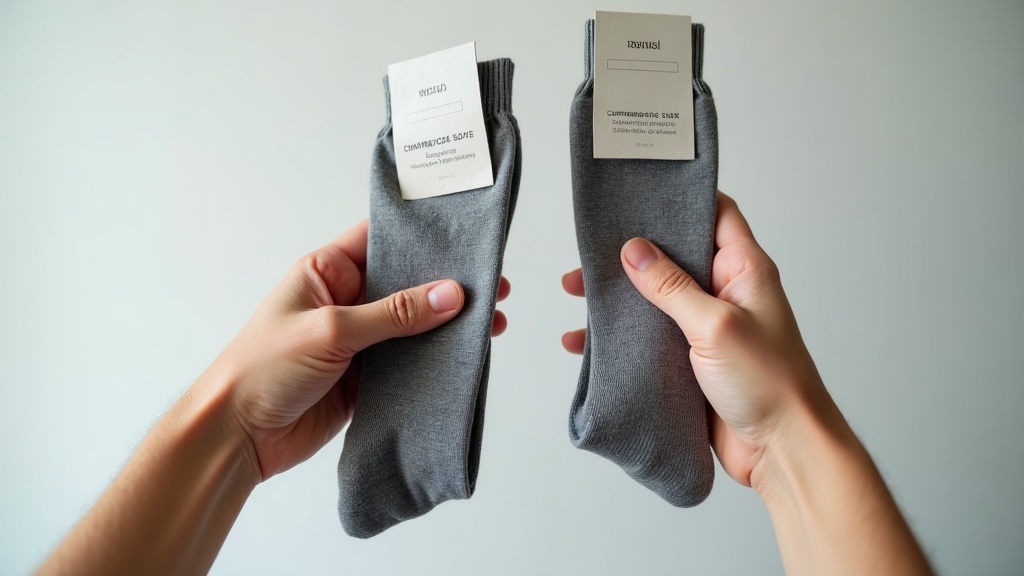
Amazon is fine if you stick to verified brands with thousands of actual reviews and a clear sizing chart. Avoid anything priced under $8 a pair with generic packaging and suspiciously perfect five-star ratings.
Medical supply stores carry FDA-registered options that are worth the slightly higher price if you're buying 20-30 mmHg for a health reason. REI and running specialty stores carry quality athletic compression options that translate well to travel. Brands like CEP, Sockwell, Sigvaris, and Comrad have their own direct sites with proper fit guides and return policies.
If you're flying more than three times a year, buy two or three pairs. Rotating them extends the life of each one and you always have a clean pair ready to pack the night before.
Make the Most of Your Socks, Flight After Flight
Hand wash or use a mesh laundry bag on cold. High heat destroys the elastic fibers that create compression. If your socks feel loose after a few months of washing, they've lost their rating and it's time to replace them.
Pack them at the top of your carry-on. Checked bags get lost. Your socks shouldn't be in there on a 14-hour flight to Asia.
One last thing: if you have diabetes, peripheral artery disease, or known circulation problems, check with your doctor before going above 20 mmHg. In rare cases, compression can restrict arterial flow for people with pre-existing conditions. For everyone else, they're a straightforward, low-cost way to step off a long flight feeling like a human being instead of a sausage.
