


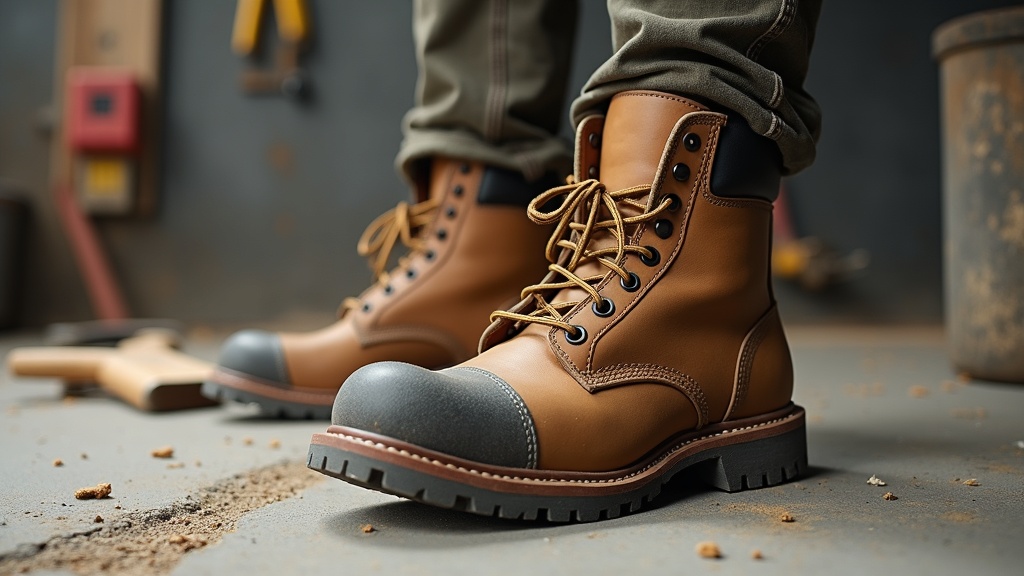
Your boots get all the credit. The sock underneath does all the suffering. Most workers replace their socks every few months because the toe blows out first, and they never stop to ask why.
Reinforced toe socks exist to fix exactly that problem. They're built differently where it counts, and once you know what to look for, you won't go back to buying whatever's cheapest at the big box store.
Key points at a glance
- The toe box is the first zone to fail on any work sock, and reinforcement there is not optional on a real jobsite.
- Material blend matters: nylon, wool, and polyester each serve a different purpose in a quality work sock.
- Steel toe boots have a hard edge that chews through thin fabric fast. Cushion and fit both need to match the boot.
- Men and women have different fit needs, and the best brands now make gender-specific versions.
- A quality reinforced work sock should last 12 to 18 months of daily wear with proper rotation.
- Price per wear almost always favors the more expensive sock. Cheap socks are not a bargain.
Why Reinforced Toe Socks Are Worth It
What 'Reinforced Toe' Actually Means (And Why Most Workers Don't Know)
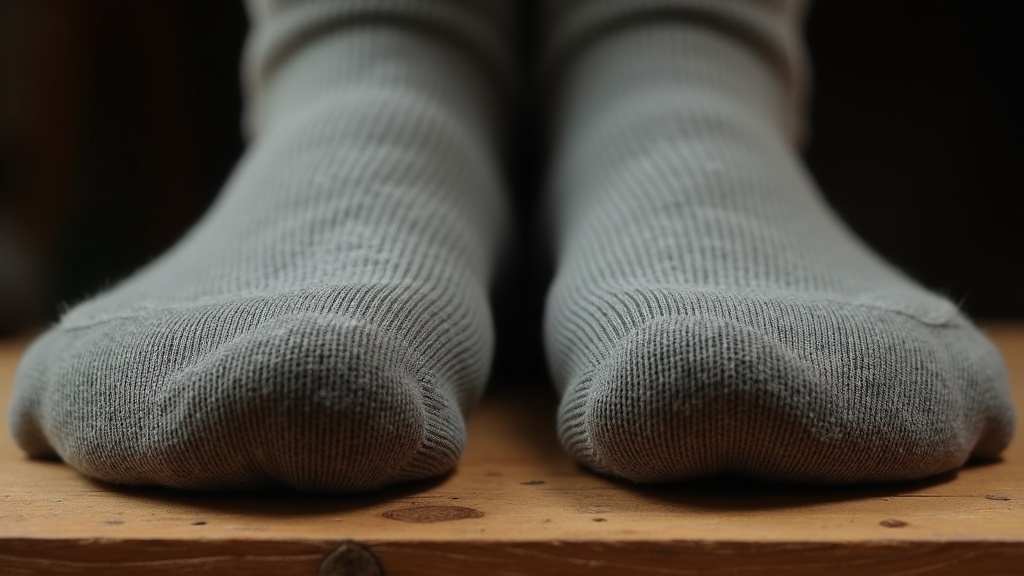
Most people think any thick sock is a reinforced sock. That's not how it works. True reinforcement means extra yarn is knit directly into the toe box, creating a denser weave in the zone that takes the most friction.
Some brands do this with nylon, some with wool, some with a tight-spun poly blend. The point is the same: double the material density right where your toes press against the inside of your boot every step you take.
Without it, a standard sock thins out at the toe in weeks. You end up with fabric so worn you can practically see daylight through it, and then a hole forms. It's not bad luck. It's physics.
Why the Toe Box Takes the Most Abuse on the Job
Every time you walk, your toes flex and push forward inside the boot. In a steel toe boot, that motion grinds the fabric against a hard metal or composite cap repeatedly, all day long.
Add kneeling, crouching, climbing ladders, or working on uneven ground, and that friction multiplies fast. The toe box sees more mechanical stress than any other part of the sock.
The heel is second. The arch rarely fails. That's why the best reinforced heel and toe socks focus material upgrades in those two zones specifically, not uniformly across the whole sock.
Did you know?
The average worker takes between 8,000 and 10,000 steps per shift on a construction or manufacturing floor. That's 8,000 to 10,000 individual toe-push cycles grinding the fabric inside a steel toe cap every single day.
What to Look For Before You Buy: Materials, Cushion, and Construction
Fiber blend
Merino wool regulates temperature and resists odor naturally. Nylon adds tensile strength. Polyester wicks moisture. The best work socks for steel toe boots combine all three in a ratio that matches the climate you work in.
Cushion level
Light cushion works for warmer months or lighter boots. Heavy cushion is what you want for concrete floors, cold environments, or boots that run stiff. Look for the term "full cushion" or "heavy-duty cushion" on the label.
Construction details that actually matter
- Seamless toe closure: eliminates the ridge that causes blisters under a steel cap.
- Arch compression band: keeps the sock from bunching inside the boot mid-shift.
- Extended leg height: over-the-calf styles prevent the sock from sliding down during physical work.
- Moisture channel knitting: some premium brands knit in pathways that actively move sweat away from the skin.
| Material | Strength | Weakness | Best for |
|---|---|---|---|
| Merino Wool | Temperature regulation, odor resistance | Less durable alone, higher cost | Cold weather, all-day wear |
| Nylon | Abrasion resistance, structural strength | Traps heat, poor moisture management alone | Reinforcement zones |
| Polyester | Moisture wicking, fast drying | Odor builds up over time | Hot or humid environments |
| Cotton | Soft, breathable initially | Retains moisture, wears out fast | Light duty only, avoid in boots |
| Blend (Wool + Nylon + Poly) | Balanced performance across all categories | Variable quality depending on ratio | Daily work in steel toe boots |
Best Reinforced Toe Socks for Men on the Job
For reinforced toe socks mens options, three brands consistently hold up under real jobsite conditions.
Darn Tough Vermont makes over-the-calf work socks with a merino-nylon blend and a lifetime guarantee. Not a marketing gimmick: they actually replace worn-out pairs. Their full-cushion boot sock has a tight reinforced toe and heel that outlasts most competitors by a significant margin.
Carhartt Force offers a FastDry polyester blend that handles sweat better than most. Their reinforced heel and toe construction uses a denser nylon weave in both zones. Good for hot environments or high-output work.
Wigwam Ironman Pro is a heavier sock built for cold-weather trades work. Thick cushion, reinforced toe box, and a snug arch band that doesn't let the sock migrate. Worth every cent for anyone doing roofing or site work through the winter.
Best Reinforced Toe Socks for Women in the Trades
Women's trade work has grown, and the sock market has finally caught up. The problem for years was that women were told to buy men's socks in a smaller size. That creates extra fabric that bunches and causes blisters. Fit is not just a comfort issue, it's a safety issue.
For steel toe socks for women, Darn Tough makes gender-specific versions of their boot sock with a narrower heel cup and adjusted arch sizing. SmartWool PhD Heavy Cushion also offers a women's-fit boot sock with reinforced toe and heel zones built specifically for the smaller foot geometry.
If you're buying for a woman working construction, manufacturing, or any trade requiring steel toe footwear, do not buy unisex. The fit difference is real and the blister rate on poorly fitted socks is genuinely higher.
Steel Toe Boots Specifically: What Makes a Sock Actually Fit Right
Steel toe and composite toe boots have a hard interior shelf right where the cap ends. That edge is where most toe holes start. A sock that's even slightly too long will fold against that edge and wear through in days.
Sizing matters more here than in any other footwear. Buy socks sized to your actual shoe size, not a range. A sock labeled "size 9-12" that you buy for a size 9 foot will bunch inside a steel cap and create pressure points.
Also: seamless toe construction is not optional for steel toe work. A sewn seam running across the toe box becomes a pressure ridge inside a hard cap. After eight hours, that's a blister waiting to happen.
Did you know?
OSHA does not specify sock requirements for steel toe footwear, but podiatric research consistently links poorly fitted hosiery inside rigid-toe boots to increased rates of subungual hematoma (bruised toenails) and stress fractures in the metatarsals over extended periods of heavy use.
How Long Should a Good Work Sock Last You?
A quality reinforced heel and toe sock worn five days a week, rotated through a set of at least four pairs, should give you 12 to 18 months before it needs replacement. That's the benchmark for a sock worth buying.
A cheap three-pack from a discount store lasts maybe six weeks under the same conditions. At $3 a pair versus $20 a pair, the math is easy: the expensive sock wins on cost-per-wear, often by a factor of three or four.
Rotation is the other half of the equation. Washing and fully drying socks between wears preserves elasticity and fiber integrity. Running the same pair two days in a row, still damp, breaks down the cushion faster than abrasion does.
Common Questions Workers Ask About Reinforced Toe Socks
A few points come up constantly among workers buying these for the first time, or switching from whatever they've been using.
Can you wear reinforced socks with any boot?
Yes, though heavy cushion socks take up more volume. If your boot fits snugly already, move up half a size or choose a medium-cushion version of the same sock.
What about compression or diabetic needs?
Several brands now offer reinforced work socks with graduated compression built in. Darn Tough and Sockwell both have options. If you have circulation concerns, look specifically for socks labeled as both reinforced and lightly compressive, typically 15 to 20 mmHg.
Your buying checklist before you order
- Confirm the sock size matches your shoe size exactly, not a range.
- Check for seamless toe construction if you're wearing steel or composite caps.
- Choose cushion weight based on your climate and boot stiffness.
- Buy at least four pairs at once. Rotation is not optional if you want them to last.
- Look for nylon content of at least 15 to 20 percent in the reinforced zones.
- If you run hot, prioritize polyester or merino-poly blends over pure merino.
The sock is not a small purchase. It's the one piece of gear between your foot and 10 hours of concrete, steel, and friction. Spend the extra $15. Your feet will tell you the difference by noon.
