


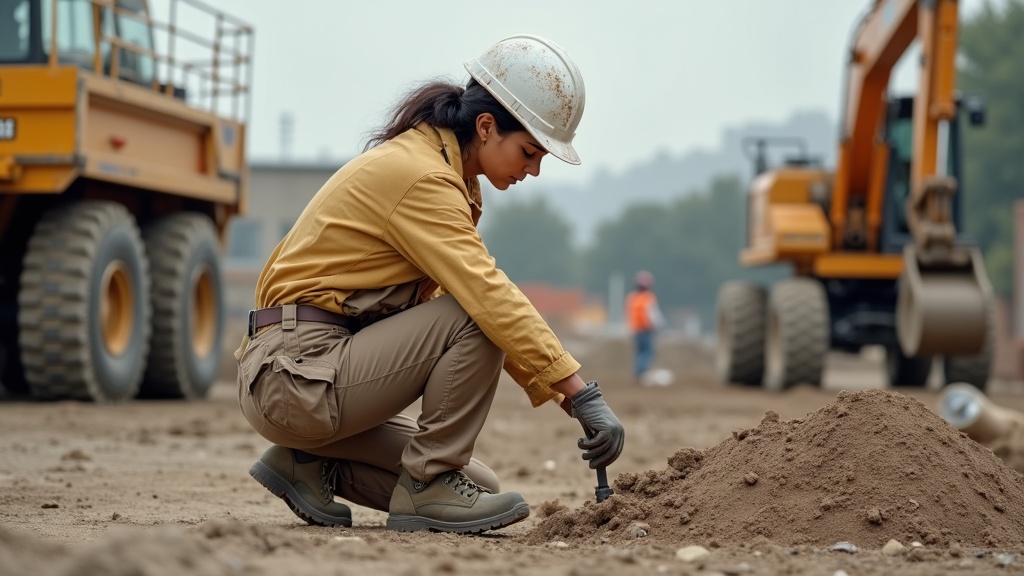
You've been handed pants with two shallow front pockets and a decorative back flap. You've got a utility knife, a tape measure, a marker, and your phone. None of it fits. That's not a minor inconvenience. On a long shift, it's a real problem.
Women's cargo work pants with pockets have finally caught up to the work itself. Not all of them, though. The ones worth buying earn it. Here's how to tell the difference.
Key points at a glance
- Most women's work pants fail because of pocket placement, not fabric alone
- Ripstop nylon beats plain cotton on abrasion and weight for most outdoor trades
- Fit options (petite, regular, tall, plus size) have improved significantly in the last two years
- Six functional pockets is a reasonable minimum for a full workday
- Wide-leg cuts give better range of motion on ladders and uneven ground
- Price points between $45 and $85 cover the most durable options on the market right now
What a good pair actually gives you
Why Most Women's Work Pants Fail on the Job
The root issue is design by assumption. A lot of brands start with a men's cargo pant, narrow the waist, and call it done. The pocket placement stays where it works for a man's hip and thigh geometry, which is a different story on a woman's frame.
Shallow pockets are the second problem. A 3-inch pocket opening lined with thin fabric loses your phone before lunch. It doesn't hold a folding knife. It definitely doesn't hold a tape measure clip.
The third failure is fabric grade. Work pants for women have historically been made from lighter materials than their men's equivalents, even at the same price point. That's changing, but slowly.
What to Look for in Women's Cargo Work Pants with Pockets
Start with the waistband. A wide, structured waistband with a gusset in the crotch tells you the manufacturer actually thought about movement. A flat, rigid waistband with no give means you're fighting the pants every time you crouch.
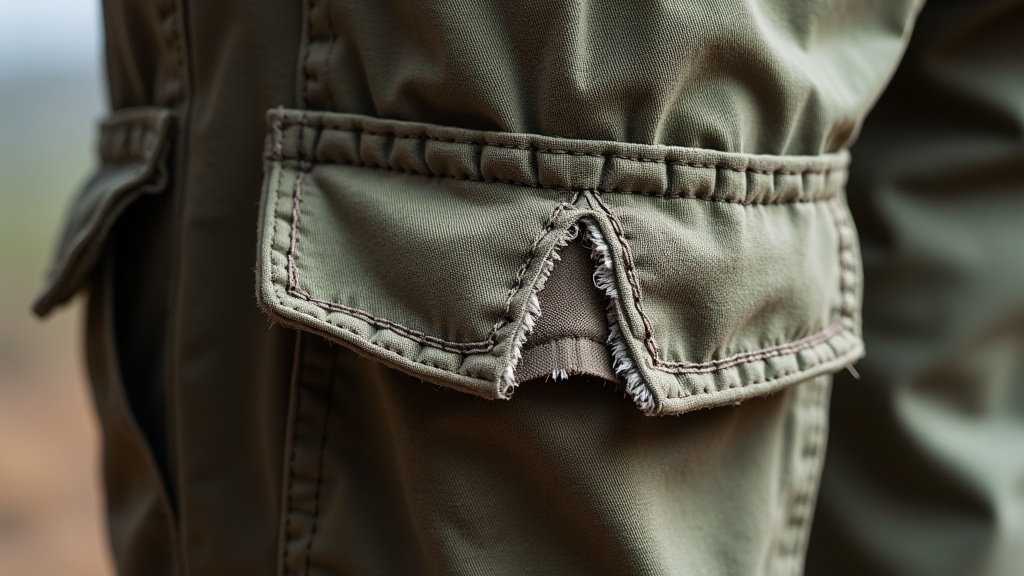
Check the bar tacks at every pocket corner. Those small reinforcement stitches at stress points are what separate a $60 pant that lasts two years from a $60 pant that's done in three months.
Look for YKK zippers on any zippered cargo pocket. Cheap zippers are the first thing to go, and replacing them on work pants isn't worth the time.
Construction details worth checking in-store or in product photos
- Double-needle stitching on inseam and side seams
- Bartack reinforcement at all pocket openings and belt loops
- Gusseted crotch for squat and climb clearance
- Articulated knees (especially for roofing, flooring, and landscaping work)
- A rise that sits at your natural waist, not three inches below it
How Many Pockets Do You Actually Need (and Where They Should Sit)
Six is a working minimum for most trades. Eight is better for construction and landscaping. Here's the breakdown that actually makes sense on a jobsite.
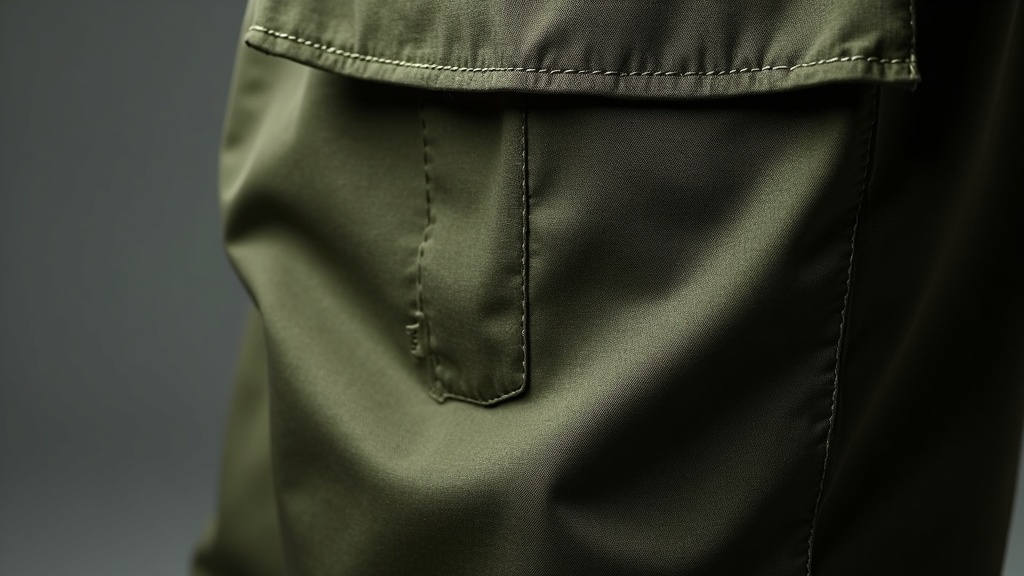
- Two front slash pockets: deep enough for your phone without squeezing
- Two cargo pockets (thigh level): large enough for a folding rule or phone charger
- One back right pocket: snap or button closure for wallet security
- One utility loop or hammer loop: on the right thigh, not the hip
- Optional: one small tool pocket inside the right cargo for a marker or utility knife
Did you know?
According to a 2022 study published in the journal Ergonomics, tool retrieval time drops by up to 18% when pockets are positioned within the worker's natural reach arc rather than at standard garment locations. Pocket placement is not a cosmetic choice, it's an ergonomic one.
Fabric That Holds Up: Ripstop, Stretch, and What the Difference Means on Site
Ripstop nylon or ripstop cotton blend is the standard for women's construction work pants that see real abuse. The grid-reinforced weave stops a small tear from becoming a full split when your knee catches a nail head or a fence corner.
Stretch fabrics (usually a cotton-nylon-spandex mix) give you freedom of movement, but the spandex content weakens the fabric over time and repeated washing. Look for no more than 5% spandex if you want the pants to last more than a season of hard use.
| Fabric Type | Durability | Stretch | Best For |
|---|---|---|---|
| Ripstop Nylon | Excellent | Low | Construction, roofing, landscaping |
| Cotton Canvas | Good | Very low | Painting, warehousing, general labor |
| Cotton-Nylon Blend | Very good | Low-medium | Mixed trades, all-day wear |
| Stretch Ripstop (with spandex) | Good short-term | High | Electrical, HVAC, active trades |
| Poly-Cotton Twill | Moderate | Low | Light duty, indoor work |
Fit Matters: Petite, Regular, Tall, and Plus Size Options Worth Knowing
The inseam problem is real. Standard women's work pants come in a 30-inch inseam. If you're 5'4" or under, you're folding fabric up at your boot. If you're 5'9" or over, you're showing ankle all day. Both are fixable now, but you have to know where to look.
Petite and tall sizing
Carhartt, Dickies, and Dovetail Workwear all carry inseam options ranging from 28 to 34 inches on select styles. Dovetail's Maven line is specifically engineered for women's body proportions and is one of the few brands that offers a genuine petite cut, not just a hemmed regular.
Plus size women's cargo work pants
Plus size women's cargo work pants with pockets have improved most in the last two years. Carhartt's Rugged Flex line goes to a size 3X with the same pocket layout and fabric weight as the straight sizes. RefrigiWear and Duluth Trading also carry extended sizes with real cargo capacity.
Watch for brands that offer plus sizing but cut the pocket depth. A size 2X with 2-inch pockets is not a work pant. It's a costume.
Did you know?
Women now make up roughly 11% of the U.S. construction workforce, a number that has grown steadily since 2012 according to the National Association of Women in Construction. The workwear market has been slow to respond, but purpose-built women's trade pants are now a growing product category for major brands like Carhartt, Duluth, and Dovetail.
Top Women's Cargo Work Pants Worth Your Money Right Now
These aren't paid placements. These are pants that show up consistently in real-world reviews from tradeswomen and hold up across categories.
Best overall: Dovetail Workwear Maven Cargo Pant
Built from stretch canvas with eight pockets, a gusseted crotch, and a rise designed for women's proportions. Available in petite, regular, and tall. Around $89.
Best value: Carhartt Women's Rugged Flex Relaxed Cargo Pant
Ripstop fabric, articulated knees, six pockets, and available through size 3X. Regularly priced between $55 and $70. One of the most reviewed women's construction work pants on the market for a reason.
Best wide-leg option: Dickies Women's Relaxed Fit Cargo Pant
Wide leg women's cargo work pants with pockets that don't restrict your stride or bunch up at the knee when you climb. Heavy-duty twill, six pockets, around $40. Not the most technical, but the fit is consistent and the fabric holds.
Best ripstop: Caterpillar Women's Essentials Cargo Pant
Ripstop nylon blend, eight pockets including a dedicated phone pocket, and articulated knees. Runs true to size. Around $65.
What You'll Pay and Where the Value Actually Is
Under $40 means cotton twill with basic stitching. Fine for light indoor work. Not what you want on a framing site or a rooftop in July.
$45 to $70 is where most of the genuinely durable options live. Carhartt, Dickies, and Caterpillar all operate in this range with ripstop or canvas and solid construction.
$75 to $95 gets you into Dovetail territory: better pocket engineering, purpose-built women's fit, and fabric that's been tested specifically for female range of motion. Worth the extra $20 if fit has been a recurring problem for you.
Above $100 is workwear lifestyle territory. Some of it is excellent. Most of it is brand premium, not durability premium.
The real cost calculation
A $55 pant that lasts 18 months costs you less per hour worked than a $35 pant you replace every 6 months. Buy for longevity, not sticker price.
How to Buy Right the First Time
Order two inseam lengths if you're between sizes and return the one that doesn't work. Most major workwear retailers offer free returns. Trying to guess on inseam is how you end up with pants that drag on the floor of every job trailer.
Wash them before your first wear. Ripstop and canvas soften slightly after the first cycle. Washing also tells you immediately if there's going to be a shrinkage problem before you've cut the tags off at 5 a.m. on a Monday.
Test the pocket depth at home. Put your full phone, a folding knife, and a marker in the cargo pocket. Sit down. Crouch. If anything pops out, the pocket geometry isn't right for your use. Return them.
If you work in heat, check for ventilation features: mesh pocket linings, laser-cut vents near the cargo pockets, or a lightweight fabric weight under 7 oz per square yard. Women's work pants all day comfort in summer comes down to breathability more than anything else.
