


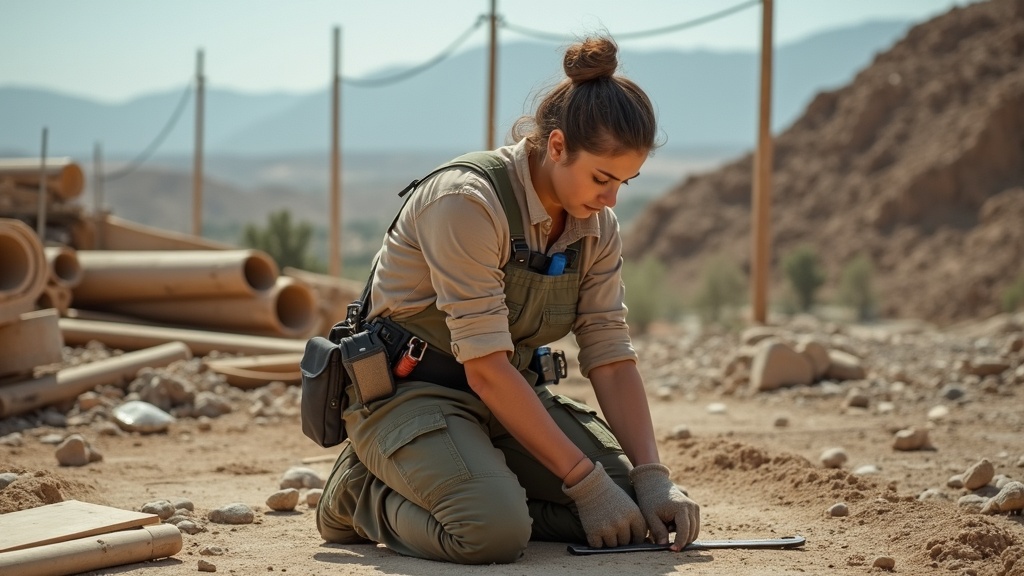
Most cargo pants marketed to women are a joke. Thin fabric that tears on rebar, pockets that can't fit a tape measure, and a fit that assumes you're heading to a music festival, not a jobsite.
Working cargo pants for women need to meet a different standard: abrasion resistance, functional storage, and a cut that moves with you whether you're climbing scaffolding or crouching under a sink.
Key points at a glance
- Work-ready cargo pants need ripstop or canvas fabric, not fashion-weight twill.
- Pocket depth and placement matter more than pocket count.
- Wide leg and straight leg cuts serve different trades and tasks.
- Petite and plus size fits exist and perform just as well when you know where to look.
- Price doesn't always equal quality: some $40 pants outlast $90 ones.
- Proper washing and storage can double the lifespan of a good pair.
What good work cargo pants deliver
What Makes a Cargo Pant Actually Work-Ready (Most Fall Short)
The word "cargo" gets slapped on anything with a side pocket these days. A real work pant earns that label differently.
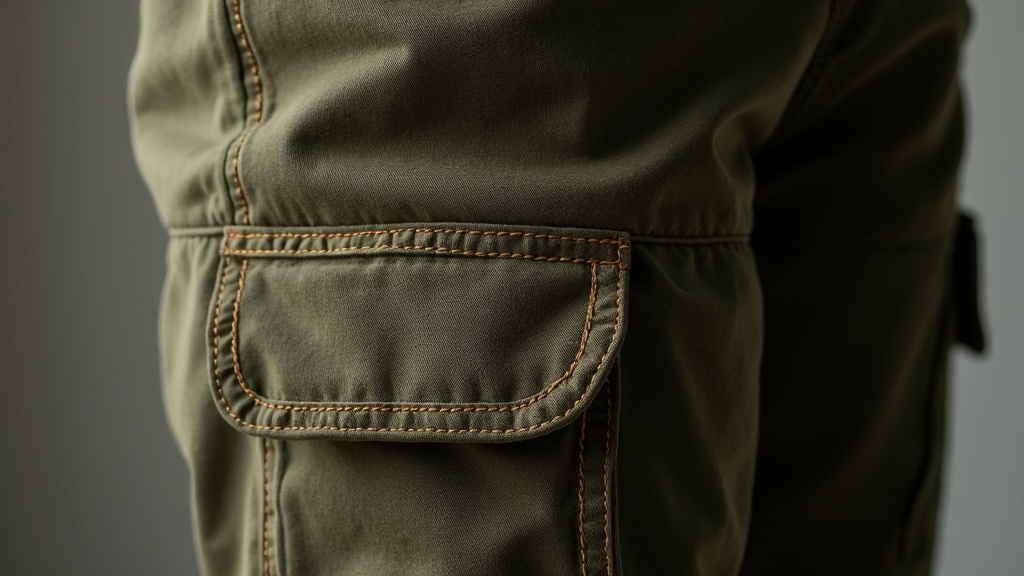
Work-ready means triple-stitched seams at stress points, a gusset at the crotch for squat mobility, and fabric rated above 200 gsm. Without those three things, you're buying a costume.
Check for reinforced knees too. Women's construction work pants that skip knee patches won't survive a season on concrete or gravel.
Fabric That Takes a Beating: Ripstop, Canvas, and Stretch Blends Explained
Fabric choice is the single biggest factor in how long a pant lasts. Here's what actually matters on site:
- Ripstop nylon/cotton blends: The grid weave stops tears from spreading. Lighter weight, good for warm climates. These are your lightweight cargo work pants for women.
- Canvas (100% cotton or cotton-poly): Heavy-duty, breathes in heat, takes a beating. Standard on serious women's construction work pants.
- Stretch blends (spandex or elastane added): Sacrifice some durability for comfort. Fine for electrical or plumbing work, less ideal for roofing or framing.
Did you know?
Ripstop fabric was originally developed for military parachutes in World War II. The reinforcement grid is woven at regular intervals so a puncture can't run along the weave. The same property that kept a parachute intact keeps your knee from blowing out on a rebar snag.
Pockets That Fit More Than Your Phone: What to Look For
Pocket count is marketing. Pocket quality is what matters. A pant with eight shallow pockets is less useful than one with four deep, reinforced ones.
The must-haves for women's cargo work pants with pockets
- Cargo thigh pockets at least 8 inches deep with a secure closure (snap or velcro, not just flap)
- Front pockets wide and deep enough for your full hand, not just your fingertips
- A dedicated utility loop or hammer loop on the thigh
- Reinforced pocket bags, not just the opening seam
If the front pockets are decorative stitching or just barely fit a card, walk away. That's a fashion pant with a work label.
Best Working Cargo Pants for Women in 2026 (Tested by the Trade)
These aren't affiliate picks from a listicle farm. These are pants that got worn on real sites and reported back by women in construction, electrical, and landscaping trades.
| Pant / Brand | Fabric | Best For | Price Range |
|---|---|---|---|
| Carhartt Women's Crawford | Cotton canvas blend | General construction, framing | $45, $60 |
| Dickies Women's Cargo | 65/35 poly-cotton | Landscaping, light trades | $30, $45 |
| Dovetail Freshley Work Pant | Stretch canvas | Electrical, plumbing, mobility-heavy work | $90, $110 |
| Berne Women's Cargo | Ripstop cotton | Plus size, warm weather sites | $40, $55 |
| Kühl Freeflex Roll-Up | Lightweight ripstop | Hot climates, lightweight cargo work pants for women | $75, $95 |
Wide Leg vs. Straight Leg: Which Cut Works Best for Your Job
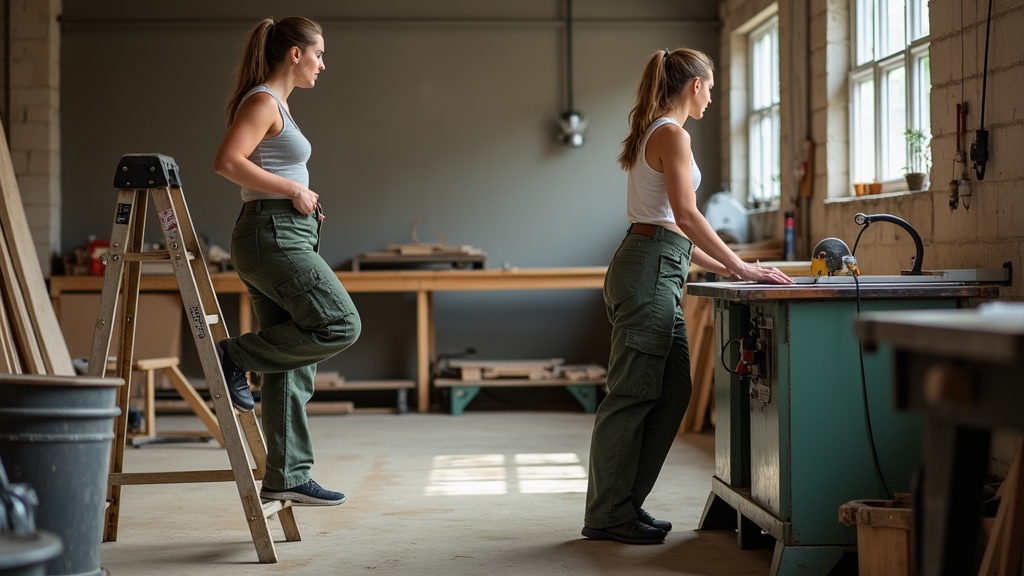
Wide leg working cargo pants for women give you unrestricted movement. Great for climbing ladders, working overhead, or any job where your legs need to spread wide.
Straight leg working cargo pants for women are cleaner around machinery and scaffolding. Loose fabric near moving parts is a hazard, and a straight leg keeps things tucked without feeling tight.
Quick guide by trade
- Roofing, framing, scaffolding: Straight leg. Less fabric to catch on edges.
- Landscaping, painting, electrical: Wide leg or relaxed fit. Crouch and reach all day.
- HVAC, plumbing: Either works. Prioritize stretch blend over cut.
Fit for Every Body: Petite, Plus Size, and In Between
Petite working cargo pants for women are a real category now, not just a rolled-up regular inseam. Look for brands that actually cut a shorter rise, not just a shorter leg.
If you're buying plus size working cargo pants for women, the waistband is the first thing to check. A rigid waistband with no stretch ruins the fit by mid-morning. Look for a partial elastic back panel or an adjustable waistband tab.
Did you know?
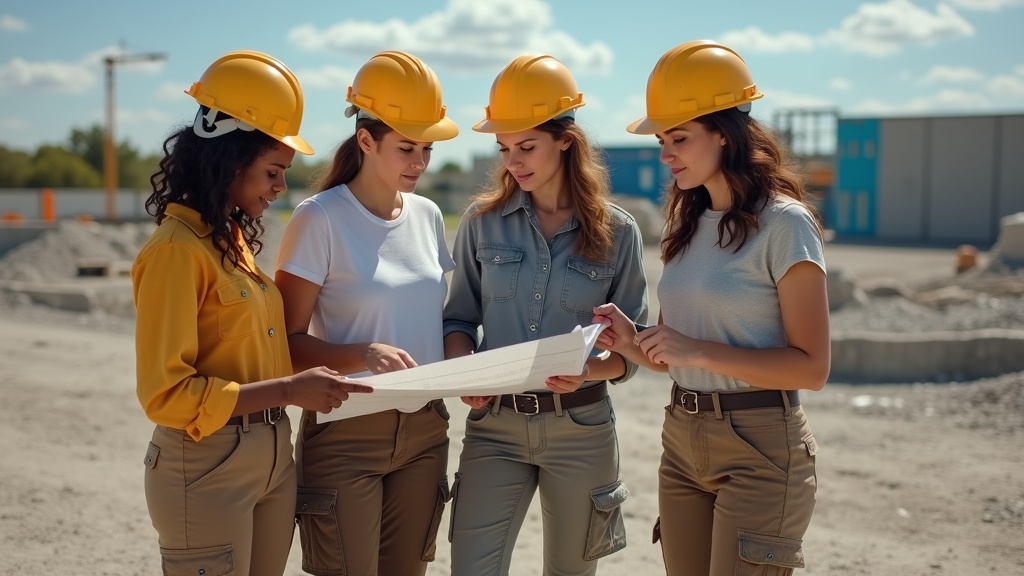
Women make up roughly 11% of the U.S. construction workforce as of 2024, up from 9% a decade ago. Despite that growth, only a handful of major workwear brands offer women's fit lines with the same technical specs as their men's equivalents. That gap is slowly closing, but it means you still need to read labels carefully.
Fit tips by body type
- Petite (under 5'4"): Target a 28, 30" inseam. Check that the crotch seam sits correctly, not drooping mid-thigh.
- Plus size (size 18+): Avoid pants with only front closures. Back elastic waistband or gusset expansion keeps comfort through a full shift.
- Athletic build: Go up a size in the waist and have the length hemmed. Off-the-shelf inseams rarely hit right for muscular thighs.
What You Should Pay and Where You're Just Buying a Logo
The honest range for quality working cargo pants for women is $40 to $90. Below $35, the fabric weight drops, the stitching thins out, and you'll be back shopping in four months.
Above $100, you're often paying for a brand story. The Dovetail Freshley is worth the price if stretch canvas is what your trade demands. Most other premium-priced options are not delivering $110 worth of durability.
Carhartt and Dickies at full retail sit in the sweet spot. They've been dressing trades workers for decades and the quality-to-price ratio holds up. Buy those before you pay $90 for a "workwear-inspired" pant from a company that launched in 2021.
How to Make Your Work Pants Last Longer Than One Season
Buying right is only half the job. How you treat the pant after the shift decides whether it lasts one season or four.
- Turn them inside out before washing. Abrasion in the drum wears the outer surface. Inside-out washing protects the face fabric.
- Cold water, not hot. Heat shrinks cotton canvas and breaks down elastic fibers faster than wear does.
- Skip the dryer when you can. Air dry on a flat surface. The dryer is where most pants lose their shape and their stitching tension.
- Spot-treat stains before they set. Concrete, tar, and grease are nearly impossible to remove after a hot wash cycle bonds them to the fiber.
- Reinforce the seams yourself. A $4 tube of Seam Grip applied to the inner thigh seam at the start of the season adds months of life.
One more thing: rotate between two pairs. Wearing the same pant five days a week concentrates stress on the same seams and stress points. Two pairs worn on rotation will outlast three pairs worn one at a time.
