


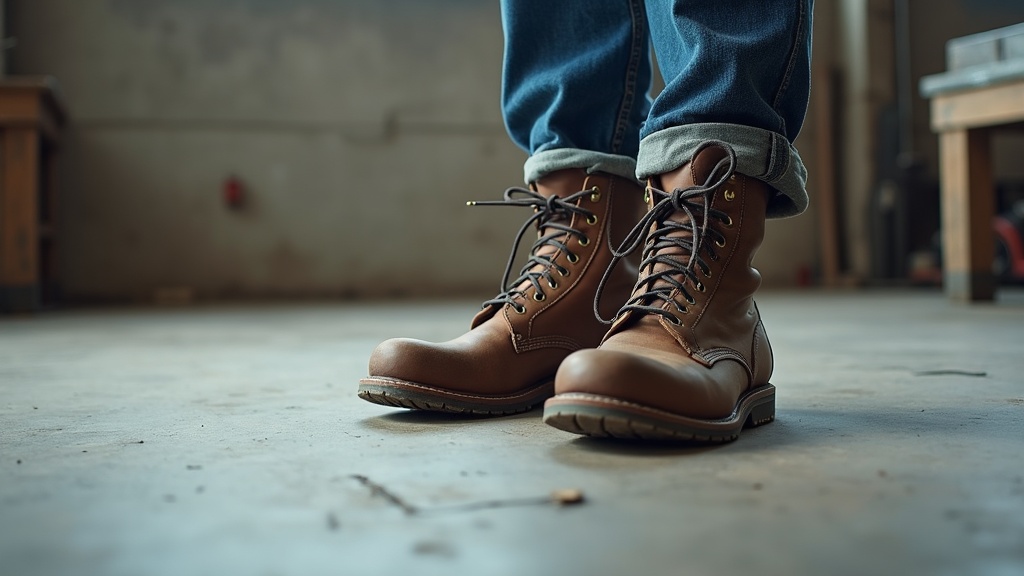
You clock in at 6 AM. By early afternoon your feet are burning, your heels are raw, and you're shifting your weight just to get through the last few hours. Most guys blame their boots. The boots are rarely the problem.
The right sock changes everything. Wrong thickness, wrong fiber, wrong fit and your $200 boots feel like a punishment. This guide cuts straight to what works, what holds up, and what's actually worth your money.
Key points at a glance
- Most foot pain on the job comes from socks, not boots.
- Merino wool and wool-synthetic blends outperform pure cotton for all-day wear.
- Crew height is the gold standard for blue-collar work; ankle socks work for light-duty and warehouse roles.
- A sock that costs $4 and blows out in 6 weeks costs more per day than a $16 sock that lasts two years.
- You need 7 to 10 pairs minimum to rotate properly and extend sock life.
- Bombas are comfortable but not always the toughest option for hard physical work.
What a great work sock does for you
Why Your Socks Are Making Your Feet Miserable by 3 PM
Cotton holds moisture. That's the whole story. You sweat, the sock gets wet, it bunches, and now you've got a damp cloth grinding against your skin for six hours straight. Blisters, hot spots, and foot odor are all downstream of that one problem.
A cheap cotton sock loses its cushion within a few hours of wear. The fibers flatten out, the padding disappears, and you're essentially standing on a thin layer of damp fabric over a hard insole.

What Actually Matters in an Everyday Work Sock (Forget the Marketing)
Brands love to throw words like "performance" and "engineered comfort" at you. Here's what actually matters when you're buying work socks.
Fiber content
- Merino wool: the best all-around fiber. Temperature-regulating, moisture-wicking, naturally odor-resistant. Works in summer and winter.
- Wool blends (wool + nylon + spandex): more durable than pure merino, slightly less soft, great for tough work environments.
- Synthetic blends (polyester + nylon): durable and affordable, decent moisture management, but they hold odor over time.
- Cotton: fine for casual use, poor for all-day standing work. Avoid as the primary fiber in a work sock.
Cushioning level
Medium cushion is the sweet spot for most workers. Heavy cushion feels great but makes your boot fit tighter. Light cushion works if your boot already has a thick insole.
Height
Crew height (mid-calf) protects your ankle and lower leg from boot chafing. Ankle height is fine for low-cut work shoes or light warehouse duty. Quarter height is the minimum for any boot work.
Did you know?
The average person's feet produce about half a pint of sweat per day. On your feet for 10 hours on a jobsite, that number goes higher. A moisture-wicking fiber moves that sweat off your skin and into the sock's outer layers, where it evaporates instead of pooling.
Best Everyday Socks Ranked: Crew, Ankle, and Boot Height
These are picks that hold up in real work conditions, not just lab tests.
Best crew socks for men: Darn Tough Vermont Hiker Micro Crew
Made in Vermont from merino wool. Unconditional lifetime guarantee, meaning when they wear out, you send them back and get a new pair. The cushioning is medium, the fit is true-to-size, and they don't bunch. These are the benchmark.
Best ankle socks for work: Feetures Elite Light Cushion No Show
Targeted compression at the arch, flat seam at the toe, anatomical left-right fit. Built for people on their feet in low-cut shoes or slip-on work footwear. Holds its shape after 50+ washes.
Best budget everyday crew socks: Carhartt Men's All Season Cotton Blend Crew
Not merino, but a solid cotton-nylon-spandex blend that outlasts the average drugstore sock by a wide margin. Good reinforcement at heel and toe. A reliable buy when you're outfitting a full week's worth of socks without spending $100.
Best boot-height for cold or rough outdoor work: Smartwool Mountaineer Classic Edition Full Cushion Crew
Heavier knit, full cushion, sits at the top of your boot shaft. Keeps feet warm down to freezing without making them sweat. Great for roofers, landscapers, and anyone working outdoors through fall and winter.
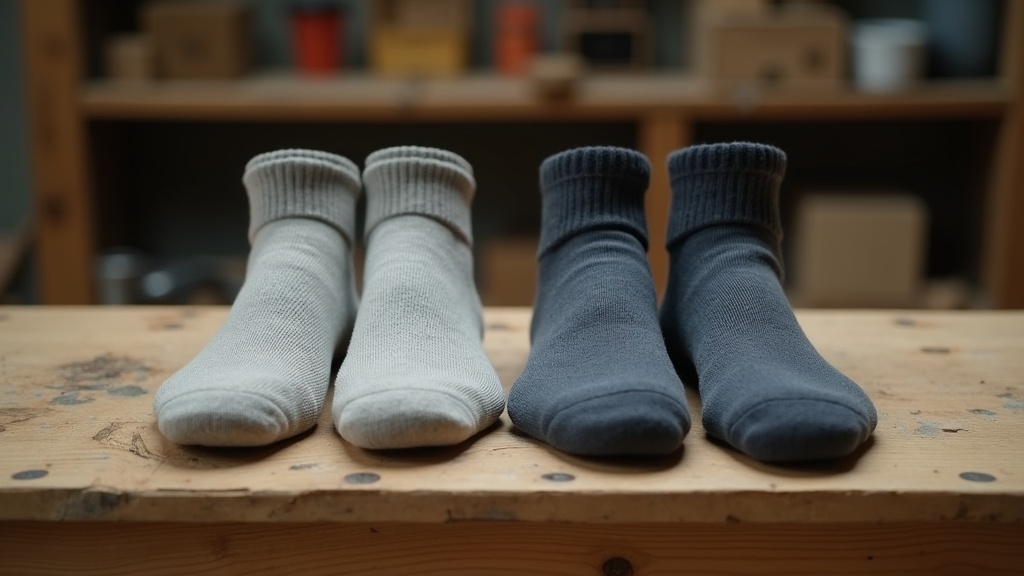
Are Bombas Socks Worth It for Guys Who Work on Their Feet?
Bombas gets a lot of attention online, and they're genuinely comfortable. The honeycomb arch support and seamless toe are real quality details. But they're built for comfort, not punishment.
If you're in retail, food service, or a light warehouse role, Bombas holds up fine. If you're on a construction site, doing heavy lifting, or working in extreme temperatures, the Darn Tough or Smartwool options will outlast them significantly.
The price point is similar to Darn Tough but without the lifetime guarantee. For blue-collar work specifically, Bombas is a solid sock but not the top pick.
| Brand | Best For | Main Fiber | Durability |
|---|---|---|---|
| Darn Tough | All blue-collar work, outdoors | Merino + nylon | Lifetime guarantee |
| Smartwool | Cold weather, outdoor trades | Merino + nylon | Very high, 2+ years |
| Bombas | Retail, food service, warehouse | Cotton blend or merino | Good, 12-18 months |
| Feetures | Low-cut work shoes, standing | Nylon + spandex | High, holds shape well |
| Carhartt | Budget, everyday rotation | Cotton + nylon | Moderate, 6-12 months |
Best Everyday Socks for Women in the Trades
Women's work sock options have improved a lot in the last five years. The fit problem used to be constant: men's socks sized down, poor heel placement, sliding all day. Purpose-built women's options fix that.
- Darn Tough Women's Hiker Micro Crew: same Vermont-made quality as the men's version, anatomically cut for a narrower heel and higher arch. Crew height that stays put in a work boot.
- Smartwool Women's Classic Hike Light Cushion Crew: slightly lighter than the mountaineer version, better for warmer seasons. Great for tradeswomen who run warm.
- Feetures Women's Elite Ultra Light No Show: for women in low-cut work shoes or standing on smooth floors. Compression arch keeps it from bunching.
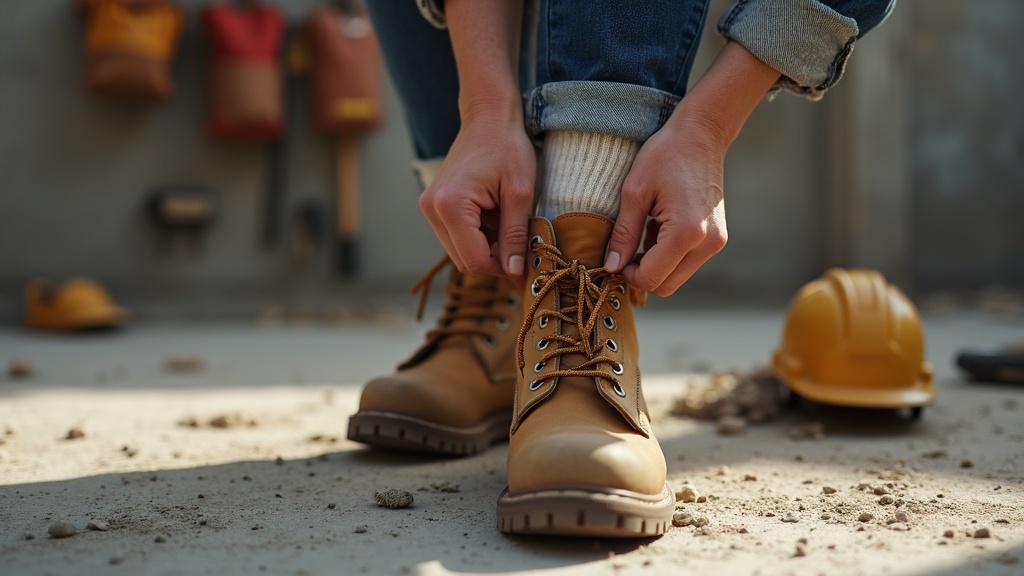
What Reddit Gets Right (and Wrong) About Everyday Sock Picks
Reddit communities like r/BuyItForLife and r/workboots give Darn Tough near-universal praise, and that's earned. The lifetime guarantee is real. People post photos of worn-out pairs they've returned and gotten replaced with no hassle.
Where Reddit goes wrong: pushing merino for every single application. If you're in a wet environment, power washing, or working near chemicals, merino wool can degrade faster than a synthetic blend. For those jobs, a high-nylon-content synthetic work sock is smarter.
Reddit also underrates Carhartt socks for budget shoppers. Not the best sock you can buy, but a serious step above Hanes or Fruit of the Loom for work conditions, and usually available in multi-packs for under $20.
Did you know?
Rotating through at least 7 pairs of socks extends each pair's lifespan by roughly 40 percent compared to wearing the same 3 or 4 pairs repeatedly. Elastic and fiber both need recovery time after compression during a full workday.
How Many Socks Do You Actually Need, and How Long Should They Last?
Seven to ten pairs is the working minimum for a five-day work week. That gives you a clean pair every day plus a buffer for laundry timing without forcing you to rewear a damp sock.
Expected lifespan by quality tier:
- Budget (Carhartt, Hanes WorkGear): 6 to 12 months with daily use
- Mid-range (Bombas, Farm to Feet): 12 to 18 months
- Premium with guarantee (Darn Tough, Smartwool): 2 to 5 years, or indefinitely with the replacement program
Wash in cold water, air dry when possible. High heat is what kills elastic bands and shrinks wool fibers. That single habit adds months to any sock's life.
The Bottom Line: What to Buy Based on Your Job and Budget
Here's where to put your money without overthinking it:
- Construction, roofing, heavy trades: Darn Tough crew, medium cushion. Buy 8 pairs, use the lifetime guarantee when they go.
- Warehouse, shipping, light manufacturing: Feetures or Bombas ankle or crew depending on your footwear. Rotate 7 to 10 pairs.
- Outdoor work in cold weather: Smartwool Mountaineer full cushion crew. Worth every cent from October through March.
- Tight budget right now: Carhartt crew multi-pack. Not forever socks, but they'll do the job properly while you save up for the better tier.
- Women in the trades: Darn Tough Women's Hiker Micro Crew. Same rules, same guarantee, built for the right anatomy.
Your feet carry you through 10-hour days, six days a week sometimes. A $14 sock that lasts three years costs you about a penny a day. That math works every time.
