


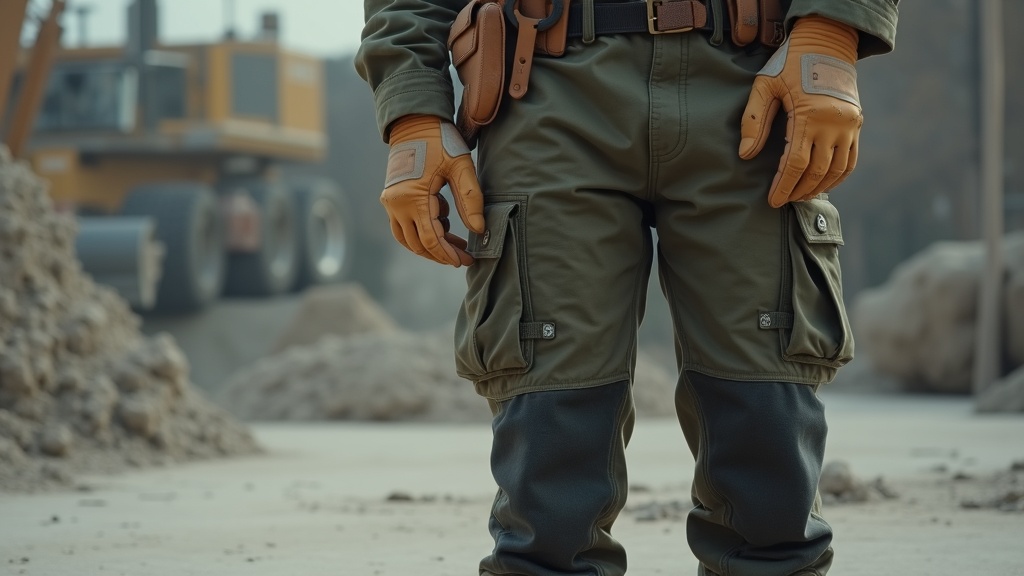
You're on the clock, both hands are full, and your phone just buzzed. You need your tape measure, a pencil, and two wire nuts, all within reach, without stopping what you're doing. That's the whole argument for work cargo pants with multi pockets right there.
Not every pair of cargo pants is built for a real shift. Some are cut for the weekend, not for eight hours on your knees in a crawl space. This guide cuts through the noise and tells you what actually matters when you're spending your own money.
Key points at a glance
- Pocket count matters, but pocket placement matters even more on an active site.
- Fabric weight and weave determine whether pants survive month two or fall apart at the seams.
- A bad cut causes fatigue and knee strain faster than most workers realize.
- Double-front panels and knee pad pockets are worth every cent in high-kneel trades.
- The best pair isn't always the most expensive, but it's never the cheapest either.
- Proper care can double the working life of a quality pair.
What Good Work Cargo Pants Actually Give You
Why Pocket Count Actually Matters on the Job
A standard pair of jeans gives you four pockets. A solid pair of multi pocket utility work pants gives you six to twelve, each designed with a specific job in mind. That difference is real productivity.
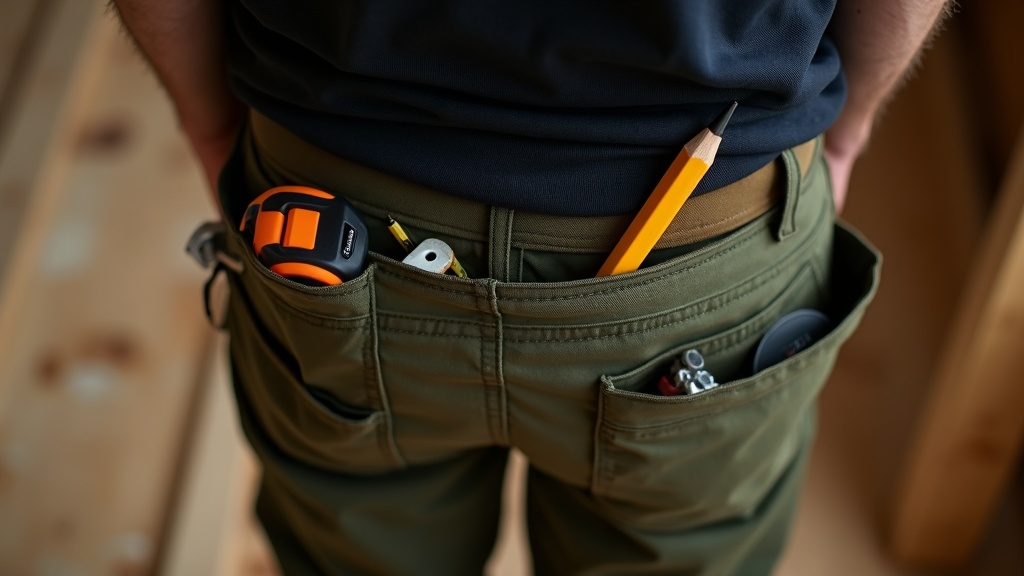
The key is dedicated pockets, not just more fabric bags sewn onto a leg. A ruler pocket on the right thigh, a phone pocket that actually fits a modern smartphone, nail and screw pockets that keep hardware sorted without rattling around together. These details reduce the number of trips to the truck.
What counts as useful pocket placement
- Thigh pockets for bulkier items like pliers, a folding knife, or chalk
- Narrow side pockets for pencils, markers, and flat-blade screwdrivers
- Back pockets with button or snap closures so nothing falls out when you crouch
- Hammer loop attached to a reinforced belt loop, not just stitched to the fabric
What to Look for in Work Cargo Pants (Beyond Just Pocket Count)
Pocket count is the headline. But the details underneath it are what separates a pair that lasts from one that shreds at the seam by week six.
Check the pocket bag material. Thin cotton linings tear fast. Polyester or canvas-backed pockets hold up to the constant friction of tools going in and out fifty times a day. Also check whether pockets are bar-tacked at the corners. No bar tacking means you're one heavy load away from a blown seam.
Look at the closure system on cargo pockets. Velcro is convenient but collects debris and wears out. Snap buttons last longer and don't snag on everything they touch. Zippers are the most secure for valuable items but slow you down if you're reaching in constantly.
Fabric and Build: What Holds Up vs. What Falls Apart by Month Two
The fabric spec is where most buyers make their mistake. They grab the cheapest pair with the most pockets and wonder why the knees are threadbare by February.
Did you know?
A canvas-weight cotton duck fabric typically weighs between 10 and 12 oz per square yard. Most denim jeans run 12 to 14 oz. Durable work pants with pockets built for heavy trades often use 8.5 oz ripstop cotton-poly blends, which beat pure cotton on abrasion resistance while staying cooler in summer heat.
| Fabric | Durability | Comfort | Best For |
|---|---|---|---|
| 100% Cotton Duck | High | Good, breathes well | Carpentry, framing |
| Cotton-Poly Ripstop | Very High | Lighter, moves well | Construction, HVAC |
| Polyester-Cotton Blend | High | Quick-dry, stain-resist | Electrical, plumbing |
| Stretch Canvas | Medium-High | Excellent mobility | Landscaping, roofing |
| Thin Poly Fashion Cargo | Low | Fine off-site | Not for the job site |
Triple-stitched seams at the crotch and inner thigh are non-negotiable for anyone doing physical work. That's the first place cheap pants fail. Bar-tacking at pocket corners and belt loop bases is the second thing to check before you buy.
Fit and Mobility: Why a Bad Cut Will Kill Your Knees by Noon
A pair cut too tight through the thigh forces you to adjust your stride and your squat. Over eight hours, that compensation wears on your hips and knees in ways you don't notice until Friday night.
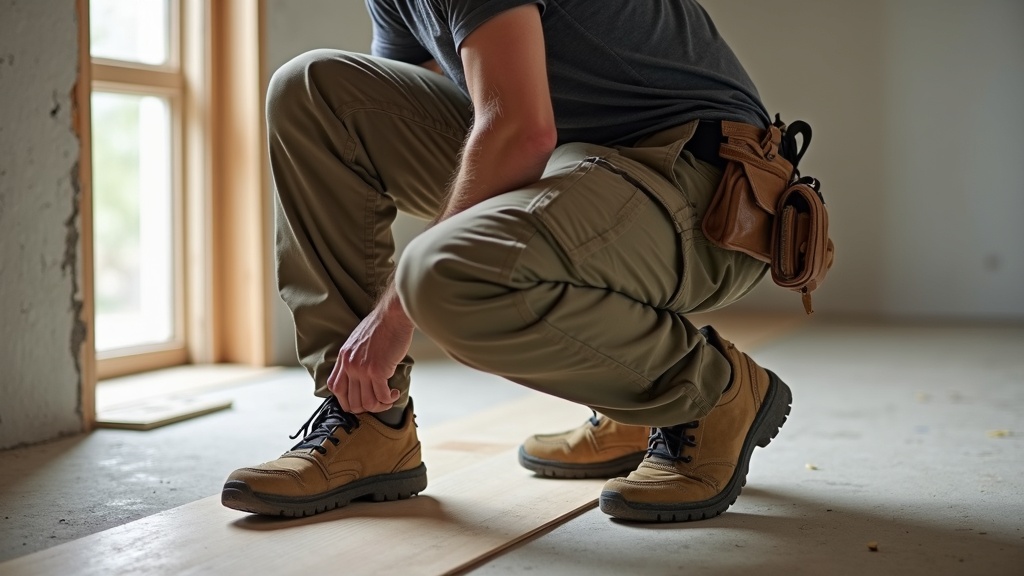
Baggy multi pocket cargo pants with a relaxed seat and tapered leg give you the best of both worlds: room to move without fabric bunching up behind the knee. Look for articulated knees, which are panels pre-shaped to a bent position, so the fabric works with you instead of fighting you.
What good fit looks like
- Two fingers of room across the thigh when standing straight
- No pulling across the seat when you step up onto a ladder rung
- Hem that clears the top of your boot without dragging
- Waistband that sits without digging when you're wearing a tool belt
Knee Pad Compatibility and Double-Front Panels: Worth It or Not
If your trade puts you on your knees regularly, tile, flooring, plumbing, roofing, this is not optional. Knee pad pockets built into the pant leg let you insert hard-shell foam pads that stay in place as you move. External knee pads shift, bind, and fall down.
Double-front panels add a second layer of fabric from mid-thigh to below the knee. On concrete or rough subfloor, that extra layer is the difference between pants that last a season and pants that last two years. The added weight is minimal. The added protection is significant.
Did you know?
The Bureau of Labor Statistics reports that knee injuries account for a significant portion of musculoskeletal disorders in construction trades. Workers who use knee protection consistently report lower rates of chronic knee pain over a career. Built-in knee pad pockets make compliance automatic because there's nothing extra to remember.
Best Multi Pocket Cargo Pants for Different Trades
No single pair is perfect for every trade. Here's how to match the pant to the work.
Carpentry and framing
Heavy cotton duck or canvas. Hammer loop, ruler pocket, and at least eight total pockets. Dickies multi pocket work pants in their Flex series hit this mark well, with the 874 and the Flex Relaxed-Fit as solid starting points.
Electrical and HVAC
Cotton-poly ripstop for the lighter weight. You're climbing and crawling more than kneeling. Prioritize thigh pockets that close securely so screws and fittings don't scatter when you're upside down in an attic.
Concrete and tile work
Cargo pants for construction workers doing floor work need double-front panels and knee pad pockets, full stop. Brands like Carhartt's Force and Caterpillar's Trademark both offer this. Duluth Trading also builds a strong option in their Dry on the Fly line.
Landscaping and outdoor trades
Stretch canvas or a poly-blend that breathes. You need mobility and you need pockets that close, because you're bending, reaching, and kneeling on wet ground. Water-resistant finishes earn their keep here.
Price vs. Value: How Much Should You Actually Spend
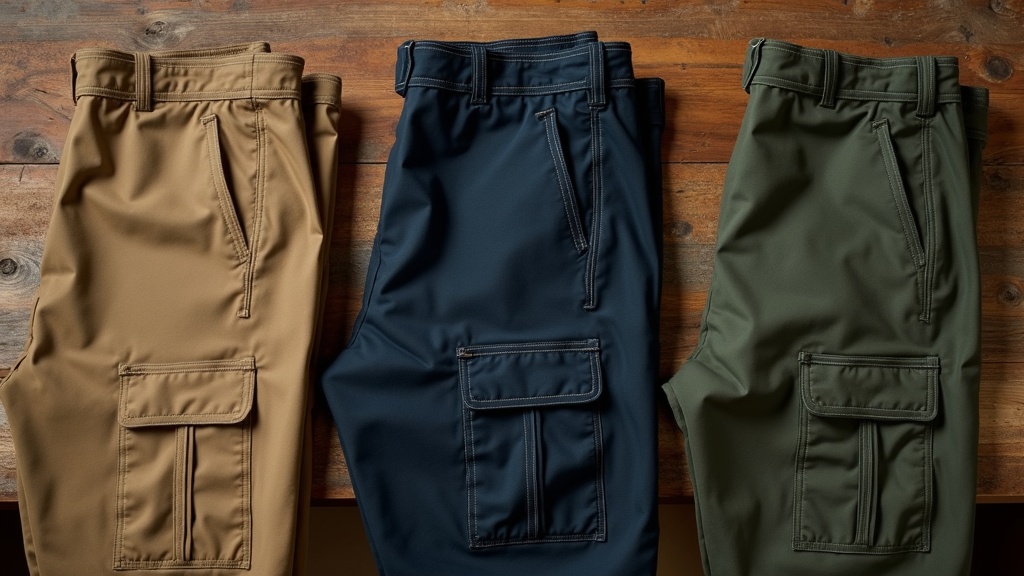
Under $30 and you're buying a pair that looks right but won't survive a real season. The fabric is too light, the seams are single-stitched, and the pocket linings rip within weeks.
The best work cargo pants sit in the $45 to $80 range for most brands. Carhartt, Dickies, Caterpillar, and Duluth Trading all have strong options in this window. Above $80, you start paying for features like stretch fabric, cleaner styling, and brand premium, which is your call depending on whether comfort or budget wins the day.
Think about cost-per-wear. A $65 pair that lasts 18 months beats a $28 pair you replace every four months. Do the math for your own situation, but the pattern holds almost every time.
How to Make Your Work Cargo Pants Last Longer
The pants do the job, but how you care for them determines whether they make it to year two.
- Cold wash, low heat dry or hang dry. Heat degrades synthetic fibers and shrinks cotton over time.
- Turn them inside out before washing. Reduces surface abrasion and keeps color from fading at the stress points.
- Empty every pocket before washing. Hardware left in pockets wears through the linings and damages the drum.
- Patch small tears immediately. A two-inch rip becomes an eight-inch tear in one shift if you ignore it.
- Rotate between two pairs. Giving each pair 24 hours to dry and recover between washes extends the fabric life noticeably.
- Re-treat with DWR spray once a season if your pants have a water-resistant finish. It wears off and a $10 spray bottle brings it back.
A quality pair of rugged cargo pants for men is a tool, same as anything else on your belt. Buy it right, take care of it, and it earns back every dollar you put into it.
