


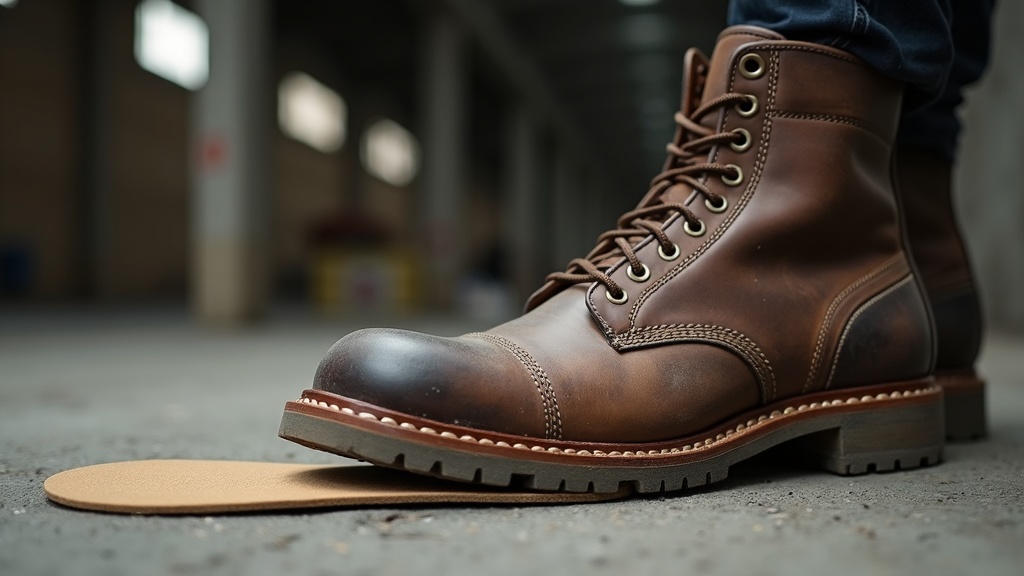
Your feet are wrecked by noon. You shift your weight, flex your toes, and that steel cap digs in like it has a grudge. It's not the boot brand, it's not your socks. The stock insole that came with those boots belongs in the trash.
The right replacement insole can turn a punishing 10-hour shift into something your body can actually recover from. Here's what works, what doesn't, and what's worth your money in 2026.
Key points at a glance
- Stock insoles in steel toe boots offer almost zero support. Replace them immediately.
- Look for deep heel cups, firm arch support, and a top layer that absorbs shock on hard surfaces.
- Women need insoles sized and contoured for a narrower heel and higher arch, not just a smaller version of a men's insole.
- On concrete all day? Prioritize dual-layer foam or gel heel pads over pure foam insoles.
- A quality insole lasts 6 to 12 months under daily work conditions. Replace it when the heel compresses flat.
- Insoles alone won't fix a boot that's two sizes wrong. Fit the boot right first.
What a good insole actually does for you
Why Steel Toe Boots Beat Up Your Feet (And What's Actually Happening)
Steel toe caps don't flex. Every time you walk, your foot bends naturally at the ball, but that steel box resists it. Over 10 hours, that friction adds up into soreness across the top of the foot, toe cramping, and hot spots on the ball.
Then there's the insole the manufacturer threw in. It's cardboard-thin and flat, designed to pass a fitting test, not to support a grown adult on a warehouse floor for a full shift. It compresses inside the first week.
Add hard concrete underneath, and every step sends a shock wave up through the heel, the ankle, the knee. That's not dramatic. That's just physics.
What to Look For Before You Buy Any Insole
Not every insole sold as a "work boot insole" is worth your time. Here's what actually matters when you're standing 8 to 12 hours straight.
Heel cup depth
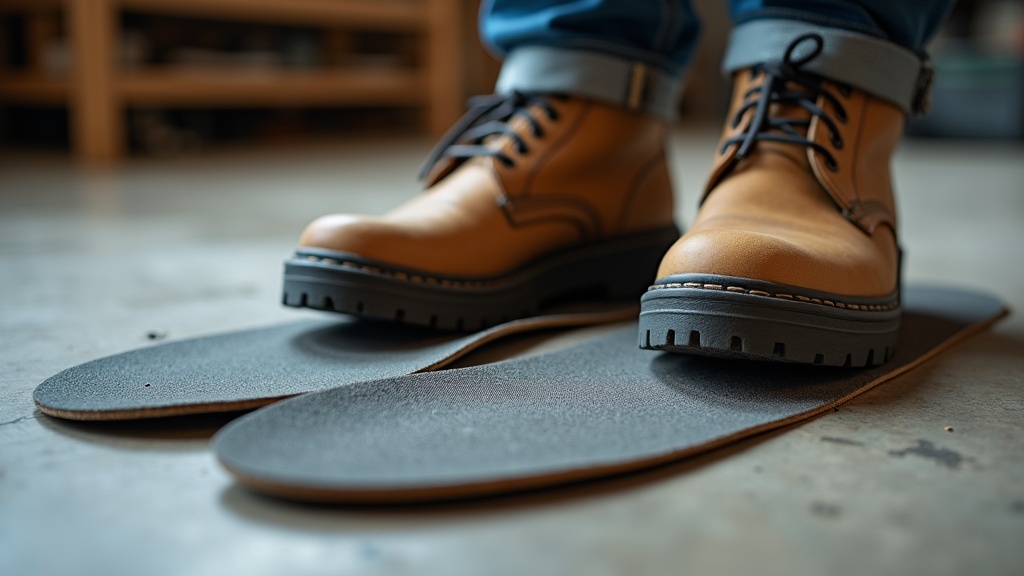
A deep heel cup cradles the fat pad in your heel and keeps it from spreading under impact. Shallow cups fail fast on concrete. Look for at least 8 to 10 mm of cup depth.
Arch support firmness
Soft arch support feels good in the store and does nothing by hour four. You want semi-rigid, meaning it has some give but holds its shape under load.
Top layer material
- Memory foam: Comfortable out of the box, but compresses permanently over time. Works for moderate use.
- EVA foam: Firmer, more durable, better for all-day standing.
- Gel: Excellent shock absorption at the heel, heavy. Best in combination with foam.
- Cork: Molds to your foot shape over time. Less common in work boots but solid for arch issues.
Profile and thickness
Steel toe boots have limited volume. A bulky insole pushes your foot up and forward, making toe contact with the cap worse, not better. Profile matters.
Did you know?
The average worker takes between 8,000 and 10,000 steps per shift on a job site. On concrete, that's roughly 1.5 times your body weight hitting the ground with every step. A 180-lb worker generates over 270 lbs of impact force per foot strike, hundreds of thousands of times a year.
Best Insoles for Steel Toe Boot Discomfort: Top Picks for 2026
These are the insoles that show up repeatedly in real worker reviews, trade forums, and safety gear communities. No sponsored rankings here.
Superfeet WORK Black
Semi-rigid nylon stabilizer cap, deep heel cup, low-profile design that fits without crowding the toe box. Holds up for 6 to 12 months of daily wear. Best overall choice for mixed-surface jobsites.
Timberland PRO Anti-Fatigue Technology Insole
Inverted cone geometry in the midsole bounces energy back up through the foot. Specifically designed for boot volume. Works well for workers who are constantly moving rather than standing still.
Dr. Scholl's Work Insoles
The most accessible option at most hardware and pharmacy chains. Reinforced arch spring and gel heel cushion. Not the most durable, but at under $15 a pair, replacing them every 4 months isn't a hardship.
Sof Sole Work Insole
Hydrologix moisture-wicking top cover plus gel pods at the heel. Good fit in medium-volume steel toe boots. Solid choice if sweating is a significant problem for you.
| Insole | Best For | Support Type | Avg. Lifespan |
|---|---|---|---|
| Superfeet WORK Black | All-day mixed-surface use | Semi-rigid arch, deep heel cup | 9, 12 months |
| Timberland PRO Anti-Fatigue | High-movement jobsites | Inverted cone energy return | 6, 10 months |
| Dr. Scholl's Work | Budget-conscious replacement | Gel heel + arch spring | 3, 5 months |
| Sof Sole Work | Sweat and moisture control | Gel pod heel, moisture-wick top | 5, 8 months |
| Powerstep Pinnacle | Plantar fasciitis / arch pain | Firm arch shell, double-layer foam | 8, 12 months |
Best Insoles for Women in Steel Toe Boots
Most work boot insoles are designed around a men's foot shape and scaled down. That's a problem because women generally have a narrower heel, higher arch, and different forefoot width. A scaled-down men's insole won't seat correctly and will migrate inside the boot.
Look for insoles explicitly designed for women's sizing, or brands that offer gender-specific arch geometry.
- Superfeet Berry: High arch support version built for women's foot geometry. Fits well in most women's steel toe boots.
- Powerstep Pinnacle Women's: Deep heel cup with narrower rear profile. One of the most recommended options for women with plantar fasciitis on the job.
- Spenco Total Support Thin: Low-profile, good for tighter-fitting women's work boots that don't have much room to spare.
Best Insoles for Concrete Floors and All-Day Standing
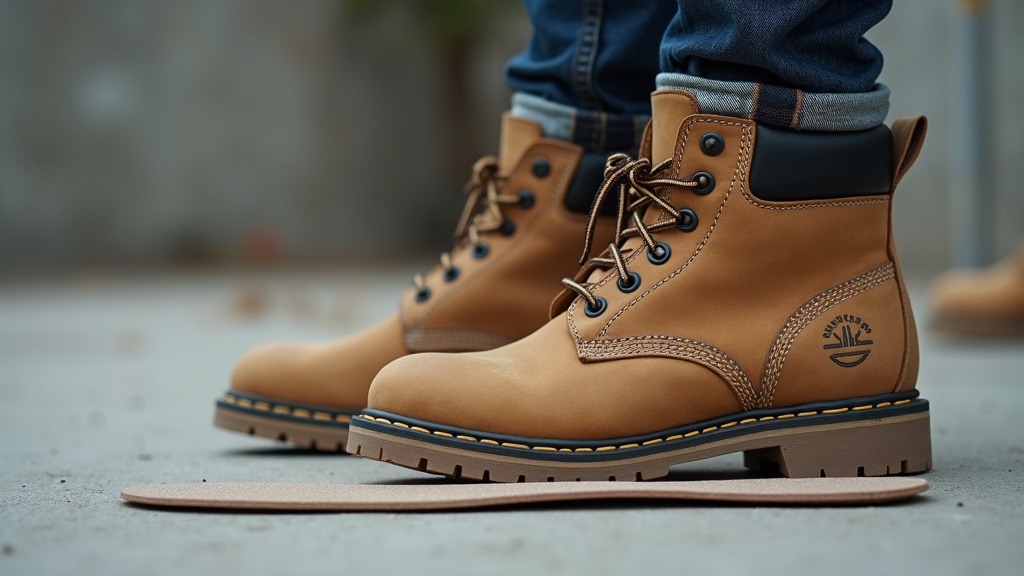
Concrete is unforgiving. It has zero give, which means every bit of shock absorption has to come from your insole and midsole. Soft foam alone won't cut it after a few hours.
What works on concrete: dual-layer construction with a firm EVA base and a cushioned top layer, plus a dedicated gel or foam heel pad. The heel takes 60 to 70 percent of your body weight on every heel strike. That's where most insoles fail first.
- Powerstep Pinnacle: Top pick for concrete. Double-layer foam with a semi-rigid arch shell. Manages shock without losing structure by end of shift.
- Timberland PRO Anti-Fatigue: The inverted cone geometry does genuinely help return energy on hard flat surfaces.
- Superfeet WORK Black: The nylon stabilizer cap holds its shape even after months on hard floors.
Did you know?
Plantar fasciitis affects roughly 2 million workers in the United States each year. Jobs requiring 6+ hours of standing on hard floors are the single biggest occupational risk factor. A semi-rigid arch insole reduces strain on the plantar fascia by keeping the foot from over-pronating under load.
Can You Put Any Insole in a Steel Toe Boot? (Fit and Sizing Tips)
Not quite. Steel toe boots have less internal volume than regular footwear because the toe cap takes up space. Thick insoles lift your foot, push it forward, and increase contact between your toes and the cap. That's the opposite of what you want.
Here's how to get the fit right:
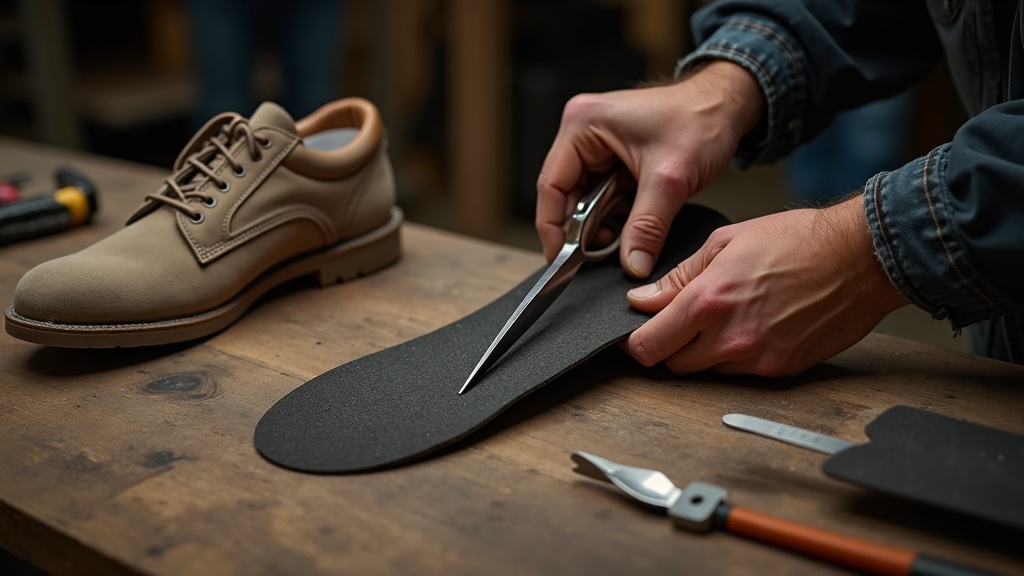
- Pull the stock insole out first and use it as a size template. Trim your new insole to match.
- Trim from the toe end, never the heel. The heel cup needs to stay intact.
- After installing, check that your longest toe has at least 3 to 4 mm of clearance from the steel cap when you're standing upright.
- If the boot suddenly feels tight across the top of the foot, the insole is too thick. Try a lower-profile model.
How to Make Steel Toe Boots More Comfortable Beyond the Insole
The insole handles a lot, but it's one piece of the puzzle. These things cost nothing or close to it and make a real difference.
- Break them in properly: Wear new boots 2 to 3 hours a day for the first week. Don't start a 12-hour shift in fresh boots.
- Use moisture-wicking work socks: Merino wool or synthetic blends. Cotton soaks up sweat, stays wet, and causes blisters. Don't use cotton.
- Try thicker lacing techniques: Heel-lock lacing (also called runner's loop) stops heel slippage that causes friction at the back of the boot.
- Rotate between two pairs: A boot that gets 24 hours to dry and decompress lasts twice as long and stays more comfortable.
- Check your boot size while standing: Feet swell during the day. If you sized your boots while sitting, you may be in the wrong size.
How Long Do Work Boot Insoles Actually Last?
Plan on replacing them every 6 to 12 months under daily work conditions. The heel is always the first place to check: press your thumb into the heel pad. If it compresses flat and stays flat, the insole is done.
Other signs it's time to swap:
- You start feeling the boot's midsole through the insole
- Foot or heel pain that wasn't there when the insoles were new
- The insole moves or bunches inside the boot during your shift
- The top fabric is worn through at the ball of the foot
At $20 to $50 for a quality insole, replacing twice a year costs less than one urgent care visit for plantar fasciitis. That math is simple.
Bottom line: what to do right now
Pull the insole out of your current work boots. Press the heel. If it compresses and stays flat, replace it this week. If you're on concrete all day, go with the Powerstep Pinnacle or Superfeet WORK Black. If you're a woman in a steel toe boot, get an insole designed for your foot geometry, not a scaled-down men's version. And if toe pain is your main issue, check that you have enough room between your longest toe and the cap before blaming the insole.
Your feet carry you through every shift. Thirty dollars and ten minutes of your time is a reasonable trade.
