


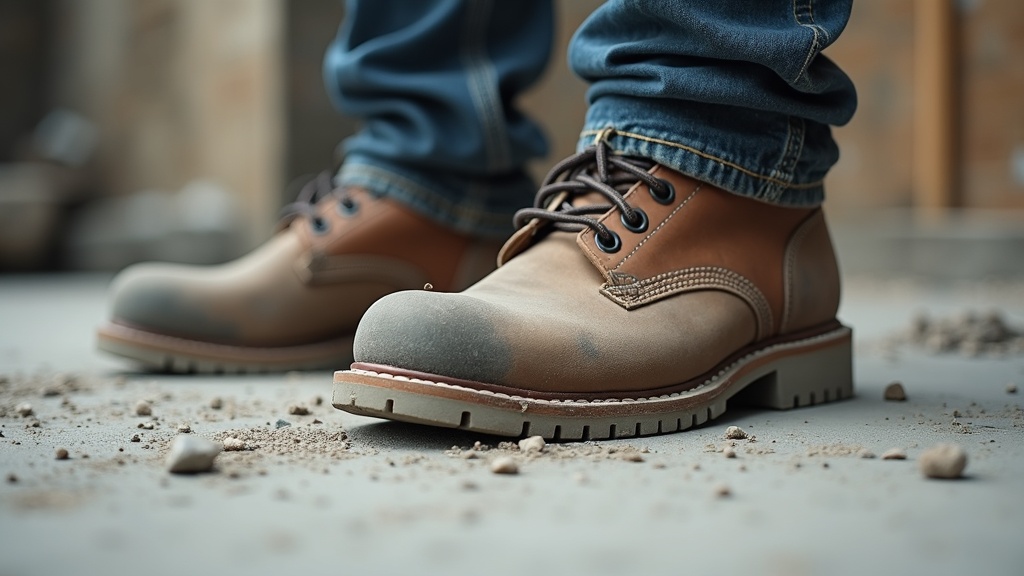
Your orthotics cost eighty bucks, maybe more. You wore them every day for three months, and your feet still hurt by lunch. That's not a product failure. That's a tissue problem an insole can't solve.
Insoles redistribute pressure. They don't strengthen anything. The muscles in your foot and calf that should be doing the work are still weak, tight, and getting beat up on concrete every single shift.
Key points at a glance
- Insoles manage symptoms. Targeted exercises fix the underlying weakness.
- A 5-minute morning routine before you lace up cuts first-step pain significantly.
- Calf tightness is the most overlooked driver of plantar fasciitis in trades workers.
- Fallen arches respond to strengthening, not just arch support.
- Mid-shift moves can break the pain cycle without leaving the jobsite.
- When orthotics stop working, soft tissue work and progressive loading are what's next.
What this routine actually does for you
Why Insoles Are a Band-Aid, Not a Fix
An insole sits under your foot and props up your arch. That's it. It takes some of the load off the plantar fascia, which can feel like relief, but the fascia never gets a chance to adapt and strengthen.
Passive support creates passive tissue. You wear the orthotic, the foot stops working as hard, the muscles get weaker, and you become more dependent on the insert. Six months later you can't walk across a parking lot without it.
That's not a reason to throw them away. It's a reason to stop treating them as the whole answer.
Read also: The No-BS Guide to Compression Socks for Standing Jobs
The Real Culprits Behind Construction Worker Foot Pain
Three things hit you harder than any other population: unforgiving surfaces, prolonged static standing, and footwear that locks your ankle into a rigid position all day.
Concrete has zero give. Every footfall sends impact straight up through your heel. Your calf, Achilles, and plantar fascia absorb that shock repeatedly for eight to ten hours.
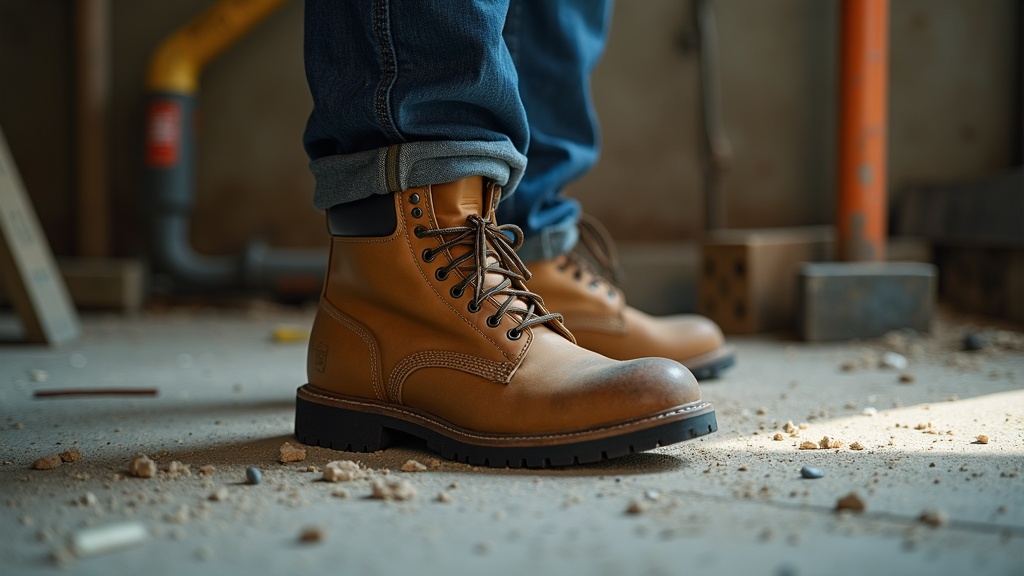
Steel-toed boots are stiff by design. That stiffness limits toe extension and ankle mobility, which shortens your calf complex over months and years. Tight calves yank on the heel bone and torch the plantar fascia from the top down.
Morning Routine: What to Do Before You Lace Up
First-step pain is caused by the plantar fascia stiffening overnight in a shortened position. You roll out of bed and load it cold. Two minutes before your feet hit the floor changes that.
Before your feet touch the ground
- Towel or band toe stretch: Loop a towel around your toes, pull gently toward you, hold 30 seconds each foot. This pre-loads the fascia before impact.
- Ankle circles: 10 slow rotations each direction, both feet. Gets synovial fluid moving in a stiff joint.
Once you're standing
- Calf raise off a step: Lower your heels below step level, hold 10 seconds, raise. Do 10 reps. This gentle eccentric load is one of the most evidence-supported moves for plantar fasciitis.
- Short foot exercise: Standing flat, scrunch the arch of your foot toward your heel without curling your toes. Hold 5 seconds, 10 reps. Activates the intrinsic muscles before your boot takes over.
Did you know?
Research published in the Journal of Orthopaedic & Sports Physical Therapy found that eccentric heel drops performed daily for 12 weeks reduced plantar fasciitis pain by up to 75% in active adults, outperforming passive stretching alone.
The Five Exercises That Actually Move the Needle
These are not yoga moves. They take about eight minutes and you can do most of them at the edge of your bed or on your tailgate.
| Exercise | Target | Dose | When |
|---|---|---|---|
| Eccentric heel drop | Calf, Achilles, fascia | 3x15 reps | Morning, before work |
| Short foot exercise | Intrinsic arch muscles | 3x10 holds | Morning, standing |
| Towel toe stretch | Plantar fascia | 2x30 sec each | Pre-boot, in bed |
| Seated towel scrunch | Toe flexors, arch | 3x20 reps | Evening, barefoot |
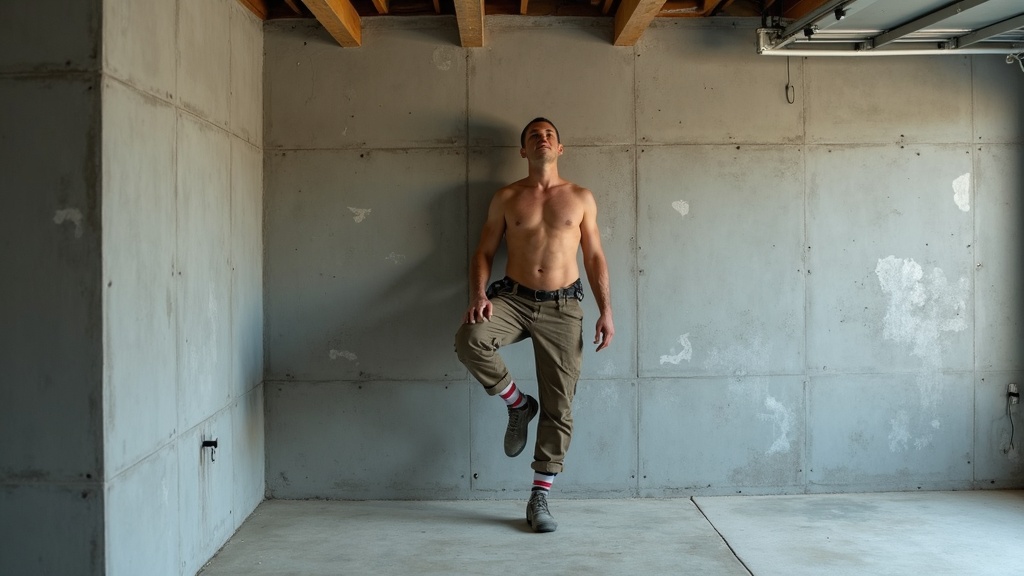
| Single-leg balance | Ankle stability, whole foot | 3x30 sec each | Anytime barefoot |
Calf and Plantar Fascia Work: The Combo Most Guys Skip
The gastrocnemius and soleus are the two main calf muscles. Both attach to the heel through the Achilles tendon. Both pull the plantar fascia tight when they're short. You need to stretch them separately because they respond to different knee positions.
Gastrocnemius stretch (knee straight)
Stand facing a wall, one foot back, heel flat, knee locked. Lean forward until you feel a deep pull in the upper calf. Hold 45 seconds. Switch sides. Do this twice a day minimum.
Soleus stretch (knee bent)
Same position, but bend the back knee slightly. The stretch drops lower, into the muscle right above your heel. This one matters more for plantar fasciitis and almost nobody does it.
What to Do Mid-Shift When Your Feet Are Already Burning
You're four hours in and your arches are screaming. You can't do heel drops on a staircase. Here's what actually works on the clock.
- Wall calf stretch on break: 60 seconds per side while you eat or drink. Costs nothing.
- Toe spread and press: In your boot, spread your toes wide, press them into the footbed, hold 5 seconds. Do 10 reps. This activates the intrinsic muscles without removing anything.
- Heel lift while standing: Rise onto your toes for a slow 3-count, lower controlled. Do 15 reps. Pumps blood back up, reduces pooling and fatigue.
- Sit when you can: Prop your heel on a piece of scrap lumber and let your foot hang. A passive fascial stretch adds up over a full shift.
Did you know?
Construction workers average between 8,000 and 12,000 steps per shift, much of it on concrete or asphalt. That surface returns nearly three times more impact force to the foot than grass or soil, according to biomechanics studies on occupational gait.
Fallen Arches: Can Exercise Actually Help?
Yes, but only if the arch hasn't fully collapsed structurally. Most trades workers have a functional flat foot, meaning the arch flattens under load but exists when you're sitting. That's a muscle problem, not a bone problem.
The posterior tibialis muscle is the primary arch lifter. When it weakens, the arch falls. The short foot exercise and single-leg balance work target this directly. Give it eight to twelve weeks of consistent daily work before judging results.
If your flat foot is rigid (the arch doesn't reappear when you sit), you're dealing with structural changes. A podiatrist visit is worth it at that point. Exercise still helps with pain and function, but expectations need to be adjusted.
Read also: Benefits of Wool Socks Every Trade Worker Needs to Know
When Your Orthotics Stop Working, Start Here
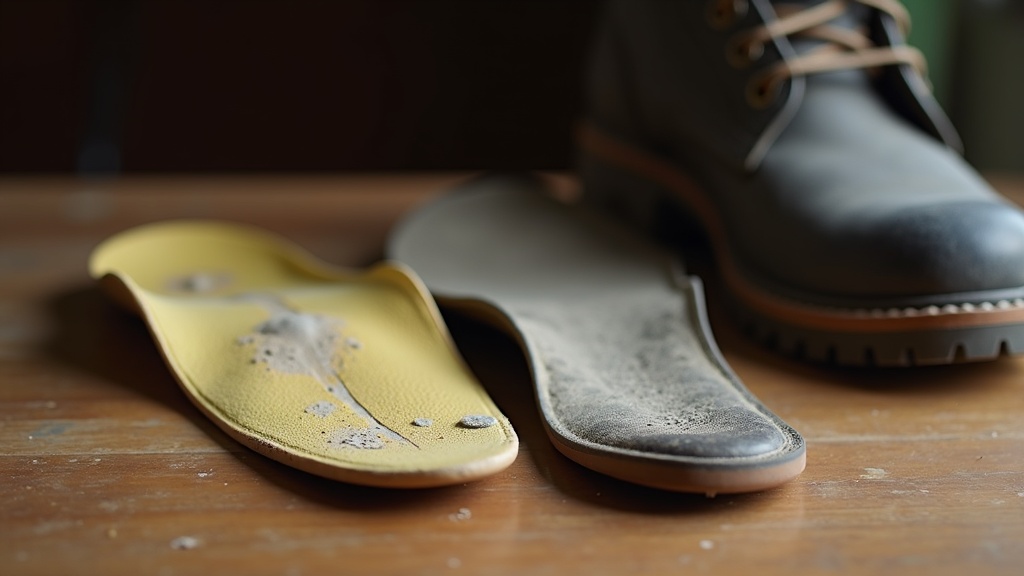
Orthotics lose their effectiveness for two main reasons: the material compresses and loses its correction, or your body adapts to the support and the underlying problem worsens. Either way, the answer is not buying a new pair. Not yet.
Start with four weeks of daily calf work, morning fascia stretching, and the short foot drill. If pain drops by half in that window, you've identified the gap the orthotics were covering up.
If you do go back to orthotics after doing the strength work, use them as a complement to the exercises, not a replacement. That's when they actually earn their price.
Building a Simple Weekly Routine You'll Actually Stick To
The reason most guys quit is too many steps and no clear schedule. This is the stripped-down version. It fits around a real workweek.
- Every morning (5 min): Towel stretch in bed, calf raises off a step, short foot drill standing.
- Every workday break (2 min): One round of wall calf stretches, both legs.
- Three evenings per week: Towel scrunch 3 sets, single-leg balance 3 sets, both calf stretches.
- Sunday: Spend 10 minutes with a lacrosse ball or frozen water bottle rolling the arch. Keeps the fascia pliable going into the new week.
That's it. No gym required. No equipment beyond a towel and something to step off. Do this for six weeks straight and your feet will feel different at 3 PM on a Friday. That's the only benchmark that matters for a person who works for a living.
