


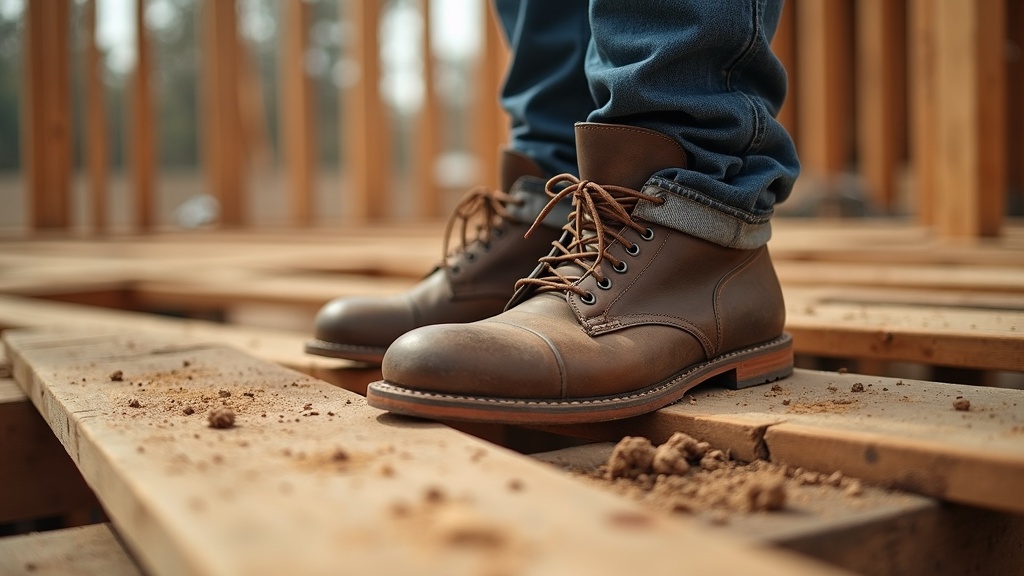
Your socks fail before your boots do. That's not an accident. Carpenters spend 8 to 10 hours a day on uneven ground, in steel-toed boots, hauling lumber and climbing ladders. Standard cotton socks turn to wet rags by noon and shred at the heel within two weeks.
This guide cuts straight to what works. No filler, no brand fluff. Just the socks worth spending money on and the reasons why they hold up when everything else falls apart.
Key points at a glance
- Cotton kills. Merino wool and synthetic blends are the only materials worth wearing in work boots.
- Cushioning at the heel and ball of the foot prevents blisters and foot fatigue on hard jobsite surfaces.
- For sweaty summer feet, choose moisture-wicking synthetics or lightweight merino, not thick wool.
- For winter framing, a mid-weight merino or wool-blend with a tall shaft is the right move.
- Rotating two or three pairs extends sock life dramatically. Washing in cold water and air-drying does the rest.
- Budget picks exist that actually hold up. You don't always have to pay $25 per pair to get a decent sock.
What a good work sock does for you
Why Carpenters Chew Through Regular Socks Faster Than Anyone Else
A carpenter's boot fits tighter than a hiking boot, generates more internal heat, and takes more lateral stress. Every time you crouch, kneel, or drag your heel against a boot lining, that sock is taking a hit.
Sweat is the first killer. Feet can produce over half a pint of moisture per day during physical labor. Cotton soaks it up and holds it, which softens skin and creates prime conditions for blisters and fungal issues.
Add concrete slabs, gravel, and pressure-treated lumber scraps underfoot, and you've got a surface that grinds through thin sock material faster than office carpet ever would. Standard department-store socks aren't built for that environment.
What to Look For Before You Buy
Material
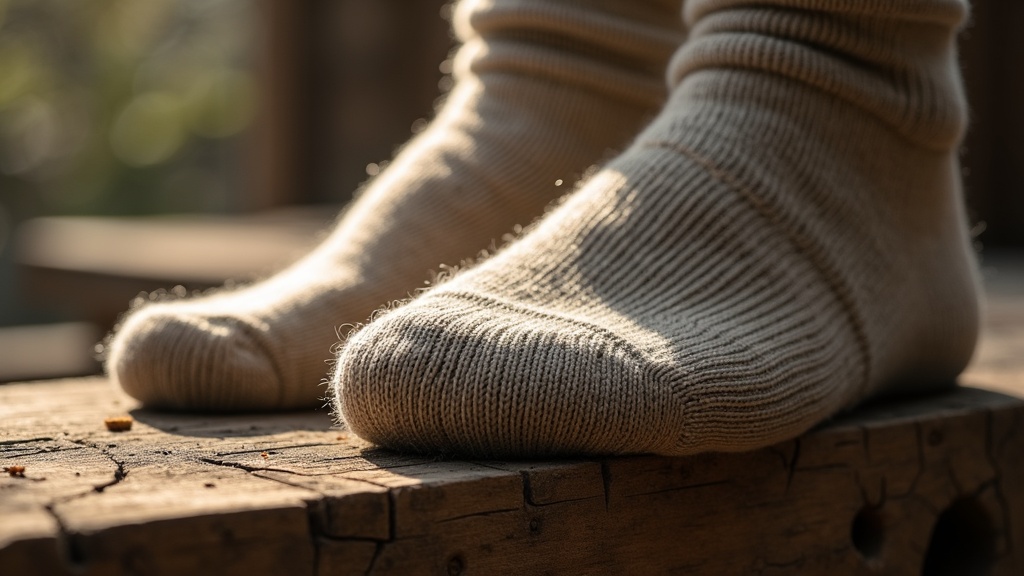
Merino wool is the gold standard for all-day wear. It wicks moisture, resists odor naturally, and stays comfortable in both heat and cold. It costs more but earns it back in comfort and longevity.
Synthetic blends (nylon, polyester, CoolMax) move moisture fast and dry quickly. They're the better call on a hot August jobsite where you need ventilation more than insulation.
Stay away from 100% cotton for work. It saturates, stays wet, and breaks down at friction points in a matter of weeks.
Cushioning
Look for targeted cushioning at the heel and ball of the foot. Full-foot padding adds bulk and heat without adding meaningful protection where it matters. A sock built with zone-specific cushioning gives you impact absorption without cooking your foot.
Fit and Height
Crew height (reaching mid-calf) is the minimum for work boots. It covers the boot shaft and prevents the top edge from rubbing against bare skin. Over-the-calf options are worth it for tall boots or cold weather.
A snug arch band keeps the sock from shifting during the day. A sock that bunches under the ball of your foot is a blister waiting to happen.
Did you know?
Merino wool fibers absorb up to 35% of their own weight in moisture before feeling wet to the touch, compared to roughly 7% for cotton. That's why merino stays comfortable through a full shift even when you're sweating heavily.
Best Socks for Outdoor Carpenters: Top Picks Ranked
These picks are based on performance characteristics that matter on a real jobsite: durability, moisture management, cushioning, and fit retention after repeated washing.
| Sock | Best For | Material | Price Range |
|---|---|---|---|
| Darn Tough Hiker Boot Sock | All-around durability | Merino wool blend | $24, $28/pair |
| Wigwam Cool-Lite Pro | Hot weather / sweaty feet | Merino + CoolMax blend | $16, $20/pair |
| Carhartt All-Terrain Boot Sock | Cold weather framing | Wool blend | $14, $18/pair |
| Dickies Crew Work Socks (6-pack) | Budget / daily rotation | Cotton-poly blend | $3, $5/pair |
| SmartWool PhD Work Heavy Crew | Maximum cushion / long shifts | Merino wool blend | $22, $26/pair |
Best Pick for Sweaty Feet and Hot Weather Jobsites
On a summer site in July, the last thing you want is a thick wool sock trapping heat. The Wigwam Cool-Lite Pro threads the needle: it uses a merino and CoolMax hybrid that wicks fast, dries fast, and doesn't hold odor the way pure synthetics do.
It runs thin enough to keep air moving inside the boot but still has a reinforced heel and toe. For carpenters dealing with sweaty feet and long hours in the sun, this is the one to reach for.
Best Pick for Cold Weather and Winter Framing
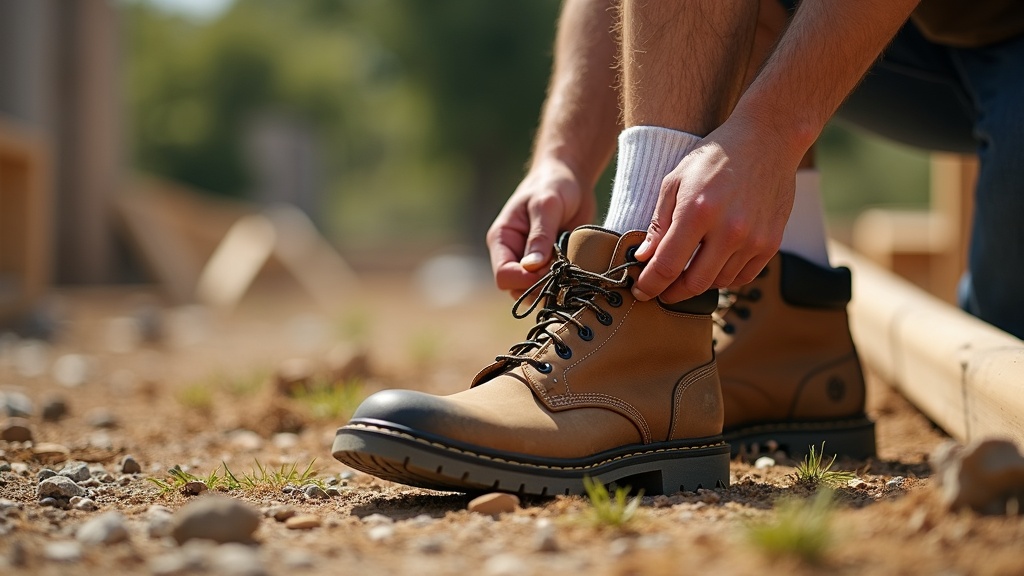
When you're working a December frame in sub-freezing temps, your feet go cold fast and stay cold. Carhartt's All-Terrain Boot Sock is a mid-weight wool blend that hits the right balance of warmth and bulk. It won't make your boots feel like they shrank a size, which is the problem with most thick winter socks.
The terry-loop lining on the interior holds warm air close to the skin while the wool shell manages moisture from sweat. Pair it with a boot that fits your foot properly and you'll be comfortable through a full outdoor shift in cold weather.
Did you know?
Cold feet on a worksite aren't just uncomfortable. Cold-induced vasoconstriction reduces blood flow to the feet, which slows reaction time and increases the risk of minor trips and missteps. Keeping your feet warm is a genuine safety issue, not just a comfort preference.
Best Budget Option That Still Holds Up
Not every carpenter wants to spend $25 on a single pair of socks. Dickies Crew Work Socks in a 6-pack come in around $18 to $22 total and hold up better than their price suggests. They're a cotton-poly blend, so they won't perform like merino in wet conditions, but the reinforced heel and toe add meaningful durability.
The smart play is to use these for drier days and shorter shifts, and save your merino pairs for high-output days or extreme weather. Rotating between premium and budget pairs stretches your total sock budget without sacrificing performance when it matters most.
How to Make Work Socks Last Longer
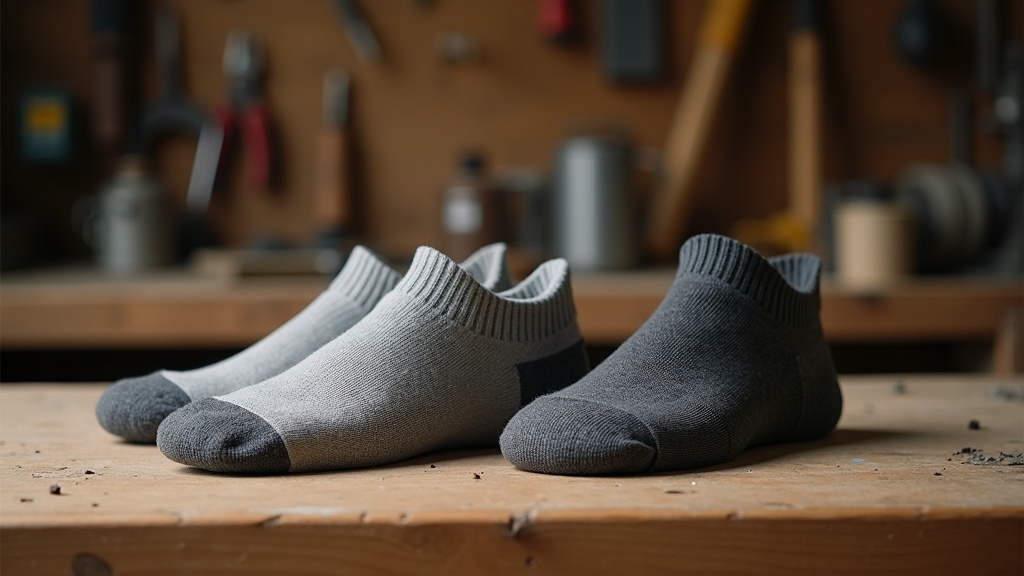
The sock itself isn't always what fails first. Washing habits and rotation patterns kill work socks faster than the jobsite does.
- Rotate at least 3 pairs per week. Wearing the same pair back to back doesn't give elastic fibers time to recover, and they lose their shape and grip faster.
- Wash in cold water, not hot. Heat breaks down elastic and shrinks wool fibers. A cold gentle cycle is enough to clean a work sock that's been worn, not used for muddy trench work.
- Air dry when you can. A dryer on high heat is the single fastest way to wreck a merino sock. Hang them or lay them flat overnight.
- Turn them inside out before washing. The interior loop pile takes the most abrasion wear. Washing inside out protects those fibers and keeps cushioning intact longer.
- Replace before they're completely dead. A sock with a thinning heel still looks fine but stops protecting your foot. Check the pad every few weeks.
One more thing worth saying plainly: your feet are a tool. Blisters, plantar fasciitis, and nerve fatigue all start with neglect at the sock level. Spending an extra $8 on a pair of socks is one of the cheapest preventive maintenance decisions you can make on the job.
