


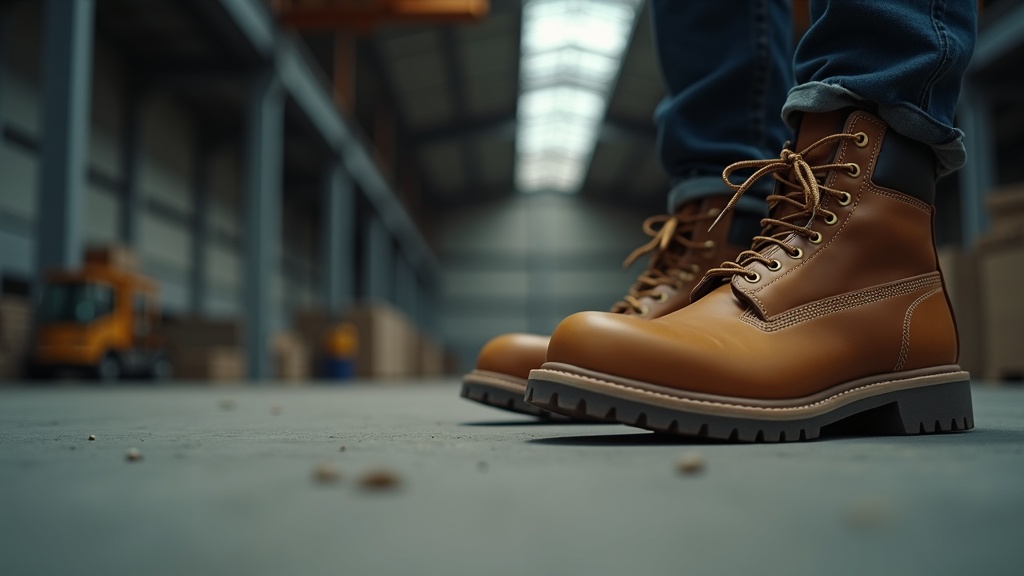
Your feet hit the floor at 5 a.m. and don't stop until the shift ends. If you've got flat feet, every hour on concrete, asphalt, or hard-packed dirt costs you more than it costs the next guy. The wrong sock makes it worse. The right one can genuinely change your day.
This guide cuts straight to what works: the materials, the features, and the specific picks that hold up for people with flat feet doing real work. No filler, no brand fluff.
Key points at a glance
- Flat feet need graduated compression and targeted arch support built into the sock itself, not just padding.
- Cushioning height matters: medium-cushion socks work best in most work boots without creating pressure points.
- Merino wool and wool-synthetic blends outperform cotton in moisture and temperature control across a full shift.
- Arch support socks and compression socks solve different problems. Many workers need both features in one.
- Job type changes the sock spec: boot work, warehouse floors, and healthcare settings each have different demands.
- With proper washing and rotation, a quality work sock should last 18 to 24 months.
What a great flat-foot work sock actually does
Why Regular Socks Fail Workers with Flat Feet
A standard tube sock has no structure. It's the same thickness from toe to cuff, zero arch engagement, and usually made from cotton that holds moisture like a sponge. For someone with a normal arch, that's annoying. For someone with flat feet, it's a source of real pain.
Flat feet pronate more aggressively. That means the ankle rolls inward, the plantar fascia stretches under load, and pressure concentrates on the inner heel and ball of the foot. Every step on hard flooring compounds that strain. A sock without built-in arch support does nothing to slow it down.
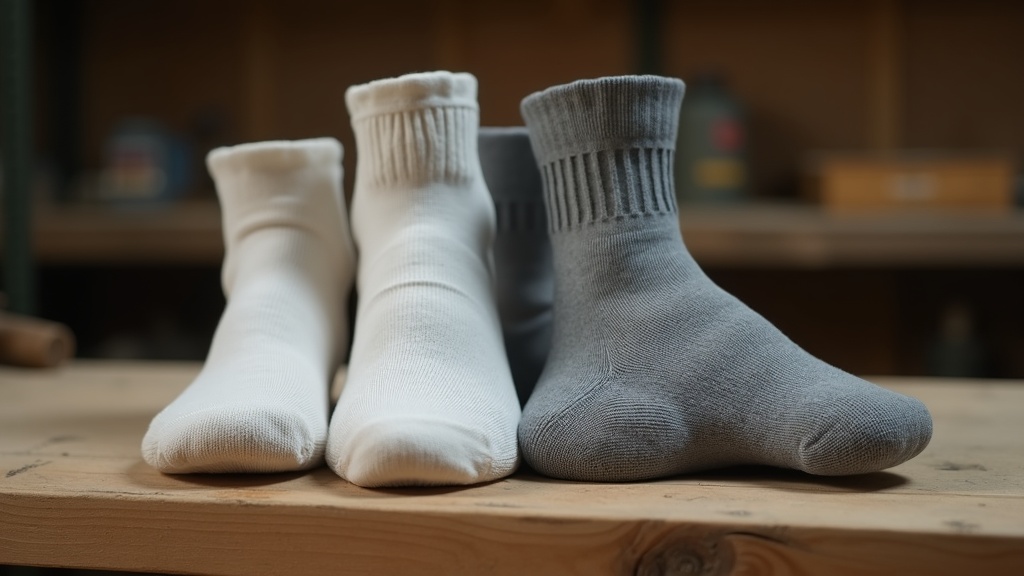
What to Look for in a Work Sock When You Have Flat Feet
Arch Compression Band
This is the most important feature. A woven elastic band that wraps the midfoot holds the arch in position and reduces pronation fatigue. Without it, you're just wearing expensive padding.
Cushion Zone Placement
You want cushioning at the heel and ball of the foot, not a uniform thick sole. Targeted cushioning absorbs impact where flat feet need it most and keeps the sock from feeling bulky inside a snug boot.
Moisture-Wicking Fiber
Merino wool, CoolMax, or nylon-blend yarns move sweat away from skin. Cotton stays wet. Wet feet blister faster and get cold faster. Simple equation.
Crew or Over-the-Calf Height
For boot work, crew height minimum. Over-the-calf stays put better and protects the shin from boot-top chafing during long shifts.
Did you know?
Research published in the Journal of Foot and Ankle Research found that people with flexible flat feet experience significantly higher plantar pressures at the medial heel and midfoot compared to those with a normal arch. This is exactly the zone where a well-placed arch band in a work sock can reduce cumulative load across an 8-hour shift.
The Best Work Socks for Flat Feet: Our Picks Ranked
These picks are based on actual construction specs, materials, and real-world feedback from workers who spend 8 to 12 hours on their feet.
- Darn Tough Hiker Micro Crew: Merino wool, unconditional lifetime warranty, solid arch banding. The gold standard for durability.
- Thorlos Experia Thin Cushion Running / Work Sock: Clinically tested padding, targeted heel and ball zones. Great for moderate-width boots.
- Wigwam Work Sock (At Work series): Budget-friendly, heavy cushion, decent arch wrap. Holds up to industrial washing better than most.
- Feetures Elite Light Cushion: Anatomical left/right fit, firm arch compression, popular with workers on hard concrete all day.
- Sockwell Elevation Graduated Compression: Merino blend with true 15-20 mmHg compression. Best pick for edema and end-of-shift swelling.
- Carhartt Force Thermal Boot Sock: Designed for heavy boots, reinforced heel and toe, moisture-wicking FastDry technology. Reliable for outdoor cold-weather work.
Arch Support Socks vs. Compression Socks: What's the Difference for Flat Feet
Arch support socks use a woven elastic band across the midfoot to physically hold the arch structure in place. They don't squeeze the whole foot or leg. They're about positioning, not circulation.
Compression socks apply graduated pressure from the ankle up the calf, measured in mmHg. They improve blood return, reduce swelling, and fight fatigue in the lower leg. They don't necessarily support the arch.
For flat feet, the best scenario is both: an arch band plus mild graduated compression (15-20 mmHg is the sweet spot for work use). Sockwell, Feetures, and Darn Tough all offer versions that hit both targets.
| Feature | Arch Support Sock | Compression Sock | Combo Sock |
|---|---|---|---|
| Main benefit | Holds arch position | Improves circulation | Both |
| Reduces pronation | Yes | No | Yes |
| Fights leg swelling | Minimal | Yes | Yes |
| Works in work boots | Yes | Depends on thickness | Yes, if low-profile |
| Best for | Boot work, construction | Healthcare, all-day standing | Warehouse, retail, any long shift |
Best Work Socks for Flat Feet by Job Type
Work Boot Jobs (Construction, Trades, Logging)
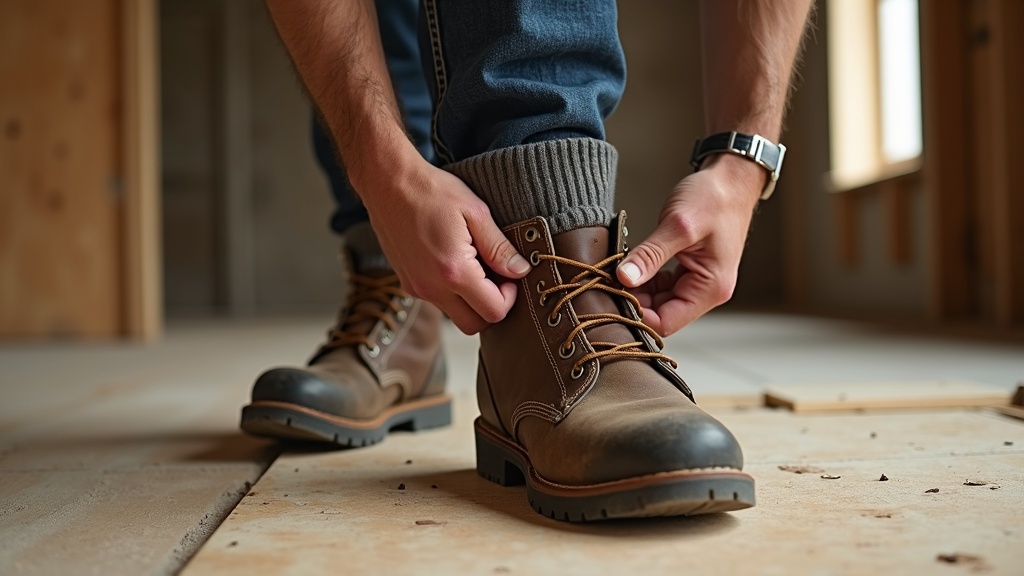
You need a medium to heavy cushion crew or OTC sock with a defined heel pocket so the sock doesn't migrate inside a stiff boot. Merino wool or a merino-nylon blend handles the temperature swings. Darn Tough and Carhartt Force are built for this.
Warehouse and Concrete Floors
Concrete has zero give. You need maximum cushioning at the heel and forefoot, plus arch compression to fight the fatigue that sets in around hour four. Feetures Elite and Sockwell Elevation are strong picks here.
Healthcare and All-Day Standing
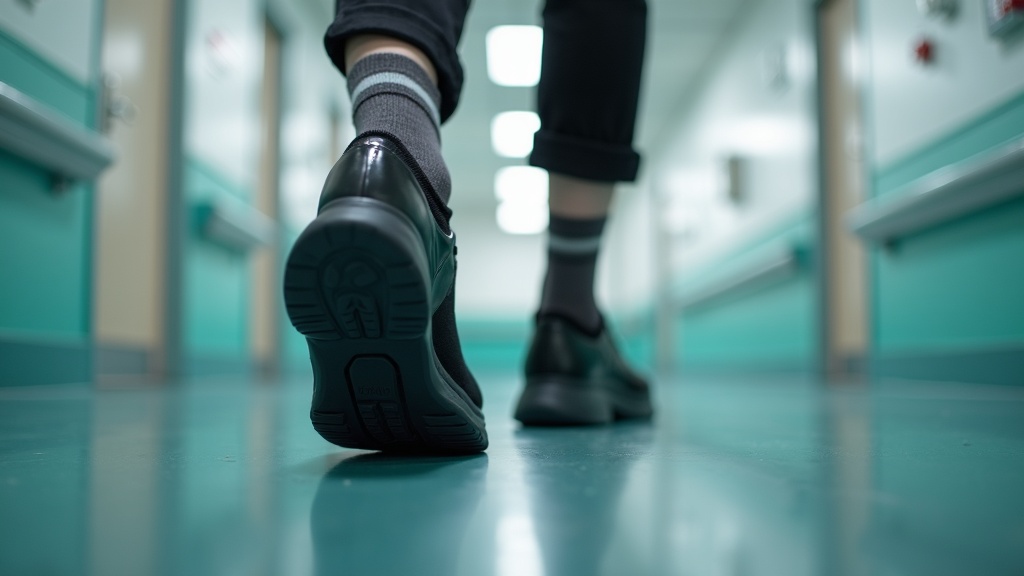
Low-profile compression socks with an arch band fit under closed-toe shoes without bulk. Sockwell and Thorlos both make versions that pass a dress code and still do the job.
Did you know?
The American Podiatric Medical Association estimates that roughly 25% of adults in the U.S. have flat feet. Yet most work sock manufacturers don't design specifically for the pronation pattern that comes with it. That gap is exactly why off-the-shelf socks so often fail flat-footed workers by mid-shift.
Best Work Socks for Flat Feet for Women on the Job
Women's feet are not just smaller men's feet. The arch position differs, the heel is proportionally narrower, and most women's work shoes have a slimmer toe box. Generic unisex socks bunch or slip because of that shape mismatch.
Look for socks with women's-specific sizing and an anatomical fit. Feetures makes left/right specific socks sized for women's foot geometry. Darn Tough's women's line uses the same lifetime warranty construction as their men's. Sockwell's women's Elevation sock fits most women's dress and work shoes without bunching at the toe.
What Podiatrists Actually Say About Socks for Flat Feet
Podiatrists are consistent on one point: a sock is not a substitute for orthotics if your flat feet are causing significant pain or gait problems. If you're getting heel pain, shin splints, or knee ache from your job, get evaluated.
That said, they do recommend arch-support socks as a first-line addition to good footwear, especially for workers who can't wear bulky orthotics inside a safety-toe boot. The compression keeps the soft tissue from fatiguing as quickly, and cushioning protects against repetitive impact on hard surfaces.
The clinical consensus: merino wool or synthetic moisture-wicking socks with targeted compression and a defined arch band are the practical minimum for flat-footed workers. Cotton athletic socks are the worst choice you can make.
How to Make Your Work Socks Last Longer and Work Harder
- Rotate at least three pairs per work week. Compression elastics need 24 hours to recover their tension between wears.
- Wash in cold water on a gentle cycle. Hot water breaks down elastic fibers fast.
- Air dry whenever possible. Dryer heat is the number one killer of cushioning and arch band elasticity.
- Turn socks inside out before washing to protect the outer surface and reduce pilling.
- Replace when the arch band goes slack. Once it stops gripping your midfoot, the sock is no longer doing its main job.
- Store flat or rolled, not balled up. Balling stretches the cuff elastic over time.
The Bottom Line Before You Buy
Spend the money once on a sock that has a real arch band, targeted cushioning, and moisture-wicking fiber. The $4 six-pack from the hardware store will cost you more in foot pain and replacement costs than a quality pair that lasts two years with proper care.
If you're not sure where to start: Darn Tough for durability, Feetures for precision fit, Sockwell for compression. All three make women's-specific and men's-specific sizing. Pick the one that matches your job type and your boot fit, and rotate at least three pairs.
