


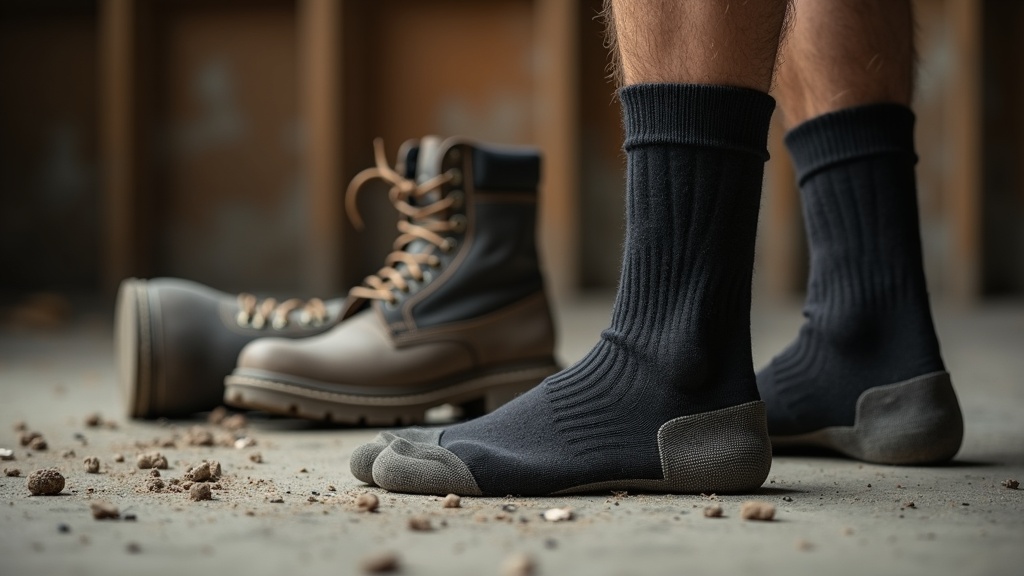
Most guys don't think about their socks until their feet are screaming at 10 a.m. By then, the blister is forming, the sock has bunched at the heel, and you've got six more hours in those boots. That's not a comfort problem. That's a gear problem.
Black crew work socks for men are not all the same. The gap between a $2 pair from a gas station bin and a properly built work sock is the difference between a decent shift and a miserable one. Here's what separates the two.
Key points at a glance
- Cheap socks fail fast because they skip cushioning where boots create pressure
- Moisture-wicking synthetics and merino wool outperform plain cotton on a long shift
- Crew height is the sweet spot for most work boots; ankle socks leave your leg unprotected
- Waterproof work socks exist and are worth it in specific wet conditions
- Buying in bulk cuts cost without cutting quality if you pick the right brand
- How you wash and dry your socks determines how long they last
What a solid work sock does for you
Why Your Socks Are Failing You by Noon
Three things kill a work sock early: thin fabric at the heel, a weak elastic band that rolls down inside your boot, and zero moisture management. When sweat has nowhere to go, it sits against your skin. That warmth and friction is exactly what creates hotspots and blisters.
Most bargain socks use low-grade cotton that holds moisture like a sponge. After two hours on your feet, you're basically walking in a wet rag. The fix isn't expensive. It's just knowing what to look for.
What Makes a Black Crew Work Sock Worth Buying
There are five things that matter. Everything else is marketing.
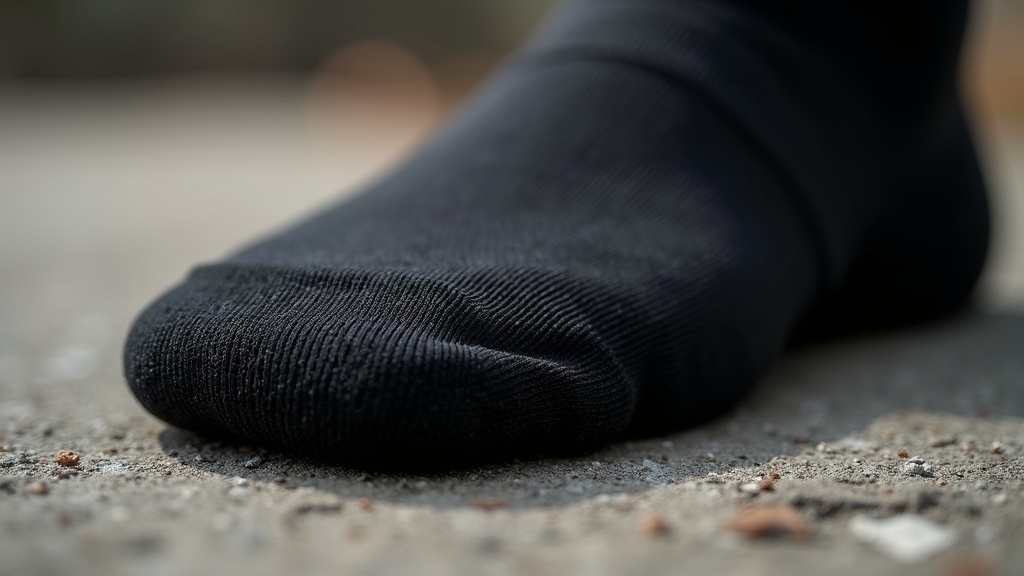
- Cushioning zone: Thick at the heel and ball, thinner at the arch to reduce bulk
- Moisture wicking: Synthetic fibers or merino wool that pull sweat away from skin
- Reinforced toe and heel: Extra yarn density where boots create the most wear
- Non-slip grip band: Holds the sock at the calf so it doesn't migrate down
- Flat or linked toe seam: Anything bulky across the toes will wreck you by lunch
Black is the practical choice for trades work. It hides dirt, grease, and concrete dust. You don't have to sort them. They look sharp under any pant leg. That's the whole argument.
Cotton vs. Wool vs. Synthetic: Which Material Works Hardest
Material is where most buying decisions go wrong. People default to cotton because it's familiar. It's also the worst option for a long day in boots.
| Material | Moisture Control | Durability | Best For |
|---|---|---|---|
| Plain Cotton | Poor, holds sweat | Low, pills and thins fast | Light office wear only |
| Merino Wool | Excellent, natural wicking | High with nylon blend | Cold weather, outdoor trades |
| Polyester/Nylon | Good, fast drying | Very high, resists abrasion | Warm climates, high-output work |
| Cotton-Poly Blend | Moderate | Moderate | Everyday work, budget-friendly |
| CoolMax / Dri-FIT | Excellent, engineered wicking | High | Summer heat, manual labor |
The real-world winner for most trades workers is a wool-nylon blend or a polyester-nylon blend. Wool handles odor naturally. Nylon adds the toughness. You get two or three seasons out of a pair instead of two months.
Did you know?
Merino wool fibers can absorb up to 30% of their own weight in moisture before feeling wet against the skin, compared to cotton which feels damp almost immediately. That's why ranchers and cold-climate workers have relied on wool socks for over a century.
The Best Black Crew Work Socks for Men Right Now
These brands consistently show up on jobsites for a reason. They've earned the reputation the hard way.
Darn Tough (Vermont, Merino Wool)
Built in Vermont, backed by an unconditional lifetime guarantee. The 40% nylon content keeps the merino wool from wearing through. Pricey up front, but you replace them for free if they fail. For serious trades workers, this is the ceiling.
Carhartt Force (Polyester Blend)
A solid budget-to-mid pick for guys who want moisture-wicking work socks without spending $25 a pair. The FastDry technology genuinely works in summer heat. Available in bulk packs. One of the most worn socks on construction sites in the U.S.
Dickies Dri-Tech (Cotton-Poly Blend)
The everyday workhorse. You can grab a six-pack for under $20. They won't last as long as Darn Tough, but they're dependable enough for daily wear and easy to rotate. Good choice if you run through socks fast because of the type of work you do.
Wigwam Master (Wool Blend)
Made in Sheboygan, Wisconsin since 1905. Their Master sock uses a wool-nylon-polyester blend that punches above its price point. Good for colder months or outdoor work where warmth still matters.
Ankle vs. Crew vs. Mid-Calf: Picking the Right Height for Your Boot
Height isn't a style choice when you're wearing work boots. It's a protection and comfort decision.
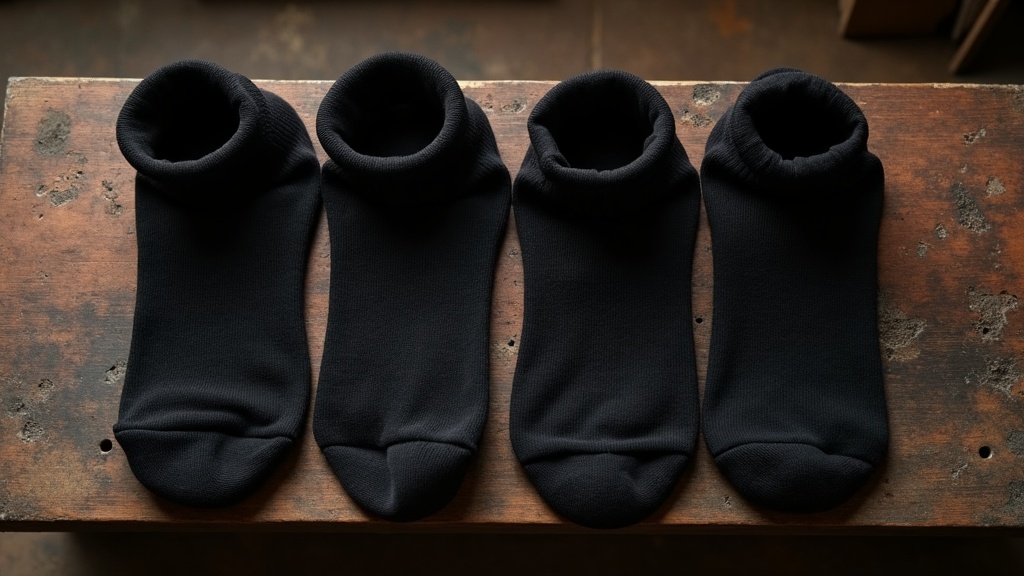
- Ankle black crew work socks (no-show to ankle): Fine for low-cut sneakers or trail runners. In a lace-up work boot, the boot collar will rub directly on bare skin. You'll blister by midday.
- Crew height (8 to 10 inches): The standard for most 6-inch and 8-inch work boots. Protects the ankle and lower leg where the boot collar sits. This is the right call for 90% of trades workers.
- Mid-calf and over-the-calf: Better for tall logger boots and extreme cold. More coverage, more insulation. Some guys prefer these for knee-high muck boots or rubber boots on muddy sites.
If you're buying black crew socks men bulk packs, crew height is the safest universal choice for a mixed rotation of boots.
Waterproof Work Socks: When You Actually Need Them
Waterproof socks exist, and they work. But they're a specific tool for specific conditions, not an everyday sock.
Brands like SealSkinz and Showers Pass make waterproof black crew work socks for men using a three-layer system: outer fabric, a waterproof breathable membrane, and a soft inner liner. They keep your feet dry in standing water, rain, and mud.
The trade-off: they're bulkier, less breathable in heat, and run $30 to $60 per pair. Worth every dollar if you're doing utility work in wet trenches, roofing in the rain, or working winter construction. Not necessary if you're in a dry warehouse or indoor site.
Did you know?
Trench foot, once a battlefield injury, still shows up in construction and utility workers today. It develops after prolonged exposure to cold, wet conditions inside a boot. A quality waterproof or moisture-wicking sock is one of the most practical defenses against it.
How to Get More Life Out of Your Work Socks
Good socks last longer when you treat them right. These aren't complicated steps.
- Wash in cold water, not hot. Heat breaks down elastic fibers and shrinks natural fibers.
- Air dry or use low heat. The dryer is the number one killer of sock elasticity. Even a few air-dry cycles a week adds months to the lifespan.
- Rotate a full week's worth. Wearing the same pair two days in a row, even washed, compresses the cushioning faster.
- Don't wash them inside out. It pulls the terry loops apart and thins the cushioning over time.
- Replace on a schedule, not on sight. By the time the heel is visibly thin, it's been hurting you for weeks already.
What to Spend and Where to Buy Without Getting Burned
Here's a straight price breakdown based on what you actually get at each tier.
- Under $5 per pair: Expect 2 to 4 months of hard use. Fine for backup pairs or light-duty days. Avoid for daily boot wear.
- $5 to $12 per pair: The sweet spot for most workers. Carhartt, Dickies, Wigwam. Buy in multi-packs to bring the per-pair cost down. This is where best work socks for men value actually lives.
- $15 to $30 per pair: Premium territory. Darn Tough, Smartwool. Justified if you're on your feet 10-plus hours, have foot problems, or need serious cold-weather performance.
Where to buy: Tractor Supply, Home Depot, Walmart workwear sections, and Amazon all carry reliable brands. Skip fashion retailers. If the sock looks trendy, it's not built for a boot. For black crew socks men bulk orders, Amazon and Carhartt's own site usually have the best multi-pack pricing.
Your boots get polished, resoled, and broken in over months. Give your socks the same basic respect. A $10 pair of quality cushioned work socks for men will do more for your feet on a hard shift than most insoles you can buy. Pick the right material, get the right height, wash them smart, and rotate enough pairs to let each one recover. That's it.
