


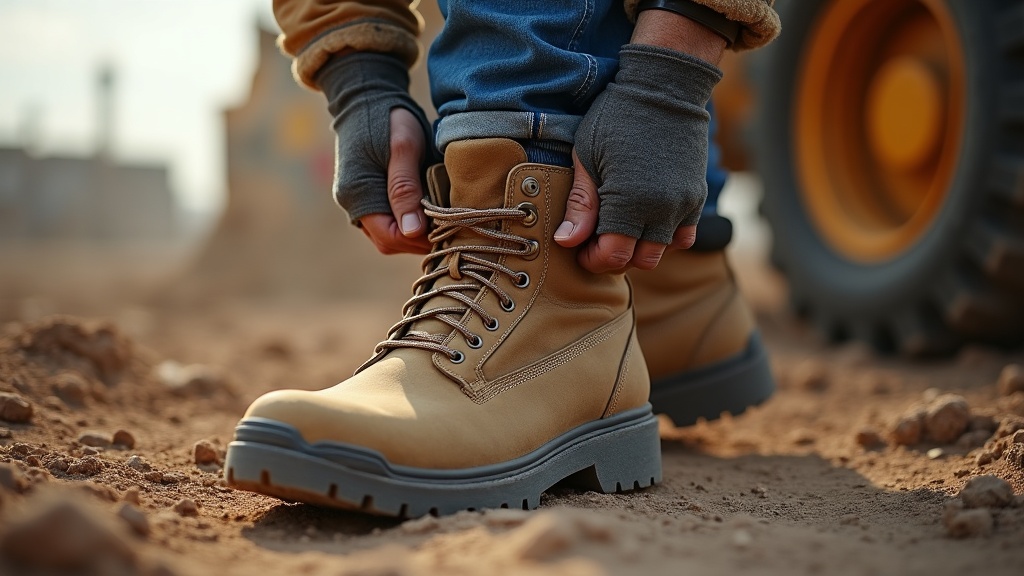
Most guys spend serious money on work boots and zero thought on what goes inside them. That's a mistake. The wrong sock turns a good boot into a blister machine by noon.
This is a straight rundown of boot socks for guys that actually do the job: cushion, durability, moisture control, and fit that doesn't slide down to your heel mid-shift.
Key points at a glance
- Cushioning placement matters: look for reinforced heel and ball, not just a thick overall fabric.
- Merino wool and wool blends outperform cotton on every job site metric.
- Sock height should match your boot shaft to prevent rubbing and bunching.
- Military-grade and construction socks share most of the same specs. The label is marketing; the specs are what count.
- Washing habits kill socks faster than hard work. High heat is the enemy.
- Cowboy boot socks need a longer leg and a slimmer profile than standard work socks.
What a Good Work Sock Does for You
Why Your Boot Socks Matter More Than You Think
Your feet take somewhere between 8,000 and 10,000 steps a day on a typical job site. Every one of those steps sends force through your heel and ball. The sock is the only layer between your skin and a hard leather or rubber boot wall.
Bad socks mean friction. Friction means blisters. Blisters mean you're limping by Wednesday and calling out by Friday. That's not dramatic, that's just how it goes on concrete and gravel all day.

What to Look For in a Work Boot Sock (The Short List)
Skip anything that doesn't check these boxes:
- Reinforced heel and toe: Not decorative stitching. Actual dense-loop cushioning in the impact zones.
- Moisture-wicking fiber: Wool or synthetic blend. Not 100% cotton.
- Arch support band: A compression band mid-foot keeps the sock from migrating down inside the boot.
- Flat toe seam or seamless toe: Raised seams cause hot spots under steel-toe caps. Non-negotiable.
- Correct height for your boot shaft: Crew for lace-up work boots, over-the-calf for tall western or logger boots.
Did you know?
The American Podiatric Medical Association estimates that nearly 75% of Americans will experience a foot problem at some point in their lives. For men who stand on hard surfaces more than six hours a day, that number climbs significantly, and most cases trace back to inadequate footwear support, including socks.
The Best Boot Socks for Guys Who Work on Their Feet All Day
The brands that consistently hold up in real work conditions are Darn Tough (Vermont merino, lifetime guarantee), Carhartt (good thick boot socks for work at a fair price), Wigwam (American-made, consistent quality for decades), and Thorlos (patented padding system, podiatrist-recommended).
If your employer or budget is tight, Carhartt and Dickies give you solid cushioned work boot socks without the premium price. You won't get the same fiber quality, but you'll be in better shape than a drugstore three-pack.
Crew vs. Mid-Calf vs. Over-the-Calf: Which Height Makes Sense for You
Crew height (6 to 8 inches)
Fits standard 6-inch and 8-inch work boots. Most common for construction and warehouse work. Mens crew boot socks are the default choice for lace-up boots with a lower shaft.
Mid-calf (9 to 11 inches)
Better for taller boots, like 10-inch logger or lineman boots. Keeps the top of the boot from rubbing bare skin when you're climbing or kneeling all day.
Over-the-calf (knee-high)
The right call for tall western boots and any military-style tall boot. Eliminates the boot-top rub entirely and stays put without a garter. These are also the go-to for cowboy boot socks for men: slim profile, long leg, no bunching under the boot shaft.
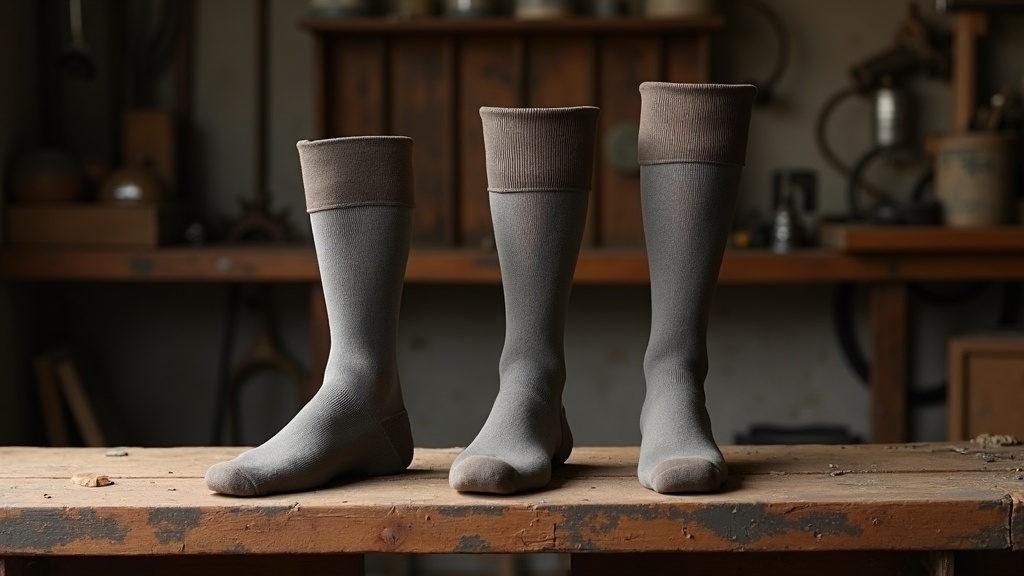
Materials Breakdown: Wool, Synthetic, Cotton, and What to Skip
| Material | Best For | Watch Out For | Durability |
|---|---|---|---|
| Merino Wool | All-season work, odor control, temperature regulation | Higher cost, needs gentle wash cycle | Excellent (especially blended with nylon) |
| Wool Blend (wool + nylon) | Heavy-duty work, reinforced zones, abrasion resistance | Slightly less breathable than pure merino | Very good to excellent |
| Synthetic (polyester/nylon) | Hot, wet environments, fast-drying needs | Odor builds up faster than wool | Good |
| Cotton | Light indoor use only | Holds moisture against skin, causes blisters | Poor for hard use |
| CoolMax / Moisture-Wicking Blends | Summer work, high-sweat conditions | Less cushion than wool options | Good |
Cotton is the one to avoid for actual job site use. It soaks through, stays wet, and that moisture against your skin is a direct path to blisters and athlete's foot. Save the cotton for the weekend.
Boot Socks for Specific Jobs: Construction, Warehouse, Cowboy Boots, and Military
Boot socks for construction workers
You need thick boot socks for work with reinforced heel and toe, arch compression, and a moisture-wicking blend. Darn Tough's Hiker Micro Crew or Wigwam's Ironman are solid picks. Look for at least 18% nylon in the blend for abrasion resistance on rough boot interiors.
Warehouse and concrete floors
Fatigue from concrete is a real thing. Prioritize maximum cushioning in the sole. A sock rated for over 8 hours of standing does more for your knees than a $40 insole in many cases.
Cowboy boot socks for men
Cowboy boots have a tight shaft. You need an over-the-calf sock with a slim leg profile. A thick hiking sock bunches up and cuts off circulation. Brands like Wrangler and Justin make purpose-built western boot socks. Smooth heel, thin leg, solid toe reinforcement.
Boot socks military grade
Military-spec socks like those made to Berry Amendment standards use a wool-nylon blend with specific cushion zones mapped to patrol and rucking. Fox River and Thorlos both make military-grade options available to civilians. They're built for 20-mile humps, so a 10-hour shift is easy work for them.
Did you know?
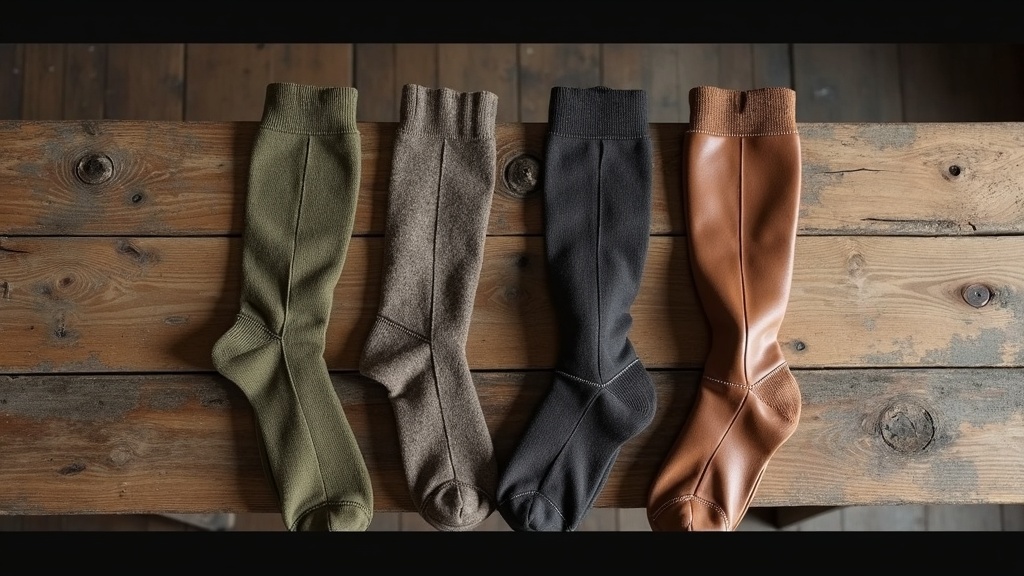
Merino wool fibers can absorb up to 35% of their own weight in moisture before they feel wet against your skin. That's why a merino work sock stays comfortable through an entire shift even when you're sweating, while a cotton sock turns into a damp rag within the first two hours.
How to Make Your Boot Socks Last Longer
A quality pair of work socks costs $15 to $25. Most guys destroy them in the wash, not on the job.
- Wash cold, always. Hot water breaks down elastic fibers and shrinks wool blends.
- Air dry or low heat. High dryer heat is the fastest way to kill cushioning and shrink the sock off your foot size.
- Rotate your pairs. Wearing the same pair every day without rest compresses the cushion permanently. Six to eight pairs in rotation is reasonable for a full-time worker.
- Turn them inside out before washing to reduce pilling on the outer face.
- Don't bleach wool blends. Ever. It destroys the fiber structure within a couple of washes.
Picking the Right Pair: A Practical Summary
Match the sock to the boot, the job, and the season. A merino wool crew sock in a wool-nylon blend covers most guys doing hard physical work. If you're in a cowboy boot, go over-the-calf with a slim leg. If you're in a military or logger boot, prioritize a thick sole with a reinforced toe box and a tall shaft.
Spend the extra few dollars on a sock built for the work you actually do. Your feet carry the rest of you all day. They've earned it.
