


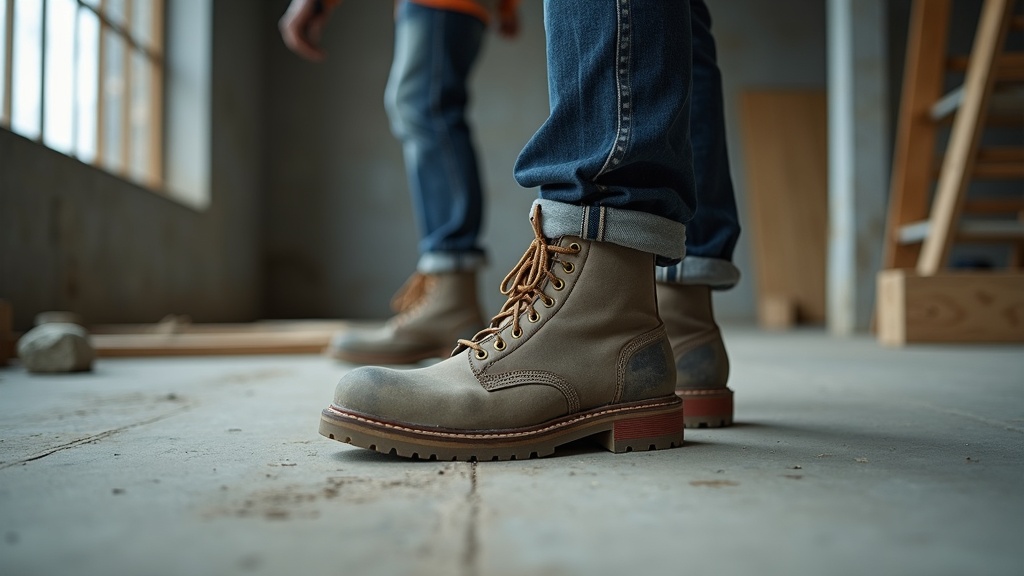
You pull off your boots after a ten-hour shift and there it is: a deep red ring carved into your calf like a brand. It's not a minor annoyance. It's your sock cutting off blood flow for the better part of a workday, and your body is telling you about it the only way it knows how.
The right pair of work socks won't just sit on your foot. They'll support it, breathe with it, and get out of the way when they're not needed. Here's what actually separates a sock that helps from one that hurts.
Key points at a glance
- Sock marks mean constriction, not compression. Those are two different things with very different effects on your legs.
- Graduated compression actively moves blood back up your leg. A tight elastic band just stops it from going anywhere.
- Workers on their feet all day face real circulatory risk. Swollen feet and leg fatigue after work are early warning signs.
- Material matters: merino wool and nylon blends hold structure across a full shift without going limp or squeezing out.
- Fit is everything. Even the best compression sock becomes a tourniquet if you grab the wrong size.
- You don't need to spend a fortune, but the cheapest option usually costs you more in the long run.
What good work socks actually do for you
Why your work socks are leaving marks (and why that's a problem)
A red ring around your ankle or calf after work isn't just cosmetic. It means the elastic in your sock was pressing hard enough, long enough, to leave an impression in your tissue. Blood was being restricted at that point for hours.
For trades workers, electricians, concrete workers, or anyone standing and moving all day, that's not a small thing. Chronic constriction slows venous return, the process by which blood moves back up from your feet toward your heart. Over time, that leads to varicose veins, chronic swelling, and the kind of leg pain that doesn't quit at the end of your shift.
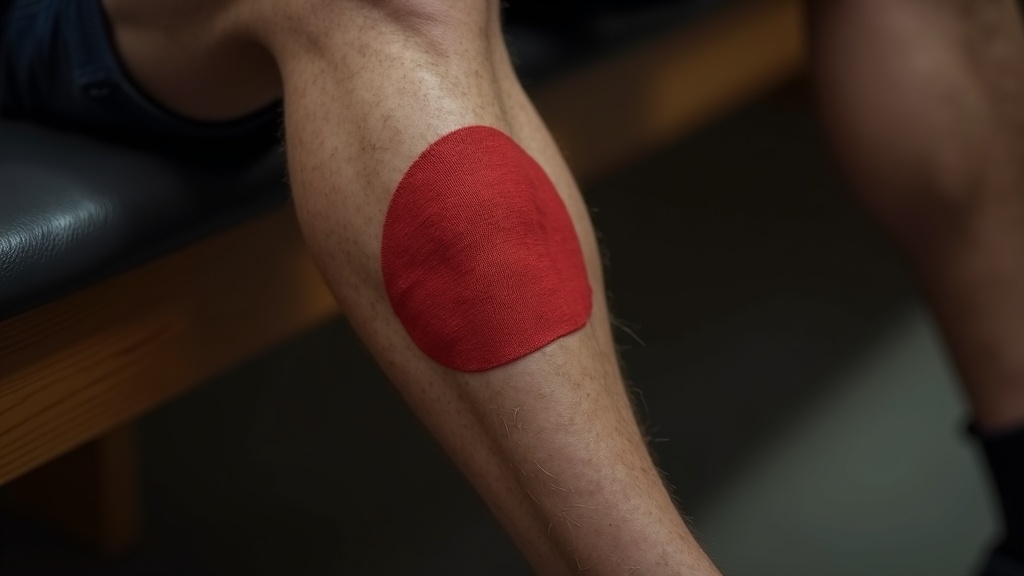
What causes those tight bands around your ankles and calves
The culprit is almost always the elastic band at the sock cuff. Budget work socks use a single-density elastic that applies uniform pressure. It doesn't flex with your movement. It just clamps.
A few specific causes:
- Wrong size: A sock that's too small pulls tighter at the cuff, concentrating pressure in a narrow band.
- Low-quality elastic: Cheap elastic degrades fast and often starts too stiff, then loses grip entirely after a few washes.
- No graduated design: A flat-compression or no-compression sock puts the same pressure everywhere. That's not how legs work.
- Cotton-heavy blend: Cotton holds moisture and loses its shape, causing the sock to bunch and create pressure points inside the boot.
Compression vs. constriction: not the same thing
This is the part most people get wrong. They hear "compression sock" and think it means tighter, so it'll leave more marks. The opposite is true when the sock is built right.
Constriction is a band of uniform pressure that stops blood flow. Compression, done correctly, is graduated: tightest at the ankle, progressively looser up the calf. That gradient is what actively pushes blood upward, toward your heart, instead of letting it pool in your feet and lower legs.
Did you know?
Graduated compression socks rated at 15, 20 mmHg (millimeters of mercury) are the most common over-the-counter level for workers on their feet all day. That pressure level has been clinically shown to reduce leg swelling and fatigue without requiring a prescription. Anything above 30 mmHg should be used only under medical guidance.
The real compression benefits for workers on their feet all day
If you're on concrete for eight to twelve hours, your circulatory system is fighting gravity the entire time. Graduated compression socks give it a hand.
- Less swelling: Compression reduces fluid buildup in the lower legs, which is the main reason your feet feel like bricks by end of shift.
- Less fatigue: Better circulation means your muscles get more oxygen. You're less wrecked at the end of the day.
- Fewer cramps: Pooled blood and dehydration are the two biggest triggers for leg cramps during a shift. Compression addresses the first one directly.
- Reduced varicose vein risk: Over years of standing work, this matters more than most guys think until it's too late.
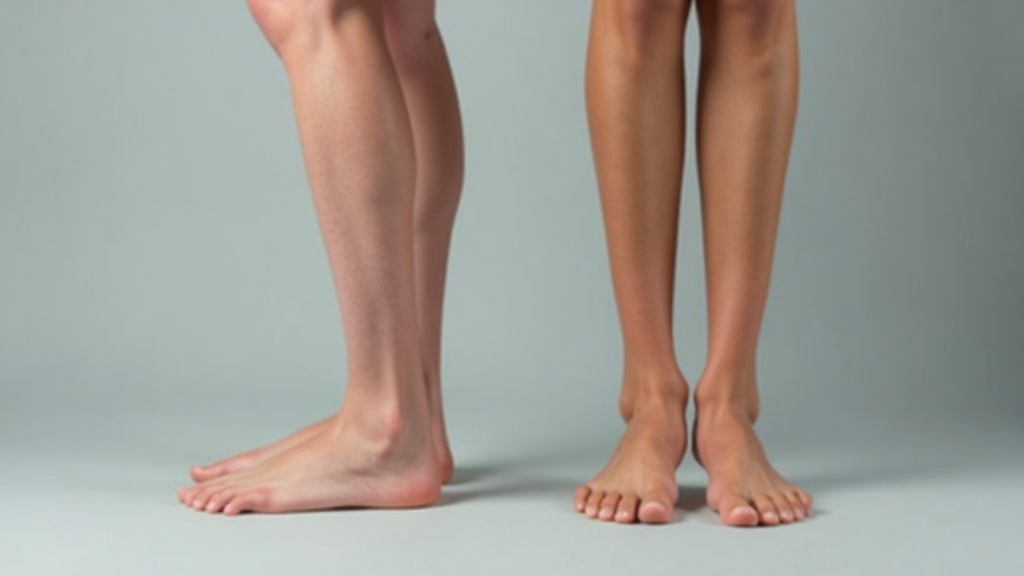
What to look for in work socks that won't leave marks
Not every sock marketed as "non-binding" actually earns that label. Here's what to check before you buy.
Non-binding cuff construction
Look for socks that specify a non-binding or seamless top band. This usually means a wider, softer cuff with less elastic density at the edge. It grips without digging.
Graduated compression rating
For most workers, 15, 20 mmHg is the sweet spot. Enough compression to support blood flow without feeling like you've wrapped your calf in duct tape.
Moisture management
Inside a work boot, moisture is the enemy. It softens skin, causes blisters, and makes socks bunch. You want a fiber that pulls sweat away from your foot and dries fast.
Reinforced heel and toe
Compression benefits disappear quickly if the sock wears through in three weeks. Reinforced zones at the heel and toe are non-negotiable for trades work.
Materials that hold up through a full shift without squeezing you out
| Material | Best For | Watch Out For |
|---|---|---|
| Merino Wool | All-season temp regulation, odor resistance, moisture wicking | Higher price point, some shrinkage if machine-dried hot |
| Nylon blend | Durability, shape retention, holds compression structure | Less breathable on its own; needs a moisture-wicking partner fiber |
| Spandex / Lycra | Graduated compression structure, stretch and recovery | Degrades with high-heat washing; always check care label |
| Polyester | Fast drying, affordable, pairs well with wool | Can trap odor over time without antimicrobial treatment |
| Cotton (pure) | Initial softness | Holds moisture, loses shape fast, poor choice for long shifts or boots |
The best socks for trades workers usually combine two or three of these. A merino-nylon-spandex blend is a reliable formula: the merino handles moisture and temperature, nylon adds durability, spandex holds the compression structure in place.
Did you know?
Merino wool fibers can absorb up to 30% of their weight in moisture without feeling wet against your skin. That's why merino-blend socks inside a work boot stay drier and more comfortable than cotton-blend alternatives, especially during heavy physical work in warm conditions.
Top features worth paying for (and what you can skip)
Worth every dollar
- True graduated compression with a stated mmHg range
- Non-binding, wide cuff band specifically engineered not to dig
- Cushioned footbed with targeted padding at ball and heel
- Reinforced heel and toe zones with higher-density knit
- Moisture-wicking and antimicrobial treatment for all-day wear
Can skip without losing much
- Specialty "cooling technology" marketing labels (good moisture management does this already)
- Branded compression zones that aren't backed by actual mmHg ratings
- Novelty patterns that add to the price but nothing to the performance
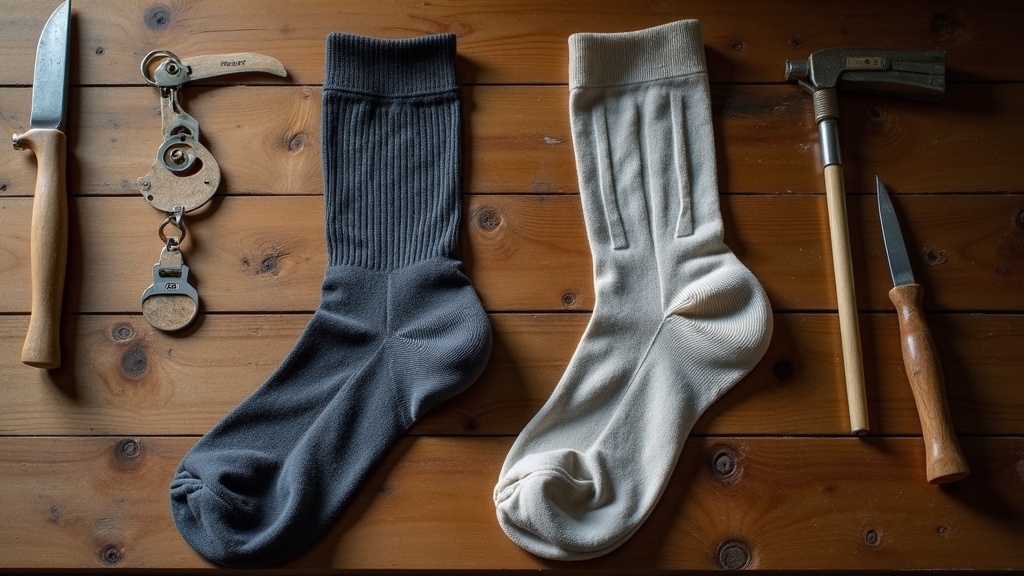
How to size work compression socks so they actually fit right
Compression socks are sized differently from regular socks. Most brands size by shoe size and calf circumference, not just foot size. Get a tape measure and check your calf at its widest point before you order.
If you're between sizes, go up. A slightly looser fit won't compromise the compression much. A too-tight sock will cause the exact problem you're trying to solve.
- Measure your calf in the morning, before a shift, when swelling is minimal.
- Check the brand's specific size chart. Sizing varies widely between manufacturers.
- Pull the sock on fully before judging comfort. A compression sock that feels tight at the ankle while only half on is normal. Once seated correctly, it should feel firm, not painful.
Your feet carry you all day, so gear them right
If your current socks are leaving marks, that's your body asking you to make a change. Work socks that don't leave marks aren't a luxury item. They're the same category as good boots or a quality pair of gloves: basic protection for the tools you use to earn a living.
Start with the right material blend. Add graduated compression in the 15, 20 mmHg range. Make sure the cuff is non-binding and the sock fits your actual calf measurement. After a week in a good pair, your legs will feel it at the end of the day, in the best possible way.
