


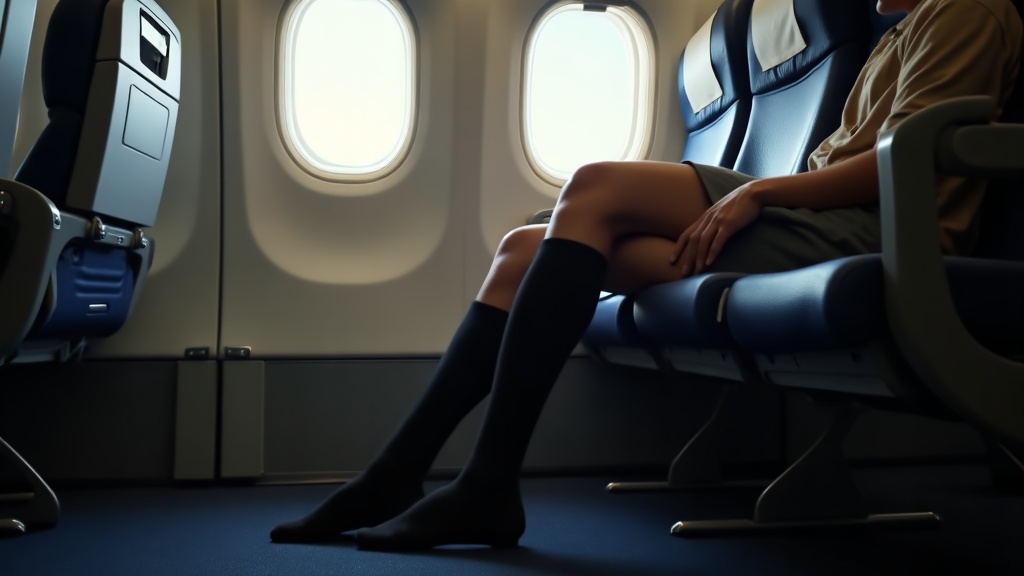
Four hours doesn't sound like much. You've worked longer shifts standing on concrete. But sitting still in a pressurized cabin at 35,000 feet is a different kind of stress on your legs, and a lot of people step off the plane with swollen ankles and tight calves without knowing why.
The short answer: yes, compression socks for a 4 hour flight are worth it for most people. Here's exactly what they do, who actually needs them, and how to pick a pair that does the job.
Key points at a glance
- A 4-hour flight is long enough to trigger leg swelling and raise DVT risk, especially in tight economy seats.
- Compression socks work by pushing blood back up toward the heart before it pools in your lower legs.
- Most healthy travelers do well with 15-20 mmHg; higher-risk individuals should use 20-30 mmHg.
- Knee-high is the right cut for flying: it covers the zone where fluid actually accumulates.
- Put them on before you board, not after you're already sitting in the gate area for an hour.
- Take them off within a few hours of landing once you're moving around normally again.
Why Compression Socks Earn Their Place in Your Carry-On
A 4-Hour Flight Is Long Enough to Cause Real Problems
Most people think DVT and serious leg issues only happen on transatlantic hauls. That's not accurate. Research published in medical literature flags flights over 3 hours as the threshold where circulatory risk starts climbing.
Economy seats are built for revenue, not blood flow. Your knees are bent, your feet barely move, and cabin pressure drops to the equivalent of sitting at 6,000 to 8,000 feet. Lower air pressure means lower oxygen partial pressure, which slows venous return. Your blood gets slightly thicker, and it sits in your lower legs longer than it should.
By hour four, some travelers step off with ankles that look like they've been on their feet all day in the sun. Others feel a dull ache behind the knee. Neither is normal. Both are preventable.

What Compression Socks Actually Do for Your Legs in the Air
The mechanism is simple. Graduated compression means the sock squeezes hardest at the ankle and gradually releases pressure as it moves up the calf. That gradient pushes venous blood upward, back toward the heart, before it pools.
It also reduces the diameter of superficial veins slightly, which speeds up blood flow velocity. Faster flow means less time for clotting factors to concentrate in one spot.
The result: less swelling, less heaviness, and meaningfully lower risk of a deep vein thrombosis forming during the flight.
Did you know?
A study by the British Journal of Haematology found that wearing properly fitted compression stockings on flights longer than 3 hours reduced leg swelling by up to 70% compared to travelers who wore none.
Who Needs Compression Socks on a 4-Hour Flight (and Who Can Skip Them)
You should wear them if you check any of these boxes:
- Over 40 years old
- Overweight or obese
- Pregnant or recently postpartum
- On hormonal birth control or hormone replacement therapy
- History of blood clots, varicose veins, or DVT
- Recently had surgery, especially on legs or hips
- Prone to swelling after long periods of sitting (truck drivers, desk workers, this means you)
Healthy, active adults under 40 with no risk factors can probably skip them on a single 4-hour flight. But if you're flying both ways in a week, stacking up travel days, or you've noticed any leg issues before, put the socks on.
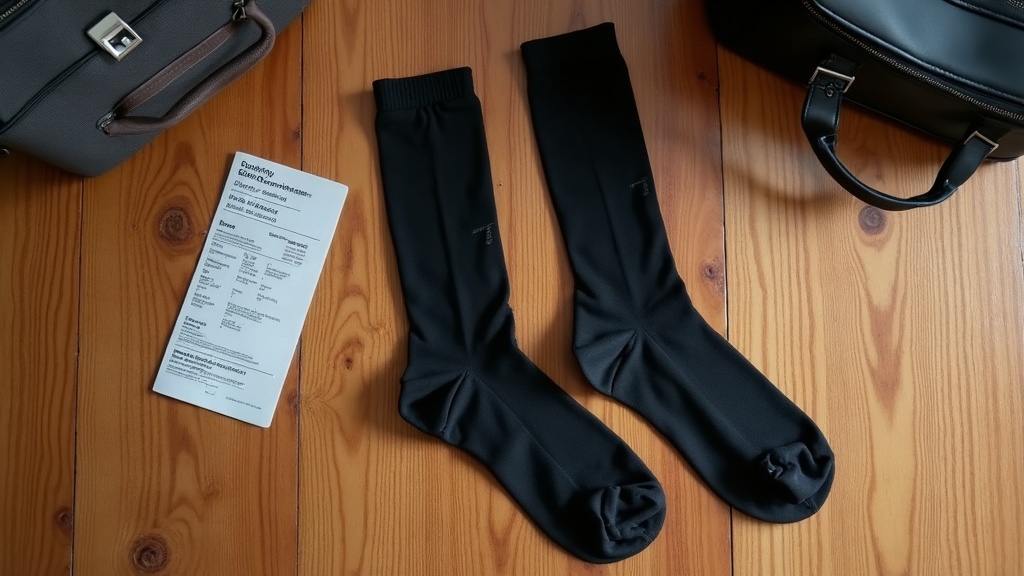
What mmHg Should You Use for Flying (15-20 vs 20-30)
mmHg stands for millimeters of mercury, the same unit used to measure blood pressure. It tells you how much squeeze the sock delivers at the ankle.
Here's the breakdown for flight use:
| Compression Level | Best For | Notes |
|---|---|---|
| 8-15 mmHg | Very mild swelling, first-time users | Light relief, minimal therapeutic effect |
| 15-20 mmHg | Most healthy travelers, moderate swelling risk | Good starting point, no prescription needed |
| 20-30 mmHg | Higher-risk travelers, DVT history, varicose veins | Medical-grade; consult your doctor if unsure |
| 30-40 mmHg | Prescribed cases only | Not for general travel use |
For most people on a 4-hour flight, 20-30 mmHg compression socks hit the sweet spot between real protection and all-day wearability. If you have a diagnosed condition, get your doctor's input before going higher.
Knee-High, Crew, or Full Length: Which Cut Works Best on a Plane
Knee-high compression socks are the answer for flying. The calf and ankle are where fluid collects when you're seated. Thigh-high stockings add coverage that most travelers don't need and are harder to keep in place in a cramped seat.
Crew-length socks that only hit mid-calf give you some compression but miss the ankle, which is the highest-pressure zone. Go knee-high and get full coverage where it counts.
When to Put On Compression Socks Before Your Flight
Put them on before you leave the house. Not at the gate. Not after you've already been sitting for 45 minutes waiting to board. Swelling starts early, and getting ahead of it is the whole point.
If you're driving to the airport, pull them on before you get in the car. That pre-flight commute adds sitting time you're not counting.
Did you know?
Blood pooling in your legs can begin within 90 minutes of continuous sitting, which means your airport wait time before boarding already counts against you.
How to Pick a Pair That Won't Fall Apart After Three Washes
The compression has to hold. A sock that stretches out after a few washes is just a regular sock with a marketing label on it.
Look for these when you shop:
- Nylon/spandex or nylon/lycra blends: These hold compression best over time. They're also breathable enough for a plane cabin.
- Reinforced heel and toe panels: These wear through first. Reinforced zones mean the sock lasts.
- Flat-knit or circular-knit with a smooth interior seam: Less friction against your skin on a long sit.
- Machine washable on cold, laid flat to dry: Heat degrades elastic fibers. Dryer heat destroys compression socks fast.
For men flying in compression socks, look for wider calf options if you have muscular legs. Standard sizing cuts off circulation at the calf on bigger builds, which defeats the purpose entirely. Women's cuts tend to run narrower through the ankle with more gradation, which works well for typical female leg proportions.
When to Take Them Off After You Land
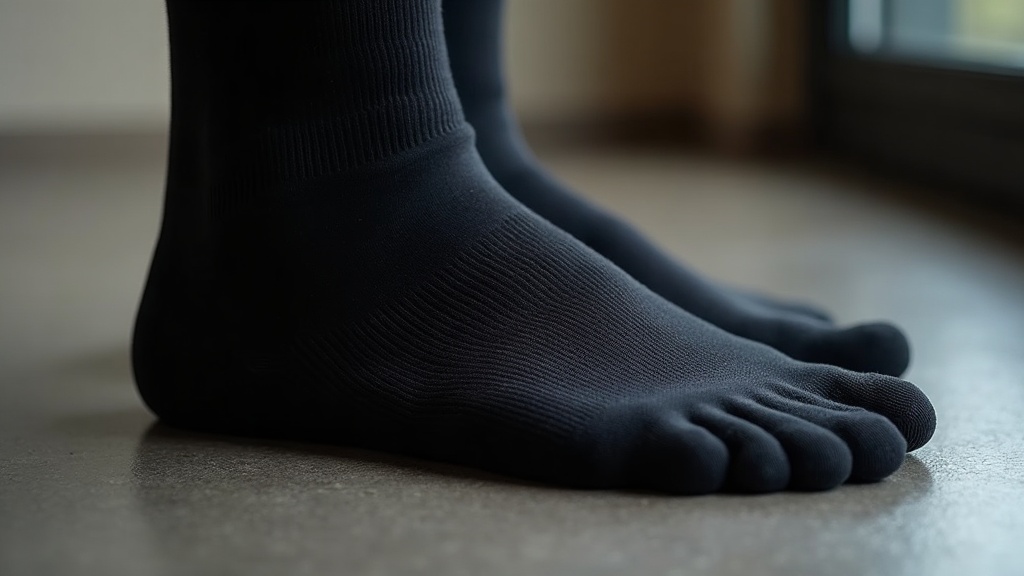
Once you're off the plane and walking normally again, the socks have done their job. You don't need to wear them all day after landing.
A good rule: once you've been on your feet and moving for 30 to 60 minutes post-flight, take them off. If you're going straight into another long sit (a car ride, a meeting room, a bus), keep them on until you're done.
Don't sleep in compression socks unless a doctor told you to. Lying flat changes your circulation dynamics, and the graduated pressure designed for upright sitting can work against you horizontally.
The Bottom Line for Your Next Flight
Grab a pair rated 15-20 or 20-30 mmHg, knee-high, made with nylon-spandex. Put them on before you leave home. Walk when the seatbelt sign goes off. Drink water, not just coffee.
That's a complete, practical routine that costs you almost nothing and keeps your legs working right when you land. Whether you're heading to a job site, a trade show, or a family trip, arriving with functional legs is worth more than whatever you saved by skipping the socks.
