


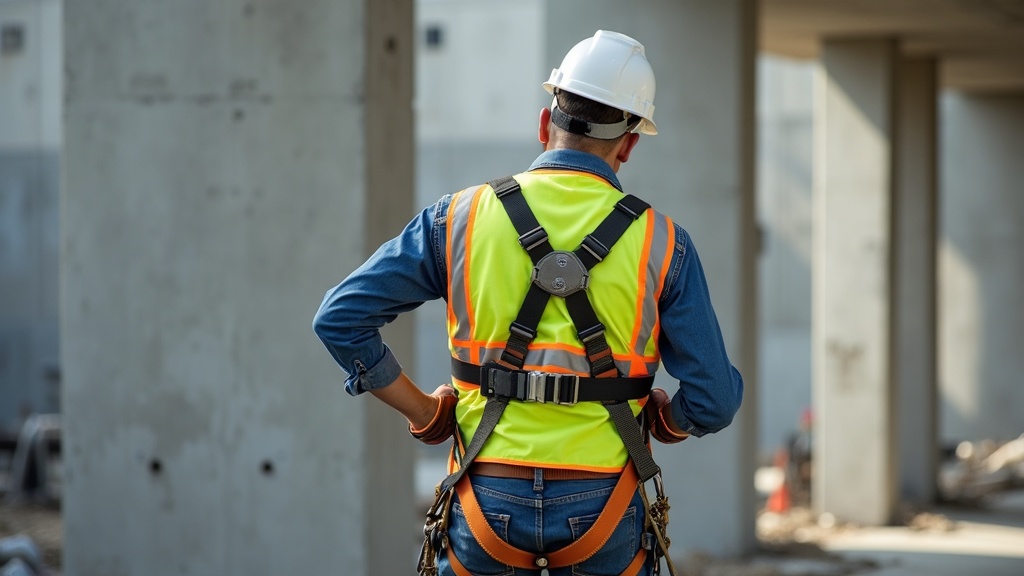
Most guys grab their hard hat and call it a day. That's fine until something comes down from three stories up, or a grinder kicks back, or a trench wall shifts. Construction worker safety gear isn't paperwork. It's the difference between going home and not going home.
This breakdown covers what you actually need on site, what the standards say, and how to avoid spending good money on gear that fails when it counts. No sales pitch. Just the straight story.
Key points at a glance
- Hard hats, eye protection, gloves, and safety boots are non-negotiable on any regulated U.S. jobsite.
- Fall protection harnesses must be ANSI Z359 compliant and inspected before every single use.
- High-vis vests are required near roadways and heavy equipment, not just a courtesy.
- Cheap gear that isn't rated to the right standard doesn't count as protection, it just counts as gear.
- Knowing how to read ANSI and OSHA markings on your PPE lets you verify compliance in under 30 seconds.
- Most safety gear can be sourced at fair prices without sacrificing certification.
Why This Guide Is Worth Your Time
The Non-Negotiables: Safety Gear Every Construction Worker Needs on Site
OSHA 29 CFR 1926 lays out the baseline. No hard hat, no eye protection, no foot protection on most sites means you're in violation before you pick up a tool. That's the legal floor. The practical floor is higher.
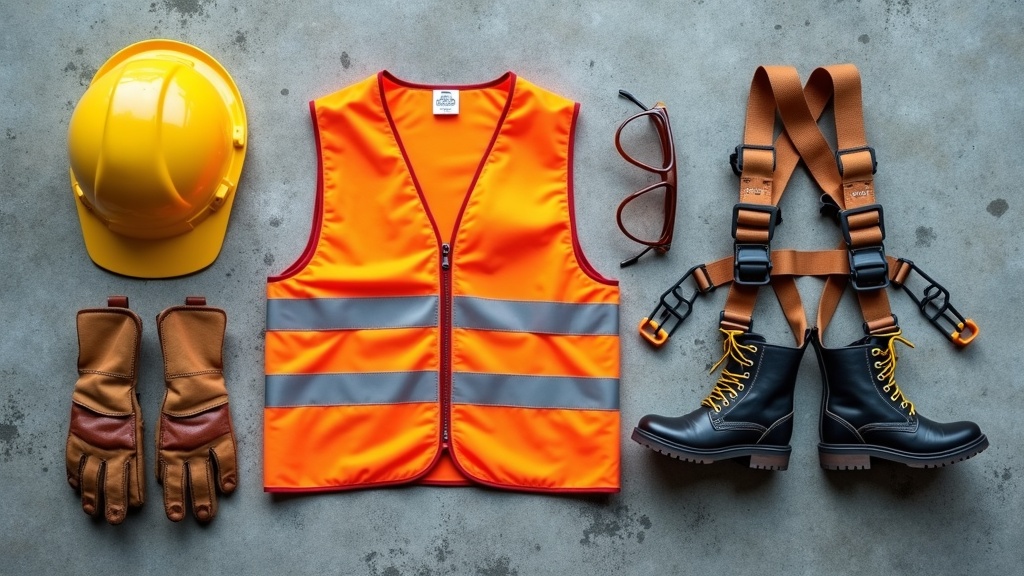
Think of your PPE in layers: head, eyes, hands, feet, body positioning, and visibility. Each layer addresses a specific kill zone. Missing one layer doesn't mean you're mostly protected. It means you have a gap that can end your career or your life.
- Hard hat (Class E for electrical work, Class G for general)
- Safety glasses or goggles (ANSI Z87.1 rated)
- Cut-resistant or impact gloves matched to the task
- Steel-toe or composite-toe boots (ASTM F2413 rated)
- High-visibility vest (ANSI/ISEA 107 Class 2 minimum near traffic)
- Fall protection harness for any work above 6 feet
Read also: Best Insoles for Steel Toe Boot Discomfort (2026 Guide)
Head Protection: Hard Hats That Don't Let You Down
Hard hats fall into two type categories and three electrical classes. Type I protects the top of the head only. Type II adds side impact protection. For most vertical construction, Type II is worth the small price difference.
Electrical class matters if you're working near live lines. Class E (formerly Class B) is rated to 20,000 volts. Class G (formerly Class A) handles 2,200 volts. Class C is conductive metal, fine for general use away from electricity.
Hard hat requirements for construction: what to check
- Look for ANSI/ISEA Z89.1 stamping inside the shell
- Replace after any impact, even if there's no visible crack
- Check the suspension system. A cracked shell with a good suspension still fails
- Retire any hat older than five years from manufacture date, regardless of condition
Did you know?
UV exposure degrades the polycarbonate or HDPE shell of a hard hat even when it's sitting unused in your truck. A hat stored in direct sunlight for extended periods can fail impact tests without ever taking a hit. That's why the five-year retirement rule exists regardless of visible wear.
Eye and Face Protection: Keep Your Vision, Keep Your Job
Roughly 2,000 U.S. workers suffer a job-related eye injury every single day, according to the CDC. The vast majority involve flying particles, concrete dust, or chemical splash, all preventable with proper ANSI Z87.1-rated eyewear.
Safety glasses handle most tasks. Goggles are required when liquids, fine dust, or chemical exposure is in play. Face shields go over glasses or goggles, never instead of them. If a grinder sends a chunk toward your face, a shield alone won't cut it.
Match the lens to the hazard
- Clear lenses: indoor work, low-light conditions
- Tinted lenses: outdoor work in bright sun
- Anti-fog coating: mandatory in humid environments or when wearing a respirator
- IR-shade lenses: required for cutting and welding operations
Hands and Feet: Gloves and Boots Worth the Money
Your hands are your livelihood. Cut-resistant gloves rated to ANSI/ISEA 105 A4 or higher are the call for ironwork, demo, and metal handling. Impact gloves add dorsal protection for heavy equipment and driving work. Don't grab a pair of cheap leather gloves and assume you're covered.
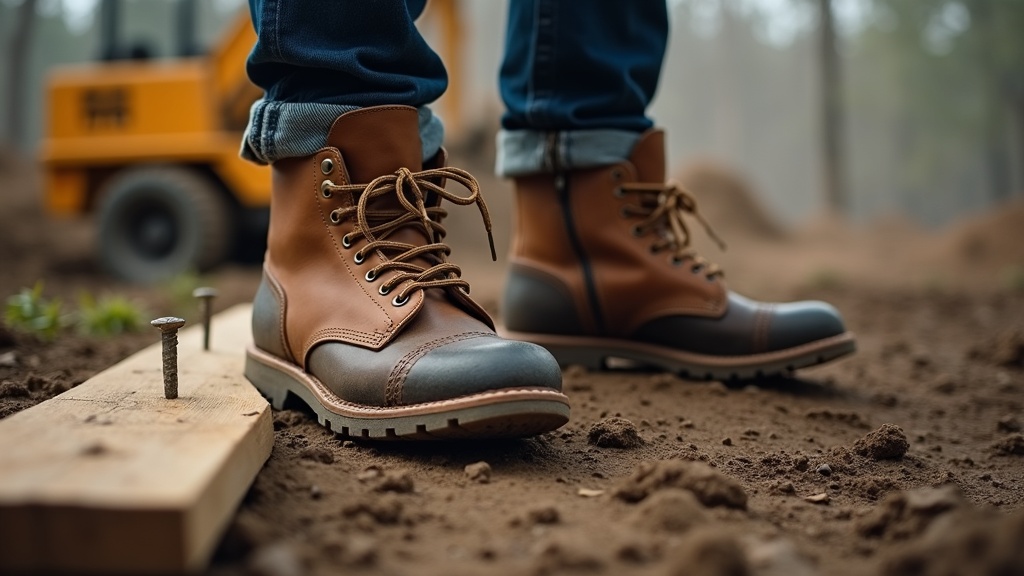
For safety boots, the ASTM F2413 standard is what you're looking for on the label. It covers steel-toe and composite-toe caps, puncture resistance, electrical hazard protection, and metatarsal protection for overhead drop risk. Composite toes are lighter and won't conduct cold or electricity, which matters on electrical and outdoor winter work.
| Boot Type | Best For | ASTM F2413 Marking |
|---|---|---|
| Steel-toe leather | General construction, demo, ironwork | I/75 C/75 PR EH |
| Composite-toe | Electrical work, cold weather, light travel | I/75 C/75 EH (no metal) |
| Metatarsal guard | Heavy overhead drop risk, steel erection | I/75 C/75 Mt/75 |
| Rubber over-boots | Concrete work, wet environments | Varies by manufacturer |
| Dielectric boots | High-voltage environments | EH rated, no steel |
Fall Protection Gear: Harnesses, Lanyards, and Anchor Points Explained
Falls are the leading cause of construction fatalities in the U.S., accounting for over a third of all deaths in the trade annually. OSHA requires fall protection at 6 feet on construction sites (29 CFR 1926.502). A full-body harness is the standard, not a belt.
A harness is only as good as what it's clipped to. Your anchor point must hold 5,000 pounds per worker, or be designed by a qualified engineer as part of a personal fall arrest system. A nail driven into sheathing doesn't count.
Key components of a fall protection harness system
- Full-body harness: ANSI Z359.11 rated, fits snug at chest, legs, and shoulders
- Self-retracting lanyard (SRL): limits free fall to two feet or less
- Shock-absorbing lanyard: six-foot max, extends to 10.5 feet with deployment
- Anchor connector: must meet ANSI Z359.1 or Z359.12
- Snap hooks: double-locking, never gate-loaded under force
Did you know?
A shock-absorbing lanyard that has arrested a fall must be taken out of service immediately, even if it looks fine. The internal deceleration mechanism is single-use by design. Using it again after a fall puts you at serious risk of a failed arrest the second time.

High-Visibility Apparel and Hearing Protection: The Gear People Skip (And Shouldn't)
High-visibility vests are required by OSHA and the MUTCD (Manual on Uniform Traffic Control Devices) anytime workers are near moving vehicles or equipment. ANSI/ISEA 107 Class 2 is the minimum for most roadway and active equipment zones. Class 3 adds sleeves and covers more of the body.
Hearing damage is permanent and cumulative. Most workers don't notice it until they've already lost meaningful hearing range. At 85 dB and above, hearing protection is required under OSHA 29 CFR 1926.52. Jackhammers run at 100+ dB. A circular saw runs around 110 dB. Foam earplugs with a 32 NRR rating cut that exposure significantly.
Quick hearing protection comparison
- Foam earplugs (NRR 29-33): cheap, effective, disposable, good under a hard hat
- Earmuffs (NRR 25-31): easier to put on and remove, better for intermittent noise
- Electronic earmuffs: allow conversation at normal levels, suppress impulse noise
How to Know If Your Safety Gear Is Actually Up to Code
The certification mark is stamped or printed directly on the gear, not just on the packaging. If the stamp isn't on the hard hat shell, the glasses frame, or the boot tongue, you can't verify compliance.
For harnesses, check for the ANSI Z359 designation and the manufacture date. Most manufacturers recommend retiring full-body harnesses after five years of use or ten years from manufacture, whichever comes first. Look for visible signs of fraying, UV degradation (fading and stiffness), or deformed hardware before every use.
Five-second gear check before you put it on
- Certification mark is present and readable
- No cracks, tears, fraying, or corrosion
- Straps and adjusters move freely
- Manufacture or expiration date is within acceptable range
- It fits. Loose PPE doesn't protect properly
Where to Buy Construction Safety Gear Without Overpaying
You don't need to overpay for compliant gear. The certification is what protects you, not the brand name on the shell. Amazon, Grainger, Fastenal, and Uline all carry ANSI and ASTM-rated PPE at competitive prices. For boots, RedWing, Wolverine, and Thorogood offer solid ASTM F2413-rated options in the $120-$180 range that will outlast two pairs of budget boots.
If your employer is supposed to supply PPE and doesn't, that's an OSHA violation you can report anonymously at osha.gov. Know your rights. You are not required to fund your own basic site protection on most regulated jobsites.
Smart buying checklist
- Buy direct from distributor or manufacturer websites to avoid uncertified knockoffs
- Check the certification mark before ordering, not just the product title
- Replacement schedule matters: budget for gloves monthly, boots annually, hard hats every five years
- Ask your foreman or site safety officer which Class is required before buying a vest
- For harnesses, buy new, never used. You have no way to know the history of a second-hand unit
