


Your feet carry you eight, ten, twelve hours a day on concrete, gravel, or steel grating. Most foot pain is not about toughness, it is about the wrong arch height sitting under your foot all day. One bad insole can turn a solid pair of work boots into a torture device.
This guide cuts straight to what matters: how to figure out your arch type at home, what insole height actually fits it, and what to skip. No gimmicks, no upsell language.
Key points at a glance
- The wet foot test gives you your arch type in under two minutes, no tools needed.
- Flat feet need firm, structured support, not just extra cushioning.
- High arches need cushioning first, light arch support second.
- An insole that is too tall causes as much damage as one that is too flat.
- Insole volume must match your boot's internal space or you lose more than you gain.
- A deep heel cup is non-negotiable for workers who stand all day.
What a good insole does for you
Why Arch Height Actually Matters When You Work on Your Feet All Day
The arch of your foot acts like a spring. When it is properly supported, it loads and unloads energy with every step. When it is not, other structures take the hit: plantar fascia, Achilles tendon, knees, lower back.
Factory floors and warehouse concrete do not give. Every step on a hard surface sends a shock wave up your leg. The right insole arch height controls how much of that force your body absorbs versus disperses.
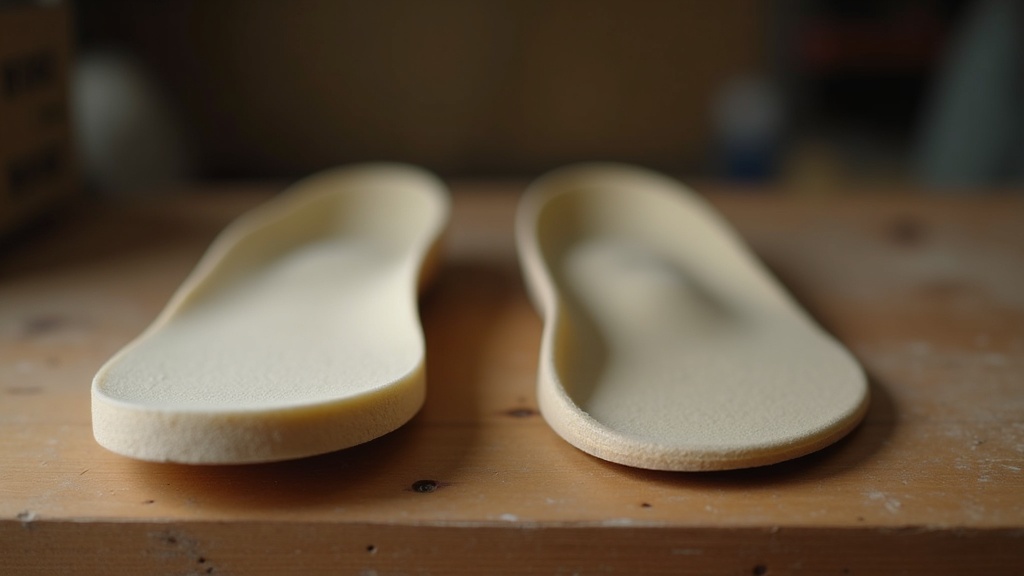
The Wet Foot Test: The Fastest Way to Find Your Arch Type at Home
Wet the bottom of your foot and step onto a piece of cardboard or a paper bag. Step off and look at the print. This is your foot arch type test, zero cost, takes ninety seconds.
Reading your print
- Full print, no curve on the inside edge: flat foot, low arch.
- Moderate curve on the inside, roughly half the foot shows: neutral arch.
- Narrow band or almost no connection between heel and forefoot: high arch.
You can also look at the wear pattern on your current boots. Heavy wear on the inner edge of the heel points to overpronation, which almost always goes with a low arch. Even wear or slight outer-edge wear suggests neutral to high.
Did you know?
About 20 to 30 percent of Americans have flat feet, but studies from the American Orthopaedic Foot and Ankle Society show that flat feet only cause pain when the arch collapses dynamically under load, which is exactly what happens during a 10-hour standing shift on concrete.
Low Arch (Flat Feet): What Support You Need and What to Avoid
Flat feet overpronate, meaning the ankle rolls inward when you step. The best insoles for flat feet are firm, with a low-to-medium structured arch and a wide, deep heel cup. You are not trying to force a high arch, you are controlling the roll.
What to look for
- Semi-rigid or rigid shell (polypropylene or carbon fiber base)
- Medial post or wedge to resist inward roll
- Overpronation insoles often label this as "motion control" support
- Deep heel cup, at least 14mm wall depth
What to avoid
- Soft foam-only insoles: they feel good for an hour and fail by noon
- Insoles with very high arch peaks: they push your arch up past its natural range and cause arch pain
Medium Arch (Neutral Foot): The Most Forgiving Type, But Still Get It Right
Neutral arches handle most insoles reasonably well, but "reasonable" is not the same as optimal. A neutral foot still benefits from a medium arch height insole with moderate cushioning and a supportive heel cup.
Skip the ultra-soft cushion insoles marketed as universal. They compress under body weight and become functionally flat within a few weeks of heavy use. Look for a dual-density construction: a firmer base layer under the arch and heel, a softer top layer for comfort contact.

High Arch: Why Cushioning Matters as Much as Support
A high arch does not spread load across the foot the way a neutral arch does. Pressure concentrates at the heel and the ball of the foot. That leads to metatarsal pain, heel bruising, and stress fractures over time.
The priority for insoles for high arches is shock absorption first, then a contoured arch filler that makes contact with the arch without pushing into it. You want the insole to meet your arch, not lift it.
Key features for high arches
- Thick EVA or polyurethane cushioning at the heel and forefoot
- A medium-high arch contour that fills the gap without creating pressure
- Flexible shell, not rigid, to allow the foot's natural flex pattern
- Metatarsal pad or built-in forefoot cushion zone
Did you know?
People with high arches are roughly twice as likely to develop lateral ankle sprains compared to those with neutral arches, because the foot tends to supinate (roll outward) rather than distribute load evenly. A cushioned insole with a contoured arch reduces that lateral instability on uneven terrain.
How to Tell If Your Insole Arch Is Too High, Too Low, or Just Right
Put the insole in your boot and stand on it for five minutes. Here is how to read what you feel.
Too high
You feel a hard ridge pressing into the middle of your foot. The arch of the insole does not sit flush against your arch, it pushes into it. This causes aching across the midfoot within the first hour.
Too low
No contact between the insole and your arch. Your foot still collapses inward, and the heel cup cannot compensate for the lack of midfoot support.
Just right
The insole meets your arch with even, distributed pressure. You can stand for ten minutes without a pressure point. Walking feels stable without any sharp contact anywhere on the foot.
What to Look for in an Insole Beyond Arch Height (Heel Cup, Materials, Fit)
Arch height is the starting point, not the whole picture. Deep heel cup insoles are critical for workers who stand, walk, or climb for most of the day. The heel cup keeps your heel fat pad from splaying sideways, which is what causes that deep bone bruise feeling after a long shift.
| Feature | What it does | Best for |
|---|---|---|
| Deep heel cup (14mm+) | Contains heel fat pad, reduces bruising | All-day standing, concrete floors |
| Polypropylene shell | Firm motion control, durable | Flat feet, overpronation |
| EVA foam top layer | Shock absorption, soft contact surface | High arches, impact-heavy work |
| Gel heel pad | Targeted cushion under heel strike | Workers on ladders or uneven surfaces |
| Moisture-wicking top cover | Moves sweat away, reduces blister risk | Warm environments, rubber boots |
| Metatarsal pad | Offloads pressure at the ball of the foot | High arches, forefoot pain |
How to Match Insole Volume to Your Work Boot
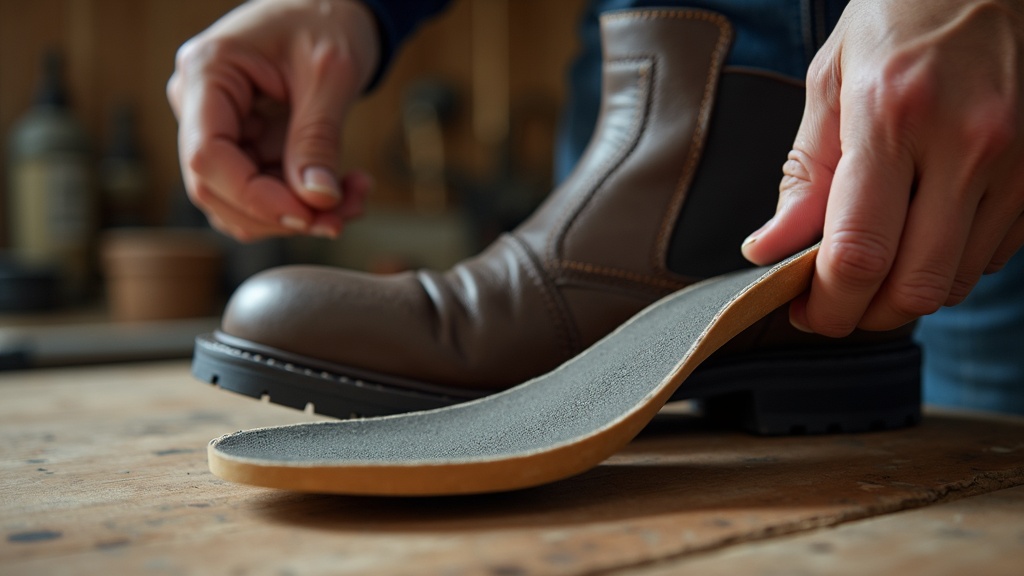
A thick insole in a low-volume boot raises your heel, tightens the toe box, and creates new pressure points. Insole arch support for work boots only works when the volume fits the boot.
Steps to check fit before you commit
- Pull the stock insole out of your boot and set the new insole on top. They should be close to the same thickness at the heel.
- Slide the new insole into the boot and insert your foot without lacing. Your toes should not feel jammed at the front.
- Lace the boot normally. If the tongue sits unusually high or your heel lifts, the insole is too thick for that boot's last.
Low-volume boots (most safety-toe styles with a tight internal fit) need slim or standard-profile insoles. High-volume boots (roomy logger or lineman styles) can handle a full-thickness insole without volume issues.
The Bottom Line: A Simple Decision Tree to Pick Your Arch Height Today
Run your wet foot test. Look at your boot wear. Then follow this straight line.
- Full print, inner heel wear, ankle rolls in: firm low-to-medium arch, motion control shell, deep heel cup. Search for overpronation insoles or flat foot support insoles.
- Half print, even heel wear, no roll: medium arch, dual-density construction, standard to deep heel cup.
- Narrow print, outer heel wear, ankle rolls out: cushioned high-arch contour, flexible shell, gel or thick EVA heel zone.
One more thing: replace your insoles every six to twelve months depending on how many hours you log per shift. A compressed insole looks fine but provides zero support. If the foam does not spring back when you press it with your thumb, it is done.
