


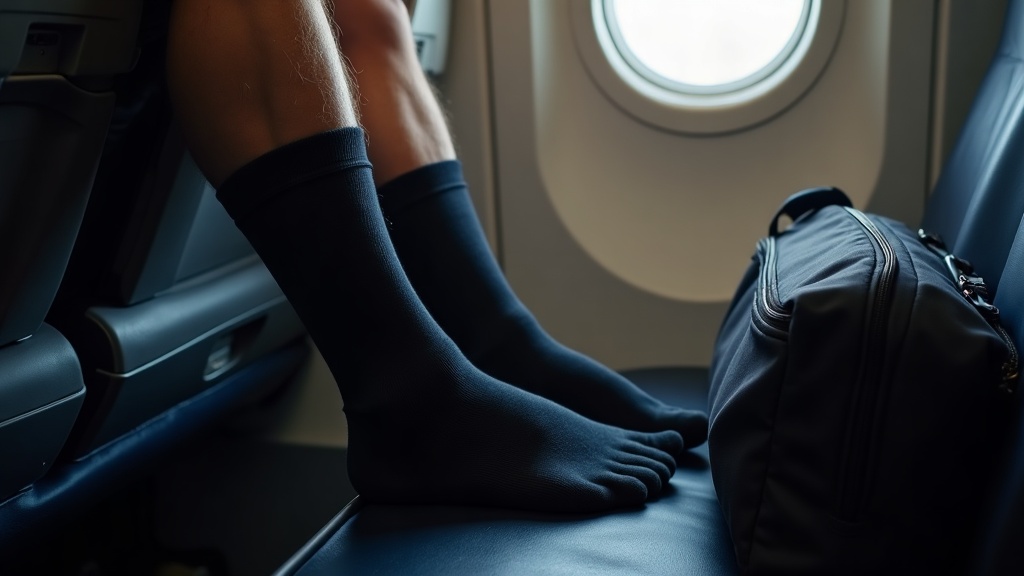
Two hours in the air. You're back on the ground before the peanuts are gone. So why would you bother strapping on compression socks for a trip that short?
For most people, you don't need to. But "most people" isn't everybody, and the guys who actually need them on a two-hour flight are the same ones who never think to ask.
Key points at a glance
- A healthy person on a 2-hour flight doesn't need flight socks, full stop.
- People with varicose veins, recent surgery, obesity, or circulation issues are a different story.
- Flight socks reduce swelling by keeping blood from pooling in your lower legs.
- You can safely wear them all day, but take them off if they cut off circulation or cause pain.
- Simple moves like hydration and walking the aisle do the same job for short flights.
- Flights hitting 4+ hours are where compression socks start making real sense for most travelers.
What flight socks actually do for you
The Short Answer: No, But It Depends on Your Body
Two hours is not enough time for blood to pool dangerously in the legs of a healthy adult. Your veins can handle it. If you're fit, mobile, and have no known circulation issues, skip the flight socks.
But if you've got varicose veins, you're coming off a procedure, or you've been on your feet all week on a job site and your legs already feel heavy, that's a different calculation.
What Flight Socks Actually Do (And What They Don't)
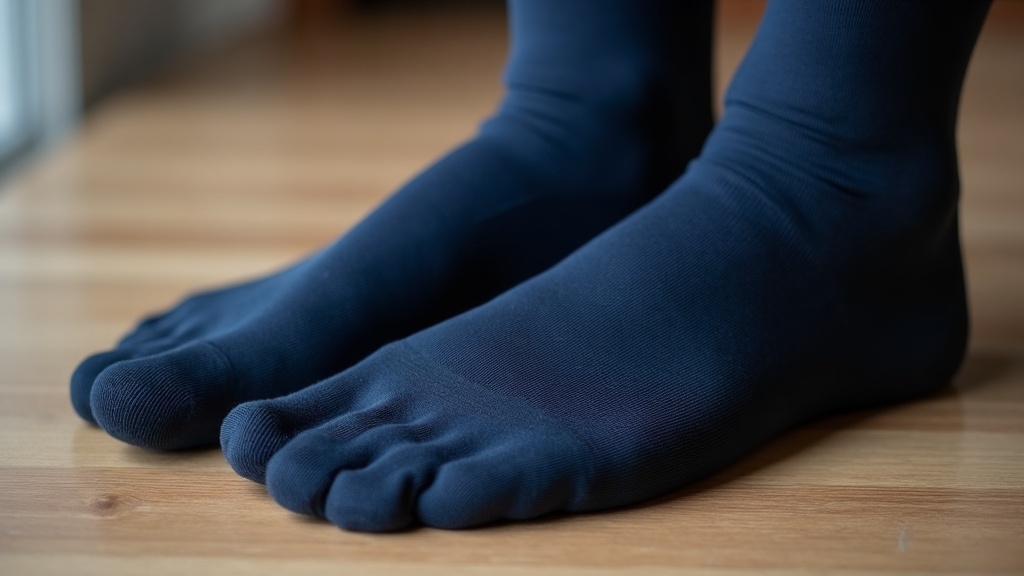
Flight socks, also called compression socks, apply graduated pressure starting at the ankle and easing up toward the knee. That pressure pushes blood back up toward the heart instead of letting it sit and stagnate.
What they don't do: they aren't a miracle fix, they won't help if you're dehydrated, and they won't substitute for getting up and walking around.
When a 2-Hour Flight Can Still Wreck Your Legs
A short flight isn't just two hours in the air. Add an hour of sitting at the gate, another hour in the cab or parking lot, and that "two-hour flight" becomes a four-hour sit. Total immobility is what causes problems, not just altitude.
If you're flying somewhere to work a physical job and you need your legs fresh when you land, a pair of compression socks for short flights costs you nothing in comfort and can make a real difference at the other end.
Did you know?
Deep vein thrombosis (DVT) risk doesn't spike until you've been immobile for four or more hours continuously. For most healthy flyers, a 2-hour flight sits well below the clinical threshold that doctors worry about.
Who Should Wear Flight Socks Regardless of Flight Length
Some people shouldn't wait for a red-eye to pack compression socks. These groups benefit even on the shortest hops.
- People with a history of DVT or blood clots
- Anyone with varicose veins or chronic venous insufficiency
- Pregnant women (blood volume is higher and veins work harder)
- Recent surgery patients, especially orthopedic or abdominal procedures
- People with obesity or limited mobility
- Anyone on hormonal medication that affects clotting
If any of those fit you, don't leave compression socks out of your bag just because the flight is short.
Who Should Skip Them (Or Talk to a Doctor First)
Flight socks are not for everyone. People with peripheral artery disease (PAD) should never wear compression socks without a doctor's clearance. The added pressure on already restricted arteries can cause serious harm.
- Peripheral artery disease
- Severe edema from congestive heart failure or kidney disease
- Skin infections or open wounds on the legs
- Nerve damage that limits sensation in the lower legs
If your legs are already swollen before you get on the plane for a reason you haven't had checked out, see a doctor before you buy compression socks.

How Long Can You Keep Flight Socks On?
Most manufacturers and doctors say you can wear graduated compression socks for up to 8 to 12 hours without issue, provided they fit correctly and aren't causing pain. A well-fitted pair should feel snug, not strangling.
Put them on before you leave the house, not at the gate. Blood starts pooling before you even board. Taking them off when you're done traveling is all the maintenance they need.
Did you know?
The NHS recommends putting on flight socks before getting out of bed in the morning, not after you've been sitting for an hour. Once fluid has already started pooling, you're playing catch-up.
What to Use Instead of Flight Socks on Short Trips
If you're a healthy traveler on a short flight, you've got options that cost nothing and work fine.
- Get up and walk: Even one trip down the aisle every 45 minutes keeps blood moving.
- Drink water: Dehydration thickens blood and makes clotting more likely. Skip the booze on the plane.
- Flex your calves: Heel raises while seated pump the calf muscle, which acts as a second heart for your lower legs.
- Loose clothing: Tight waistbands and jeans that cut into the back of the knee make circulation worse.
These alternatives to flight socks are practical, free, and work for any flight under three hours if you're in good health.
Flight Length Guide: 2, 3, 4, and 6 Hour Flights Broken Down
| Flight Length | Healthy Adults | High-Risk Individuals |
|---|---|---|
| 2 hours | Not needed. Hydrate and move. | Wear them. Low risk doesn't mean zero risk. |
| 3 hours | Optional. Worth it if your legs already tire easily. | Wear them without question. |
| 4 hours | Recommended. DVT risk starts becoming real. | Non-negotiable. Get a medical-grade pair. |
| 6+ hours | Strongly recommended for everyone. | Talk to your doctor about compression level (20-30mmHg+). |
Bottom Line: What a Trade Worker Should Actually Pack
You're flying to a job or flying back from one. Your legs have already taken a beating this week. Here's the practical call:
- Two-hour flight, legs feel fine: Leave the compression socks at home. Walk the aisle, drink water, done.
- Two-hour flight, legs are already swollen or heavy from the week: Pack them. Wear them from the house. They cost less than a bad day on the next job.
- Any flight over three hours: Just bring them. The small amount of hassle is worth it when you land ready to work instead of limping to the rental car.
- Known health risk: Wear them on every flight, period, and check the compression rating with your doctor.
A decent pair of 15-20 mmHg compression socks runs about $15 to $30 and fits in a shirt pocket. That's a cheap insurance policy for your legs if you're on your feet for a living.
