


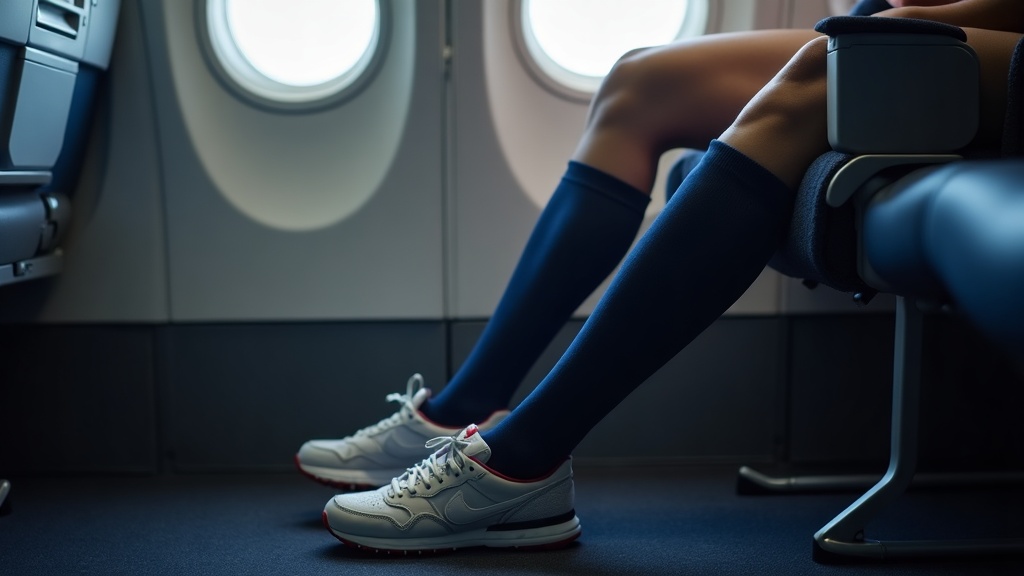
You land after a six-hour flight and your ankles look like you borrowed them from someone else. That's not just discomfort. That's your circulatory system fighting a pressurized cabin, recycled air, and a seat designed to fold you in half.
Graduated compression socks for flying are one of the few things you can actually do about it. Not a gimmick. Not a luxury. A tool, like steel toes or a good back brace. Here's how to use it right.
Key points at a glance
- Graduated compression means tighter at the ankle, looser up the calf. Regular compression socks do not work the same way on a flight.
- For most healthy travelers, 15-20 mmHg is the right call. Reserve 20-30 mmHg for those with a medical history of clots or significant swelling.
- Put them on before you leave home, not at the gate. Elevation matters from the start.
- People with peripheral artery disease or certain circulation conditions should not wear compression socks without a doctor's sign-off.
- Material and seam construction matter as much as compression level, especially on flights over four hours.
- Men and women have different fit needs. Sock architecture is not one-size-fits-all.
Why Compression Socks Are Worth the Investment
Why Your Legs Take a Hit on Long Flights (And Why It's Worse If You Work on Your Feet)
At cruising altitude, cabin pressure drops. Your body responds by allowing more fluid to pool in the lower extremities because gravity is doing its thing and you're barely moving. Blood flow slows in the deep veins of the calf.
If you spend your week on a job site, in a warehouse, or standing a full shift, your legs are already dealing with chronic stress on those same veins. A long flight compounds that fast.
Compression Socks vs. Graduated Compression Socks: What's the Actual Difference
Standard compression socks apply even pressure from toe to knee. Graduated compression socks apply more pressure at the ankle and gradually decrease that pressure as they move up the leg.
That gradient is what actually pushes blood back up toward the heart against gravity. Even pressure doesn't do that. For flying, you want graduated, full stop.
Did you know?
A 2016 Cochrane Review of 10 trials covering over 2,800 airline passengers found that graduated compression stockings significantly reduced the incidence of symptomless deep vein thrombosis on long-haul flights compared to passengers who wore no stockings.
What Grade of Compression Do You Need for Flying: 15-20 or 20-30 mmHg
This is the question people get wrong most often. They either go too light and get no real benefit, or they go too heavy and cut off circulation they didn't need to restrict.
15-20 mmHg: The Right Starting Point
For most people taking flights over three hours, 15-20 mmHg is ideal. It handles swelling, improves venous return, and is comfortable enough to wear the whole flight. No prescription needed.
20-30 mmHg: When You Actually Need It
Step up to 20-30 mmHg if you have a documented history of DVT, varicose veins, or chronic venous insufficiency. This level is often considered medical-grade and a doctor's recommendation makes sense before you use it long-term.
| Compression Level | Best For | Prescription Needed? |
|---|---|---|
| 8-15 mmHg | Mild fatigue, short flights under 2 hours | No |
| 15-20 mmHg | Most travelers, flights 3+ hours, workers with tired legs | No |
| 20-30 mmHg | DVT history, varicose veins, chronic venous insufficiency | Recommended |
| 30-40 mmHg | Severe medical conditions, post-surgical | Required |
Who Should Not Wear Compression Socks on a Flight
Compression socks are not for everyone. Put them on the wrong legs and you make things worse.
- Peripheral artery disease (PAD): Compression restricts already compromised arterial flow. Skip them until a doctor clears you.
- Severe peripheral neuropathy: If you can't feel your feet, you won't notice a sock that's too tight cutting off blood flow.
- Skin infections or open wounds on the lower leg: A compression sock against broken skin is a bad situation.
- Congestive heart failure: Pushing more fluid back toward the heart when it's already struggling requires medical guidance first.
If you have any of these conditions, get a straight answer from your doctor before your trip. This is not the place to guess.
When to Put On Compression Socks Before Your Flight
Put them on first thing in the morning, before you get on any form of transit. The moment you stand up, gravity starts pulling fluid into your lower legs. You want the socks in place before that process begins.
At minimum, wear them from the time you leave for the airport. Putting them on at the gate, after two hours of walking terminals and sitting at a food court, is too late to get the full benefit.
Did you know?
The risk of developing a flight-related blood clot is highest on flights exceeding 4 hours. The risk roughly doubles for every 2-hour increase in flight duration beyond that threshold, according to the World Health Organization's WRIGHT project research.
What to Look for in Compression Socks for Flying: Fit, Material, and Build Quality
Fit
Measure your ankle circumference and calf circumference before you buy anything. A compression sock that's too wide at the calf loses its gradient pressure fast. Too narrow and you get a tourniquet effect at the top band.
Men vs. Women Fit Differences
Men graduated compression socks for flying typically have a longer foot bed, wider calf panels, and heavier fabric weight. Women graduated compression socks for flying are cut for a shorter foot, narrower ankle, and often use lighter-weight or sheer materials that still deliver the same mmHg rating.
Material
- Nylon/spandex blends: Most common, durable, hold compression well after washing, moisture-wicking.
- Merino wool blends: Better temperature regulation, naturally antimicrobial, good for long-haul, costs more.
- Cotton-blend: Breathable but stretches out faster and loses compression rating more quickly over time.
Build Quality Checkpoints
- Reinforced toe and heel seam so the sock doesn't bunch under pressure
- Non-binding top band (it shouldn't dig in or leave a ring mark)
- Consistent knit density from ankle to knee, no thin spots
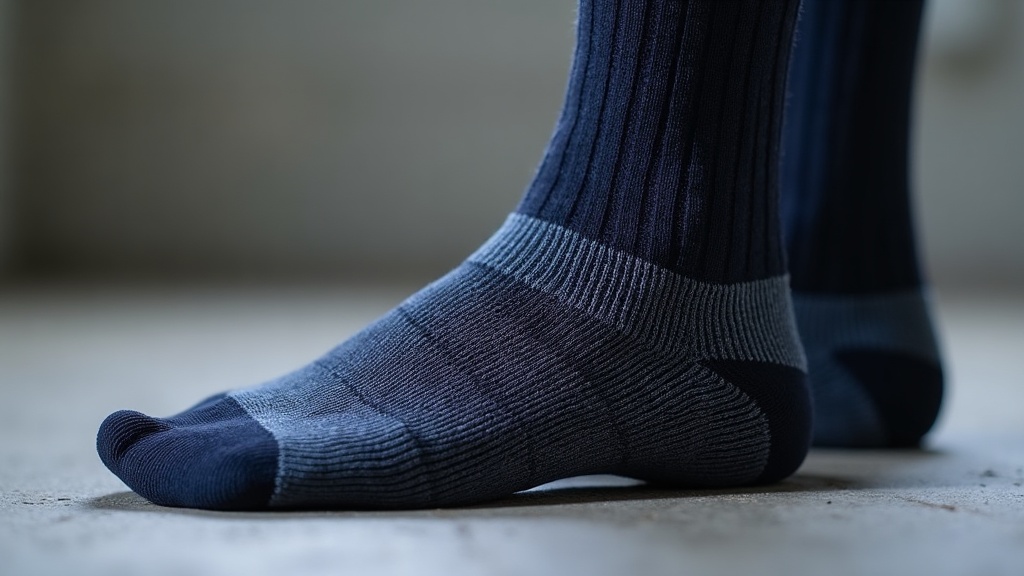
Best Graduated Compression Socks for Flying Worth the Money
For the best graduated compression socks for flying on Amazon and beyond, these are the names that hold up in practice, not just in marketing copy.
CEP Compression Run Socks
German-engineered, medically certified at 20-30 mmHg, used by clinical studies. Expensive but accurate compression rating that doesn't fade after a season of washes. Built for people who take this seriously.
Sockwell Elevation Graduated Compression Socks
Merino wool blend, 15-20 mmHg, great for long international flights where temperature control matters. Available in men's and women's cuts. These are the ones to pack if you're doing a 10-hour red-eye.
Physix Gear Sport Compression Socks
Strong value buy at 20-30 mmHg. Holds its shape well, good sizing range, and the construction quality is honest for the price point. Popular for a reason on Amazon.
Jobst TravelSocks 15-20 mmHg
Made specifically for travel. Medical-grade manufacturer. If you want a sock designed from the ground up for the airplane environment, this is it.
Straight Answers to the Questions You're Actually Asking
Can you sleep in compression socks on a flight? Yes. They work best when worn continuously. Removing them mid-flight and putting them back on can actually cause a surge of pooled blood if you've been sitting still.
How long after the flight should you keep them on? At least until you've walked around your destination for 20-30 minutes and your circulation has normalized. On very long flights, some doctors recommend wearing them until you've slept.
Do compression socks prevent DVT? They reduce risk, especially for travelers already at elevated risk. They are not a guarantee. Get up and walk the aisle every 90 minutes regardless of what socks you're wearing. Stay hydrated. Avoid alcohol.
Can you wear compression socks over regular socks? No. Wear the compression sock directly on skin so the pressure gradient works correctly against the tissue.
