


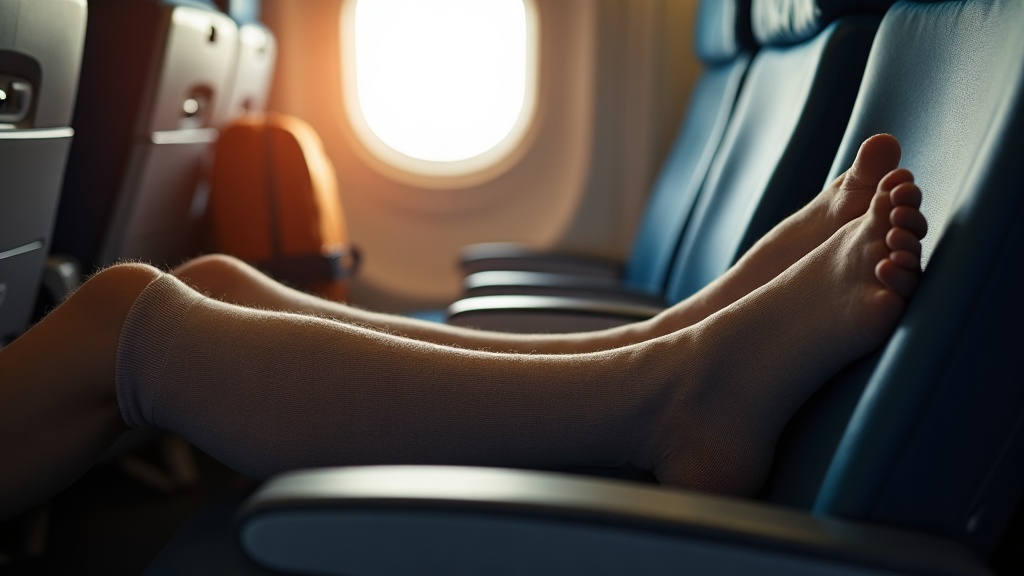
You bust your back all week on your feet, and then you fold yourself into a plane seat for six hours and land with ankles the size of softballs. That's not bad luck. That's physiology, and it's fixable.
Compression socks aren't just for nurses and old guys at the cardiologist. They're one of the cheapest, simplest tools you can pack. Here's where to get them and what actually works.
Key points at a glance
- 15, 20 mmHg is the sweet spot for most travelers, no prescription needed.
- Put them on before you board, not once you're already swollen in seat 24B.
- Amazon, REI, Walgreens, and Target all stock solid options, often under $20.
- Bombas and CEP are worth the extra few bucks for long-haul flights.
- Fit by calf circumference, not just shoe size. Men and women both need to measure.
- Yes, they make a real difference on flights over four hours.
What Good Compression Socks Do for You
Why Your Legs Take a Beating on Flights (Same Reason They Do on the Job)
When you sit still in a cramped seat, blood pools in your calves. Gravity pulls it down, cabin pressure drops, and the dry recycled air pulls fluid into your tissue. Your legs don't move the way they do when you're walking a jobsite or standing at a machine.
For guys and women who already put serious miles on their legs every week, that stagnation hits harder. Your veins are already working overtime. Give them a hand.
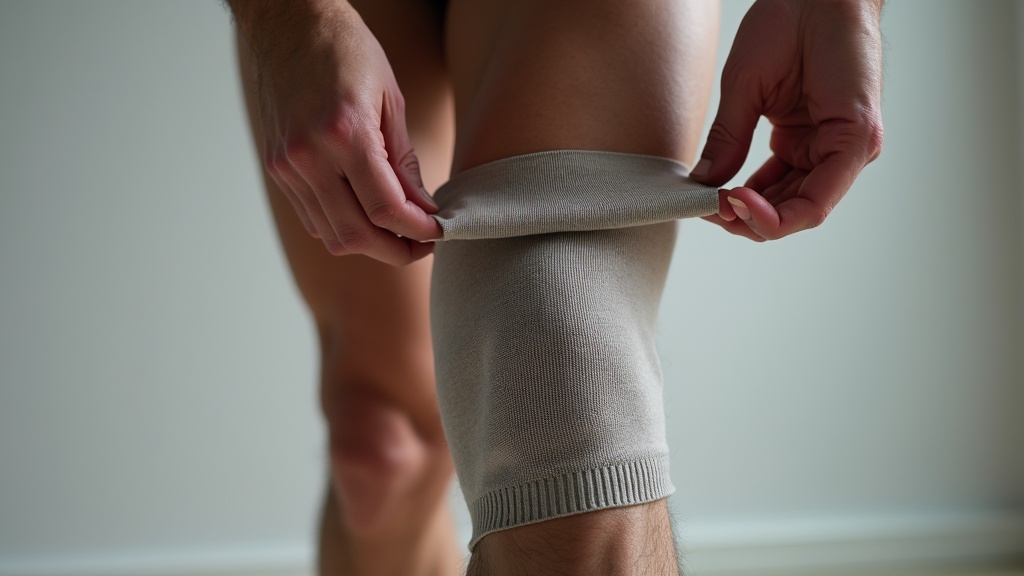
What Compression Level Do You Actually Need for Flying
Compression is measured in millimeters of mercury (mmHg). Higher doesn't mean better for travel. Wrong level and you've got socks that cut off circulation instead of helping it.
- 8, 15 mmHg: Light. Fine for short flights under 3 hours if you're healthy.
- 15, 20 mmHg: Moderate. The standard travel recommendation. No prescription. Fits most people's needs on any flight.
- 20, 30 mmHg: Firm. For people with varicose veins, a history of DVT, or a doctor's suggestion. Don't go here without a reason.
- 30+ mmHg: Medical grade. Prescription only. Not what you're shopping for at Target.
For the vast majority of travelers, including workers with tired legs, 15, 20 mmHg is the answer. That's what to put in your cart.
Did you know?
Deep vein thrombosis (DVT) risk roughly doubles on flights lasting more than 4 hours. According to the World Health Organization, travelers in economy class seats are at greater risk because of limited legroom restricting blood flow in the popliteal vein behind the knee.
What to Look for Before You Buy Compression Socks for Flying
Don't just grab any pair off the rack. A few specs make a real difference between socks that help and socks that sit in your bag after the first flight.
Graduated compression
Tightest at the ankle, easing up toward the knee. That's how blood gets pushed back up toward your heart. Uniform pressure socks aren't doing the same job.
Calf fit, not shoe size
Measure the widest part of your calf in inches or centimeters before buying. A size chart that only asks for shoe size is a red flag.
Fabric and breathability
Nylon and spandex blends hold up best and don't get rank on a long flight. Merino wool options exist and work great if you run hot.
Height: crew vs. knee-high
For flying, knee-high is the standard. That's where the compression gradient actually covers the veins doing the most work.
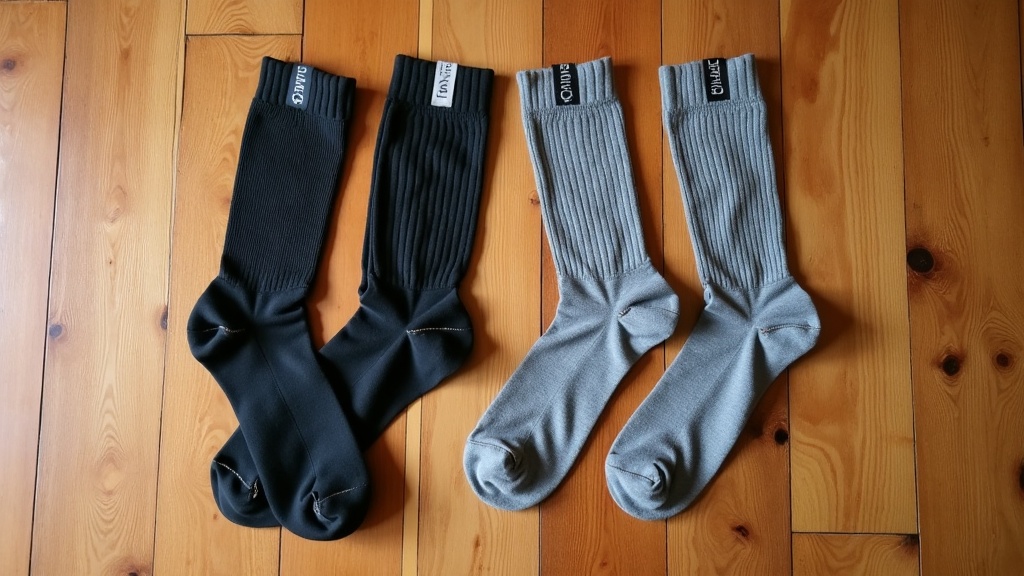
Where to Buy Compression Socks for Flying: Best Places Online and In-Store
You've got options depending on how fast you need them and what you want to spend.
Amazon
Compression socks flying Amazon is one of the most searched combos out there for a reason. You'll find brands like Physix Gear, SB SOX, and even Bombas with next-day shipping. Filter by mmHg level and read the sizing chart before hitting buy. Most solid pairs run $15, $30.
REI and outdoor retailers
REI stocks CEP, Smartwool, and Darn Tough compression options. Pricier, but the staff can actually help you measure and fit. Good if you're also buying for hiking or post-run recovery.
Walgreens, CVS, and pharmacies
Fast and cheap. You'll find Dr. Scholl's and similar brands in the 15, 20 mmHg range. No frills, but they get the job done for a one-time trip.
Target and Walmart
Better selection than you'd expect. Brands like Copper Fit and Comrad show up here. Good for a last-minute buy the night before your flight.
Brand websites directly
Bombas, CEP, and Sockwell all sell direct with detailed sizing guides and return policies. Worth it if you're buying multiple pairs or need a specific fit.
Best Compression Socks for Flying Worth Your Money in 2026
| Brand | mmHg | Best For | Price Range |
|---|---|---|---|
| Bombas | 15, 20 | All-day comfort, premium fabric, both genders | $22, $28 |
| CEP Compression | 20, 30 | Long-haul flights, athletic recovery | $30, $45 |
| Physix Gear | 20, 30 | Budget pick that holds up, wide calf options | $15, $20 |
| Sockwell | 15, 20 | Merino wool, travel women's sizing, temperature control | $24, $35 |
| SB SOX | 15, 20 | Value, available on Amazon Prime, decent sizing chart | $14, $18 |
Bombas compression socks for flying are consistently the most recommended for people who want comfort without overthinking it. The honeycomb footbed and stay-up technology make them easy to wear for 10-hour flights without bunching or sliding.
Men vs. Women Fit: Does It Actually Matter
Yes, and it's mostly about calf shape and sizing increments. Compression socks for travel men tend to run with wider calf ranges and longer foot beds. Compression socks for travel women often have narrower ankle tapering and shorter foot length.
Either way, the measurement that matters most is your calf circumference at its widest point. If you're between sizes, size up. A sock that's too tight defeats the purpose, and too loose doesn't give you the gradient you need.
Did you know?
A 2021 Cochrane review of 11 studies found that graduated compression stockings reduced the incidence of symptomless DVT by roughly 50% in economy class air travelers. That's not a marketing claim, that's clinical data from over 2,800 passengers.
When to Put On Compression Socks Before Your Flight
This is where most people get it wrong. Put them on before you leave the house, not at the gate. By the time you've driven to the airport, stood in the security line, and walked to your terminal, your circulation is already working against you.
The best window: put them on within 30 minutes of waking up on travel day, when swelling is at its lowest. That way the sock is doing compression work the whole time, not playing catch-up with fluid that's already pooled.

Do Compression Socks Really Make a Difference on Long Flights
On flights under two hours, you'll probably survive fine without them. But best compression socks for flying long distance is a real category because the four-plus-hour mark is where things go south fast.
At six, eight, ten hours in a seat, the difference is real. Less swelling when you deplane. Less fatigue in your calves. Faster recovery if you're heading straight to work or a job site on the other end.
If you're a tradesperson, a nurse, a retail worker, anyone who spends all day on their feet, your venous system is already stressed before you board. Compression socks on a long flight aren't optional for you. They're just common sense.
Your practical action plan
- Measure your calf today. Write the number down.
- Order 15, 20 mmHg, graduated compression, knee-high. Bombas or Physix Gear if you want a starting point.
- Put them on before you leave home on travel day.
- Keep walking the aisle every couple hours. The socks help, movement helps more when combined.
- Wash them inside-out, cold water, air dry. They'll last 30, 50 washes if you treat them right.
