


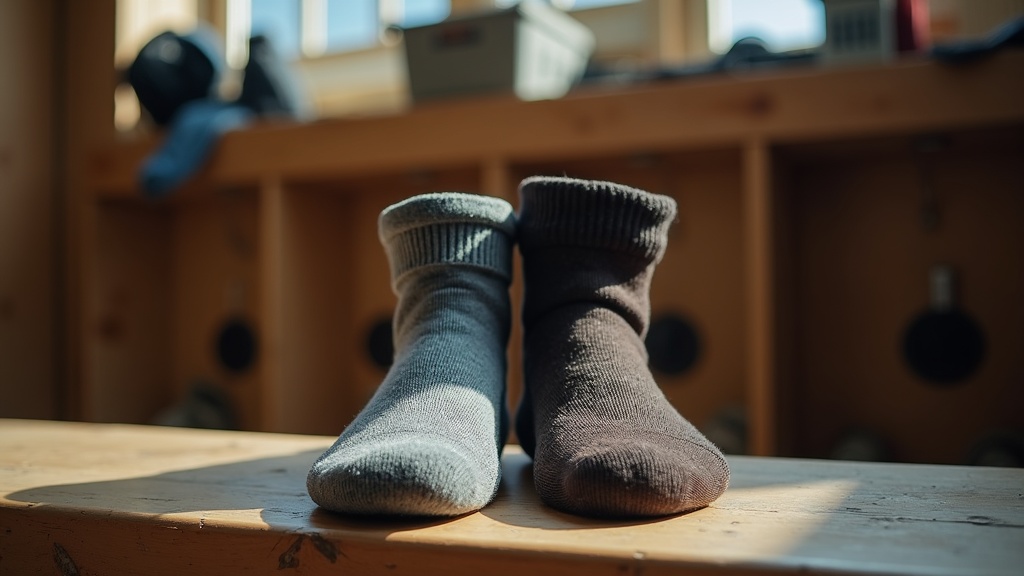
Most guys toss their wool socks in a drawer the second the temperature hits 70. That's a mistake that costs you blisters, sweat, and ruined feet before lunch.
The truth is, the right wool sock keeps your feet drier and more comfortable in summer heat than cotton ever will. But not every wool sock belongs in every season. Season, sock weight, and job type all matter.
Key points at a glance
- Wool regulates temperature actively, not just passively, thanks to moisture-wicking and crimped fiber structure.
- Lightweight merino (under 200 g/m²) handles summer work heat far better than cotton or basic synthetics.
- Winter work socks need extra cushion, mid-to-heavyweight wool, and tighter weave construction.
- Cotton kills moisture management and becomes a blister machine once it's wet.
- Sock weight is the main lever: match it to your season and your boot type, not just the calendar.
- Avoiding common mistakes, like wearing thick socks in steel-toe boots in July, prevents most foot problems on the job.
Why Wool Beats the Competition Year-Round
Why Wool Works Differently Than You Think
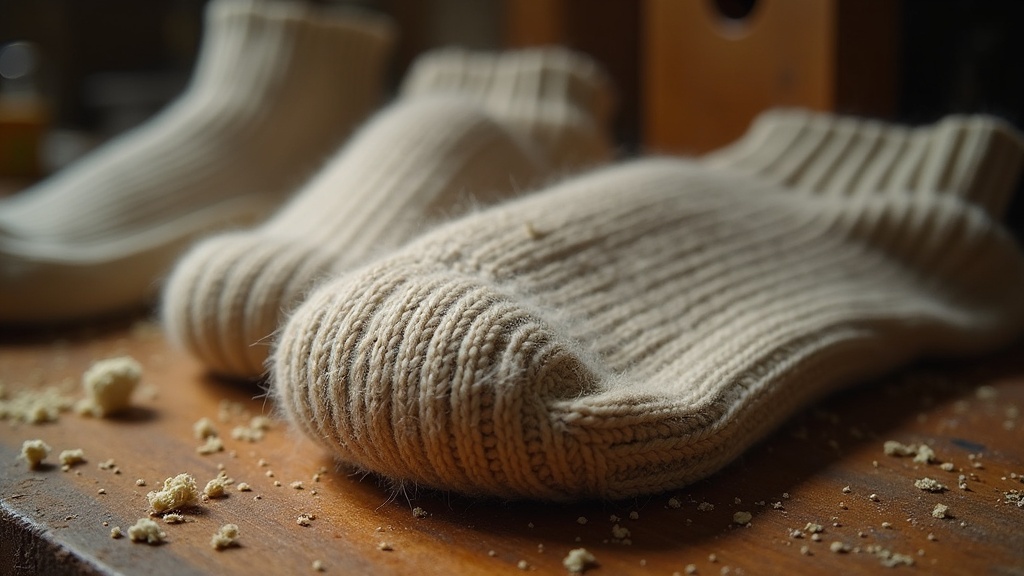
Wool isn't just a winter insulator. The fiber itself is built like a tiny coil spring, with a crimped structure that traps air and moves moisture at the same time. That's a combination no synthetic fully replicates.
The crimp creates micro air pockets. In cold, those pockets trap warmth. In heat, they allow airflow and pull sweat away from skin before it pools. The fiber adapts to what your body is doing, not just to the outside temperature.
How Wool Actually Regulates Temperature on the Job
Wool absorbs up to 30% of its weight in moisture vapor before it feels damp against your skin. That's not marketing, that's textile science. By the time cotton socks feel wet, wool socks have already moved that moisture toward the boot lining.
Read also: Foot Odor Prevention in Closed Toe Work Boots That Actually Work
That process, called moisture buffering, also releases a small amount of heat as it happens, which matters in cold conditions. In hot conditions, the evaporation from the fiber surface creates a light cooling effect.
Did you know?
Merino wool fibers measure between 17 and 24 microns in diameter. For reference, a human hair averages around 70 microns. That fineness is why merino doesn't itch, even against skin you've worked raw all day.
Summer Work Socks: What to Look for in Hot Conditions
In summer, you need lightweight wool socks for summer work in the 150 to 200 g/m² range. Anything heavier turns your boot into a sauna.
Key features for hot-weather work:
- Ultra-fine merino (17 to 19 microns) for next-to-skin comfort
- Mesh ventilation panels or open-knit construction in the footbed
- Minimal cushioning, just enough under the heel and ball
- Reinforced toe and heel without bulk
- Quarter or crew height to keep the shaft from trapping heat
Work socks for hot weather should feel close to nothing in the boot. If you're noticing the sock, it's too thick.
Winter Work Socks: What Changes When the Cold Hits
Cold work demands more from a sock. You're standing on frozen ground, loading dock concrete, or walking a site in single digits. The sock has to insulate without cutting off circulation inside a tighter boot.
What to prioritize in winter:
- Mid-to-heavyweight wool, 250 to 400 g/m² depending on conditions
- Full cushion footbed for impact protection on hard, cold surfaces
- Taller shaft height, at least crew, ideally over-the-calf
- Tighter rib construction at the top to keep the sock from sliding
- Blend with a small percentage of nylon (10 to 20%) for durability under heavy boots
Wool vs Cotton vs Synthetic: The Honest Comparison for Workers
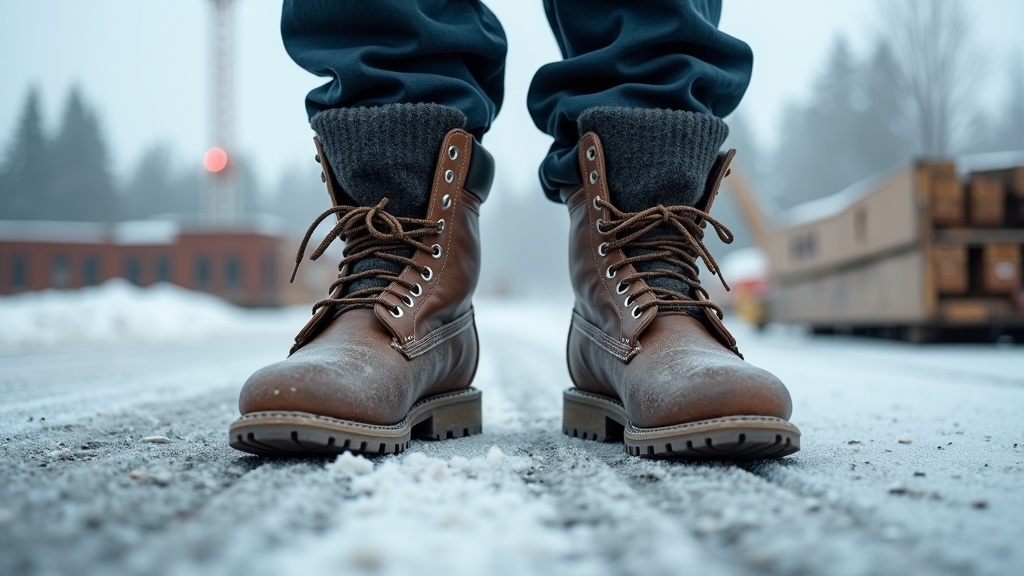
Cotton feels great out of the package. It fails fast under real work conditions. Synthetics are cheaper and dry quickly but don't regulate temperature the way wool does.
| Material | Moisture Wicking | Temp Regulation | Odor Resistance |
|---|---|---|---|
| Merino Wool | Excellent | Active (hot + cold) | Excellent (natural) |
| Standard Wool Blend | Good | Good (mainly cold) | Good |
| Cotton | Poor (holds moisture) | None | Poor once wet |
| Polyester | Good (moves fast) | Minimal | Poor without treatment |
| Nylon Blend | Moderate | None on its own | Poor |
The takeaway is straightforward. Cotton has no place in a work boot if you're on your feet for eight hours. Synthetics work as a secondary fiber mixed into wool, not as the main event.
Are Wool Socks Too Hot for Summer?
The straight answer: thick wool socks are too hot for summer. Lightweight merino wool socks in summer heat are not. The weight of the sock is everything here.
A 150 g/m² merino sock will actually keep your foot cooler than a cotton sock in the same conditions because it pulls sweat off the skin before friction and heat build up. The fiber breathes, cotton sits there.
Did you know?
The Australian and New Zealand armed forces have issued merino wool socks to soldiers in desert environments since the early 2000s, specifically because the fiber manages heat and sweat better than any synthetic alternative tested in field conditions.
How to Pick the Right Wool Sock Weight for Your Season and Your Work
Weight matching isn't complicated once you know the ranges. Here's how to think about it.
Lightweight (under 200 g/m²):
Summer road work, warehouse jobs, any environment over 75°F. Pair with work boots that have breathable linings.
Midweight (200 to 300 g/m²):
Fall and spring, cool jobsites, jobs where you're moving and generating body heat. The everyday workhorse for most trades.
Heavyweight (300 g/m² and up):
Winter outdoor work, logging, roofing in cold weather, standing on frozen surfaces. Combine with a boot that has enough volume to fit without compression.
What to Avoid: Common Mistakes That Leave Your Feet Wrecked by Noon
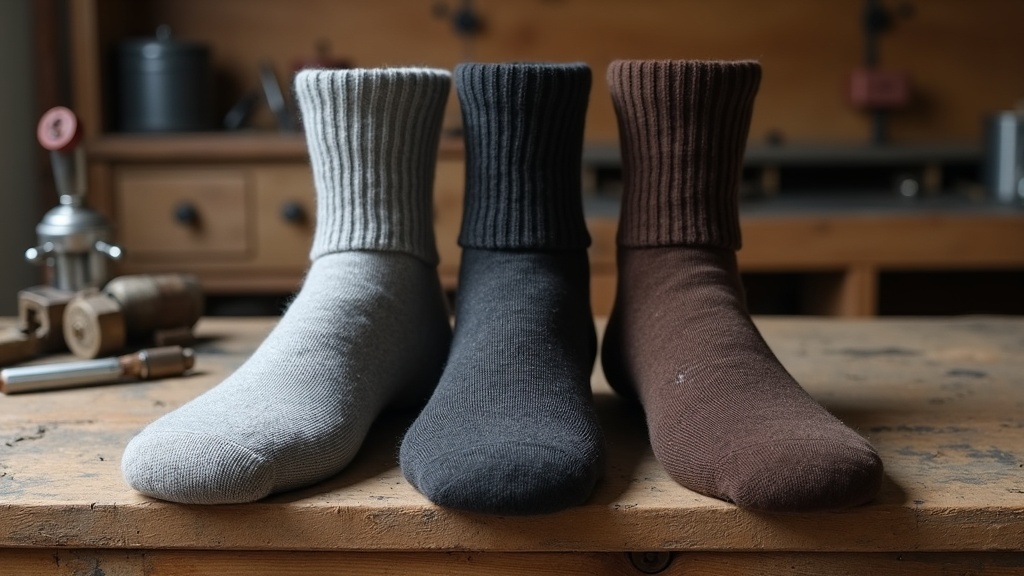
Most foot problems on the job come down to the same few errors. They're easy to fix once you know what they are.
- Wearing heavyweight wool in summer: Your boot becomes an oven. Moisture stalls, friction increases, blisters follow.
- Grabbing cotton because it's cheaper: Cotton holds sweat against your skin. Once it's soaked, it doesn't recover. You'll feel it by the third hour.
- Buying the wrong sock height: A crew sock in knee-high rubber boots traps cold air at the gap. Go over-the-calf in winter or in tall boots.
- Ignoring fit inside the boot: A heavy sock that compresses your toes cuts circulation. In cold weather, that's a frostbite risk, not just discomfort.
- Washing wool on hot cycles: Merino shrinks fast in high heat. Cold water, gentle cycle, lay flat to dry. That's it.
- Buying based on price alone: A $6 cotton sock costs you more in blisters, lost days, and foot pain than a $20 merino sock that lasts two years of hard use.
The bottom line on temperature regulation work socks, summer vs winter wool: one material handles both seasons, but only if you match the weight to the conditions. Get that right, and your feet stop being a problem you think about at all.
Read also: Calluses and Corns from Work Boots: How to Stop Them
