


```html
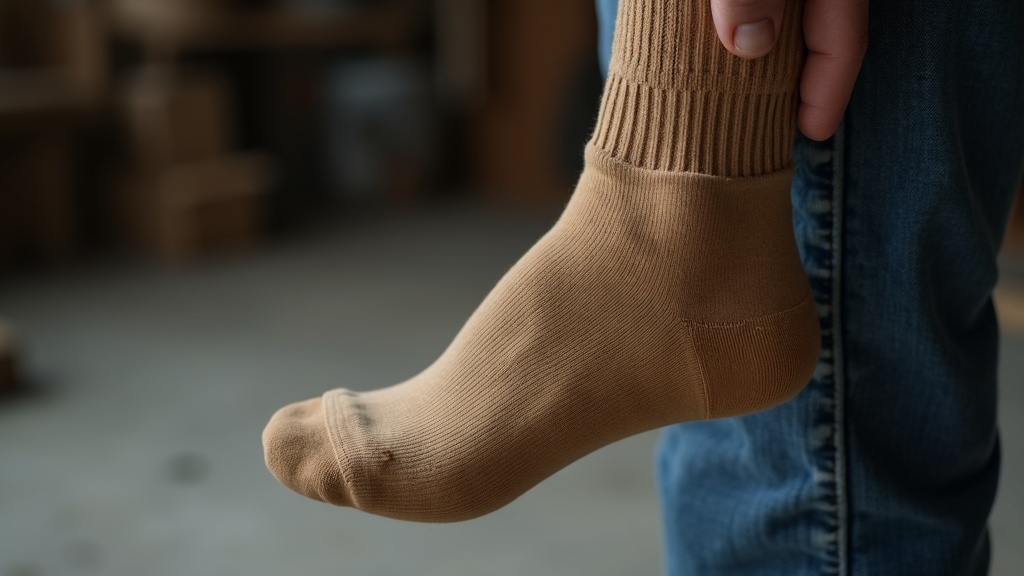
Your best pair of work socks just blew out again. Same spot as last time. And at $20 or more a pair, you're not exactly thrilled about buying another set this week.
Darning takes about fifteen minutes. The repair holds. And it costs you nothing but a piece of yarn and a needle you already own. Here's how to do it right.
Key points at a glance
- Work socks blow out at the heel, ball, and toe because those zones take the most friction inside a boot.
- You don't need a darning egg: a light bulb, a tennis ball, or your fist all work.
- The basic woven darn takes under 20 minutes and produces a flat, boot-friendly repair.
- Darning is worth it for socks over $12 a pair, not for worn-out synthetics under $5.
- Proper washing and rotation matter more than any other factor for sock longevity.
- Know when to stop: if more than 30% of the fabric is gone, replace the pair.
What You'll Get From This Guide
Why Work Socks Blow Out (And Where They Always Do It)
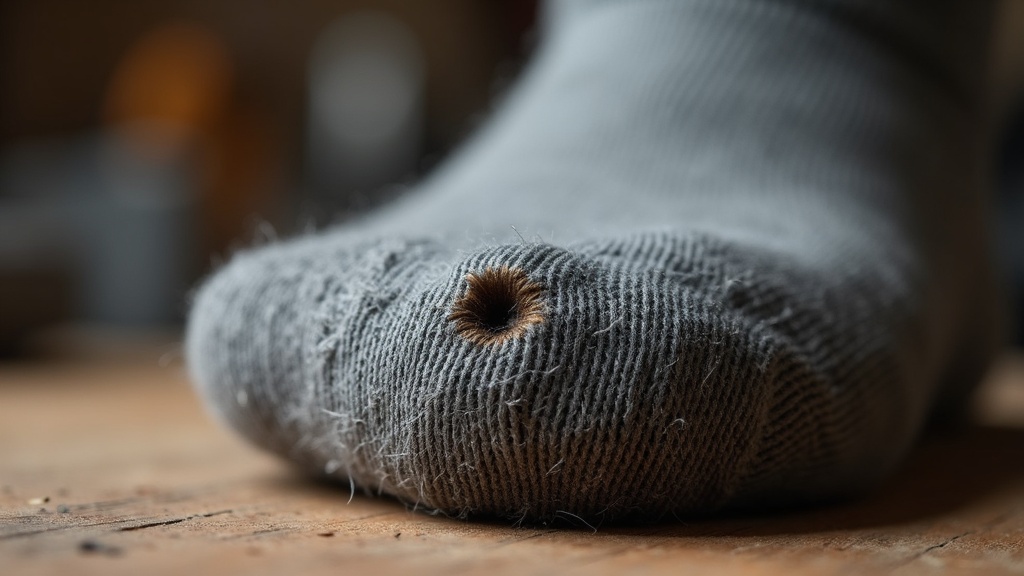
Work socks don't fail randomly. The heel, the ball of the foot, and the toe account for roughly 90% of all blowouts. Those are the pressure points where your foot flexes hard against the inside of a boot, every step, all day long.
Thick-soled boots make it worse. The stiffer the boot, the more the sock has to absorb. Add sweat, heat, and hours on concrete or gravel, and even quality wool breaks down faster than you'd expect.
Synthetic socks tend to pill and thin out evenly across the sole. Wool and wool-blend socks wear in concentrated spots, which actually makes them easier to darn since the rest of the sock is still solid.
What You Actually Need to Darn a Sock (No Fancy Kit Required)
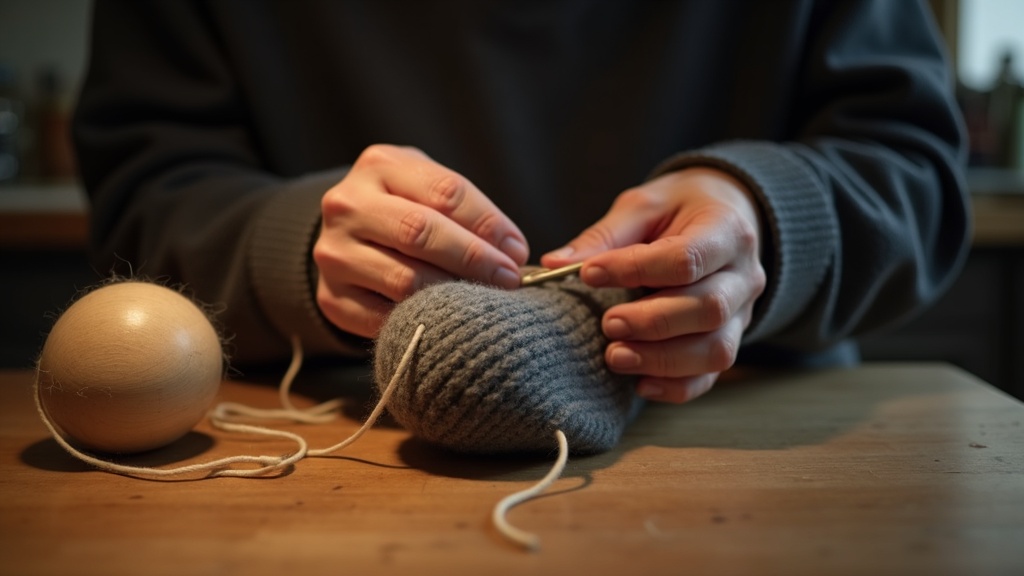
You need four things: a needle with a large eye, some yarn, scissors, and something round and firm to stretch the sock over.
The darning egg alternative
A traditional darning egg is a smooth wooden oval, but you almost certainly don't own one. Use a light bulb (turned off), a billiard ball, a large smooth river rock, or stuff a tennis ball inside the sock. All of these give you the firm, curved surface you need to work against.
Yarn selection
Match the yarn weight to the sock fabric. A thin fingering-weight wool or a single strand pulled from another old wool sock works perfectly for darning socks with yarn. Avoid cotton for this: it stretches, doesn't grip, and wears out fast under boot pressure. Wool grips itself and compresses well.
Needle size: a blunt-tip needle (size 18 to 22) is ideal. It won't split the existing fibers when you weave through them.
Did you know?
Darning as a repair technique dates back to at least the 16th century in Europe, when wool was expensive enough that mending a sock was standard household practice for every income level. The word itself comes from a Middle English term meaning simply "to mend."
How to Darn Work Socks by Hand, Step by Step
This is the basic woven darn, the most useful technique for how to darn socks for beginners and experienced repairers alike.
- Step 1: Insert your egg or substitute into the sock and position the hole at the center of the curved surface.
- Step 2: Thread your needle with about 24 inches of yarn. Don't knot the end.
- Step 3: Start about 1/4 inch outside the hole on the good fabric. Run parallel horizontal stitches across the hole, picking up a few threads of existing fabric on each side. Keep stitches loose, not tight.
- Step 4: Once you've covered the hole with horizontal rows, rotate the sock 90 degrees. Now weave vertical stitches over and under the horizontal ones, alternating each row. This creates the woven patch.
- Step 5: Secure the end by weaving it back through several stitches on the solid fabric. No knots needed.
The finished patch should sit flat with no bunching. If it puckers, your stitches were too tight. Looser is better: the yarn needs room to compress under your foot without pulling the surrounding fabric inward.
Three Darning Methods Ranked by Speed and Durability
| Method | Time to Complete | Durability | Best For |
|---|---|---|---|
| Woven darn (hand) | 15-20 min | High | Holes up to 1 inch, wool socks |
| Running stitch patch | 5-8 min | Medium | Small worn spots before full blowout |
| Iron-on sock patch | 3-5 min | Low-Medium | Quick fix, synthetic blend socks |
| Fabric glue (no-sew) | 2-3 min | Low | Emergency fix, lasts 3-5 washes max |
The woven darn wins on every metric that matters for a work sock. The iron-on patch stiffens the fabric and can blister your heel inside a tight boot. Fabric glue is a get-you-through-the-week answer, not a real solution.
How to Darn a Sock Toe Without It Bunching Under Your Boot
Toe repairs are trickier than heel repairs because the sock curves sharply in three dimensions. The biggest mistake is pulling stitches too tight, which creates a hard ridge right where your toes press against the boot cap.
For how to darn a sock toe, use a smaller egg or substitute (a large rounded spoon, the back of a ladle, or two fingers held together inside the sock). Work in smaller sections. Keep yarn tension deliberately slack, about 20% looser than feels natural.
If the hole is larger than a dime at the toe, reinforce the surrounding rows by running a second pass of stitches perpendicular to the first. Two layers hold longer and still compress flat when you pull your boot on.
Did you know?
A 2022 textile waste study found that the average American discards over 68 pounds of clothing and textiles per year. Socks, undershirts, and underwear make up a large share because most people don't repair them. Darning one pair of heavy wool work socks saves the equivalent fiber of roughly half a skein of quality yarn from landfill.
Is It Worth Darning Your Work Socks or Just Replace Them?
Honest answer: it depends on what the sock is worth and how much of it is left.
Darn them if: The sock retails for $12 or more, the damaged area is smaller than a quarter, and the rest of the fabric is still solid. A good wool or wool-blend work sock with one repaired heel will outlast two pairs of cheap replacements.
Skip the repair if: The sock is already thin across the whole sole, the fabric pills and snags when you handle it, or it's a low-cost synthetic that cost less than $5. You'll spend 20 minutes to add maybe three washes of life.
How to Make Work Socks Last Longer Before They Need Darning
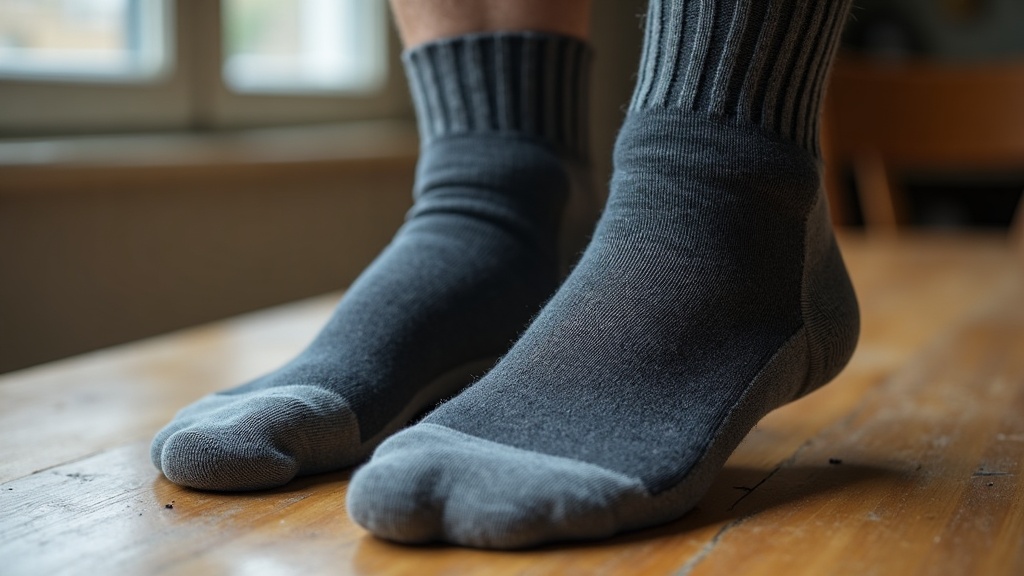
You can cut your blowout frequency in half with a few basic changes.
- Rotate at least three pairs. Wearing the same socks every day compresses and degrades the fibers twice as fast. Three pairs in rotation gives each one 48 hours to recover.
- Wash in cold water, never hot. Hot water shrinks wool and weakens elastic. Cold water cleans just as well and extends fiber life significantly.
- Air dry, skip the dryer. Dryer heat breaks down the yarn structure and the elastic band faster than anything else you do.
- Trim your toenails. A long toenail punching through the toe box from the inside is one of the most common causes of early sock failure. Takes 90 seconds to prevent it.
- Match sock thickness to boot type. Thin dress socks in a steel-toe work boot are just waiting to fail. A mid-cushion crew sock absorbs boot friction properly.
When to Stop Patching and Buy a New Pair
There's a point where a sock can't be saved. Here's how to recognize it without overthinking it.
Replace the sock when: the fabric thins to near-transparency over a wide area, the elastic at the cuff is completely shot and the sock bunches in your boot, the original blowout has been repaired twice in the same spot and is failing again, or the sock structure has shrunk or felted to the point where it no longer fits correctly.
A work sock that's past its limit isn't just uncomfortable. A bunched or thinned sock increases friction and pressure points inside a boot, which raises your risk of blisters and foot fatigue on a long shift. That's a safety issue, not just a comfort issue. Buy the new pair.
The math is straightforward. A quality pair of work socks repaired twice costs you 40 minutes of evening time and about $0.50 in yarn. The same lifespan from disposable cheap socks costs you three or four replacement purchases. Darning isn't a nostalgia project. It's just the smarter spend.
Frequently asked questions
Can I darn work socks without any sewing experience?
What's the best yarn for darning thick work socks?
How to mend socks without sewing if I don't own a needle?
How long does a darned sock repair actually last?
Is a darning egg really necessary, or can I skip it?
When should I replace work socks instead of repairing them?
```
