


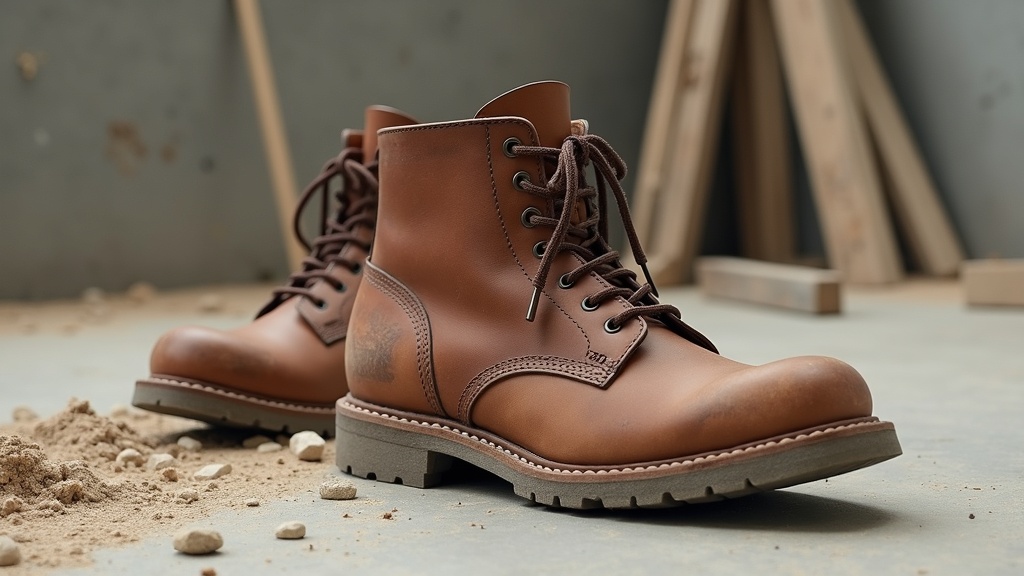
Your boots are the first thing that takes a beating on the job. Get the fit wrong and you're limping by noon. Get the style wrong and you look like you grabbed whatever was on sale at a hardware store.
This is a straight answer to every question men actually ask about work boots: how tight, which socks, pants in or out, and yes, can you wear them to the bar on Friday.
Key points at a glance
- A proper fit means a thumb's width of space at the toe and a heel that barely lifts, not zero movement.
- Snug at the ankle, roomy at the toe box is the golden rule for all-day comfort.
- One thick pair of wool socks beats two thin pairs for most work situations.
- Pants over boots is the standard on the job; cuffing over the shaft works off the clock.
- Waterproof boots are worth the extra cost if you're in wet or muddy conditions more than twice a week.
- Work boots worn casually are totally valid, but clean them first.
What This Guide Does for You
Get the Fit Right Before Anything Else
Everything else in this guide falls apart if the boot doesn't fit. Blisters, ankle rolls, and back pain all trace back to the wrong size or wrong last for your foot shape.
Always try work boots on in the afternoon. Your feet swell during the day. A boot that fits at 9 a.m. might pinch by 3 p.m.
Bring the socks you'll actually wear on the job. A thin dress sock will give you a completely different fit than a thick wool work sock.
Tight or Loose? What the Correct Fit Actually Feels Like
Are work boots supposed to be tight or loose? Neither extreme. Here's what you're aiming for.
- Heel: Should lift no more than a quarter inch when you walk. More than that means blisters on long shifts.
- Toe box: Press your thumb down above the big toe. You want about a thumb's width of space between your longest toe and the boot's end.
- Ankle and instep: Snug, with no pinching. The laces should hold the foot without cutting off circulation.
- Width: Your foot shouldn't bulge the sides. If it does, go up a width, not a size.
If the boot feels perfect out of the box with zero break-in needed, it might actually be too big. Full-grain leather will conform to your foot over two to three weeks.
Did you know?
The American Podiatric Medical Association reports that over 75% of Americans will experience foot problems in their lifetime, and ill-fitting footwear is one of the top contributing causes. For men who stand on concrete eight-plus hours a day, this number is even higher.
Socks Matter More Than You Think: One Pair or Two
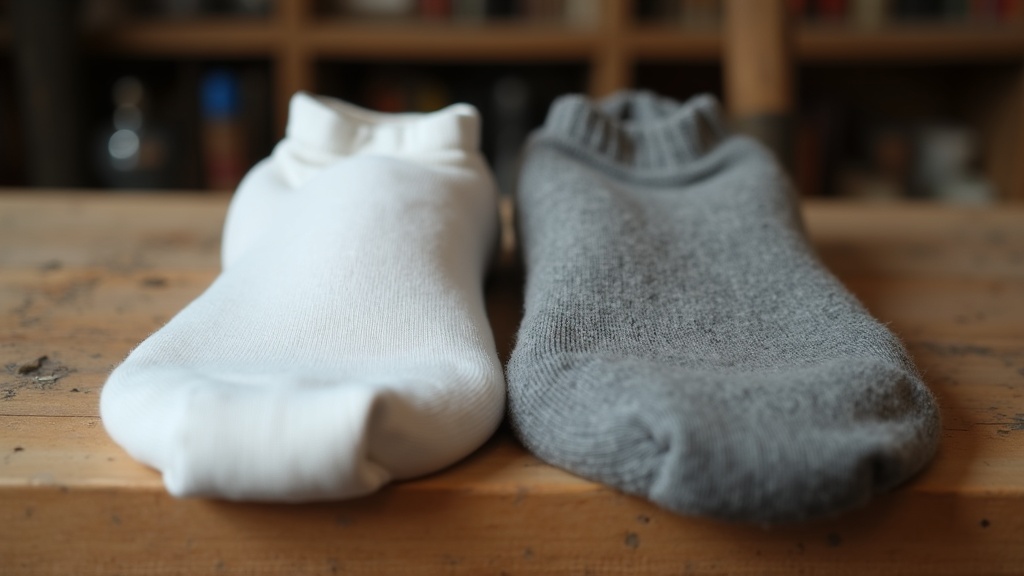
The question of wearing two pairs of socks with work boots comes up a lot. The logic: more padding, fewer blisters. The reality is more nuanced.
When two pairs makes sense
- You're breaking in a stiff new boot and want a buffer layer.
- The boot runs slightly large and you need to fill space.
- You're working in cold conditions and need insulation.
When one thick pair is the better call
- A quality mid-weight wool or merino blend sock handles sweat, odor, and cushioning on its own.
- Two pairs in a snug boot restrict blood flow, which makes your feet colder and more prone to fatigue.
- Cotton socks, single or doubled up, stay wet. Skip them entirely for work.
The best work sock material is merino wool or a wool-synthetic blend. It breathes, wicks moisture, and cushions the heel and ball of the foot where most pressure sits.
Pants Over or Inside Your Boots: The Real Answer
On the jobsite, pants go over the boot, full stop. Tucking your pants into your boots looks odd and, depending on the trade, creates a hazard (pants cuffs catching on steps, scaffolding clips, or machinery).
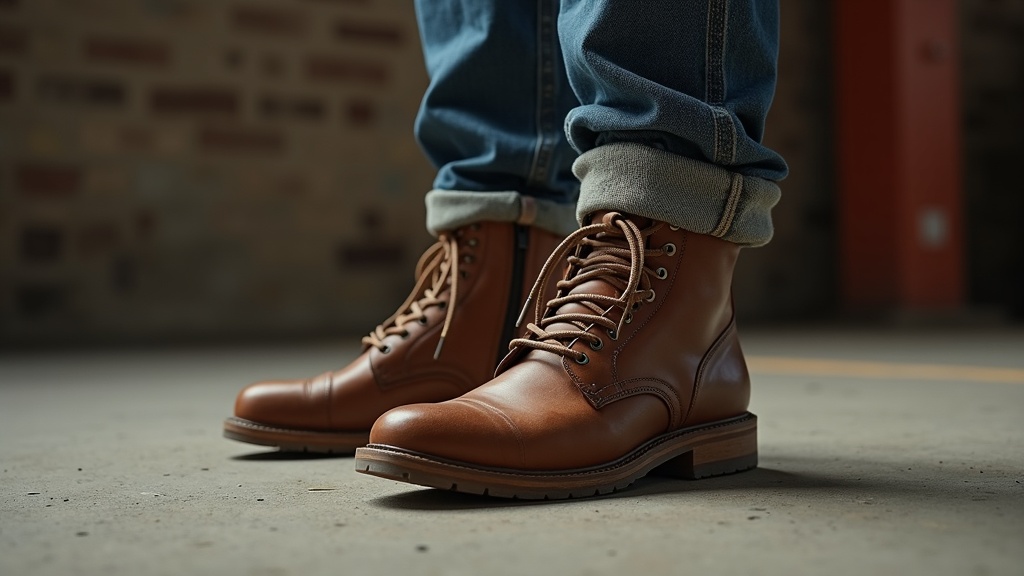
Off the clock or in a casual setting, you have options. A slim or straight-leg jean cuffed once or twice and sitting just above the shaft collar of the boot is the cleanest look. It shows the boot without trying too hard.
Avoid wide-leg or baggy jeans tucked in. The proportions don't work and it looks messy rather than intentional.
How to Wear Work Boots with Jeans Without Looking Sloppy
Work boots fashion for men doesn't require a wardrobe overhaul. A few rules keep it from looking like you forgot to change after work.
- Jean fit: Slim or straight cut. Avoid boot-cut jeans with work boots, it's redundant and dated.
- Cuff height: One to two inches of cuff, sitting on the boot shaft, not bunched above the ankle.
- Boot condition: Clean and conditioned. Mud and scuff marks read as workwear, not style. A quick brush and a pass of leather conditioner changes everything.
- Color pairing: Dark brown or black boots work with dark wash jeans. Tan or honey-brown boots pair well with lighter denim or chinos.
- Upper body: Keep it simple. A flannel, a plain tee, or a denim jacket. Nothing that competes with the boot.
| Boot Color | Best Jeans Pairing | Avoid |
|---|---|---|
| Black | Dark indigo or black denim | Light wash, acid wash |
| Dark Brown | Medium or dark blue denim | Black jeans (clashes) |
| Tan / Honey | Light to medium wash, chinos | Dark charcoal or black jeans |
| Russet / Cognac | Raw or medium blue denim | Brown tones in the jeans |
Can You Wear Work Boots Off the Clock
Yes, and plenty of guys already do. Work boots worn casually have been a fixture in American style since at least the 1970s, when Timberlands started showing up in cities far from any construction site.
The key is intention. A boot worn casually should be clean, conditioned, and laced properly. Swap the safety-yellow high-vis laces for something flat and neutral. Leave the steel-toe models for work if you want a cleaner silhouette off the clock, since composite-toe boots tend to have a slimmer profile that reads less industrial.
A simple chore coat or quilted vest over a solid tee, straight jeans with one clean cuff, and a well-kept brown leather boot: that's a finished look that costs nothing extra if you already own the boots.

Break-In Period: What to Expect and How to Speed It Up
A quality leather work boot will take two to four weeks of regular wear to break in fully. That's not a flaw, it's how leather works. The fiber structure softens and molds to your foot over time.
What the break-in actually feels like
- Days 1 to 5: Stiff, possibly some heel friction. Wear them for short shifts or around the house first.
- Days 6 to 14: The leather starts to flex more naturally. Hotspots begin to ease.
- Week 3 onward: The boot conforms to your foot shape. Comfort improves noticeably.
How to speed it up without wrecking the boot
- Apply a quality leather conditioner (mink oil, neatsfoot oil, or a brand like Obenauf's) before the first wear. It softens the leather and reduces friction points.
- Wear your thickest work socks during break-in to stretch the upper gently.
- Use a cedar boot tree overnight. It holds the shape and pulls out moisture.
- Never blast them with a heat gun or leave them by a fire to speed drying. Heat degrades the leather and warps the sole bond.
Did you know?
Full-grain leather work boots, properly maintained with conditioning every two to three months, can last 7 to 10 years of daily jobsite use. The average low-quality boot fails in under 18 months. The price difference at purchase is almost always recovered in longevity.
Waterproof Work Boots: When You Need Them and How to Maintain Them
Men's work boots with waterproofing are not just for outdoor trades. If you're in food processing, landscaping, concrete work, roofing in rainy climates, or any environment with standing water, a waterproof boot is a health decision as much as a comfort one. Wet feet lead to trench foot, fungal infections, and hypothermia in cold conditions.
What waterproofing actually means
- Gore-Tex membrane: A breathable barrier sewn inside the boot. Keeps water out while letting vapor escape. Best for all-day wear.
- Full-grain leather treated with wax: Naturally water-resistant. Needs re-treatment every few months but holds up well in mud and rain.
- Waterproof rubber lower: Found on pac boots and muck boots. Fully waterproof from the ankle down, less breathable overall.
How to maintain waterproofing
- Reapply a waterproofing wax or spray every 60 to 90 days, or sooner if water stops beading on the surface.
- Clean the boot before re-treating. Dirt and salt block the treatment from bonding to the leather.
- Let boots dry at room temperature after wet work. Stuffing them with newspaper helps pull moisture out of the lining faster.
Put It All Together: Your Boot Routine
Here's what a solid work boot habit actually looks like in practice, no complicated system required.
- Before the first wear: Condition the leather, lace them correctly with even tension across every eyelet, and wear them around the house for a few hours.
- Every workday: Knock off mud and debris before they dry and harden into the seams.
- Weekly: Quick brush, check laces for fraying, check the sole edge for separation starting.
- Monthly: Full clean and condition. Re-treat waterproofing if the surface looks dry.
- When worn casually: Clean the upper, swap to flat neutral laces, pair with the right jeans cut, and cuff once.
That's it. The boots do the rest of the work, provided you bought a pair built to last and sized them right from the start.
