


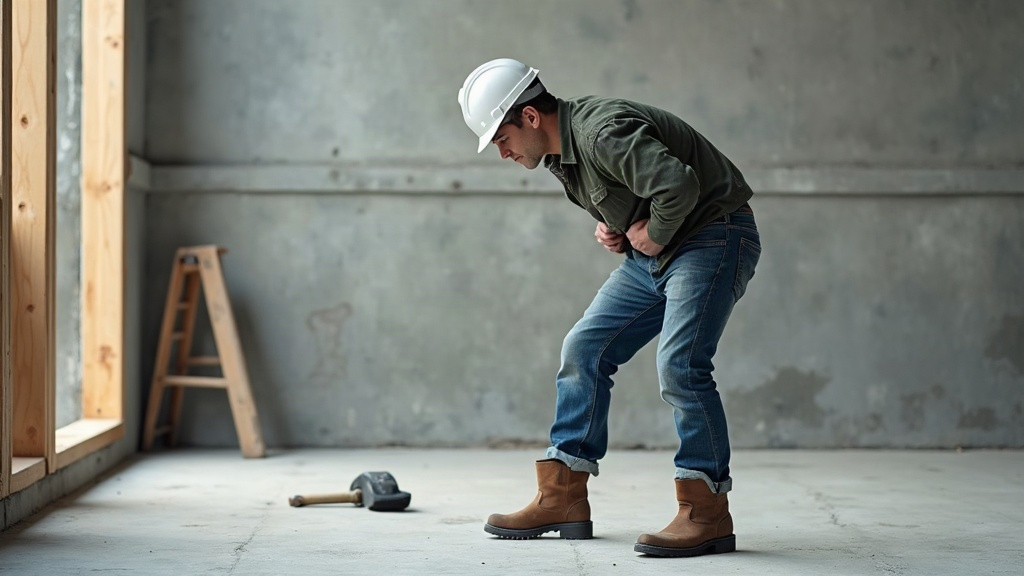
If you've spent years on your feet, carrying loads, bending over slabs, or standing on concrete all day, that deep ache in your lower back isn't just fatigue. It might be hyperlordosis, and it doesn't fix itself.
The trades beat your spine harder than most people realize. This guide cuts to what matters: what's happening, why it gets worse on the jobsite, and what you can actually do about it before it costs you.
Key points at a glance
- Hyperlordosis is an excessive inward curve in the lower spine, common in tradespeople who stand or lift for hours daily.
- Tight hip flexors and weak glutes are usually the root cause, not heavy lifting alone.
- Simple floor exercises done consistently do more than most braces or painkillers.
- Bad work boots with zero arch support accelerate the problem fast.
- Caught early, hyperlordosis can be corrected or significantly reduced without surgery.
- Ignoring it leads to disc compression, sciatica, and shortened careers.
What This Guide Gives You
What Hyperlordosis Actually Is (And Why Trades Work Makes It Worse)
Your lumbar spine has a natural curve. Hyperlordosis, also called hollow back, is when that curve goes too far inward, pulling your pelvis forward and pushing your belly out. It's not a posture choice. It's a structural shift that builds over time.
Trades work stacks every risk factor in one place: prolonged standing on hard surfaces, repeated bending and lifting, carrying weight across uneven ground. Each hour on the job reinforces the pattern.
Read also: Broken Ankle Recovery: When and How to Return to Work in Boots
How to Know If You Have It: Symptoms Worth Paying Attention To
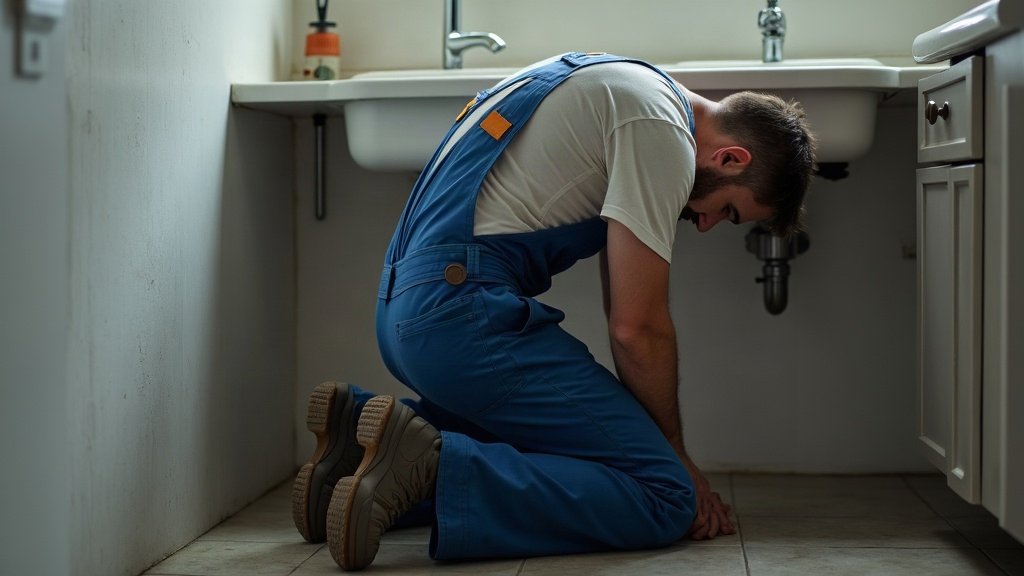
Hyperlordosis symptoms in tradespeople often get written off as normal soreness. They're not. Pay attention if you recognize these:
- A persistent deep ache in your lower back that's worse after standing shifts
- Tightness or cramping across the lumbar region at the end of the day
- Pain that eases slightly when you bend forward or sit down
- Visible belly protrusion and a noticeable gap between your lower back and the floor when lying flat
- Hip flexor tightness that makes it hard to stand fully straight
- Occasional shooting pain or numbness into the glutes or legs
That last one, the shooting pain, means the curve is already compressing nerve roots. At that point you're not dealing with prevention anymore.
Did you know?
A 2019 study published in the Journal of Occupational Health found that workers who stand on hard surfaces more than 6 hours a day show measurable increases in lumbar curvature angle within just 18 months of starting the job. Concrete floors are a particular problem because they offer zero give, forcing your spine to absorb every load.
The Real Causes on the Jobsite: Lifting, Standing, and Bad Footwear
Three things drive lower back arch pain in construction more than anything else.
Tight Hip Flexors
Hours of standing with weight on one side, or crouching repeatedly, shortens the hip flexors. Short hip flexors yank the pelvis forward. That forward tilt is the root of the arch.
Weak Posterior Chain
Your glutes, hamstrings, and lower ab muscles are supposed to counterbalance the pull of the hip flexors. If those muscles aren't doing their job, the spine takes the load instead.
Bad Footwear
Work boots with no arch support or a worn-out midsole change how your whole kinetic chain sits. Your ankle, knee, hip, and spine alignment all shift when your boot stops doing its job. Most guys replace their boots based on outsole wear, not midsole compression. That's a mistake.
Exercises That Fix Hollow Back Without a Gym Membership
These are the moves that physical therapists actually prescribe for lordosis. You need a floor and about 15 minutes. Do them every morning before work or every evening after.
- Pelvic tilts: Lie flat, press your lower back into the floor, hold 5 seconds. 3 sets of 15.
- Glute bridges: Feet flat on the floor, drive hips up, squeeze glutes at the top. Slow and controlled. 3 sets of 12.
- Dead bug: On your back, extend opposite arm and leg while keeping your lower back glued to the floor. 3 sets of 10 per side.
- Hip flexor stretch (kneeling): One knee down, push hips forward until you feel the front of the hip stretch. Hold 30 to 45 seconds per side.
- Cat-cow: On all fours, alternate between arching and rounding the spine. 10 slow reps each morning loosens overnight stiffness fast.
Exercises to Skip If Your Lower Back Already Arches Too Much
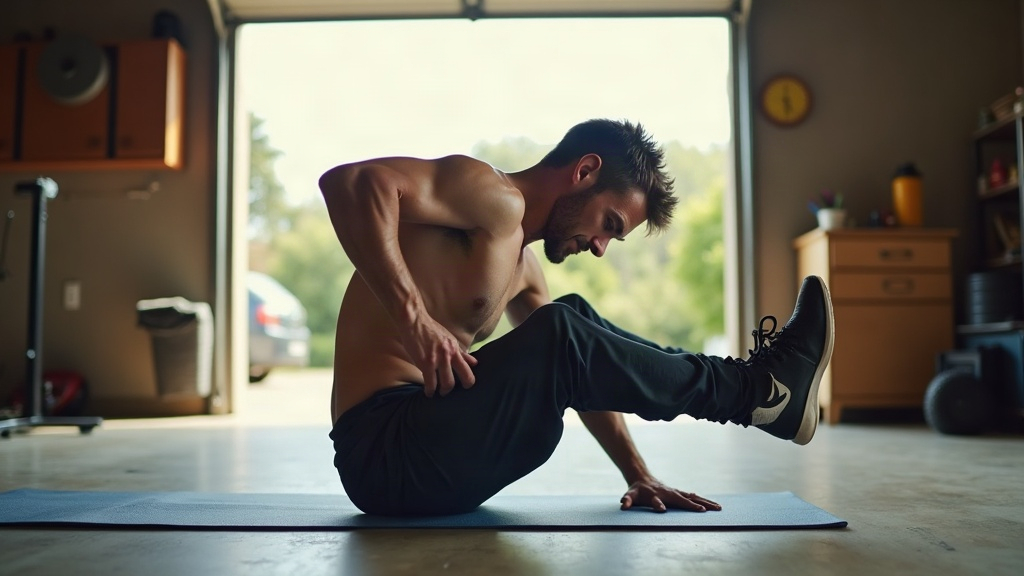
Some common gym moves make hyperlordosis significantly worse. Avoid these or modify them carefully:
- Barbell back squats: Without serious coaching on neutral spine, they drive the arch deeper.
- Roman chair back extensions: They hyperextend exactly where you're already overextended.
- Situps and crunches with anchored feet: They recruit hip flexors aggressively and worsen the pelvic tilt.
- Overhead pressing with a heavy arch: Flaring the lower back to get the bar up is a fast way to accelerate disc compression.
Can Hyperlordosis Be Reversed, Or Are You Stuck With It?
Can hyperlordosis be corrected? Yes, in most cases, especially if you're under 50 and the condition is functional rather than structural. Functional means it's driven by muscle imbalance, not by bone deformity.
Consistent stretching and strengthening over 8 to 12 weeks produces measurable changes in pelvic tilt. Most people who stick with it notice real differences in 6 weeks: less pain, better endurance on long shifts, easier mornings.
Structural hyperlordosis, where the vertebrae themselves have remodeled, is harder to reverse but can still be managed effectively to prevent it from getting worse.
Did you know?
The Bureau of Labor Statistics consistently ranks construction and extraction among the top three occupations for musculoskeletal disorders. Lower back conditions account for more lost workdays in the trades than any other injury category, including acute trauma from falls.
Back Braces, Boot Support, and Gear That Actually Helps
A hyperlordosis back brace is not a fix. It's a crutch. Worn occasionally on high-load days, it gives your spine a break. Worn all day every day, it weakens the muscles you need to build. Use it strategically, not habitually.
Your boots matter more than any brace. Here's what to compare when you're shopping:
| Boot Feature | What to Look For | Why It Matters for Lordosis |
|---|---|---|
| Arch Support | Built-in contoured footbed or orthotic-ready | Prevents overpronation that tilts the pelvis forward |
| Heel Height | 1 to 1.5 inches maximum | Higher heels push the pelvis forward and increase lumbar curve |
| Midsole Cushioning | EVA or polyurethane, replace every 12 months | Compresses over time; worn midsoles transmit shock directly to lumbar discs |
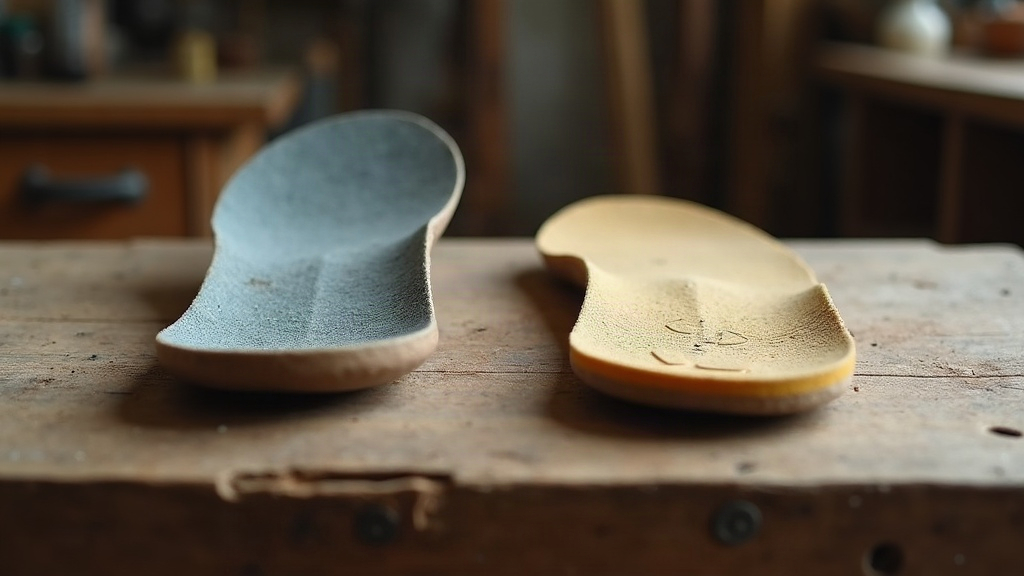
| Insole Upgrade | Superfeet Green or Powerstep Pro | Affordable fix that improves alignment in boots that lack support |
| Anti-fatigue Mat | 3/4 inch foam or gel, for fixed workstations | Reduces the muscular compensation that concrete standing forces on the lower back |
Does Lordosis Get Worse With Age, And What That Means for Your Career
Bluntly: yes. Without intervention, lumbar lordosis in tradespeople tends to worsen every decade. Disc hydration drops with age. Muscles that aren't actively maintained lose mass. The curve deepens, and the disc spaces compress further.
For a 25-year-old, hollow back is an annoyance. For a 45-year-old with 20 years of unchecked progression, it's often the thing that ends the career early, through chronic sciatica, a disc herniation, or spinal stenosis that makes standing impossible for more than an hour.
Read also: Post Work Workout Muscle Recovery Socks for Trades Workers
Daily Habits on the Job That Keep Your Spine from Breaking Down
You can't always control the work. You can control how you carry yourself through it.
- Alternate your standing foot. Keep a piece of scrap lumber or a small step nearby and rest one foot on it. It cuts lumbar load significantly.
- Check your belt and tool pouch weight. An uneven load around your hips tilts your pelvis sideways, compounding the lordotic curve.
- Bend at the hips, not the lower back, when picking up anything off the ground. Hinge from your hips with a neutral spine.
- Stretch your hip flexors mid-shift. Drop to one knee for 30 seconds on each side during a break. It costs you nothing.
- Hydrate properly. Spinal discs are largely water. Dehydration stiffens them faster than any physical load.
- Strengthen your core off the clock. A few minutes of dead bugs and glute bridges each morning compounds over months.
None of this is complicated. What makes the difference is consistency, doing the basics every day instead of waiting until you're already injured to take it seriously.
