



Your socks fail before your boots do. That's the dirty truth most guys figure out the hard way, standing in a puddle of their own sweat by 10 a.m., with a blister forming on the back of their heel. The right pair of mens heavy duty work socks changes that equation entirely.
This is a straight breakdown of what actually works on the job: the materials, the construction, the cuts, and the brands worth your money. No fluff, no filler.
Key points at a glance
- Cheap socks wear through at the heel and ball in 4 to 6 weeks under daily site use
- The right fiber blend (merino, nylon, spandex) determines comfort, moisture control, and durability
- Cushion zone placement matters more than overall sock thickness
- Moisture-wicking construction is non-negotiable for sweaty feet in steel-toe boots
- Crew height works for most boots; over-the-calf is better for tall lace-up boots and knee strain
- Proper washing and rotation can triple the lifespan of any work sock
What a Real Work Sock Delivers
Why Most Work Socks Fail Before Lunch
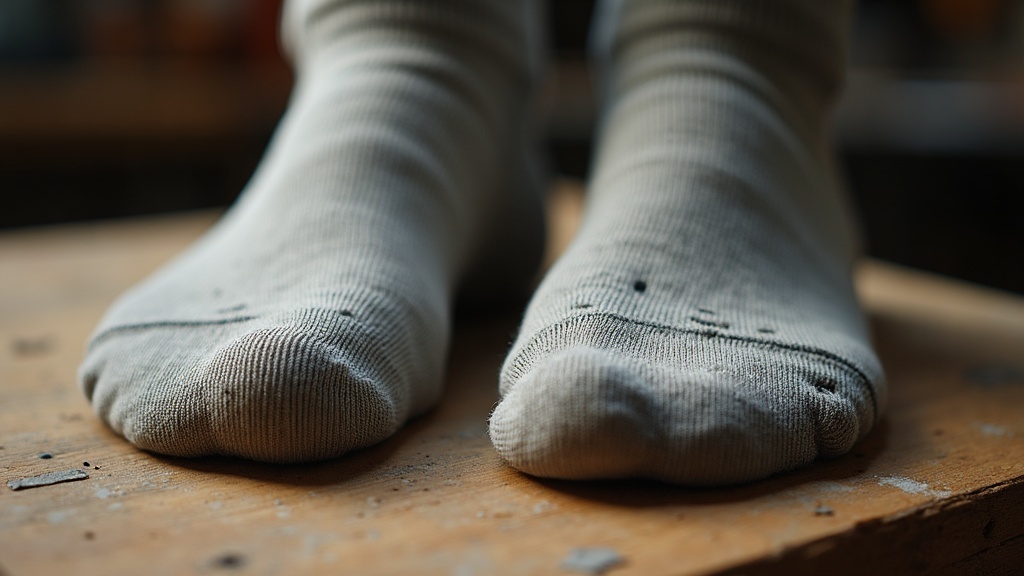
Most budget socks are made with 80% or more cotton. Cotton holds moisture like a sponge, and wet cotton against skin in a boot is how you get blisters, hot spots, and fungal issues. It also breaks down fast under the grinding friction of steel-toe boot wear.
The other problem is construction shortcuts: single-layer fabric at the heel and ball, no real arch support band, and a cuff that falls down by hour three. You're basically wrapping your foot in a cheap t-shirt and expecting it to survive a war zone.
What Makes a Sock Actually Heavy Duty (The Specs That Matter)
Heavy duty is not just about thickness. It's about where the cushion sits, what the fabric does with sweat, and how well the structure holds after 50 washes.
Fiber composition
- Merino wool: natural moisture management, odor resistance, temperature regulation. Best all-around fiber for work socks.
- Nylon: adds abrasion resistance and structure. You want at least 15 to 20% in the mix.
- Spandex/elastane: holds the sock's shape around the arch and cuff. Without it, your sock bunches inside the boot.
- Polyester: cheap moisture wicking. Works fine but lacks merino's odor control and comfort range.
Cushion placement
Look for targeted cushioning at the heel and ball, not a uniform thick pad all the way around. Thick everywhere means a tight fit in the boot and overheated feet by noon.
Reinforced zones
The best heavy duty socks for work boots run extra nylon loops at the heel, toe, and instep. You can feel the difference when you rub the fabric between your fingers.
Did you know?
The average construction worker takes between 8,000 and 12,000 steps per shift. That's the equivalent of walking 4 to 6 miles almost entirely on hard surfaces. Sock cushioning directly reduces cumulative impact on the plantar fascia, knees, and lower back.
The Best Mens Heavy Duty Work Socks Right Now
These are the brands that show up repeatedly in trade forums, union halls, and Amazon reviews from guys who've actually put them to work.
Darn Tough Vermont
Made in Vermont, backed by a lifetime guarantee. Their merino blend holds up to daily washing without the felting and shrinking you get from cheaper wool socks. The Hiker Micro Crew and the Work Boot Sock models are the go-to picks for most trades.
Carhartt Force
A solid mid-range option. The Force Midweight Crew uses a polyester-based moisture-wicking system that works well for guys running hot. Widely available, priced fair, and the cushion holds its loft longer than most in this price range.
Wigwam Ironman
Built specifically for heavy labor on hard floors. Thick, durable, and the arch band stays tight through dozens of washes. Electricians and warehouse workers in particular rate these very high.
Smartwool PhD Work
Smartwool's PhD line uses targeted cushion zones and their Indestructawool technology in the high-wear areas. More expensive, but they routinely outlast two or three pairs of budget socks.
| Brand | Main Fiber | Best For | Price Range |
|---|---|---|---|
| Darn Tough Vermont | Merino wool + nylon | All-day wear, odor control, lifetime durability | $22 to $30/pair |
| Carhartt Force | Polyester blend | Sweaty feet, hot weather, budget-conscious buyers | $12 to $18/pair |
| Wigwam Ironman | Wool + nylon | Hard floors, heavy labor, warehouse work | $14 to $20/pair |
| Smartwool PhD Work | Merino + nylon | Maximum cushion, targeted zones, long lifespan | $25 to $35/pair |
| Dickies Dri-Tech | Polyester blend | Value packs, casual trades, light duty use | $6 to $10/pair |
Best Heavy Duty Work Socks for Sweaty Feet
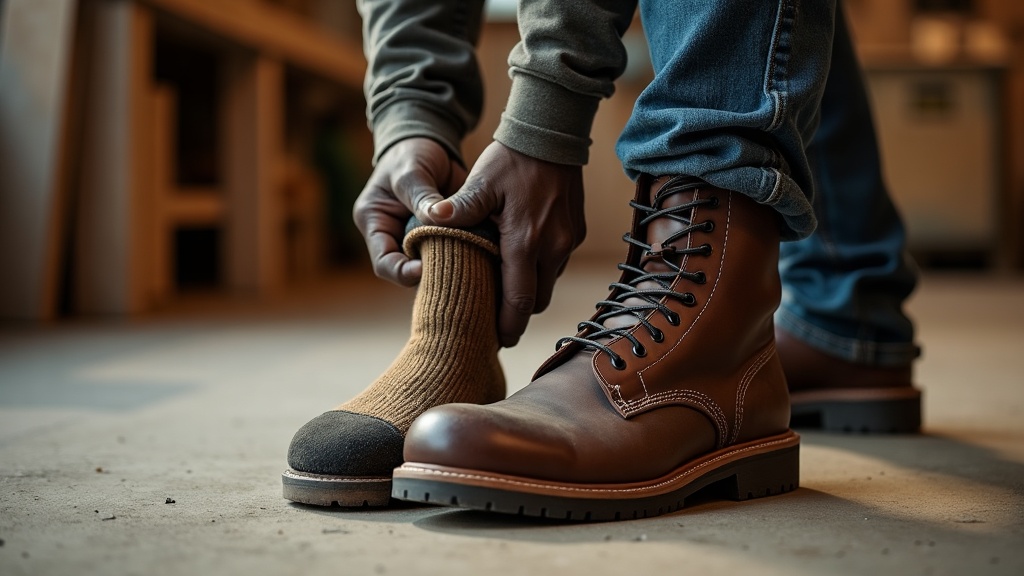
If your boots smell like a locker room by noon, the problem starts with the sock, not the boot. Steel-toe boots trap heat and limit airflow. You need a sock that actively moves sweat away from the skin and dries fast inside the boot.
Merino wool is the gold standard for best work socks for sweaty feet. It can absorb up to 30% of its weight in moisture before feeling wet, and it naturally resists the bacteria that cause odor. For guys who run extremely hot, a merino-polyester blend like Carhartt's Force line dries faster while still managing moisture well.
Avoid any sock labeled "cotton rich" if sweaty feet are your issue. Cotton holds moisture and creates exactly the warm, damp environment that breeds blisters and fungal infections.
Crew vs. Over-the-Calf: Which Cut Is Right for Your Work Boot
Cut is not just a style choice. It directly affects how the sock performs in your specific boot.
Crew work socks for men
Crew height (hits mid-calf) is the right call for most 6-inch work boots and low-cut boots. It stays below the boot cuff, doesn't bunch, and gives the leg room to breathe. The majority of guys on construction sites and in trades wear crew cut.
Over-the-calf
If you wear 8 to 10-inch logger or lineman boots, over-the-calf is worth the extra coverage. It prevents the boot shaft from rubbing your shin raw over a long shift, and it adds a layer of compression that can reduce leg fatigue when you're standing all day.
Did you know?
Compression in over-the-calf socks (typically 15 to 20 mmHg) has been shown in occupational health studies to reduce lower leg swelling by up to 40% in workers who stand on hard surfaces for more than 6 hours a day.
How to Make Your Work Socks Last Longer
A $28 pair of Darn Toughs can outlast six pairs of $6 socks if you treat them right. Here's how.
- Rotate at least 3 pairs so the same pair isn't washed daily. Rest time between wears extends fiber life significantly.
- Wash in cold or warm water, never hot. Hot water breaks down elastic and felts wool fibers.
- Air dry when possible. High heat in the dryer degrades nylon and spandex faster than anything else.
- Turn inside out before washing to protect the outer loops and cushion zones from agitator damage.
- Store loosely. Stuffing socks tight into a drawer creases the cushion pad and weakens the arch band.
What Trade Workers Say About Their Go-To Socks
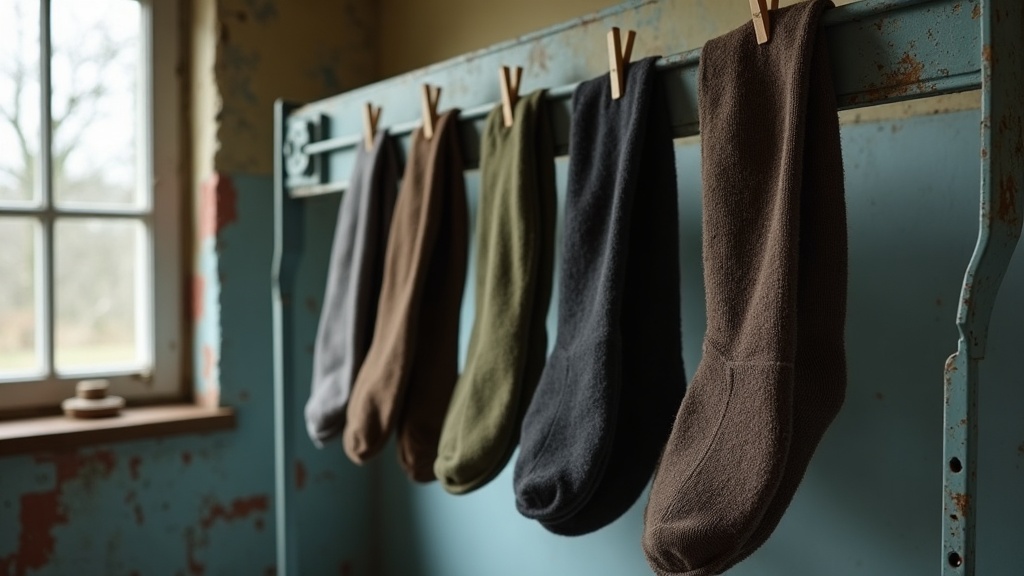
Concrete finishers, electricians, ironworkers, and plumbers tend to agree on a few things. Darn Tough gets the most repeat purchases. Carhartt Force is the first upgrade most guys make when they get tired of replacing cheap socks every month. And almost nobody goes back to cotton once they've tried a good merino blend.
The consistent complaint about budget socks: the cushion flattens out in under three weeks. After that, you're basically wearing a thin nylon shell inside a hard boot. That's when the knee and back pain starts showing up too.
How to Pick the Right Pair for Your Job
Match the sock to what your shift actually demands. Here's a fast breakdown.
- Concrete and flooring work: maximum cushion at ball and heel, crew cut, merino or wool-nylon blend
- Roofing and framing: medium cushion, moisture wicking, reinforced toe for boot friction on pitched surfaces
- Electrical and plumbing: all-day standing focus, compression support, odor resistance
- Warehouse and logistics: lightweight thick sock, fast-drying, crew height, good arch band
- Outdoor winter work: heavier merino weight (cushioned work boot socks 250g and up), over-the-calf cut
One rule cuts across every trade: buy fewer pairs at higher quality. Three good pairs rotated will serve you better than a 12-pack of bargain socks that fail in a month. Your feet carry you through every shift. Give them something worth standing on.
