


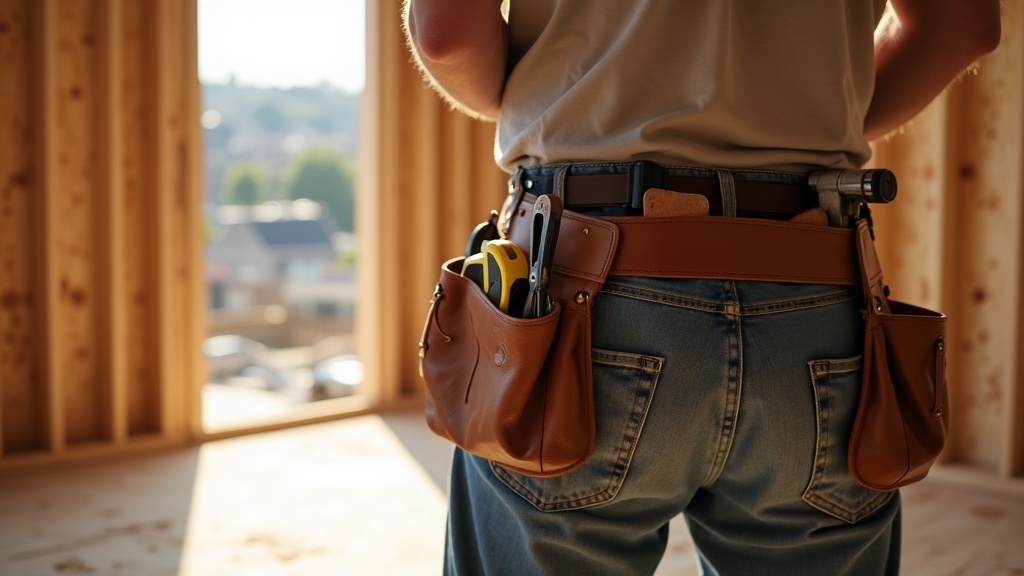
You didn't hurt your back. You didn't slip. You didn't fall. You just showed up to work every day with a loaded tool belt, and now your outer thigh burns, your foot goes numb on the ladder, and the pain follows you home. That's not normal wear and tear. That's nerve compression.
The good news: most of it is fixable without surgery, without quitting the trade, and without a doctor telling you to just "rest more." But you have to understand what's actually happening to your body first.
Key points at a glance
- A tool belt resting on your hips compresses the lateral femoral cutaneous nerve, causing burning and numbness in the outer thigh.
- Meralgia paresthetica is the clinical name for this condition, and tradesmen are among the most at-risk groups.
- Sciatica and meralgia paresthetica feel similar but come from completely different nerve roots, requiring different fixes.
- Where you position your belt on your body changes everything: waist vs. hip placement directly affects nerve compression.
- Suspender harnesses, padded belts, and load redistribution are practical gear fixes that actually work.
- If numbness persists for weeks or you lose strength in your leg, stop waiting and get it checked.
What this article does for you
What That Burning, Tingling Hip and Foot Pain Actually Is
The burning sensation on your outer thigh, the tingling that creeps toward your knee, the foot that feels half-asleep by mid-morning: these are nerve symptoms, not muscle aches. Nerve pain from tool belt weight on hips and feet has a specific pattern, and it's different from general soreness.
Muscles ache. Nerves burn, tingle, go numb, or send electric jolts. When a nerve gets compressed long enough, it starts misfiring. That's your body telling you the structure squeezing it needs to move.

Why Your Tool Belt Is the Culprit (Even If It Fits Fine)
A belt that fits your waist doesn't necessarily fit your body's nerve geography. Most loaded tool belts weigh between 15 and 30 pounds. That weight gets distributed through two to three inches of leather or nylon, right over some of the busiest nerve corridors in your lower body.
"Tight belt syndrome" is an actual clinical term. The symptoms include burning, numbness, and tingling in the thigh and hip, and they come from sustained external pressure, not from injury. You can have a belt that technically fits and still be compressing a nerve every single workday.
Did you know?
The lateral femoral cutaneous nerve, the nerve most commonly crushed by a hip-worn tool belt, has no motor function. It only carries sensation. That's why you get numbness and burning but no actual weakness in the leg, at least early on.
Meralgia Paresthetica: The Nerve Condition Tradesmen Get Diagnosed With Too Late
Meralgia paresthetica is compression of the lateral femoral cutaneous nerve (LFCN) as it passes under or through the inguinal ligament at the front of your hip. Tool belts are listed in medical literature as a direct cause. Cops with duty belts, utility workers, and carpenters all share this diagnosis.
The classic symptom pattern is burning or aching on the outer thigh, sometimes extending toward the knee. It often gets worse when you stand or walk for long periods and feels better when you sit down and take the belt off.
- Location: Outer thigh, from hip to just above the knee
- Sensation: Burning, tingling, or full numbness
- Trigger: Standing, walking, heavy belt around the hip
- Relief: Sitting, removing the belt, lying down
Most guys push through it for months before getting a diagnosis. By then, some have mild nerve damage that takes longer to heal.
Sciatica vs. Meralgia Paresthetica: How to Tell the Difference on the Job
Both conditions cause leg pain. The location and type of that pain tell you which nerve is involved.
| Feature | Sciatica | Meralgia Paresthetica |
|---|---|---|
| Pain location | Lower back, buttock, back of leg, foot | Outer thigh only, rarely below knee |
| Pain type | Sharp, shooting, electric | Burning, aching, numbness |
| Muscle weakness | Possible (calf, foot drop) | None (sensory nerve only) |
| Worsened by | Sitting, bending, lifting | Standing, walking, tight waistband |
| Origin nerve | Sciatic nerve (L4-S3) | Lateral femoral cutaneous (L2-L3) |
| Back pain present? | Usually yes | Usually no |
If you have back pain radiating down the back of your leg into your calf or foot, that points to sciatica. If the pain lives on the outer thigh with no back involvement, meralgia paresthetica from your tool belt is the more likely cause.
Should a Tool Belt Sit on Your Waist or Your Hips? (This Matters More Than You Think)
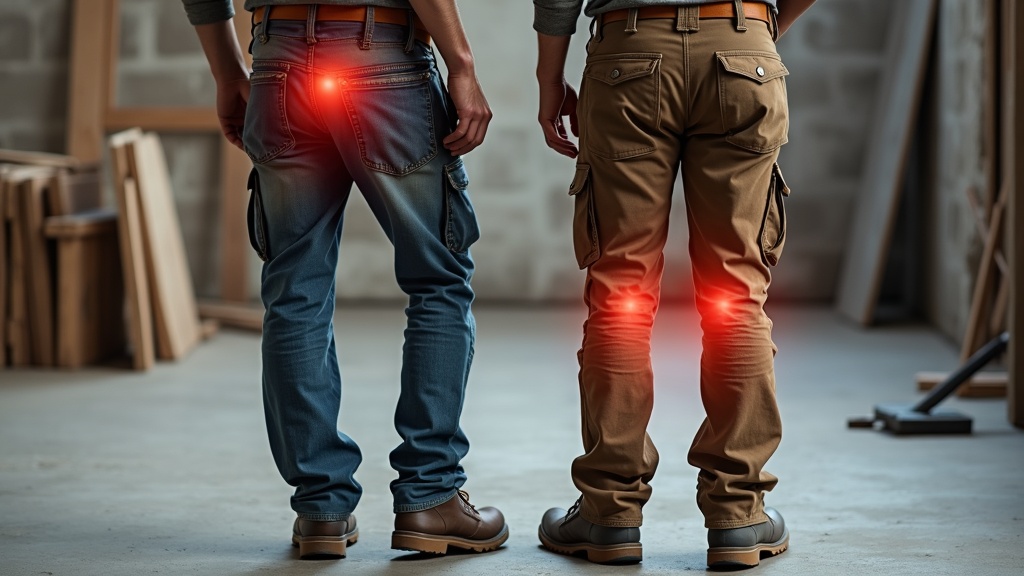
The short answer: your waist, not your hips. The inguinal ligament runs from your hip bone (ASIS) to your pubic bone. The lateral femoral cutaneous nerve exits right at that junction. A belt riding low on the hip compresses exactly that spot, all day, every day.
A belt positioned at the natural waist (around the navel) sits above that nerve pathway entirely. Most guys wear their belts low because it feels more stable with heavier loads. That habit is trading short-term comfort for long-term nerve damage.
- Measure your natural waist, not your pant size. Wear the belt there.
- If the belt keeps sliding down, that's a weight and balance issue, not a position issue. Fix the load, not the placement.
- Suspender-style harnesses keep the belt from migrating south by transferring weight to your shoulders.
Did you know?
Studies on police officers with duty belts found that switching to a shoulder-suspended belt system reduced hip and thigh nerve compression symptoms in over 60% of cases within 8 weeks. The fix wasn't medication. It was load redistribution.
Gear Changes That Actually Reduce Nerve Compression
You don't have to throw money at the problem. But some gear changes make a real difference.
1. Suspender harness systems
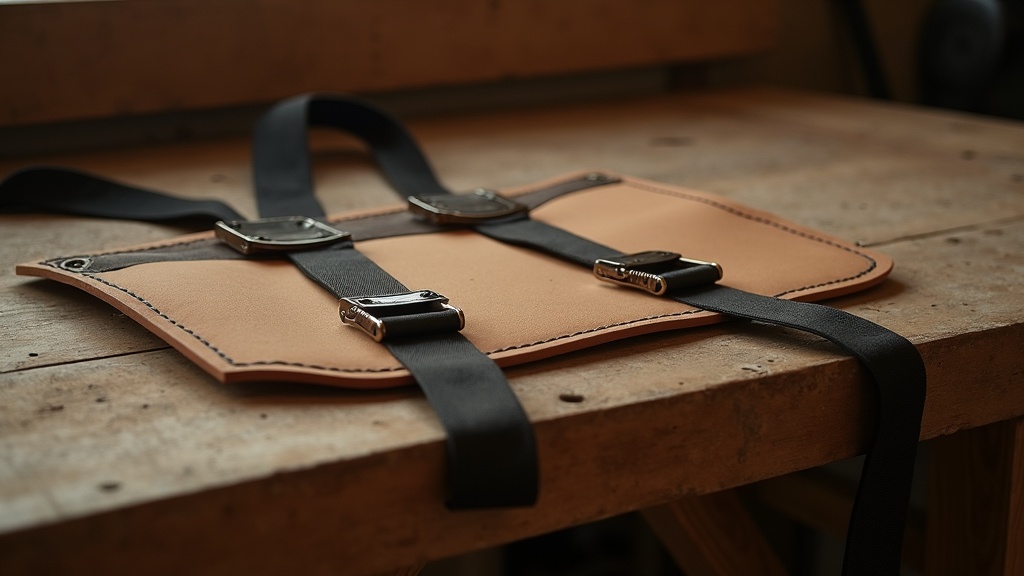
These clip to your existing belt and run over your shoulders like suspenders. They take 30 to 50 percent of the belt's weight off your hips. This single change eliminates the hip-drop that causes nerve compression in most cases.
2. Padded belt backing
A wide neoprene or foam-padded backing distributes pressure across more surface area. It doesn't remove the compression, but it spreads it so no single nerve point takes all the load.
3. Lighten the rig
Audit your pouches. How many tools do you carry "just in case" that you use twice a week? A lighter belt is the simplest nerve treatment there is. Move specialty tools to a bucket or a rolling cart on the jobsite.
4. Clip-on holsters and side pockets
Magnetic bit holders, clip-on drill holsters, and cargo pants with built-in loops let you offload weight from the belt entirely. Fewer pounds on the belt means less pressure on the nerve.
On-the-Job Habits and Stretches That Keep the Pain from Coming Back
Gear alone isn't enough if your habits haven't changed.
Take the belt off during breaks
Every break, every lunch: unhook the belt. Giving the nerve 15 minutes of decompression during an 8-hour shift makes a measurable difference in recovery speed and symptom severity.
Hip flexor stretch
Kneel on one knee, push your hips forward slowly, hold 30 seconds each side. This releases tension on the inguinal ligament, which is the same structure compressing the lateral femoral cutaneous nerve. Do it every morning before you strap in.
Piriformis stretch
Sit on a chair, cross one ankle over the opposite knee, lean forward gently. Thirty seconds each side. This targets the piriformis muscle, which can contribute to both sciatic irritation and hip pain from tool belt positioning.
Shift your load distribution
Don't load one side of your belt heavier than the other. An uneven belt tilts your pelvis, which changes how pressure lands on both hips. Balance the weight left-to-right as much as possible.
When to Stop Toughing It Out and See a Doctor
Most mild meralgia paresthetica from a tool belt resolves within weeks when you take pressure off the nerve. But some cases need medical attention.
See a doctor if you have any of these:
- Numbness that hasn't improved after 4 to 6 weeks of belt modifications
- Pain that wakes you up at night
- Weakness in your leg or foot (this suggests a different nerve is involved)
- Pain that has spread from your thigh into your groin or lower back
- Loss of bladder or bowel control (this is a medical emergency, call immediately)
A doctor can confirm the diagnosis with a physical exam and sometimes an EMG (nerve conduction study). Treatment for persistent cases includes corticosteroid injections near the inguinal ligament, which are effective and minimally invasive. Surgery is rare and almost never needed for tool belt-related compression.
Chronic nerve compression doesn't get better by ignoring it. The trade keeps going whether your nerves are healthy or not, but a body that stops working right doesn't come cheap to fix. Handle this early, handle it smart.
