


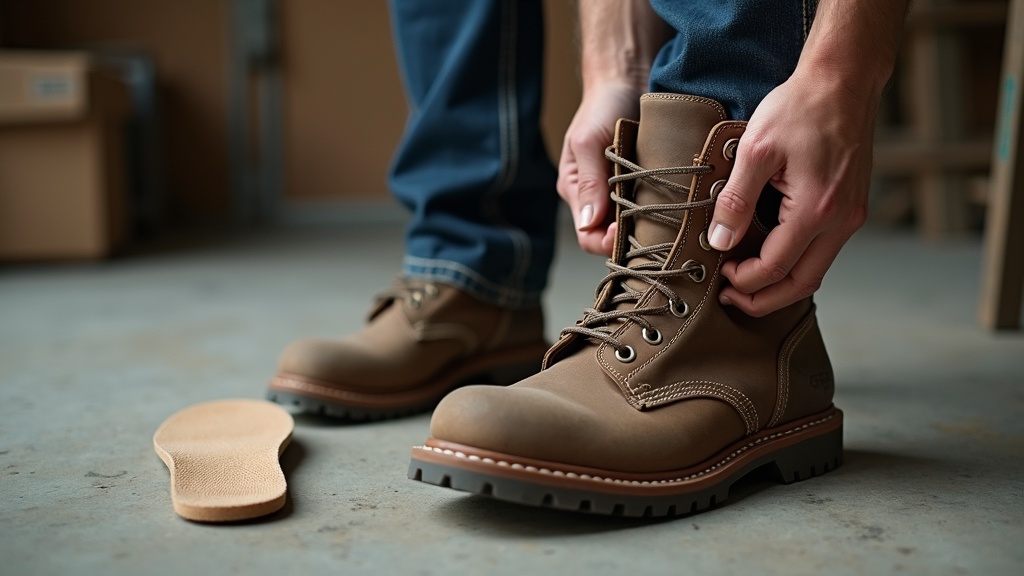
Your work boots came with an insole. It's about 4 millimeters of compressed foam that was designed to keep costs down, not to protect your feet through a 10-hour shift on concrete. By lunch, you already know it.
Adding a real insole to your work boots is one of the cheapest, fastest changes you can make to stop going home with wrecked feet. Here's exactly what you need to know before you spend a dime.
Key points at a glance
- Stock insoles in most work boots are thin foam fillers, not support systems.
- Concrete floors transfer shock directly into your heel, arch, and knees after just a few hours.
- A quality aftermarket insole costs $20 to $60 and can last 12 months of daily use.
- Arch support type matters: neutral, low, or high arch determines which insole fits your foot.
- Stacking two insoles rarely works and often makes things worse.
- Plantar fasciitis, metatarsalgia, and Achilles pain each call for a different insole profile.
Why This Upgrade Actually Matters
The Short Answer: Yes, and Here's Why Your Stock Insole Is Failing You
Every major work boot brand, including Wolverine, Red Wing, and Timberland Pro, ships their boots with a basic foam liner. It's not support. It's filler. The real structure is in the midsole and shank of the boot itself.
That stock liner compresses fully in under two weeks of daily use. After that, you're essentially walking on the boot's midsole with a thin layer of foam between you and it. That's fine for an hour. It's not fine for eight.
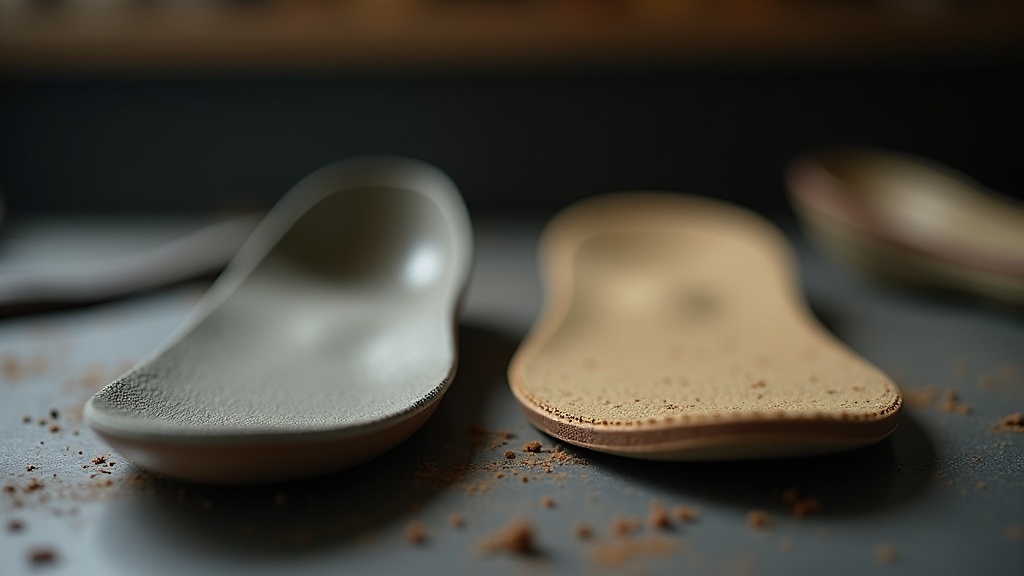
What Happens to Your Feet After 8 to 12 Hours on Concrete
Concrete doesn't give. Every step sends a force equal to roughly 1.5 times your body weight up through your heel, ankle, knee, and lower back. Do that 8,000 to 10,000 times a day and you understand why guys go home limping.
The plantar fascia, the thick band of tissue running along the bottom of your foot, gets pulled repeatedly when there's no arch support underneath it. That's how plantar fasciitis starts. It doesn't start from one bad day. It starts from 60 bad days in a row.
Did you know?
Workers who stand on concrete for more than 8 hours a day are up to 3 times more likely to develop chronic lower back pain compared to those who work on cushioned surfaces, according to occupational health research published in Applied Ergonomics.
The Real Benefits of Adding Insoles to Work Boots (No Fluff)
Here's what a proper insole actually does for you on the job:
- Shock absorption: A good EVA or polyurethane heel cup cuts the impact before it reaches your joints.
- Arch support: Keeps your foot from pronating (rolling inward) across a full shift, which protects your knee and hip alignment.
- Moisture management: Better top covers wick sweat away from your skin, cutting down on blisters and hot spots.
- Metatarsal support: Some insoles include a met pad that takes pressure off the ball of your foot, which is critical on concrete.
- Boot fit: If your boots are slightly too wide, a thicker insole fills the gap and stops heel slippage.
What to Look For in a Work Boot Insole (and What's a Waste of Money)
Get this right and a $35 insole does more for you than a $200 boot upgrade.
Worth paying for
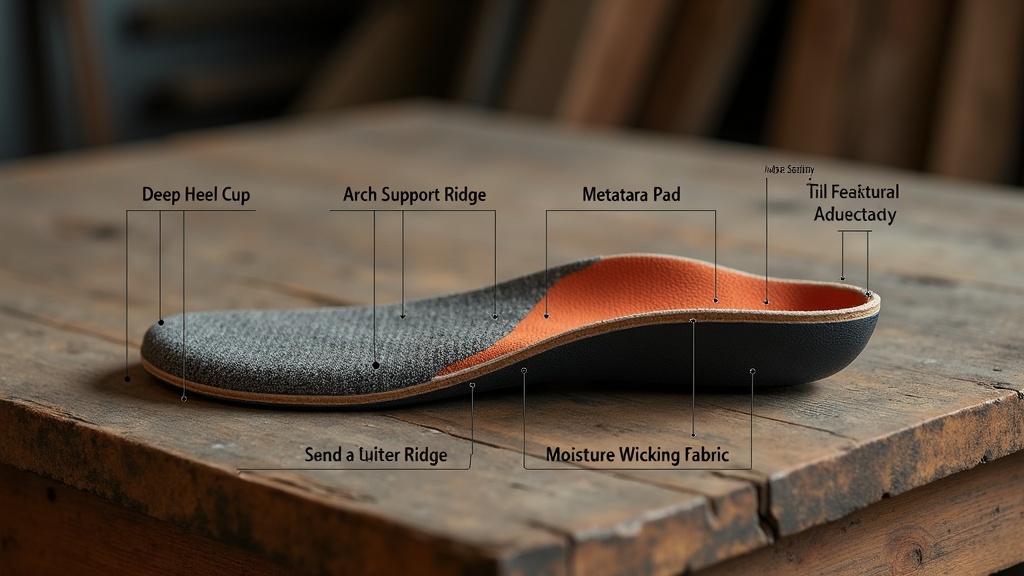
- A rigid or semi-rigid arch support shell (not full-foam)
- A deep heel cup, at least 20mm, to stabilize your foot
- A moisture-wicking top cover, preferably antimicrobial
- Metatarsal pad if you're on concrete all day
Not worth it
- Gel insoles that feel great in the store and flatten in a month
- Full-foam insoles marketed as "memory foam comfort" with no arch structure
- Anything that advertises itself purely on thickness without mentioning support
Can You Stack Two Insoles? When It Makes Sense and When It Doesn't
People ask this on Reddit constantly. The short answer: pull out the stock insole first. Stacking on top of it raises your foot in the boot, compresses your toes against the toe box, and can actually reduce stability around the ankle.
The one case where stacking can work: if you have a very low-volume boot with barely any depth, a thin cushion pad under a structured insole can help. But that's the exception, not the rule. In most cases, remove what's in there and replace it clean.
Did you know?
The average person takes between 8,000 and 12,000 steps on a workday shift. If you're carrying 200 lbs, that's over 1.5 million pounds of cumulative force on your feet before you clock out.
Insoles for Specific Pain: Plantar Fasciitis, Achilles, Metatarsalgia, Morton's Neuroma
Not all foot pain is the same. The insole that fixes your buddy's heel may do nothing for your ball-of-foot burn.
Plantar fasciitis
You need a firm arch support that stops the fascia from overstretching. Look for a deep heel cup and a pronounced medial arch. Superfeet Green and Powerstep Pinnacle are built for this.
Achilles tendinitis
A small heel lift, around 6mm, reduces tension on the Achilles. Avoid insoles with a flat heel profile. Spenco Total Support is a solid pick here.
Metatarsalgia (ball-of-foot pain)
You specifically need a metatarsal pad placed just behind the ball of your foot. Not every insole includes one. Sole Signature Response and Superfeet Carbon have it built in.
Morton's neuroma
A wider toe box plus a metatarsal pad to spread the load. This one often needs a podiatrist's opinion too, but insole support can buy you significant relief while you get there.
Top Picks That Hold Up on the Job (Concrete, Warehouse, Construction)
| Insole | Best For | Arch Type | Price Range |
|---|---|---|---|
| Superfeet Green | Plantar fasciitis, concrete work | High | $50, $55 |
| Powerstep Pinnacle | All-day standing, plantar fasciitis | Medium-high | $40, $50 |
| Spenco Total Support Max | Warehouse, Achilles, heel pain | Medium | $35, $45 |
| Superfeet Carbon | Low-profile boots, construction | High, thin | $55, $65 |
| Timberland PRO Anti-Fatigue | Budget pick, general labor | Low-medium | $20, $30 |
How to Put Insoles in Your Work Boots the Right Way
It takes two minutes. Do it right and it actually stays put.
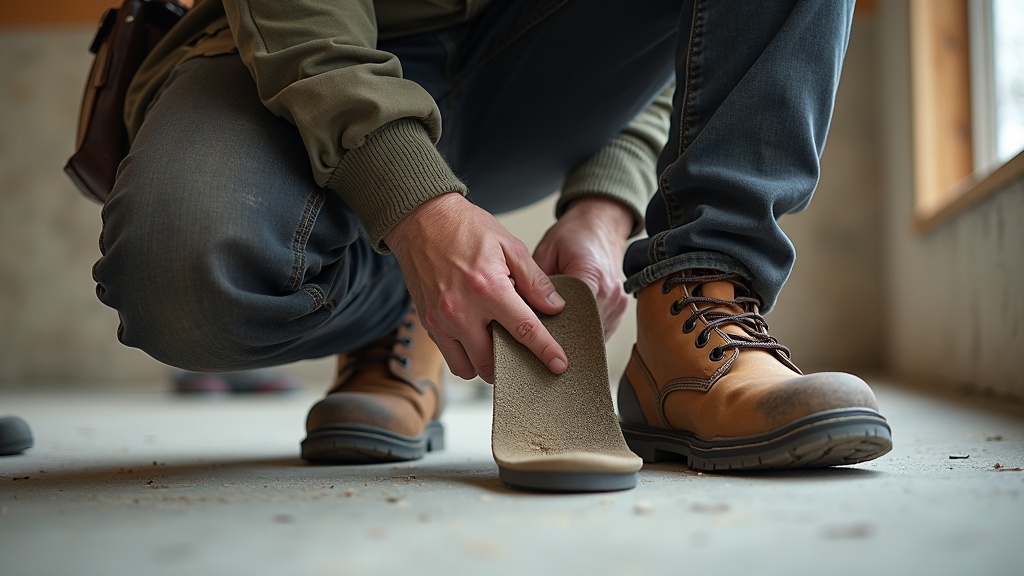
- Pull out the stock insole completely. Don't leave it in. If it's glued down, use a flat screwdriver along the edges.
- Use the old insole as a template. Trace it on the new one and trim with scissors if it's too long. Cut conservatively: you can always take more off.
- Drop it in and press heel-first. Press along the arch and toe to make sure it lies flat with no buckle under the ball of the foot.
- Wear them for 30 minutes around the house first. Your feet need a day or two to adjust to real arch support, especially if you've been walking on flat foam for years.
Bottom Line: Is It Worth the Money?
A $40 insole that lasts 12 months costs you about 11 cents a day. That's less than a quarter of a cup of gas station coffee. If it means you're not hobbling to your truck at the end of a shift, it's not even a question.
Your boots protect your toes from a dropped beam. Your insoles protect everything else. Both matter. Most guys spend $200 on boots and skip the insole. That's backwards.
If you're starting from zero: grab Superfeet Green or Powerstep Pinnacle, pull the stock liner, drop them in, and give it a week. That's the move.
