


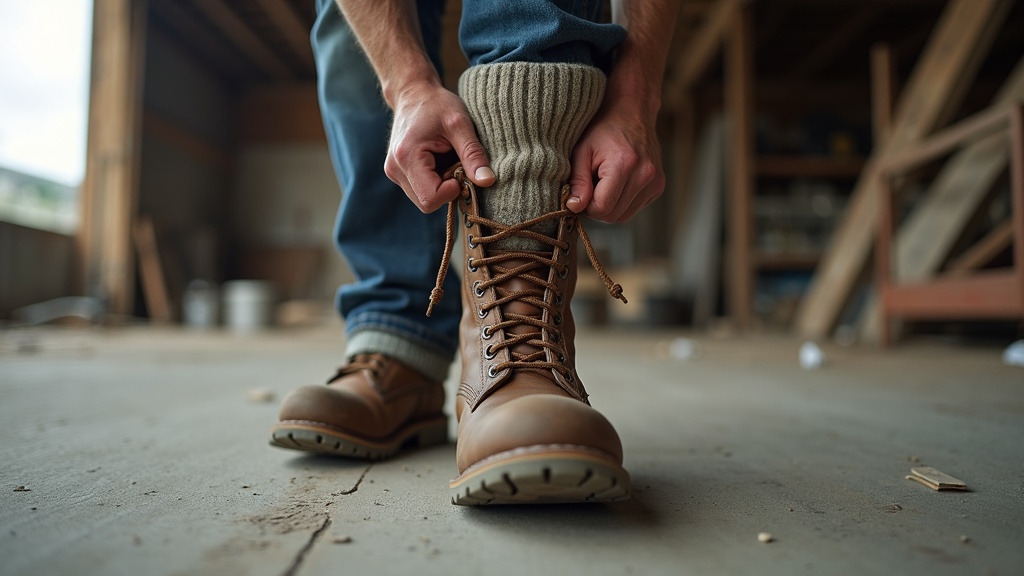
Wrong sock height doesn't just feel uncomfortable. It tears up your skin, bunches under your boot collar, and turns an eight-hour shift into a slow grind. The sock height question matters more than most workers think, and it costs next to nothing to get right.
This guide cuts through the noise. You'll know exactly which height to grab for your boot, your trade, and your day, before you ever hit the checkout line.
Key points at a glance
- Sock height should always reach past your boot collar, not stop below it.
- Crew socks work for most 6-inch boots; mid-calf and over-the-calf are built for 8-inch and taller.
- Quarter socks are for low-cut work shoes only, never tall boots.
- Material and cushion level matter as much as height for all-day comfort and blister prevention.
- Your trade changes the answer: logging, electrical, and concrete work each have different needs.
- One wrong size can cause blisters, boot slippage, and ankle abrasion by noon.
What the right sock height does for you
Why Sock Height Actually Matters on the Job
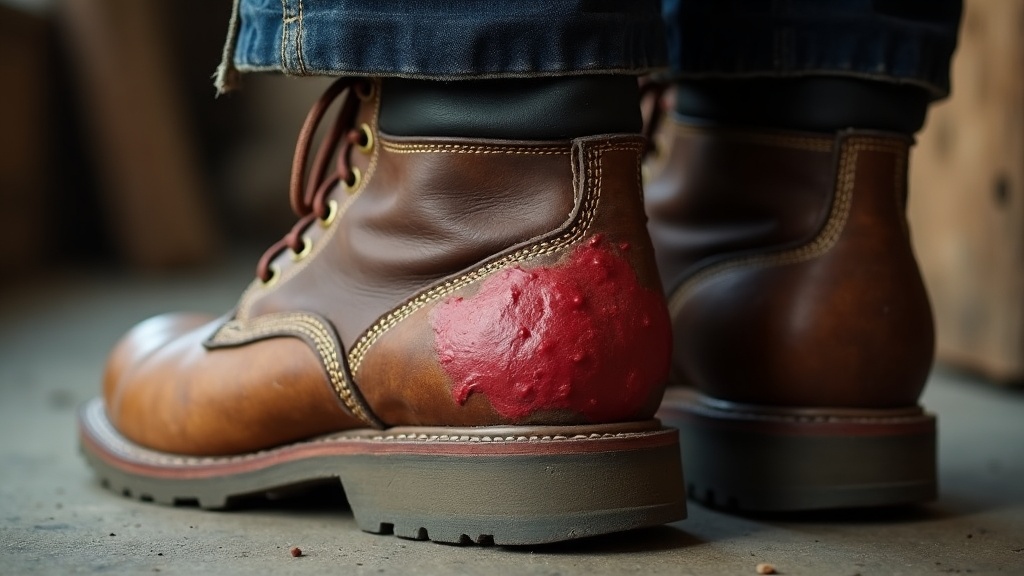
Your boot collar is a raw edge of leather or synthetic material. Every step, it rubs against your leg. Without enough sock coverage above that collar, you get friction. Friction becomes a raw spot. By Thursday, that raw spot is a real problem.
Coverage is protection. The sock acts as a buffer between your leg and the boot. Too short, and you lose that buffer at exactly the point where the boot flexes hardest.
Sock height also affects moisture management. A taller sock gives sweat more surface area to move through. That keeps your skin drier and reduces the chance of hot spots building up during a long shift.
Every Sock Height Explained (No-Nonsense Breakdown)
There are four main sock heights you'll see on store shelves. Each has a specific job.
Quarter socks
Sits just above the ankle bone. Made for low-cut athletic shoes or work sneakers. Never pair these with a tall work boot. The collar will sit above the sock and eat your leg alive.
Crew socks
Ends roughly 6 to 8 inches above the heel. This is the go-to height for standard 6-inch work boots. It clears the collar comfortably with room to spare. Most workers live in crew height and it's the right call for most trades.
Mid-calf socks
Hits about mid-way up the calf. Solid choice for 8-inch boots. Mid-calf socks for work boots also add light compression on the lower leg, which helps if you're standing on concrete all day.
Over-the-calf socks
Goes all the way to just below the knee. Built for loggers, linemen, and anyone in tall boots above 10 inches. Also the best choice when you're working in brush, mud, or any condition where debris can get in at the top of the boot.
Did you know?
The American Podiatric Medical Association reports that blisters are the most common foot complaint among workers who spend more than 6 hours a day in boots. In most cases, the friction source is traced back to the sock-to-boot interface at the collar, not the toe box.
Match Your Sock Height to Your Boot Height
The rule is simple: your sock should always end at least 1 to 2 inches above your boot's top edge. If it doesn't, you have a gap, and that gap is where blisters start.
Here's how sock height by boot height breaks down in practice:
| Boot Height | Recommended Sock Height | Why It Works |
|---|---|---|
| Low-cut (under 4") | Quarter or no-show | Boot collar is below ankle, no abrasion zone |
| 6-inch boot | Crew sock | Clears collar by 1-2 inches, most popular pairing |
| 8-inch boot | Mid-calf | Covers the full collar with cushion to spare |
| 10-inch and taller | Over-the-calf | Only height that protects the full leg inside a tall boot |
| Logger or lineman boot | Over-the-calf wool | Insulation, abrasion protection, debris barrier |
What Sock Height Works Best for Your Trade
There's no single answer that covers every worker. Your job changes the math.
Construction and general labor
A crew sock height for work boots in a merino wool or wool-blend is the workhorse pick. It fits a 6-inch boot, manages sweat, and won't bunch up when you're climbing a ladder.
Electrical work
Electricians need full coverage. Arcing and heat can reach the lower leg. An over-the-calf sock in a non-synthetic material adds a layer between you and heat exposure. Merino wool does not melt against the skin the way nylon does.
Logging and forestry
Tall boots, heavy brush, and wet ground. Over-the-calf work boot socks are non-negotiable here. You want thick cushion, long coverage, and a fiber that stays warm when it gets damp.
Warehouse and concrete floors
Standing on hard, flat surface all day is rough on the arch and heel. A mid-calf sock with targeted cushion zones at the heel and ball of the foot will do more for you than height alone. Pair it with a 6-inch boot and you're set.

Men's vs. Women's Fit: What Changes, What Doesn't
The height rules are identical for men and women. A 6-inch boot on a woman still needs a crew sock. An 8-inch boot still needs mid-calf coverage. The height logic doesn't change with gender.
What does change is the fit around the calf and ankle. Women's specific work boot socks are cut narrower through the leg and have a shorter foot length. A sock sized for men will bunch at the ankle in a woman's boot, which creates exactly the friction you're trying to avoid.
When shopping for work boot sock guide men women options, look for socks labeled by shoe size rather than S/M/L. It's more accurate, and the fit shows up immediately when you pull them on.
Material and Cushion Matter as Much as Height
You can get the height right and still end up with sore feet if the material is wrong. Here's what to know:
- Merino wool: Regulates temperature in heat and cold, resists odor, soft against skin. Best all-around fiber for work boots.
- Wool blend (wool + nylon): More durable than pure wool. Holds its shape after washing. The most common choice in quality work socks.
- Synthetic (polyester, CoolMax): Strong moisture-wicking, dries fast. Better for warm climates and summer work.
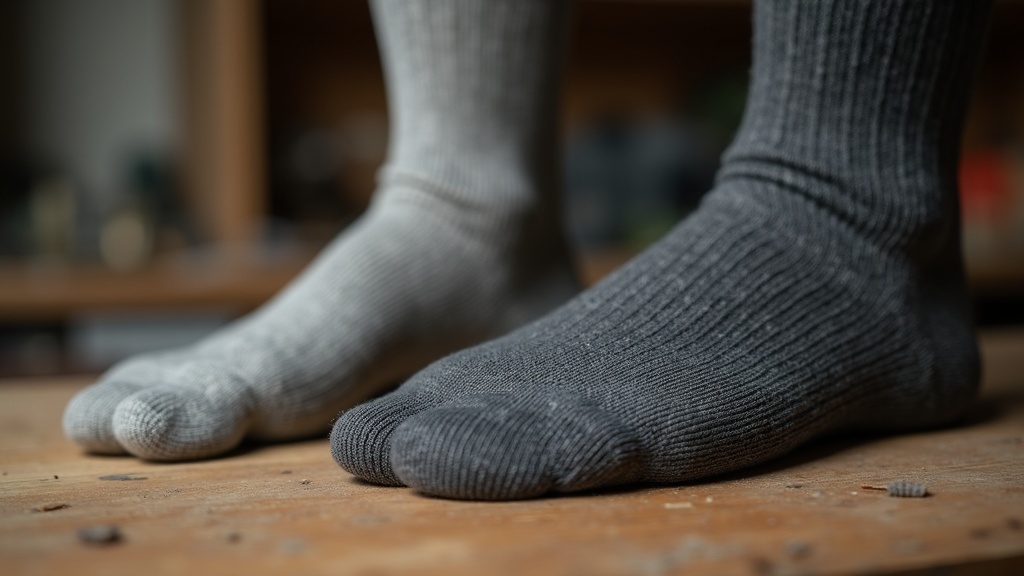
- Cotton: Cheap, but holds moisture against the skin. Fine for light duty. Not recommended for heavy work or hot days.
Cushion level is separate from material. Light cushion works for moderate days and tight-fitting boots. Full cushion adds bulk, which helps on hard surfaces but can make a snug boot too tight. Know your boot's fit before you go thick.
Did you know?
Merino wool fibers can absorb up to 30% of their own weight in moisture before they feel wet to the touch. That's why a merino sock keeps your foot feeling dry long after a synthetic sock has already soaked through.
The Most Common Sock Height Mistakes Workers Make
- Buying crew socks for 8-inch boots. They ride down inside the boot collar within an hour. You end up with bare leg rubbing against leather all day.
- Wearing cotton socks in summer. Cotton soaks through and stays wet. Wet skin plus friction equals blisters, fast.
- Going thick cushion in a tight boot. If your boot already fits snug, a full-cushion sock will compress your toes and cut circulation by mid-afternoon.
- Buying on price alone. A $3 pack of department store socks will be thread-bare in two weeks of hard use. A quality wool sock at $15-$20 lasts a year or more and saves money long term.
- Ignoring gender-specific sizing. A men's sock on a smaller foot will bunch and fold, creating pressure points inside the boot.
Quick-Reference Chart: Boot Height vs. Sock Height
Use this as your go-to before you buy. Match your boot height on the left, grab the corresponding sock height on the right.
| Boot Height | Sock Height | Best Material | Cushion Level |
|---|---|---|---|
| Under 4 inches | Quarter | Synthetic blend | Light |
| 6 inches | Crew | Wool blend | Medium |
| 8 inches | Mid-calf | Merino wool | Medium to full |
| 10 inches+ | Over-the-calf | Heavy wool | Full |
| Logger / lineman | Over-the-calf | Merino or heavy wool | Full with arch support |
Your Three-Step Buying Decision
Before you buy another pair of work socks, answer these three questions:
- How tall is your boot? Measure from the heel to the top edge in inches. That single number narrows your height choice down to one or two options.
- What's your work environment? Hot and dry means prioritize moisture-wicking. Cold and wet means go merino or heavy wool. Hard flat surfaces mean go full cushion.
- Does your boot fit correctly right now? If it's snug, don't go thick cushion. If you have a little room, a medium cushion sock will fill it and improve the fit.
Get those three answers right and you'll have the best socks for work boots for your specific situation, not a generic recommendation off a shelf. Your feet carry you through every shift. Give them the right foundation.
