


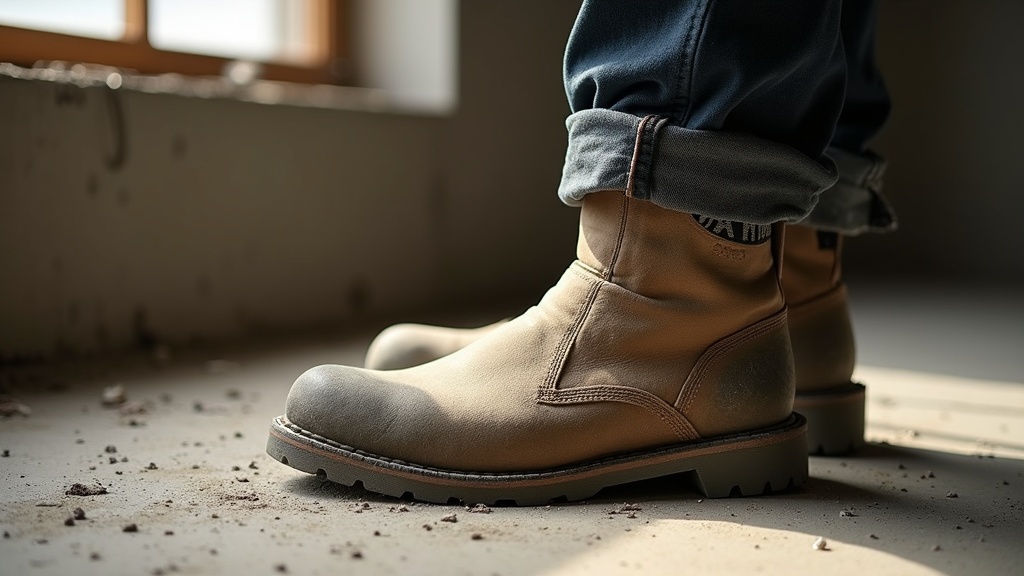
Most sock reviews are written by someone who wore a pair for a weekend hike. This one isn't. These socks went through ten-hour shifts in steel toe boots, concrete dust, summer heat, and the kind of friction that grinds through cheap fabric in two weeks flat.
The goal here is simple: which work socks actually hold up, which ones are worth the price tag, and which ones will leave you with a blister and a hole in the heel by Thursday.
Key points at a glance
- Real-shift testing beats lab data every time for work socks.
- Heel and toe seams fail first in steel toe boots, not the shaft.
- Merino wool outlasts cotton by a wide margin in hot, sweaty conditions.
- A good work sock should last 12 to 18 months with daily rotation.
- Darn Tough Steely socks delivered the best overall durability in this test.
- Matching socks to your trade matters more than most workers realize.
What This Test Covers
How We Tested: No Lab, No Mannequin Feet, Just Real Shifts
Five pairs per brand, rotated daily across a four-person crew working commercial construction and warehouse shifts. Every pair logged at minimum 60 working days before evaluation.
We tracked: heel thinning, toe seam integrity, elastic retention, moisture buildup, and odor after a single shift. No brand was given a pass for price. A $7 sock and a $28 sock get the same concrete floor and the same steel toe.
What Actually Destroys a Work Sock (And It's Not What You Think)
Most guys blame the washing machine. The machine isn't the problem.
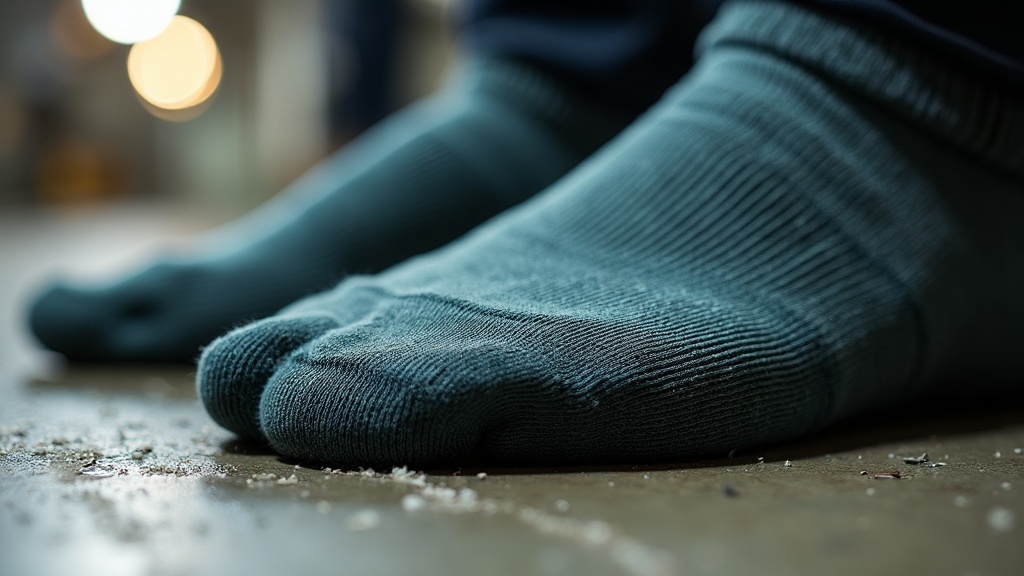
The real killers are friction at the steel toe edge, compressive heel strike on hard concrete, and moisture that never fully dries between shifts. A wet sock that goes back into a boot the next morning starts breaking down fibers from the inside out.
Heat is the second factor nobody talks about. Feet inside work boots can hit 100°F on a summer pour. That temperature degrades elastic and weakens synthetic bonding faster than any dryer cycle.
Did you know?
The average construction worker's foot sweats roughly half a pint of moisture per shift. Cotton absorbs that sweat and holds it against the skin, increasing blister risk and fiber breakdown. Merino wool absorbs moisture too, but releases it as vapor instead of pooling.
The Socks We Put Through the Grinder: Brand-by-Brand Breakdown
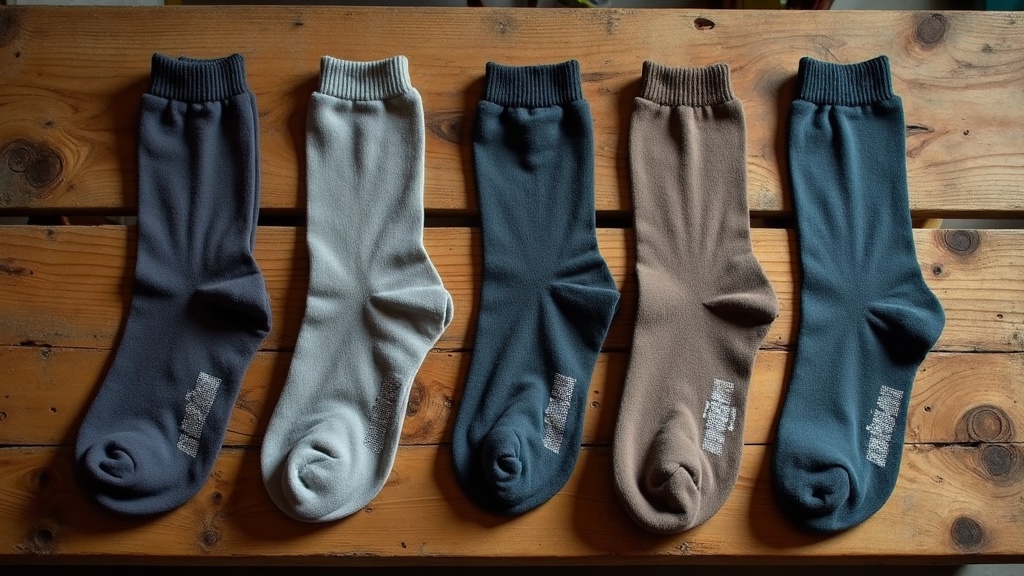
Darn Tough Steely Work Socks
The standout. After 60 days, no heel thinning, seams intact, elastic still holding a clean cuff line. The merino-nylon blend handles sweat without the funk. These are the socks that come with a lifetime guarantee, and after this test, that guarantee isn't a gimmick.
Wigwam Men's Ironman
Solid mid-range performer. Showed some heel thinning by week six but no blowouts. Good cushioning underfoot. Better suited to warehouse work than heavy construction.
Carhartt Force Crew Sock
The cotton-blend option in the test. Comfortable on day one, noticeably degraded by week four. Developed a hot spot at the toe seam that caused friction blisters for one tester wearing narrow-box steel toes. Not recommended for outdoor summer shifts.
Fox River Wick Dry Maximum
Surprising performer at the price point. Held up well in warehouse conditions but showed accelerated wear on demolition days when grit worked its way into the boot. Best value pick for light-duty or climate-controlled work.
Check out our guide on: Cargo Work Pants for Men That Actually Hold Up on the Job
How Long Should Work Socks Last? Here's the Honest Answer
With a rotation of four to five pairs and daily wear, a quality work sock should last 12 to 18 months before showing meaningful wear. Budget socks? Six to eight weeks, sometimes less on abrasive floors.
The math matters here. Two pairs of Darn Tough at $26 each will outlast six pairs of $8 drugstore socks, cost less over a year, and save you from a Friday afternoon blister. That's not a pitch, that's arithmetic.
Cotton vs. Merino vs. Synthetic: Which Material Survives the Job
| Material | Moisture Handling | Durability | Best For |
|---|---|---|---|
| 100% Cotton | Absorbs and holds sweat | Low (6-8 weeks) | Short shifts, cool climates |
| Merino Wool Blend | Wicks and releases as vapor | High (12-18 months) | All trades, all seasons |
| Synthetic (Polyester/Nylon) | Fast-wicking, dries quickly | Medium (8-12 months) | Warehouse, light construction |
| Cotton-Synthetic Blend | Moderate wicking | Low-Medium (6-10 weeks) | Casual or light-duty only |
| Merino + Nylon Reinforced | Best overall moisture control | Highest (18+ months) | Heavy construction, steel toe |
Steel Toe Boots and Sock Wear: Where Your Socks Die First
Steel toe caps have a hard, defined edge that sits right against the top of your toes and the front of your sock. Every step flexes the fabric against that edge. Over hundreds of steps a day, it's like running a sock across the corner of a workbench.
This is why reinforced toe construction isn't optional for steel toe boot wearers. Look for a sock that lists extra-cushion toe and heel zones on the label, not just general cushioning through the arch.
Did you know?
Composite toe boots are actually harder on socks than steel toe boots in some conditions. The composite cap flexes slightly with the boot, creating more repetitive micro-friction at the toe seam than a rigid steel cap does.
Best Work Socks by Trade: Electricians, Plumbers, Warehouse, Construction
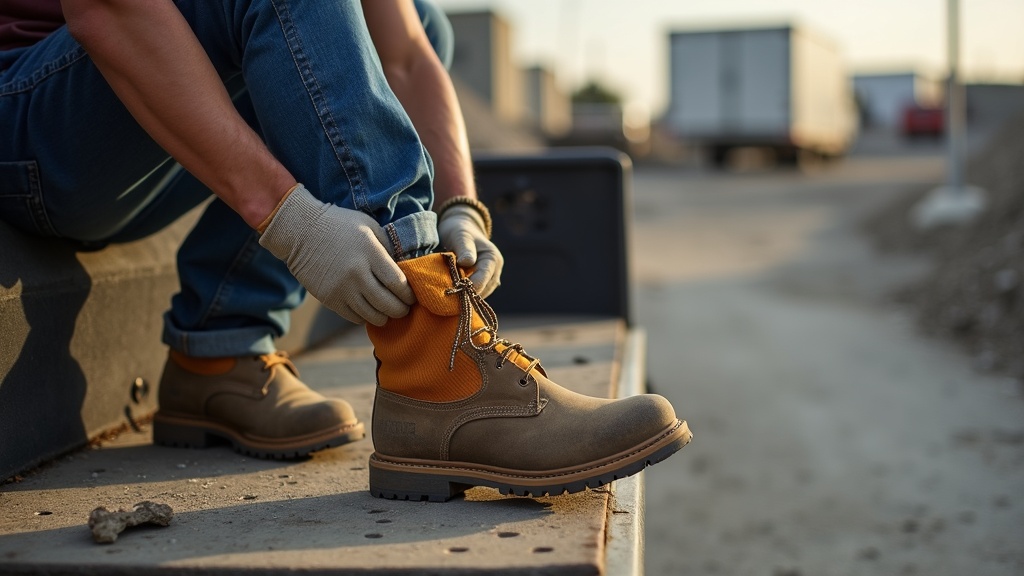
Construction (Concrete, Framing, Demo)
- Pick: Darn Tough Steely Work Boot Sock, full cushion
- Needs maximum heel protection and heat resistance over long pours
Electricians
- Pick: Darn Tough or Fox River Wick Dry
- Moderate cushion, strong moisture control, no loose fibers near hot work
Plumbers
- Pick: Wigwam Ironman or Darn Tough
- A lot of kneeling and crawling puts stress on the ankle and arch, so mid-cushion with good elastic retention wins
Warehouse and Distribution
- Pick: Fox River Wick Dry Maximum or Carhartt Force
- Smooth epoxy floors are easier on socks, so mid-range performs fine here
What to Look For Before You Buy: The Short List That Actually Matters
Ignore the marketing copy. Here's what actually predicts how a sock holds up on the job:
- Reinforced heel and toe zones, specifically called out, not generic cushioning
- Merino or nylon content of at least 20% for durability and moisture control
- Over-the-calf or mid-calf height so the sock doesn't slide under your heel during long shifts
- No exposed cotton at high-friction points (toe box, heel cup)
- A warranty or guarantee from the manufacturer, which usually means they stand behind the construction
Bottom Line: Which Work Sock Is Worth a Hard-Earned Dollar
After 60 days of honest wear across real jobsite conditions, the Darn Tough Steely Work Boot Sock is the clear winner for construction and heavy trades. It costs more upfront and lasts longer than anything else in the test. The lifetime guarantee backs that up.
If budget is the constraint, Fox River Wick Dry is a solid second for warehouse and light-duty work. Skip the cotton blends entirely for anything involving steel toes, summer heat, or eight-plus-hour shifts on hard surfaces.
Buy fewer pairs. Buy better ones. Rotate them properly, air them out between shifts, and a good work sock will carry you through a full year without a second thought. That's the whole game.
