


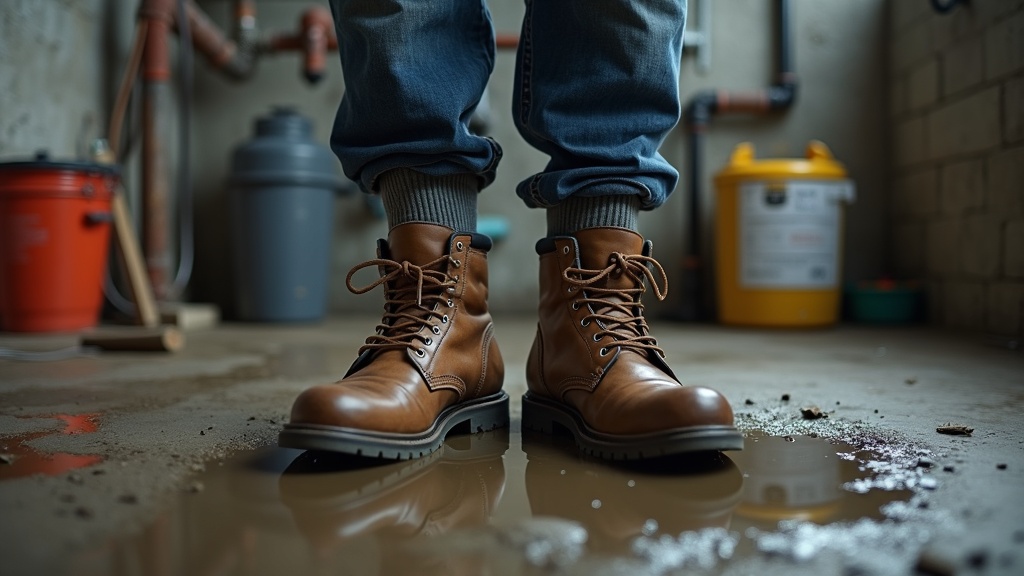
You know that feeling: cold water creeping through your boot at 7 a.m., and you've got six more hours on the floor. Wet feet aren't just uncomfortable, they wreck your focus, your skin, and your whole day.
This guide cuts straight to what actually works for plumbers. No lab ratings nobody understands, no gear that looks good in a photo but falls apart by October. Just real-world waterproof work socks that hold up when the job gets wet.
Key points at a glance
- True waterproof socks use a membrane layer, water-resistant socks do not. The difference matters every single day.
- Merino wool inner liners manage sweat better than synthetic blends for long shifts.
- The best waterproof work socks for plumbers balance protection, breathability, and durability, not just one of the three.
- Waterproof boots and waterproof socks solve different problems. Sometimes you need both.
- Washing habits and drying routines are where most guys destroy a good pair of socks in the first month.
What a solid pair of waterproof socks does for you
Why Plumbers Need Waterproof Socks (Not Just Water-Resistant Ones)
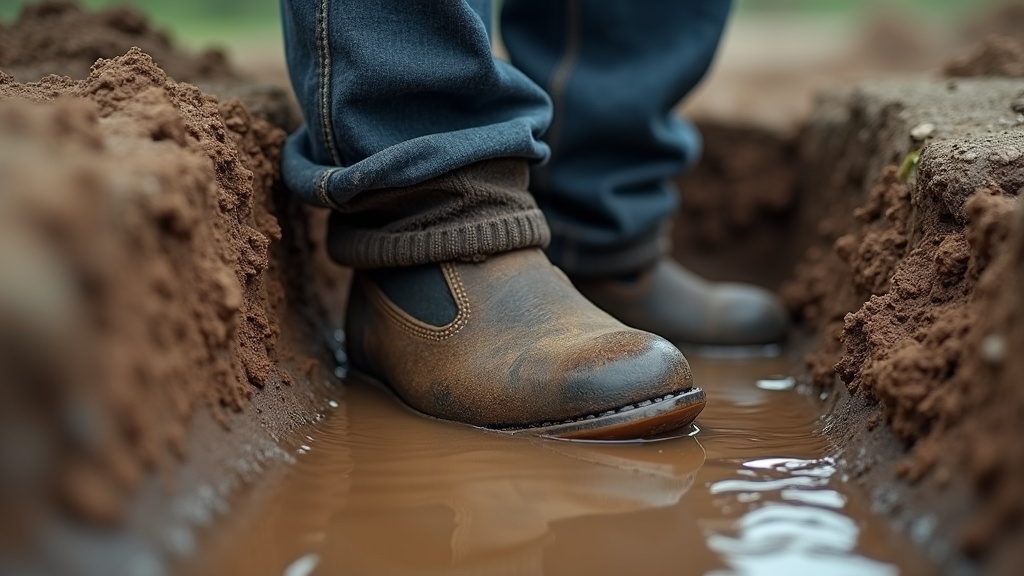
A water-resistant sock will handle a quick splash. It will not handle you kneeling next to a busted supply line or crawling through a flooded crawl space. Plumbing is one of the wettest trades there is.
The moment saturation kicks in, a water-resistant sock becomes dead weight. It holds moisture against your skin and the damage starts: blisters, trench foot risk, athlete's foot. None of that is dramatic. All of it is preventable.
Are Waterproof Socks Actually a Thing? (Yes, Here's How They Work)
Yes, they're real, and the technology is straightforward. True waterproof socks use a laminated membrane, usually polyurethane or PTFE, sandwiched between an outer layer and an inner liner. Think of it like a Gore-Tex jacket, but built as a sock.
The membrane blocks water from getting in from the outside. A good inner liner, ideally merino wool, pulls sweat away from your skin so moisture doesn't build up from the inside. Both directions matter.
Did you know?
PTFE (polytetrafluoroethylene), the same material used in Gore-Tex fabrics, has pores 20,000 times smaller than a water droplet but 700 times larger than a molecule of water vapor. That's why it can be waterproof and still breathe.
What to Look for in a Waterproof Work Sock Before You Spend a Dime
Not all waterproof socks are built for hard use. Some are made for hikers who stay dry most of the time. A plumber has different needs.
The non-negotiables
- Membrane integrity: Look for confirmed PTFE or polyurethane membrane, not marketing language like "moisture-managed."
- Seam placement: Flatlock seams at the toe reduce friction. A bad seam in a steel-toe boot after six hours is a blister factory.
- Height: Over-the-calf is the only real option for plumbers. Water doesn't care where your sock ends.
- Padding zones: Reinforced heel and ball of foot, at minimum. Cushioning under the arch is a bonus.
- Inner liner material: Merino wool wins for sweat management and odor control. Synthetic blends cost less but underperform on long shifts or sweaty feet.
| Material / Feature | Best For | Watch Out For |
|---|---|---|
| Merino wool liner | Temperature regulation, odor control, sweat management | Higher price, requires gentle wash cycle |
| Synthetic (polyester/nylon) liner | Budget-friendly, durable, quick-drying | Odor builds fast, poor temp regulation |
| PTFE membrane | Maximum waterproofing, decent breathability | Adds bulk, can feel stiff until broken in |
| Polyurethane membrane | Cost-effective waterproofing | Less breathable than PTFE, degrades faster |
| Terry cushion sole | All-day comfort, shock absorption | More volume inside boot, check fit first |
The Best Waterproof Work Socks for Plumbers Right Now
Three brands come up consistently for guys who actually use them on the job:
Sealskinz Waterproof All Weather Mid-Length Sock
Sealskinz has been building waterproof socks since 1997. Their three-layer construction (merino outer, PTFE membrane, merino/viscose inner) is the real deal. They hold up to submersion, not just splash, and the merino inner manages heat well in both cold basements and summer crawl spaces.
Dexshell Waterproof Trekking Socks
Dexshell runs slightly cheaper than Sealskinz and uses a similar layered approach. The terry loop cushioning is thicker, which makes them a good call if you're on your feet all day on concrete. Less refined than Sealskinz, but solid value for the money.
SealSkinz Waterproof Cold Weather Over-the-Knee Sock
If you're working in cold conditions, flooded crawl spaces in January, or unheated buildings in winter, this is the one. Extra height, extra insulation. It's not a summer sock, but when you need it, nothing else compares.
Waterproof vs. Moisture-Wicking: Which One Do You Actually Need?
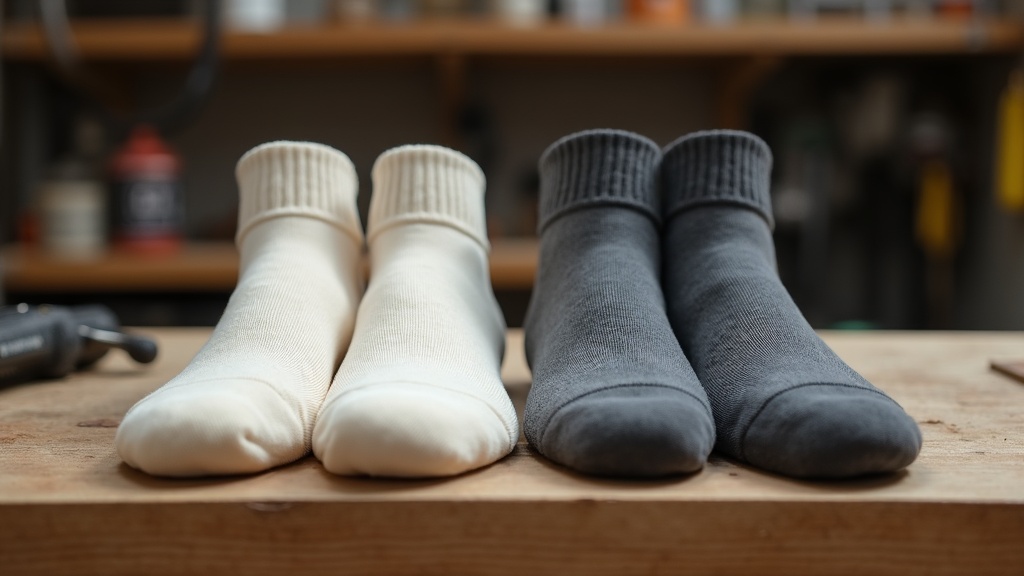
If your problem is sweaty feet inside dry boots, moisture-wicking socks are your answer, not waterproof ones. Moisture-wicking pulls sweat off your skin and pushes it out through the sock. That's exactly what work socks for sweaty feet need to do.
If your problem is external water, standing water, sprays, crawl spaces, waterproof socks solve that. Some high-end models do both reasonably well, but if you run hot and don't work in wet conditions, skip the waterproof membrane. It adds warmth and bulk you don't need.
Did you know?
Merino wool can absorb up to 30% of its weight in moisture before it feels wet to the touch. That's significantly more than cotton (which holds moisture against the skin) and most synthetic fabrics.
Do Plumbers Need Waterproof Boots Too, or Can Good Socks Cover It?
It depends on what you're walking into. Waterproof socks handle incidental water: puddles, spray, wet floors, damp ground. They are not a substitute for rubber boots when you're standing in a flooded basement for two hours.
The practical setup for most plumbers: waterproof work socks as your daily standard, plus a pair of rubber over-boots or dedicated waterproof boots on site when conditions call for it. One doesn't replace the other. They solve different problems at different price points.

How to Make Your Work Socks Last Longer (Most Guys Get This Wrong)
You can spend $40 on a pair of Sealskinz and kill the membrane in three weeks if you wash them wrong. Here's how to avoid that.
- Machine wash cold, gentle cycle. Hot water degrades the membrane adhesive faster than anything else.
- No fabric softener. It coats the fiber and kills wicking performance. Same goes for dryer sheets.
- Air dry only. Heat from a dryer will delaminate the membrane over time. Hang them up. Let them dry flat if possible.
- Rotate pairs. Running the same pair every day shortens the life by half. Three pairs rotating equals six pairs' worth of use.
- Turn them inside out before washing to protect the outer layer and flush out the inner liner more effectively.
Bottom Line: Which Waterproof Sock Is Worth Your Money
If you're buying once and want the best protection for daily plumbing work: Sealskinz Waterproof All Weather Mid-Length Sock. Merino wool liner, proven PTFE membrane, holds up to real abuse.
If budget is a priority and you want reliable waterproofing without the premium tag: Dexshell Trekking Socks. More cushion, lower price, still genuinely waterproof.
If you're doing cold-weather work in wet conditions: Sealskinz Cold Weather Over-the-Knee. No competition at that end of the spectrum.
Buy two or three pairs, rotate them, wash them cold, air dry them. Do that and a good pair of waterproof socks will last you a full season or more. That's a fair trade for dry feet every day on the job.
