


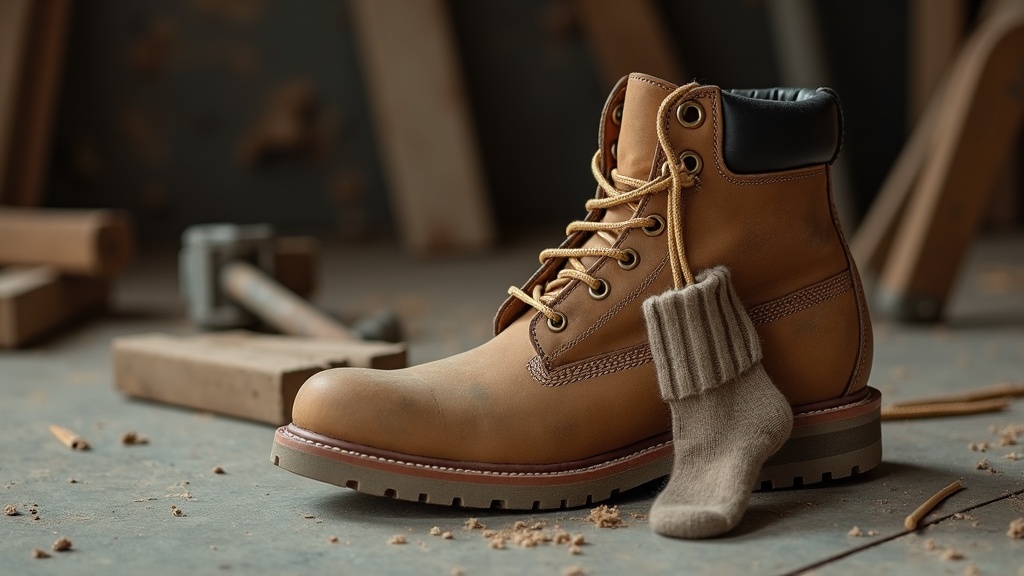
You pull out the laundry basket and there it is: one boot sock, no match, no explanation. It happens to every tradesman, every driver, every guy who wears real work socks five days a week. The question isn't why. The question is what you do next.
Throwing it straight in the trash feels wasteful when it still has good material in it. And keeping it in the drawer forever isn't an answer either. Here's what actually makes sense, from the job site to the garage to the donation bin.
Key points at a glance
- Single work socks are almost always caused by lost partners, not worn-out ones, so the surviving sock still has useful life.
- A lone work sock has a dozen legit uses on the job site and in the shop before it deserves the bin.
- Some shelters and nonprofits do accept single socks, but you have to know which ones and in what condition.
- Textile recycling programs can handle worn-out work socks so they don't end up in landfill.
- One sock dying before the other is a clear signal about sock construction quality.
- A simple rotation system can cut your single-sock problem dramatically without buying anything new.
What This Guide Does for You
Why Workers End Up With So Many Single Socks (And What to Do About It)
The number one reason is the dryer, but it's not the only one. Socks get left in lockers, tossed in truck beds, kicked off at the end of a shift and forgotten. Work socks also have uneven wear patterns, which means one sock from a pair often blows out before the other.
That surviving sock is usually still in decent shape. Thick, reinforced heel and toe, good cushioning in the arch. Plenty of use left in the fabric, just no partner to go with it.

What to do about it starts with sorting your singles into two piles: still-good fabric versus actually worn out. That determines every option below.
Put Them Back to Work: Job Site Uses for Single Work Socks
A thick work sock is basically a padded sleeve. That has real value on a job site if you stop thinking of it as footwear.
Tool and equipment protection
- Slip it over a hammer or hatchet head when throwing it in a bag with other tools. Protects the tool and the bag.
- Use it as a quick cover for a power drill or angle grinder sitting on a dusty truck bed.
- Stretch it over a level or a long-handled tool to protect the finish during transport.
Hands-on uses mid-job
- Slide it over your hand as a cheap applicator for wood stain, linseed oil, or rust treatment. Thick cotton work sock material absorbs and applies evenly.
- Use it as an emergency rag for wiping down blades, handles, or surfaces when you're out of clean rags.
- Stuff it with dry rice or sand to make a weighted door stop or draft blocker in a job site trailer.
Did you know?
Cotton and wool work socks can absorb up to 27 times their weight in liquid. That's why a thick boot sock makes a better oil applicator than most cheap foam brushes, and it won't leave lint behind on raw wood.
Around the Shop and Garage: Single Sock Fixes That Actually Work
The shop and garage are where single work socks have the longest second life. Keep a dedicated bin there and you'll reach for them more than you expect.
- Buffing and polishing: Slip it over your hand and buff wax onto a vehicle hood, boot leather, or a metal surface. Works as well as a dedicated applicator pad.
- Pipe insulation in a pinch: Cut the sock lengthwise and wrap it around a small exposed pipe to prevent condensation drips in a crawl space or utility room.
- Ice pack sleeve: A frozen gel pack wrapped in a thick work sock is far more comfortable on a bruised knuckle or aching knee than plastic directly on skin.
- Cable and hose organizer: Roll a garden hose or extension cord and slip the sock over it to keep it bundled in the truck bed.
Should You Donate Single Socks? Here's the Honest Answer
Most thrift stores will turn away a single sock. They can't sell it, so they won't take it. But that's not the full picture.
Several organizations specifically accept single socks and mismatched work socks because their clients need them for warmth, not fashion. Look at these options:
- Homeless shelters and warming centers: Many accept individual socks because a single dry sock is genuinely useful to someone sleeping rough. Call ahead and ask specifically about singles.
- The Sock Project and similar nonprofits: Groups focused on sock drives for unhoused populations often accept mismatched pairs and individual socks. Check your region for local equivalents.
- Veterans' organizations: Some VA-affiliated shelters and transitional housing programs list socks as a top-requested item. Again, call first.
Condition matters. Washed, no holes, no serious thinning at the heel. If you wouldn't put it on your own foot on a cold morning, don't donate it.
How to Dispose of Work Socks the Right Way (Recycle, Don't Just Trash)
When a work sock is genuinely done, the heel is through, the elastic is gone, there's still a better option than the landfill.
Textile recycling
H&M, Patagonia, and many municipal recycling programs accept worn textiles including socks. The material gets shredded into industrial insulation, padding, or new yarn. Check Earth911.com with your zip code to find the nearest drop-off.
Composting natural fiber socks
If your work socks are 100% cotton or wool with no synthetic blend, they can go in a compost pile. Cut them into strips first to help them break down. Synthetic-blend socks cannot be composted.
Did you know?
The EPA estimates that over 11 million tons of textile waste goes to U.S. landfills annually. Work clothing and socks are a significant slice of that. Textile recycling diverts this material into industrial insulation and new fabric, with zero new resource extraction required.
When One Sock Dies Early: What It Says About Your Sock Quality
If one sock from a pair falls apart in three months while the other still looks new, that's a manufacturing defect, not bad luck. Inconsistent yarn tension, uneven reinforcement, or poor heel gusset stitching causes exactly this.
What to look for in a work sock that actually wears evenly:
| Feature | What Good Looks Like | Red Flag |
|---|---|---|
| Heel reinforcement | Thickened terry or double-knit zone at heel cup | Same thin knit all the way through |
| Toe seam | Flat-knit or hand-linked toe, flush against the skin | Bulky overlocked seam that creates friction hot spots |
| Fiber blend | Merino wool or ring-spun cotton with nylon for durability | 100% cotton with no structural nylon, pills and thins fast |
| Leg elastic | Woven-in spandex that stays firm after 50 washes | Elastic sleeve that separates or goes loose within weeks |
| Cushioning consistency | Even terry loop density from heel through ball of foot | Cushioning only at heel, nothing under the forefoot |
One sock dying early is your early warning system. If it keeps happening with the same brand, switch brands.

How to Stop Losing Singles: Keeping Your Work Sock Rotation Simple
The fix isn't complicated. Most guys lose socks because they treat every pair as individual and have no system. Here's what actually works.
Buy multiples of the same sock
If every sock in your drawer is identical, a single is never truly orphaned. Buy six or eight pairs of one model in one color. Any sock pairs with any other sock, and you never have a lone leftover.
The mesh laundry bag method
Toss socks directly into a small mesh laundry bag at the end of every shift. Wash the bag closed. They come out together. Simple as that.
Retire in pairs, on purpose
When one sock in a true pair wears out, retire both at the same time. Drop the worn one in the rag bin or recycling, and keep the good one in a dedicated single-sock drawer for shop use. You build up a useful supply instead of a mystery pile.
What to do right now
Pull your singles out of the drawer today. Sort them: still good fabric goes in a zip-top bag for the shop. Worn out but natural fiber goes in the compost or textile recycling bag. Worn out synthetic blend goes in a separate textile recycling bag, not the trash. That's the whole system. Takes five minutes.
