



Flight socks are sold at every airport pharmacy like they're candy. Grab a pair, pull them on, problem solved. Except for some people, pulling on a pair of compression socks before a flight is the wrong call, and it can actually make things worse.
Before you board, spend two minutes here. If any of the conditions below apply to you, skip the socks or at least talk to your doctor first.
Key points at a glance
- People with peripheral arterial disease should never wear flight socks without medical clearance.
- Skin conditions, open wounds, and diabetic neuropathy all raise red flags with compression.
- Short flights under 4 hours carry very low DVT risk for most healthy adults.
- Compression socks are fine to wear for the full flight duration, but remove them when you land.
- Hydration and movement are solid, no-risk alternatives for low-risk travelers.
- If you do wear them, 15 to 20 mmHg is the sweet spot for most passengers.
What this article does for you
The Short Answer: Flight Socks Are Not for Everyone
Flight socks work by squeezing your lower legs to push blood back up toward your heart. That's useful when you're sitting still at 35,000 feet. But that squeezing pressure becomes a problem the moment circulation is already compromised for other reasons.
The socks don't know why your circulation is bad. They just squeeze. And squeezing an already struggling artery can cut off blood flow entirely.

Who Should Not Wear Flight Socks (The Full List, No Fluff)
These aren't edge cases. These are real conditions that interact badly with compression.
Peripheral arterial disease (PAD)
This is the biggest one. PAD means your arteries are narrowed and blood flow to your legs is already reduced. Compression socks can make that worse fast. Cold feet, leg cramps while walking, and pale or bluish skin are warning signs of PAD. If any of that sounds familiar, talk to your doctor before you even look at a pair of flight socks.
Severe edema or congestive heart failure
If your legs swell because your heart isn't pumping efficiently, compression socks can push that fluid toward your heart too quickly. That's dangerous. A cardiologist should weigh in before you compress anything.
Skin infections, open wounds, or dermatitis
Compression traps heat and moisture against already-irritated skin. That speeds up infection. Any broken skin on your lower leg or foot is a reason to hold off.
Diabetic neuropathy
If you've lost sensation in your feet due to diabetes, you won't feel the socks cutting off circulation. That's a serious problem. Fit has to be perfect, and you need medical guidance before using compression on legs with no reliable pain signal.
Pulmonary edema or known DVT
If you're currently being treated for a blood clot or fluid in the lungs, compression socks during a flight require direct medical supervision, not a pharmacist's recommendation.
Did you know?
Peripheral arterial disease affects roughly 8.5 million Americans over age 40. Many don't know they have it, making flight socks a hidden risk for a large portion of frequent flyers who never got a vascular screening.
Other conditions that warrant caution
- Severe varicose veins with skin changes (lipodermatosclerosis)
- Recent skin grafts on the lower limbs
- Extreme leg deformities that prevent a proper fit
- Known hypersensitivity to compression garment materials
Who Actually Benefits from Wearing Flight Socks
Flight socks earn their place for specific travelers. If you're healthy but fall into one of these groups, compression on a long flight is a smart move.
- People who have had a DVT in the past
- Pregnant travelers (with OB clearance)
- Anyone who recently had surgery
- People with mild to moderate varicose veins
- Tall passengers who can't stretch their legs in economy
- Anyone flying more than 6 hours
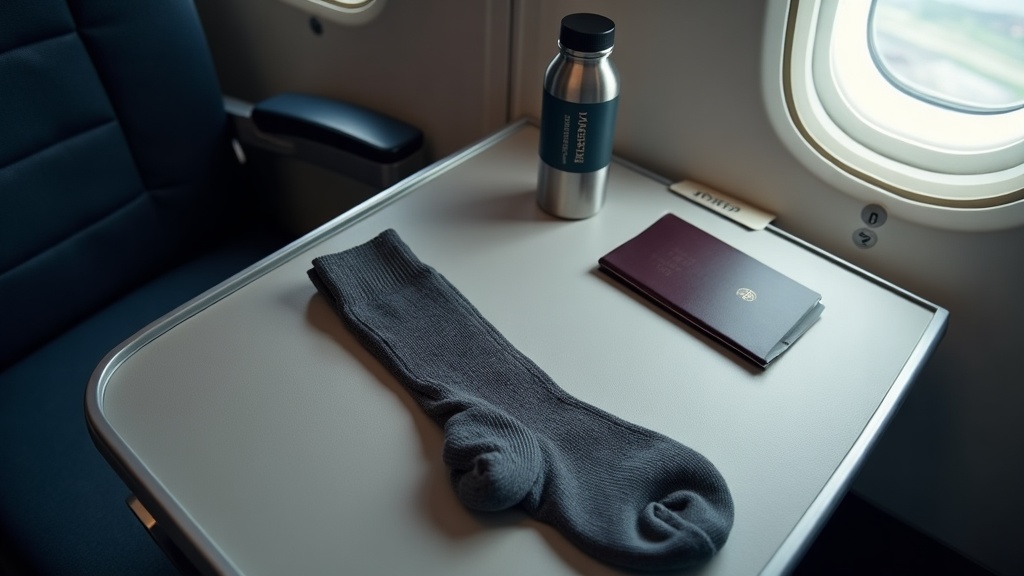
Do You Really Need Flight Socks for Short Flights (2 to 4 Hours)?
For most healthy adults, a two-hour flight carries almost no DVT risk. Your body can handle that without compression.
The risk starts climbing on flights over 4 hours, and it gets meaningful past the 6-hour mark. If you're healthy, no history of clots, not pregnant, and not coming off surgery, a domestic hop does not require compression socks.
Save the socks for the transatlantic leg. That's where they earn their keep.
Did you know?
A 2016 Cochrane review found that compression stockings reduced the incidence of symptomless DVT by about 50% on long-haul flights in healthy travelers. The key word is long-haul: the data doesn't support routine use on short routes.
How Long Can You Safely Wear Flight Socks?
You can wear flight socks for the entire duration of your flight, including time on the tarmac. That's what they're designed for.
Once you land and start moving normally, take them off within an hour or two. Walking activates your calf muscles, which already pump blood back up your legs on their own. The socks aren't doing much extra work at that point, and wearing them longer than needed just adds unnecessary pressure.
Don't sleep in them unless a doctor told you to. Overnight compression without monitoring is a different situation than a controlled flight window.
When to Put Them On and When to Take Them Off
Put them on before you get to the airport, ideally while you're still sitting at home with your legs elevated. Your ankles are at their least swollen first thing in the morning. That's when compression fits correctly.
Take them off once you've walked around the arrival terminal for 15 to 20 minutes and your circulation is back to normal rhythm.
What to Use Instead of Flight Socks
If compression socks aren't right for you, you still have options. None of these require a prescription or a doctor's note.
- Hydration: Drink water consistently throughout the flight. Dehydration thickens blood, which raises clot risk.
- Movement: Get up every 90 minutes. Walk the aisle. Even ankle circles and heel raises in your seat help pump blood through your calves.
- Aisle seat: Book it. You'll move more when it's not an awkward climb over two people.
- Loose clothing: Avoid anything tight around your waist or thighs. It restricts venous return.
- Low-dose aspirin: Some doctors recommend this for high-risk patients. Ask yours, not the internet.
How to Pick the Right Pair If You Do Wear Them
Compression is measured in mmHg (millimeters of mercury). Higher number means more squeeze.
| Compression Level | mmHg Range | Best For | Rx Needed? |
|---|---|---|---|
| Mild | 8 to 15 mmHg | Tired or achy legs, low-risk travelers | No |
| Moderate | 15 to 20 mmHg | Most long-haul passengers, mild varicose veins | No |
| Firm | 20 to 30 mmHg | DVT history, post-surgery, pregnancy | Recommended |
| Extra Firm | 30 to 40 mmHg | Severe venous conditions, lymphedema | Yes |
For most people on a long-haul flight, 15 to 20 mmHg hits the target. That's enough to help circulation without being aggressive. Measure your ankle circumference and calf circumference before you buy. A sock that's too small is worse than no sock at all.
Look for graduated compression, meaning tighter at the ankle and gradually looser toward the knee. That gradient is what actually moves blood upward. A uniform squeeze does nothing useful.
Bottom line: if you're healthy and flying long-haul, flight socks are a reasonable, low-cost tool. If you have any of the conditions listed above, check with your doctor first. The socks cost eight bucks. A vascular complication costs a lot more than that.
