


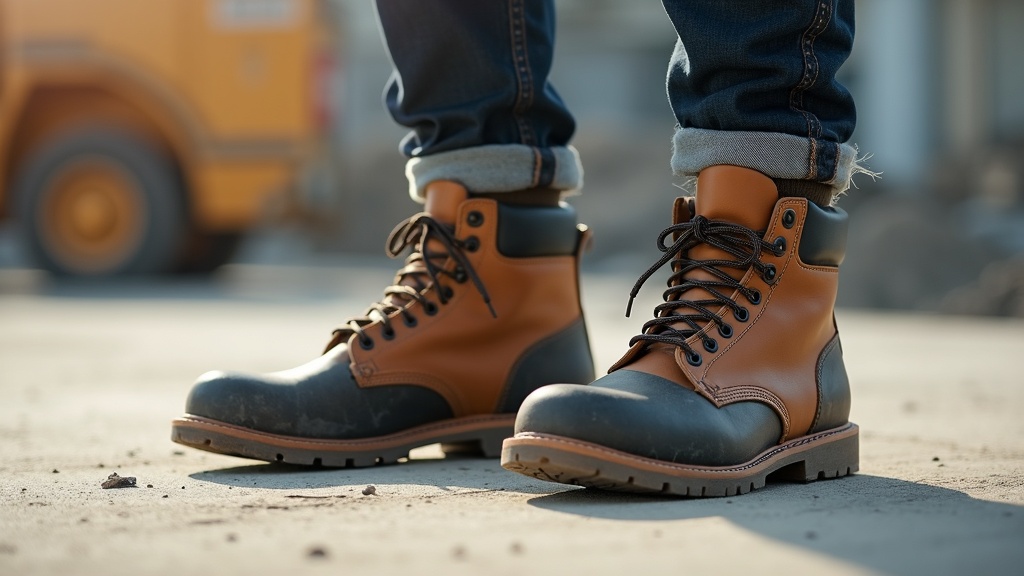
You've bought the $4 three-pack. You know how this ends: a thin spot over the heel by week six, a hole by month three, and a blister you didn't need on a ten-hour shift. That's not bad luck. That's what happens when you put cheap fiber under hard use.
Natural fiber work socks cost more at checkout. There's no getting around it. But the guys who've worn them for a season understand the trade. This is the straight story on what you're actually paying for and why it matters when you're on your feet all day.
Key points at a glance
- Cheap synthetic socks break down fast because the fiber itself can't handle heat, friction, and moisture together.
- Merino wool regulates temperature in both summer and winter, making it the top all-season material for work socks.
- Natural fibers cost more to source and process, but they outlast budget socks by a factor of three or more.
- Cost-per-wear math almost always favors the pricier natural fiber option over twelve months of daily wear.
- The right sock material depends on your trade: merino for temperature swings, cotton-nylon blends for dry heat, wool-nylon for heavy-duty impact.
- Foot health on the job is a real safety issue, not a comfort luxury.
What natural fiber work socks actually do for you
The Real Reason Cheap Socks Fall Apart by Month Three
Budget work socks are mostly polyester or low-grade acrylic. Both materials trap heat, break down under friction, and go flat fast. The thin loop pile that passes for cushioning compresses out after twenty washes and never comes back.
The heel and ball of the foot take the most punishment on a jobsite. Cheap fiber has no structural memory. Once it compresses, it stays compressed. That's when the rubbing starts, and the blisters follow.
What 'Natural Fiber' Actually Means and Why It Matters on a Jobsite
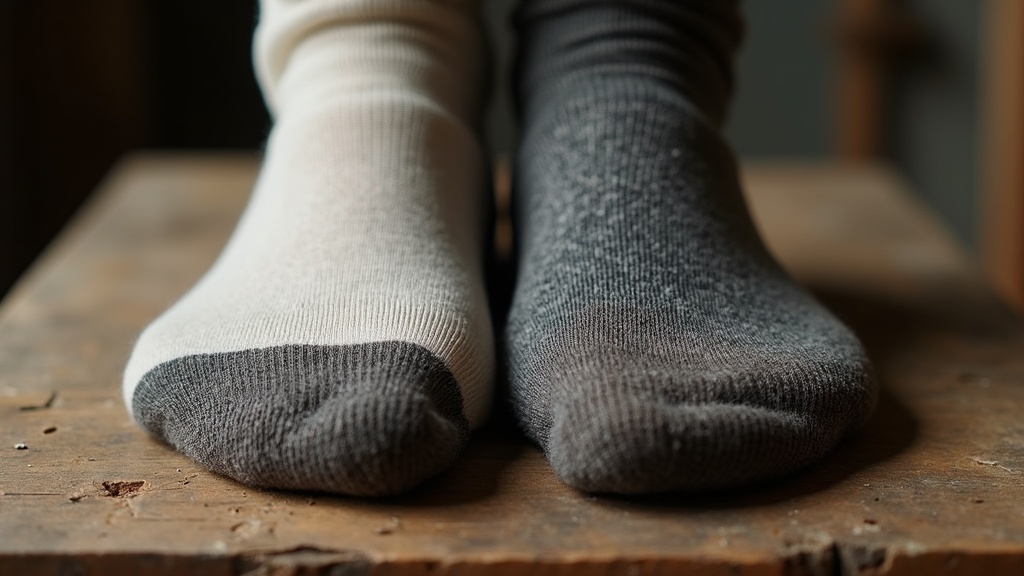
Natural fibers include merino wool, standard wool, cotton, and alpaca. They come from animals or plants. The key difference from synthetics is fiber structure. Natural fibers have microscopic scales and air pockets that manage heat and moisture passively, without any chemical treatment that washes out over time.
On a jobsite, that means your feet stay drier in the heat and warmer in the cold without you changing anything. The fiber does the work.
Did you know?
Merino wool fibers can absorb up to 35% of their own weight in moisture vapor before they feel wet to the touch. A polyester sock, by comparison, holds almost none and starts feeling clammy almost immediately.
Merino Wool vs. Cotton vs. Synthetics: A Straight Comparison for Workers
All three show up in work socks. They are not interchangeable. Here's how they actually perform under load.
Merino wool
The best all-around option for most trades. It regulates temperature in both directions, resists odor naturally, and stays soft after hundreds of washes. The fiber is finer than standard wool so it doesn't itch.
Standard cotton
Comfortable in dry conditions but a real problem once it gets wet. Cotton holds moisture against the skin, which causes friction and, in cold weather, can contribute to dangerous chilling. It's decent for light indoor work in dry environments, nothing more.
Synthetics (polyester, nylon, acrylic)
Nylon is useful as a reinforcement blended into natural fibers, especially at the heel and toe. Pure synthetic socks are the weakest option for hard use. They pill, flatten, and trap odor compounds that won't wash out after a few months.
| Material | Moisture management | Durability (daily wear) | Best use case |
|---|---|---|---|
| Merino wool | Excellent, active wicking + absorption | 2 to 3 years with proper care | All seasons, all trades |
| Standard wool blend | Very good, stays warm when damp | 1.5 to 2.5 years | Cold weather, outdoor labor |
| Cotton (plain) | Poor once wet, stays damp | Under 1 year heavy use | Light indoor dry work only |
| Polyester/acrylic | Poor, traps heat and odor | 3 to 6 months | Not recommended for trade work |
| Merino + nylon blend | Excellent | 2.5 to 4 years | Heavy-duty, boot environments |
Why Natural Fiber Work Socks Cost More to Make (and Buy)
Merino comes from specific breeds of sheep, mostly raised in New Zealand and Australia under strict quality standards. The fiber is graded by micron count. Finer fiber costs more to source, full stop.
After shearing, merino goes through multiple cleaning, combing, and spinning stages before it becomes yarn. Each step adds cost. Then the knitting itself: quality work socks use reinforced construction at the heel and toe, cushioned terry loops through the footbed, and seamless or hand-linked toes to prevent pressure points inside a steel-toe boot.
A $4 sock skips most of that. You get a basic knit, standard seam, and whatever fiber was cheapest at the commodity level that week.

The Cost-Per-Wear Math That Makes Natural Fibers the Smarter Buy
Run the numbers. A pack of three budget work socks costs $12 and lasts about four months of five-days-a-week wear. That's roughly $3 per month per pair.
A single pair of quality merino work socks runs $22 to $28. Worn five days a week and washed correctly, they hold up two to three years. That works out to under $1 per month. The expensive sock is the cheaper sock by a factor of three.
- Cheap 3-pack: $12 every 4 months = $36 per year
- Quality merino pair: $25, lasting 2.5 years = $10 per year
That math doesn't even count the blister that takes you off the job for a day.
Did you know?
According to data from the American Podiatric Medical Association, blisters and friction injuries are among the top causes of lost workdays in trade and construction jobs. The interface between foot, sock, and boot is where most of that starts.
Best Sock Material for Sweaty Feet: Summer Shifts and Winter Jobs
Sweaty feet on the job are not just a comfort issue. Wet skin inside a boot means friction. Friction means blisters. Blisters on a concrete floor or a scaffold mean real risk.
Summer and hot environments
Lightweight merino (around 150 to 200 GSM) is the right call for hot-weather work. It moves sweat away from the skin before it saturates. A thin merino sock inside a steel-toe boot in July keeps your feet drier than a thick cotton sock ever will.
Winter and cold environments
Midweight merino or a merino-nylon blend (200 to 300 GSM) gives you insulation without bulk. It stays warm even when slightly damp, which matters when you're working in snow or cold concrete. Cotton in these conditions is actively dangerous: once it's wet, it pulls heat away from your foot.
Which Work Sock Brands Actually Hold Up (and Which Ones Don't)
A few brands consistently get it right for trade workers. Darn Tough Vermont builds every sock with a lifetime guarantee and uses merino-nylon blends that outlast nearly everything else on the market. Farm to Feet makes solid American-made merino options. Smartwool has been the entry point for most workers discovering merino, with reliable cushioned boot sock options.
Brands to skip: any sock sold primarily on bulk price with no fiber content listed. If the label says "acrylic blend" and lists no wool percentage, put it back.
How to Pick the Right Natural Fiber Work Sock for Your Trade
Not every trade needs the same sock. Here's how to match material to the job.
- Construction, concrete, framing: Midweight merino-nylon blend with full-foot cushion. You need impact protection and moisture management together.
- Electrical and HVAC: Lightweight merino for clean fit inside tighter boots, good moisture control through climb and crawl work.
- Warehouse and logistics: Merino or wool-cotton blend, moderate cushion, anti-fatigue loop construction through the arch.
- Roofing and outdoor labor (summer): Lightweight merino, crew height, maximum breathability.
- Cold storage, outdoor winter work: Heavy merino-nylon over-the-calf sock. Warmth, coverage, and cushion all at once.
Bottom Line: What Your Feet Are Worth After Eight Hours on Concrete
Your feet are the only tools you can't replace. They take eight to twelve hours of direct load every day you're working. A sock is not a minor detail. It's the last layer of protection between your skin and a steel-toe boot that doesn't forgive mistakes.
Natural fiber work socks cost more because they are made from better raw materials, processed more carefully, and constructed to hold up under real use. They also save you money over twelve months, keep your feet healthier, and reduce the kind of small physical problems that turn into big ones when you ignore them long enough.
Buy one good pair this week. Wear them five days straight. Then tell me the cheap ones were the smart play.
