


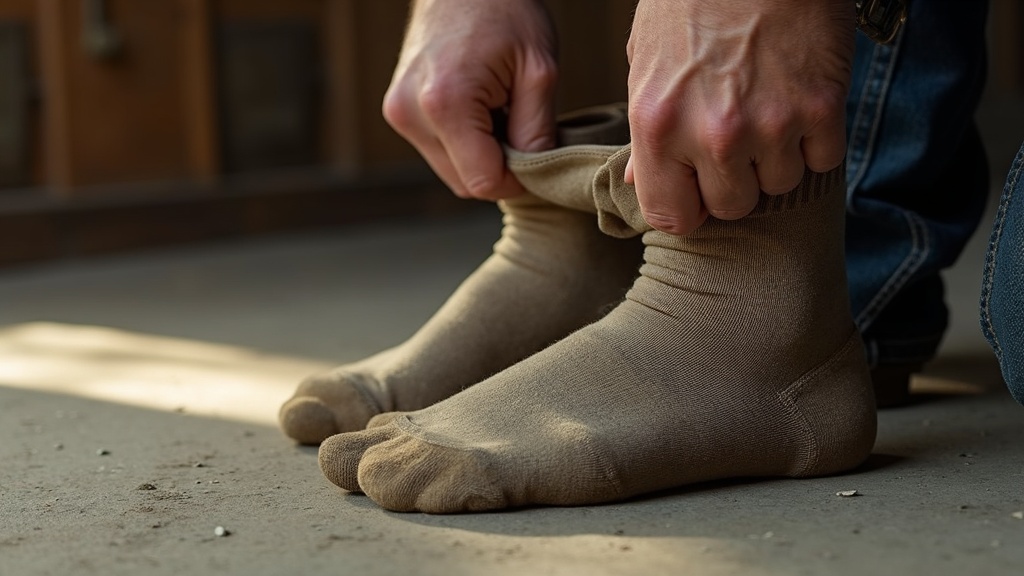
By hour ten, your feet feel like they belong to someone else. The toes are jammed, the arches ache, and the skin around your ankles is pressing against the cuff of your boot like it's trying to escape. That's not just tiredness. That's swelling, and the wrong pair of socks is making every bit of it worse.
The right wool work socks for swollen feet end of shift won't fix a bad boot fit or a fourteen-hour concrete pour. But they will cut down the punishment your feet take, and that difference adds up across a thirty-year career.
Key points at a glance
- Foot swelling during long shifts is driven by gravity and poor circulation, and cheap socks accelerate it.
- Merino wool regulates temperature and wicks moisture better than cotton, reducing friction-related swelling.
- Mild graduated compression (15, 20 mmHg) works inside a work boot without cutting off circulation.
- Cushion zone placement matters: arch support and heel padding outperform full-boot thick socks in real conditions.
- Women's work socks are cut differently and the fit genuinely affects how swelling is managed through the day.
- Certain marketed features (seamless toes, antimicrobial coatings) only matter if the base sock construction is solid.
What a good wool work sock actually does for you
Why Your Feet Swell by End of Shift (And Why Cheap Socks Make It Worse)
Standing for eight to twelve hours forces blood and lymphatic fluid downward. Gravity wins, and your body can't pump it all back up fast enough. The result: edema in the feet and ankles, that tight, puffy feeling that greets you when you pull your boot off.
Heat speeds this up. So does restricted circulation from a sock that bunches, cuts in at the cuff, or goes stiff with dried sweat. A cheap cotton sock soaks through by hour four and stays wet, which raises skin temperature, increases friction, and tightens around the foot as the fabric loses elasticity.
What Wool Actually Does That Cotton Cannot
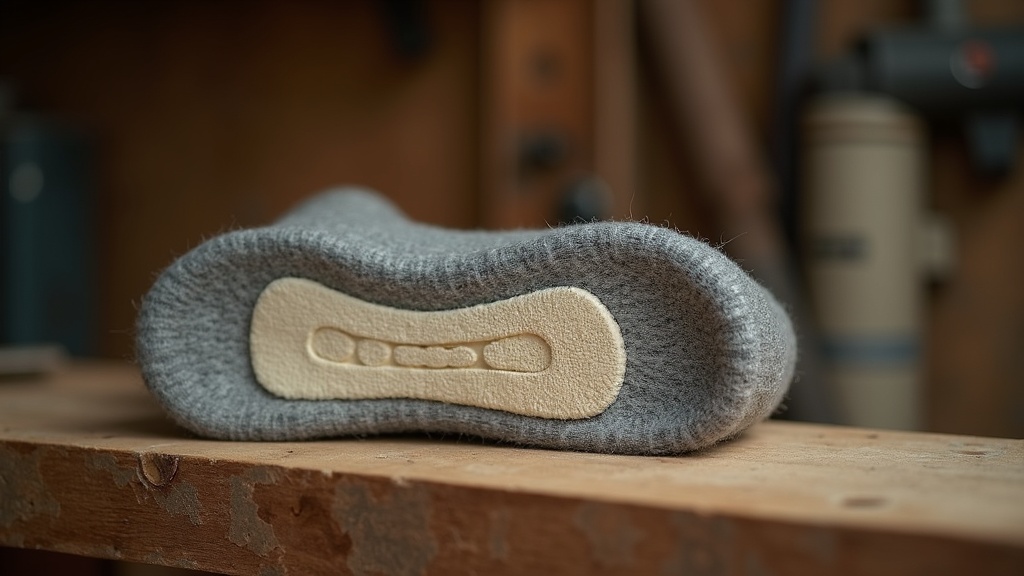
Merino wool fibers are hydrophilic on the inside and hydrophobic on the outside. In plain English: they pull moisture away from your skin and hold it in the fiber until it can evaporate, so your foot stays drier and cooler.
Cotton absorbs moisture and holds it. Once it's wet, it stays wet, loses structure, and starts bunching. That bunching creates pressure points, which makes swelling worse and blisters faster.
Wool also handles temperature swings. It insulates when it's cold and breathes when it's hot. For trades workers moving between a freezer unit and a loading dock or an outdoor site in variable weather, that matters more than most people think.
Did you know?
Merino wool can absorb up to 35% of its own dry weight in moisture before it even feels wet to the touch. A cotton sock hits its saturation point much earlier and then simply transfers that wetness directly onto your skin.
Compression Level That Works in a Work Boot: What Numbers Matter
Compression socks are rated in millimeters of mercury (mmHg). The range that works for socks for swollen feet standing all day in a work boot sits between 15 and 20 mmHg.
Why not higher?
Medical-grade compression (20, 30 mmHg and above) is designed for clinical use. Inside a stiff work boot that's already snug around the ankle, that level of compression can actually restrict blood flow rather than help it. Stick to the 15, 20 mmHg range unless a doctor has told you otherwise.
What graduated means
Graduated compression is tighter at the ankle and looser toward the calf. It helps push fluid back up the leg throughout the shift. A uniform-compression sock doesn't do this. Check the product spec before you buy.
| Fiber Type | Moisture Management | Temperature Regulation | Best For |
|---|---|---|---|
| Merino Wool | Excellent, stays dry to touch | Hot and cold both | Long shifts, variable weather |
| Cotton | Poor, holds moisture | Warm only (barely) | Light office wear |
| Synthetic (polyester/nylon) | Good wicking, odor builds fast | Warm environments only | Short athletic use |
| Wool/Nylon Blend | Very good, durable | Hot and cold | Heavy-duty trades, boot use |
| Alpaca | Good, softer than merino | Excellent cold weather | Cold climates, outdoor trades |
The 6 Best Wool Work Socks for Swollen Feet End of Shift
These picks are based on construction, compression design, and real-world durability in trade environments. Not sponsored. Not ranked by whoever paid most for placement.
- Darn Tough Vermont Hiker Boot Sock (Merino Wool): Unconditional lifetime guarantee, 18% nylon for durability, graduated arch compression. Holds up to washing machine cycles that would destroy lesser socks.
- Smartwool PhD Pro Endurance Boot Sock: Indestructawool reinforcement in high-wear zones, targeted cushioning at heel and ball, excellent for concrete and tile floors.
- Wigwam Merino Airite Quarter Crew: Lighter weight option, good for warmer job sites, solid moisture control, affordable price point relative to most wool options.
- Farm to Feet Madison Midweight Compression Crew: American-made, 15, 20 mmHg graduated compression, merino blend, runs true to size which matters a lot for swelling management.
- Carhartt Comfort Grip Crew Work Socks (Merino Blend): A budget-friendly entry, blended construction holds compression well through a full shift, available in wider sizing for swollen feet.
- Wrightsock Coolmesh II Quarter (Merino Version): Double-layer construction eliminates blister friction entirely, good choice for workers who are also developing hot spots by end of shift.
Men vs. Women: Does the Fit Actually Differ for Swell and Support
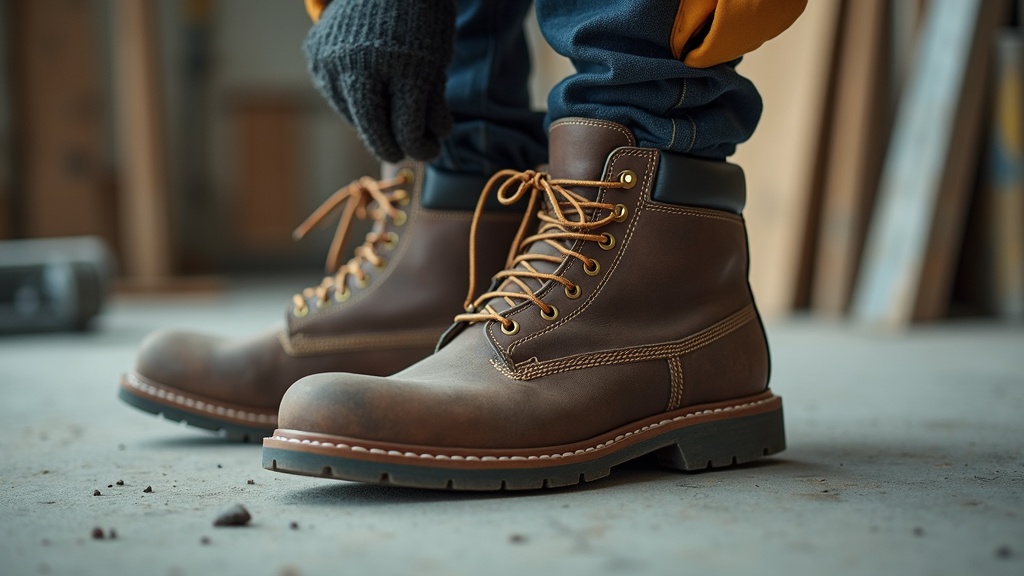
Yes, and it's not marketing fluff. Women's feet have a higher arch on average, a narrower heel, and a wider forefoot relative to overall foot length than men's feet. A men's sock on a women's foot will bunch at the heel and gap at the arch, which is exactly where you need compression to actually contact the skin.
For women wool work socks swollen feet specifically, look for socks that specify women's cut, with reinforced arch bands positioned higher than a men's equivalent. Smartwool, Darn Tough, and Farm to Feet all offer gender-specific lasts for this reason.
Did you know?
Studies on occupational foot health show that nurses and retail workers who wear compression hosiery rated 15, 20 mmHg report up to 50% less end-of-shift leg fatigue compared to those in standard socks. The data on trades workers is thinner, but the mechanism is the same: gravity doesn't care what job you have.
How to Pick the Right Sock for Your Specific Trade
Not all job sites hit your feet the same way. The right padded socks for foot pain on concrete are not necessarily the right pick for someone working a wet environment or a cold-storage facility.
Concrete and hard floors (construction, warehouse, retail trades)
Go with a midweight cushion sock, wool/nylon blend, 15, 20 mmHg graduated compression. Cushioning at heel and ball is non-negotiable.
Outdoor and wet environments (landscaping, utility, roofing)
Prioritize moisture management over cushion thickness. A lighter merino with DWR-treated nylon blend sheds water faster and dries quicker between breaks.
Cold storage and refrigerated environments
A heavyweight merino or alpaca-blend sock with extra ankle insulation. Compression still helps here, but thermal rating becomes the primary filter.
What to Avoid: Features That Sound Good but Fail on the Job
- "Antimicrobial" silver-infused fibers: Wash out after 20 to 30 cycles. Wool is naturally odor-resistant without it. This is marketing padding on a thin product.
- Ultra-thick full-boot cushioning: Looks great in the package, but a thick sock in a fitted boot compresses to nothing by hour two and creates pressure on a swollen foot rather than relieving it.
- Uniform (non-graduated) compression: A sock that squeezes equally from toe to calf doesn't assist venous return. It just makes your leg feel like it's in a sleeve.
- 100% merino with no nylon: Merino alone wears through at the heel in a work boot in three to four months. You need at least 15, 20% nylon to get a season out of a pair.
- One-size-fits-most: A sock that doesn't fit right won't compress right. Spend the extra two minutes finding your actual size range.
Before Your Next Shift: Three Things You Can Do Today
You don't need to overhaul your whole setup. Start with this:
- Check your current sock's cuff: If it leaves a red ring on your leg at end of shift, it's cutting circulation rather than supporting it. Replace it.
- Size your sock to your foot, not your boot: Compression only works when the sock is properly tensioned against your skin. A sock that's too big collapses. Too small and it restricts.
- Rotate two pairs: Wool needs 24 hours to fully recover its loft and compression elasticity between wears. Two pairs in rotation will last longer and perform better than one pair worn daily.
