


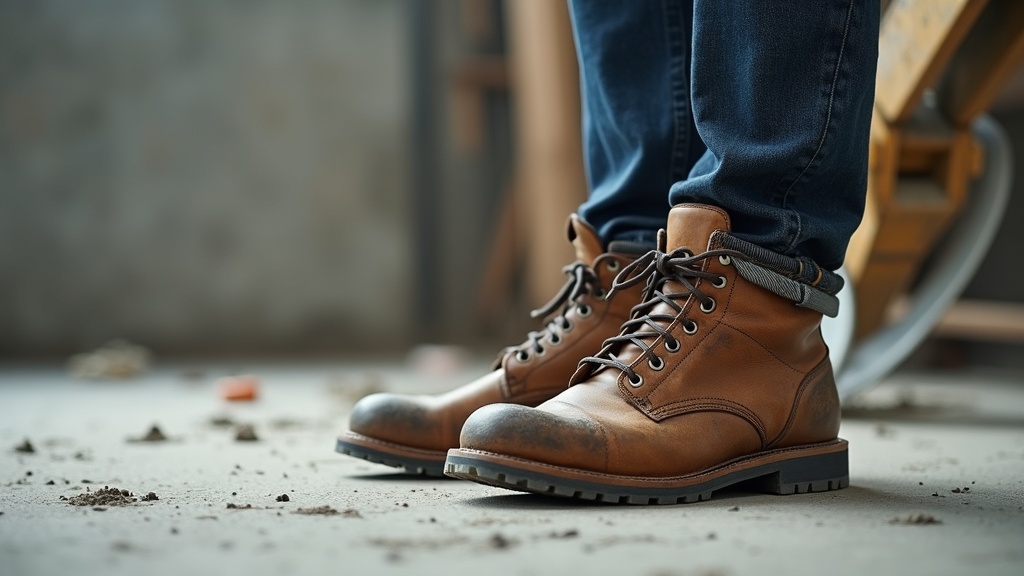
Your feet are wrecked by 2 p.m. and you still have four hours left. That's not a toughness problem. That's a gear problem.
The right work boots for sore feet won't fix a bad day, but they'll stop your boots from making it worse. Here's what actually works, and what to skip.
Key points at a glance
- Arch support and heel cup design matter more than brand name or price tag.
- Most stock insoles that come with work boots are garbage. Swap them out.
- Plantar fasciitis, heel pain, and flat feet each need a slightly different feature set.
- Waterproof membranes are worth it if you work outdoors or on wet surfaces more than two days a week.
- Spending $150 to $220 hits the sweet spot between durability and real foot support.
- Boots are only part of the fix. Socks, insoles, and break-in time all count.
What good work boots actually give your feet
Why Your Current Boots Are Wrecking Your Feet (And What to Look For Instead)
Most cheap work boots are built around cost, not biomechanics. The outsole is flat, the insole is a thin foam slab, and the heel counter is soft enough to fold with two fingers. That's the setup that gets you.
When your heel isn't locked in, your whole foot shifts forward on every step. That shear movement is what causes blisters, arch fatigue, and that deep heel ache you're feeling by shift end.
What you actually want to look for:
- A firm heel counter (press the back of the boot with your thumb; it shouldn't cave in)
- Midsole cushioning with some resistance, not just squish
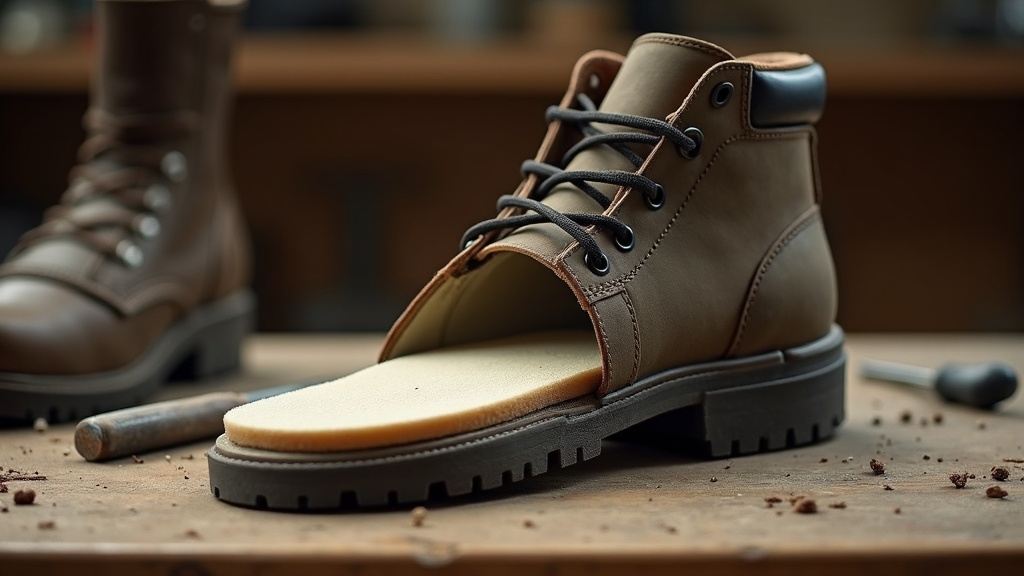
- A shank (steel or fiberglass) running under the arch for torsional rigidity
- Removable insole so you can swap in your own orthotics
The Features That Actually Matter in Work Boots for Sore Feet
Not all cushioning is equal. EVA foam is light but compresses fast. Polyurethane midsoles hold up longer but feel firmer. If you're on concrete all day, you want PU or a hybrid.
The outsole matters for more than grip. A shock-absorbing outsole with some flex at the ball of the foot reduces the impact that travels up to your knees and back. A totally rigid outsole turns your foot into a lever and that stress lands on your plantar fascia.
Did you know?
A study published in Applied Ergonomics found that workers standing on hard floors for 8 hours experienced a measurable increase in lower limb discomfort when their footwear lacked a midsole with at least 15mm of cushioning thickness. Most budget work boots come in well under that.
Weight matters more than most people admit
A boot that weighs 3.5 lbs means you lift 700 extra pounds per mile just from boot weight. Over a ten-hour shift that adds up fast. Look for boots under 2.5 lbs per boot if your job keeps you moving.
Best Work Boots for Sore Feet: Top Picks by Job Type
Construction and heavy labor
You need a steel or composite toe, a fiberglass shank, and a thick PU midsole. Thorogood American Heritage and Red Wing Iron Ranger are warhorses here. Both have solid arch support and hold their shape for years.
Warehouse and logistics
Composite toe keeps weight down. Look for an athletic-style last (the foot-shaped form the boot is built on) so the fit mimics a sneaker. Keen Utility Atlanta Cool 2 or Timberland PRO Powertrain are strong picks for workers on concrete all shift.
Outdoor trades (roofing, landscaping, utility)
Here waterproofing becomes non-negotiable. Danner Bull Run or Irish Setter Wingshooter handle wet conditions without turning into a sweat trap thanks to Gore-Tex linings.
Work Boots for Specific Foot Problems (Plantar Fasciitis, Heel Pain, Flat Feet)
Work boots for plantar fasciitis
Plantar fasciitis responds best to boots with a raised heel (roughly 1 to 1.5 inches), firm arch support under the medial arch, and a toe spring that lets the front of the foot flex without straining the fascia. Look for boots explicitly mentioning orthotic compatibility.
Pull on work boots for plantar fasciitis work well here too. No laces means no pressure points across the top of the foot. Brands like Ariat Workhog and Justin Original Work Boots make pull-on styles with solid arch support built in.
Best work boots for heel pain
Deep heel cups are the key. The cup should cradle the fat pad of your heel and prevent it from spreading sideways on impact. If you're already dealing with bone spurs, add a gel heel insert on top of whatever the boot comes with.
Work boots for flat feet
Flat feet overpronate, meaning the ankle rolls inward. You need a boot with a motion control midsole or a wide, stable base. Avoid lightweight minimalist-style boots entirely. New Balance MID626 and Thorogood 6-inch American Heritage both work well for low arches.
Did you know?
Plantar fasciitis is one of the most common foot injuries in the skilled trades. According to the American Orthopaedic Foot and Ankle Society, it accounts for roughly 15% of all adult foot complaints, and workers on hard floors or uneven terrain are at significantly higher risk than office workers.
How to Stop Your Feet From Hurting at Work: Boots Are Only Half the Fix
Swap the stock insole. Most factory insoles are cut from cheap EVA and offer almost no real support. A Superfeet Green or Powerstep Pinnacle runs $30 to $50 and changes everything, especially for plantar fasciitis and heel pain.
Your socks matter more than you think. A merino wool or cushioned synthetic sock (Darn Tough, Smartwool, Wigwam) reduces friction, manages moisture, and adds a real layer of cushioning. Cotton soaks up sweat and stays wet against your skin all day.
- Wear your new boots for two to four hours the first few days. Don't go full shift on day one.
- Stretch your calves and plantar fascia before your shift. Tight calves pull on the Achilles, which loads the heel.
- Rotate between two pairs if you can. It lets the midsole decompress overnight.
What to Avoid: Red Flags That Mean a Boot Will Cook Your Feet by Quitting Time
- No shank: Twist the boot heel to toe. If it twists easily, there's no shank and your arch will be carrying all the load.
- Non-removable insole: You can't upgrade it, you're stuck with whatever foam the factory threw in.
- Very thin outsole: Anything under 12mm of outsole plus midsole total is basically nothing between you and the concrete.
- Narrow toe box: Your foot swells during a shift. A boot that fits snug in the morning becomes a vice grip by 3 p.m.
- Heavy upper with no ankle support: Adds weight without the stabilization that justifies it.
Waterproof Work Boots for Sore Feet: Worth the Upgrade?
Short answer: yes, if you're outside more than twice a week or work near water, wet concrete, or mud. Wet feet blister faster. Cold wet feet tighten the plantar fascia and make every step worse.
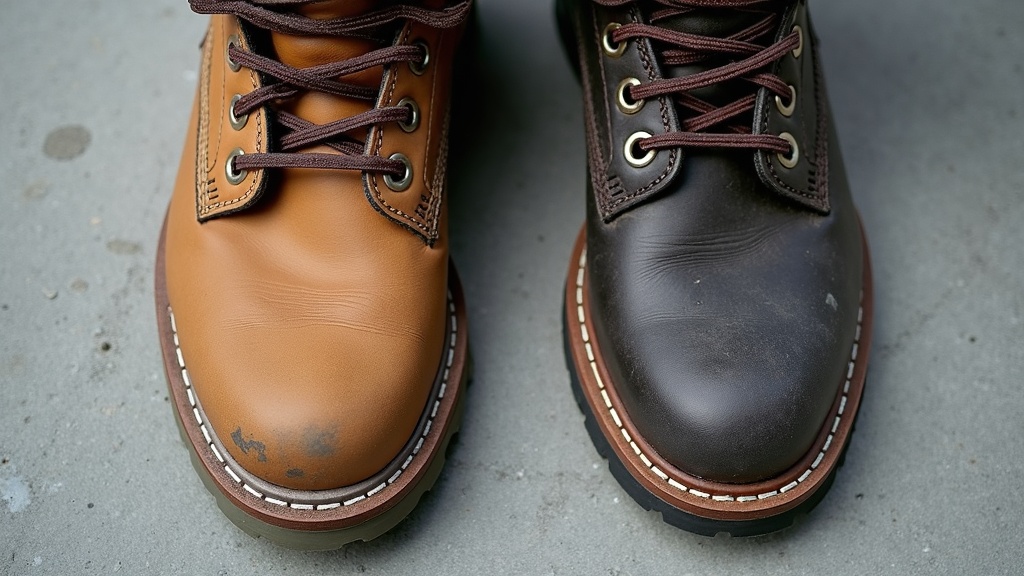
The two real options are full-grain leather (naturally water-resistant, breathes better, lasts longer) and leather with a Gore-Tex or similar membrane (fully waterproof but less breathable in heat). For most outdoor tradespeople, the membrane is the better call.
What to watch for: some waterproof work boots for sore feet sacrifice midsole cushioning to fit the membrane. Check that the boot still has a real PU or EVA midsole, not just the leather and lining sandwiched together.
How Much Should You Spend? Breaking Down the Price-to-Value Honest Truth
Under $80 gets you a boot that will last a season if you're lucky. The midsoles in this range compress in two to three months and the support is gone before the upper shows wear.
The real sweet spot sits between $150 and $220. That's where you find genuine leather uppers, real midsole technology, and actual shanks. Boots in this range routinely last two to four years with basic care.
| Price Range | What You Get | Expected Lifespan | Good For Sore Feet? |
|---|---|---|---|
| Under $80 | Split leather, thin EVA midsole, weak shank | 3 to 6 months | No |
| $80 to $130 | Better upper, basic PU midsole, removable insole likely | 6 to 14 months | Marginal |
| $150 to $220 | Full-grain leather, real shank, cushioned PU midsole, orthotic ready | 2 to 4 years | Yes |
| $220 to $350 | Premium leather, Goodyear welt (resoleable), top-tier support | 4 to 8 years (resoled) | Yes, best option long term |
| Over $350 | Handcrafted, limited production, custom sizing options | 10+ years | Yes, but diminishing return for most workers |
A Goodyear welt construction means you can get the boot resoled for $60 to $80 when the outsole wears down. That's a $200 boot that lasts eight years instead of two. Do that math against buying a $90 boot every year.
The real cost breakdown
If your feet hurt badly enough that you're taking ibuprofen at lunch or seeing a podiatrist, the cheap boot already cost you more than a good one would have. That's the honest math.
