


Steel toe or composite toe — it sounds like a minor detail. It isn't. The type of safety toe in your work boot affects how much your feet weigh at hour ten, whether your toes get cold in winter, and whether you're safe to work near electrical equipment. That's three things that matter a lot on a real job site.
This guide covers what composite toe protection actually means, where it outperforms steel, and which Mason composite toe work boots make sense for which type of work.
What a Composite Safety Toe Actually Does?
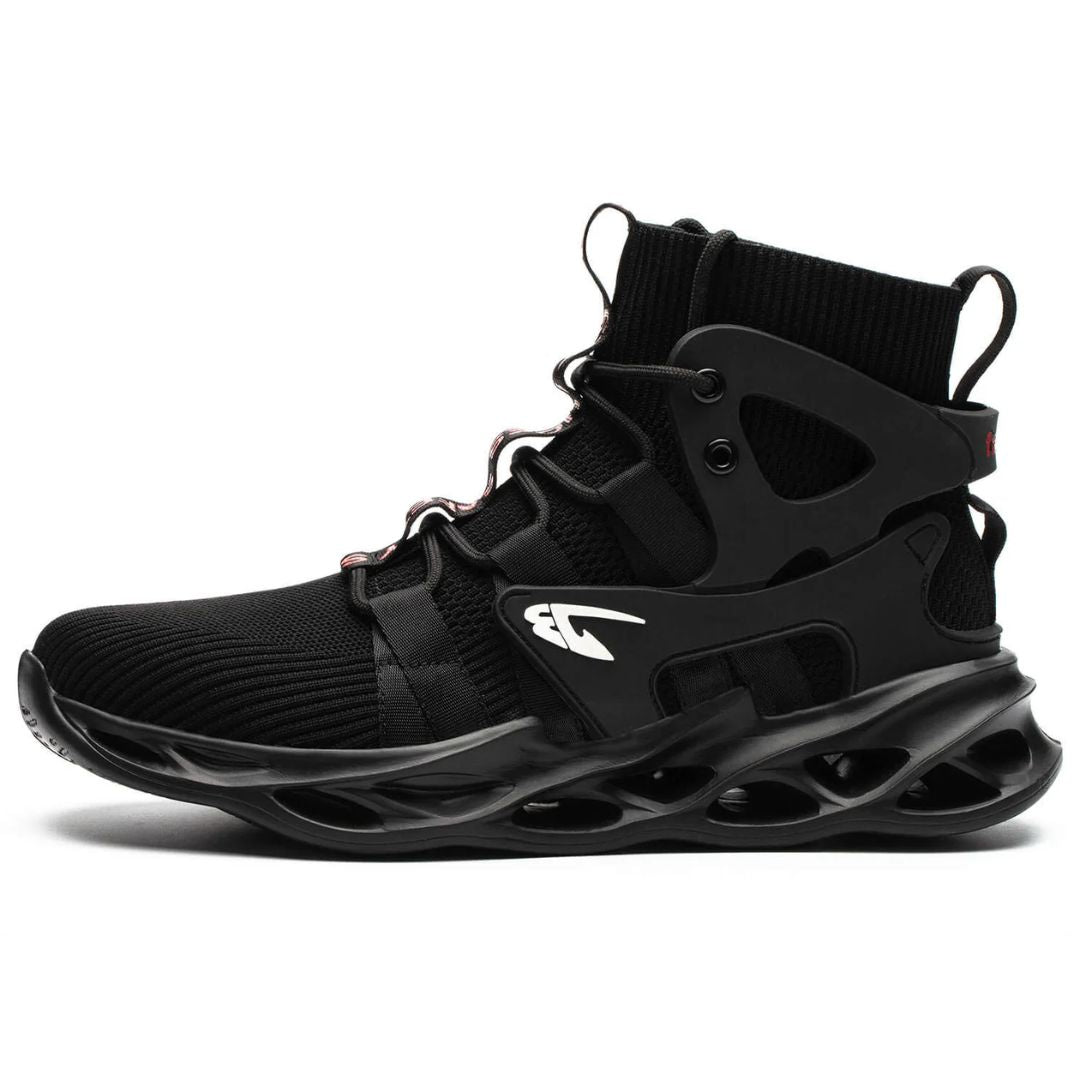
A composite toe cap is made from non-metallic materials — typically carbon fiber, fiberglass, Kevlar, or reinforced plastic. It meets the same impact and compression standards as steel (ASTM F2413 in the US, EN ISO 20345 in Europe), but without the metal.
That difference has real consequences in three situations:
- Cold environments. Steel conducts temperature. In winter, a steel toe cap gets cold fast and transfers that directly to your toes. Composite materials don't — your feet stay warmer without extra insulation.
- Electrical hazards. Steel is conductive. In environments with live circuits, exposed wiring, or electrical panels, a metal toe cap is a liability. Composite toes are non-conductive by design, which is why they're standard in electrical trades, technical jobs, and some industrial maintenance roles.
- Weight and fatigue. Composite toes are generally 20–30% lighter than steel equivalents. Over a 10-hour shift, that difference adds up in your legs and lower back. Studies from the European Safety Footwear Institute (ESFI) confirm that reduced footwear weight measurably lowers fatigue in prolonged standing situations.
The one place composite comes up short: extreme impact scenarios, like very heavy steel beams or industrial machinery with significant crush risk. In those environments, steel still offers a higher safety ceiling. But for most construction, warehouse, logistics, and maintenance roles, composite toe protection is more than adequate — and more comfortable.
Check out our article on: Aluminum Toe vs Composite Toe Work Boots: Which One Should You Buy?
The 3 Mason Composite Toe Work Boots, Compared
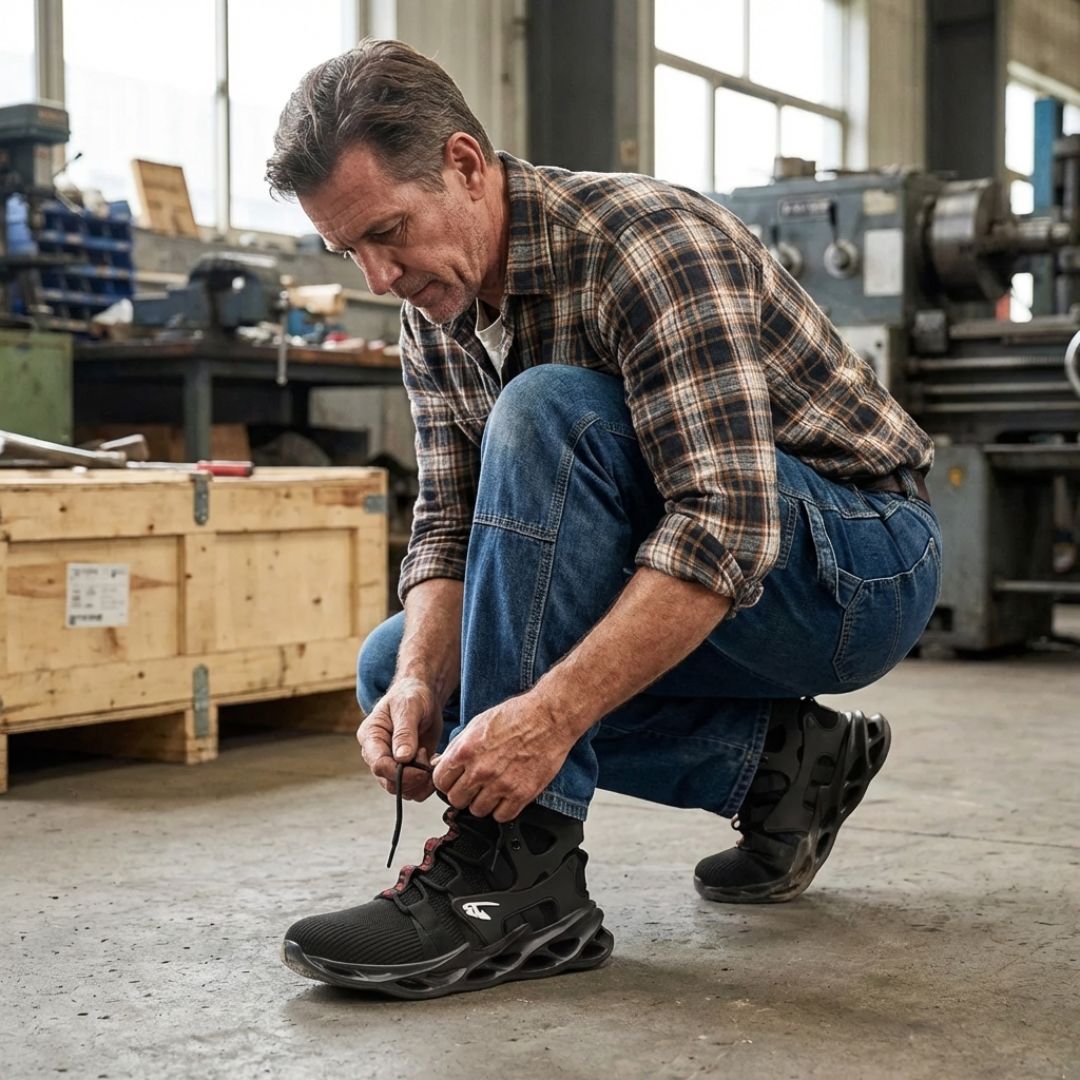
Mason's composite toe work boots collection has three models, each built for a different type of worker. Here's how they break down.
1. ATLAS S3 Pro Safety Boots
View the ATLAS S3 Pro Safety Boots
The ATLAS S3 Pro is the most robust option in the collection. It's designed for jobs where you're carrying weight, working on uneven ground, or spending long hours on concrete and gravel — construction sites, industrial plants, logistics hubs with heavy equipment.
What makes it stand out is the combination of protection levels. S3 certification means it covers the full stack: composite toe cap, puncture-resistant midsole, closed heel, and slip-resistant outsole. The waterproof upper handles rain and mud without special treatment needed.
- Best for: Construction, heavy-duty industrial, uneven terrain
Key specs
- S3 certified (EN ISO 20345) — composite toe, puncture resistance, SRC slip rating
- Waterproof construction throughout
- Slip-resistant outsole for wet, oily, and uneven surfaces
- Reinforced ankle support for stability on rough terrain
- Shock-absorbing midsole — reduces joint load over long shifts
- 12-month warranty
The reinforced ankle support is worth calling out specifically. On construction sites with rubble, uneven paving, or debris, ankle stability isn't just about comfort — it's injury prevention. A rolled ankle on a job site ends your day, sometimes your week. This boot is built with that in mind.
Who isn't this for? If you're mostly on flat warehouse floors or doing light-duty indoor work, the ankle support and heavier build of this boot are more than you need. One of the other two options will be more comfortable for you.
2. STRIDE S1 Pro Slip-On Steel Toe Boots
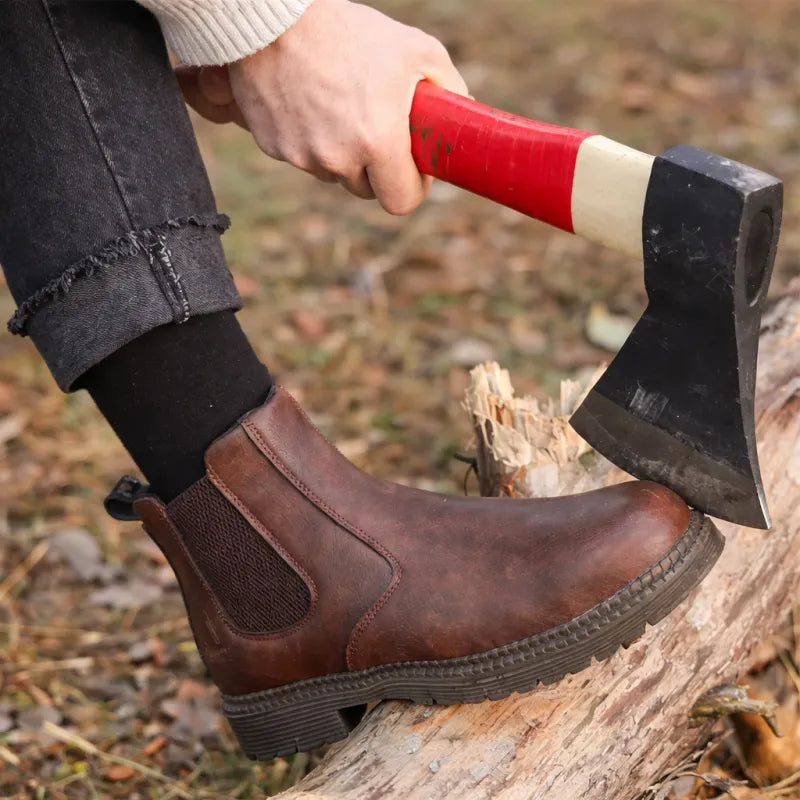
View the STRIDE S1 Pro
The STRIDE S1 Pro is built for people who put their boots on and take them off multiple times a day — warehouse workers, delivery drivers, anyone who moves between zones with different PPE requirements.
No laces. No zippers. Slip straight in, and the boot locks into position. That sounds like a convenience feature, but on a 10-hour shift where you're on your feet constantly, not fighting with laces during breaks adds up.
S1 certification covers the core requirements: closed heel, toe cap, anti-static sole, and oil resistance. It's the right level for controlled environments without the heavier build of an S3.
- Best for: Warehouse, logistics, roles requiring fast on/off
Key specs
- S1 certified — composite toe cap, anti-static, oil-resistant sole
- Slip-on design, no laces or fasteners
- Lightweight construction — lower fatigue on long walking/standing shifts
- Shock-absorbing cushioned insole
- Ergonomic fit for all-day wear
At $84, this is also the most accessible price point in the collection — which matters if you're buying multiple pairs to rotate (a legitimate strategy for boot longevity and hygiene on long shift schedules).
One real consideration: S1 doesn't include puncture resistance, which S3 does. If your warehouse or site has nails, sharp metal debris, or rough flooring materials underfoot, step up to the ATLAS S3 Pro instead. For clean warehouse floors, distribution centers, and similar environments, the STRIDE handles everything you need.
3. POLAR S3 Pro Winter Safety Boots
View the POLAR S3 Pro
The POLAR S3 Pro is built for outdoor professionals who can't choose their weather. Construction in northern winters, landscaping in wet conditions, outdoor logistics in cold months — this boot handles the combination of cold, wet, and physically demanding that regular work boots don't cover.
The difference from the other two is thermal insulation built into the waterproof construction. This isn't a regular boot with a waterproofing treatment. The insulation and waterproof barrier are integrated into the boot's structure — which means they hold up under sustained exposure, not just light rain.
- Best for: Outdoor winter work, cold environments, all-weather job sites
Key specs
- S3 certified (EN ISO 20345) — composite toe, puncture-resistant midsole, SRC slip rating
- Thermal insulation for cold environments
- Fully waterproof construction (integrated, not surface-treated)
- Reinforced support for uneven and unstable terrain
- Slip-resistant traction on snow and wet surfaces
- 12-month warranty
Here's what the composite toe does specifically in this context: in cold weather, a steel toe cap gets icy. It draws heat away from your toes and holds the cold against them. A composite toe cap doesn't conduct temperature either way — so your thermal insulation actually works as designed, without a metal heat sink undermining it.
If you're working outdoors in winter and currently wearing a regular waterproofed boot, switching to the POLAR S3 Pro is a meaningful upgrade — not just in warmth, but in safety on slippery terrain and in ankle support on packed snow or frozen ground.

Check out our article on: Best Mens Work Boots Winter for Warmth & Safety | Top Picks
How to Choose Between the Three?
Here's the clearest way to think about it:
Your environment is the main factor. Not your preference — your actual job site conditions.
- Rough terrain, heavy loads, construction debris → ATLAS S3 Pro
- Flat floors, warehouse, fast on/off routine → STRIDE S1 Pro
- Outdoor, cold weather, wet conditions → POLAR S3 Pro
Then consider electrical risk. If you work near live electrical equipment, you want composite toe specifically for non-conductivity. All three models use composite (or non-metallic) toe caps, so any of them works in that respect. Just confirm the certification level matches your site requirements.
And consider puncture risk. S3-certified boots (ATLAS and POLAR) include a puncture-resistant midsole — Kevlar-based or equivalent. The STRIDE S1 Pro doesn't. If there's any chance of stepping on nails, screws, or sharp debris, S3 is the right call.
What ASTM and EN ISO 20345 Actually Mean?
If you're in the US, you'll see ASTM F2413 certification referenced. In Europe, it's EN ISO 20345. They're equivalent standards — both test impact resistance (200 joules for the toe cap), compression resistance, and slip resistance on different surfaces.
S1, S2, and S3 are progressive levels under EN ISO 20345:
- S1: composite/steel toe, anti-static, oil-resistant sole, closed heel
- S2: S1 requirements + water resistance
- S3: S2 requirements + puncture-resistant midsole
For most demanding job sites, S3 is the standard you want. S1 is appropriate for controlled environments with lower hazard levels. Any Mason composite toe work boot in this collection is certified to the relevant standard for its protection level — tested by independent laboratories, not self-declared.
A Note on Fit and Break-In
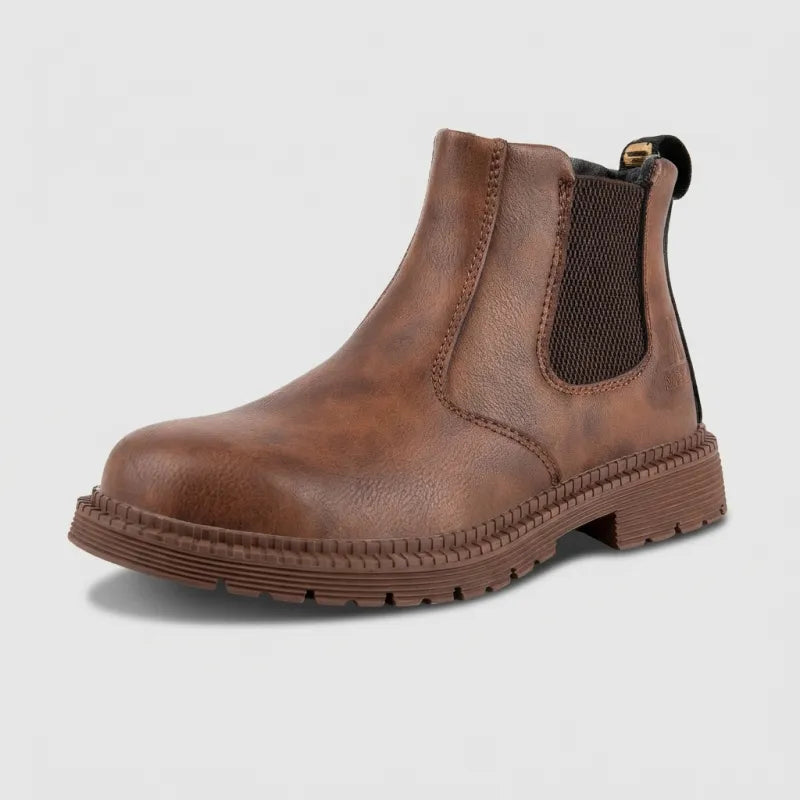
Composite toe caps don't flex the way leather does during break-in. That means the fit at purchase is largely the fit you'll have going forward. Mason recommends choosing your usual size. If you're between sizes, go up half a size — composite toe caps leave less room for error than soft toe boots when sizing down.
Also worth knowing: composite materials don't conduct temperature, but they don't move like a glove around your toes either. Some people find the toe box feels more rigid than they're used to, especially in the first few days. That's normal. The composite cap stays in position and doesn't compress like a soft toe, so it can feel different initially.
Check out our article on: Steel Toe vs Composite Toe Boots: Expert Guide to Choosing the Best Protection
See the Full Collection
All three models are in stock with free shipping and a 45-day return window. If you're unsure which level of protection your job requires, Mason's customer support can help you match the right certification to your site's requirements.
Browse Mason's Composite Toe Work Boots
