


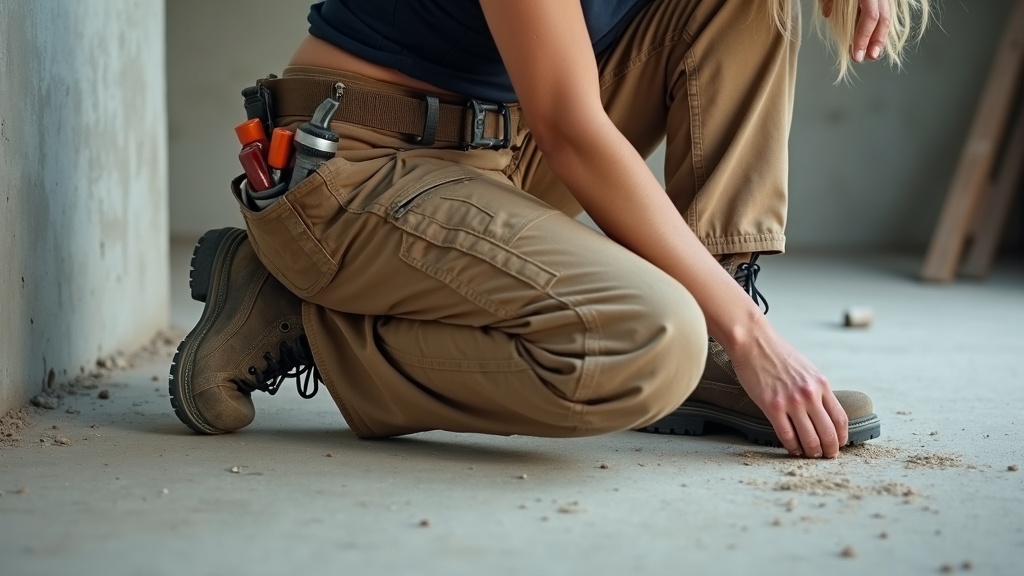
If you've ever had a cargo pocket rip out by noon, or spent a shift hiking up pants that were never built for squatting, you know the difference between work pants and pants that look like work pants. That difference costs you time, energy, and sometimes safety.
This guide cuts through the noise. No runway looks, no vague "durable" claims. Just what actually holds up on a real site, in a real day of work.
Key points at a glance
- Work-ready cargo pants need reinforced knees, bar-tacked seams, and gusseted crotches, not just extra pockets.
- Fabric weight and weave determine whether pants survive a full season or fall apart in six weeks.
- Pocket placement matters: too low and nothing stays in; too wide and they catch on everything.
- Straight leg beats wide leg for most active job sites, but fit depends on what you're climbing or hauling.
- Plus size and petite options have caught up, and you no longer have to size up and roll the ankles.
- Spending $60 to $90 is the sweet spot for most working women; above $120 is only worth it for specific trade needs.
What good working cargo pants actually give you
What Makes a Cargo Pant Actually Work-Ready (Not Just Work-Themed)
A lot of brands slap cargo pockets on a pair of stretch pants and call it workwear. That's not workwear. That's athleisure with extra steps.
Real working cargo pants for women have a gusseted crotch so the seam doesn't blow out when you climb a ladder. They have bar-tacked pocket corners. The waistband doesn't roll when you bend. Those details aren't marketing, they're the difference between pants that last a season and pants that quit by week three.
- Gusseted crotch: lets you squat, climb, and crouch without seam stress
- Bar tacks: metal-reinforced stitching at pocket corners and belt loops
- Double-knee construction: extra fabric layer where you kneel most
- Articulated knees: pre-shaped bend so the fabric moves with you, not against you
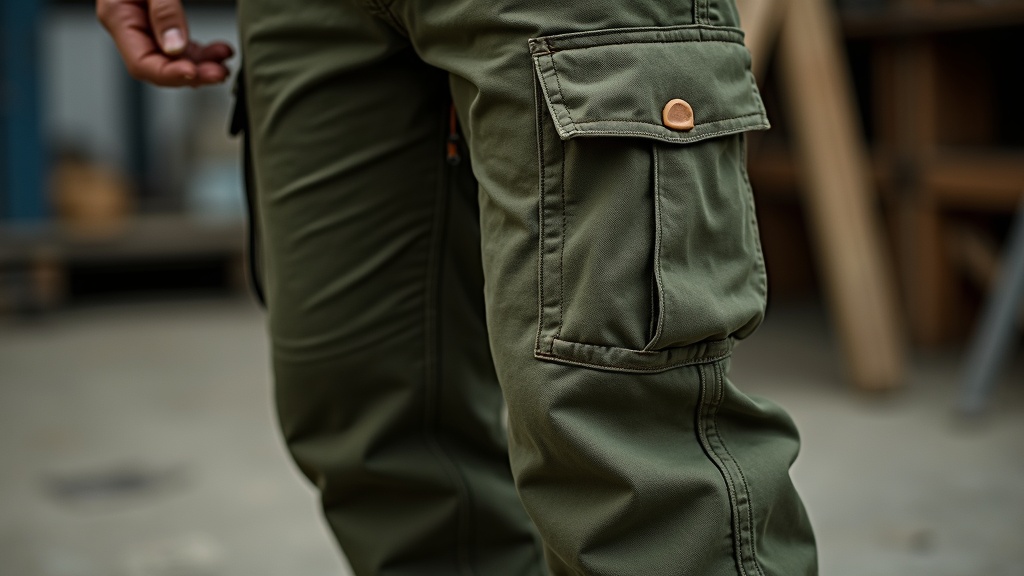
The Fabrics Worth Paying For, and the Ones to Avoid
Fabric is where most cheap cargo pants lose the game fast. You want a material that handles abrasion, breathes enough to keep you functional in July heat, and washes without turning into a stiff board.
Duck canvas and ripstop nylon-cotton blends are the two workhorses. Duck canvas (typically 7 to 10 oz) is tough and gets more comfortable with wear. Ripstop blends are lighter and dry faster, making them the better pick for outdoor summer work.
Did you know?
Duck canvas gets its name from the Dutch word doek, meaning linen or cloth. A 10-oz duck canvas work pant can withstand over 50,000 rubs on the Martindale abrasion scale, compared to roughly 10,000 for standard denim.
What to skip: 100% polyester cargo pants trap heat badly and pill fast against rough surfaces. Thin cotton twill under 5 oz looks fine off the rack but starts thinning at the knees within a month of daily use.
| Fabric | Best for | Watch out for |
|---|---|---|
| Duck canvas (7, 10 oz) | Construction, trades, heavy abrasion | Heavy and warm in summer heat |
| Ripstop nylon-cotton blend | Outdoor work, hot weather, landscaping | Less abrasion resistance than canvas |
| Cotton-polyester twill (65/35) | General labor, warehouse, moderate wear | Mid-range durability, not for kneeling trades |
| Stretch ripstop (4-way) | Climbing, electrical work, tight spaces | Wears thinner faster at high-friction points |
| 100% polyester | Nothing on a real job site | Traps sweat, pills, melts near heat sources |
Pockets: How Many, Where They Sit, and What Fits Inside
Six pockets sounds great. Useless pockets don't. The placement and depth of cargo pockets determine whether your tape measure, markers, and phone survive a full shift without bouncing out or dragging on a step ladder.
Side cargo pockets should sit mid-thigh, not at the knee. When they drop too low, items shift your center of gravity and catch on rungs. Look for pockets deep enough to hold a 25-foot tape measure and wide enough for a utility knife without forcing the flap open.
- Snap or Velcro closures beat button flaps for speed and reliability
- Internal zip pocket at the hip is worth its weight for cards and cash on a site
- Hammer loop placement: right hip for right-handers, should not swing into the back of your knee
- Avoid cargo pockets sewn in place with no bellows, they look full of capacity but hold almost nothing
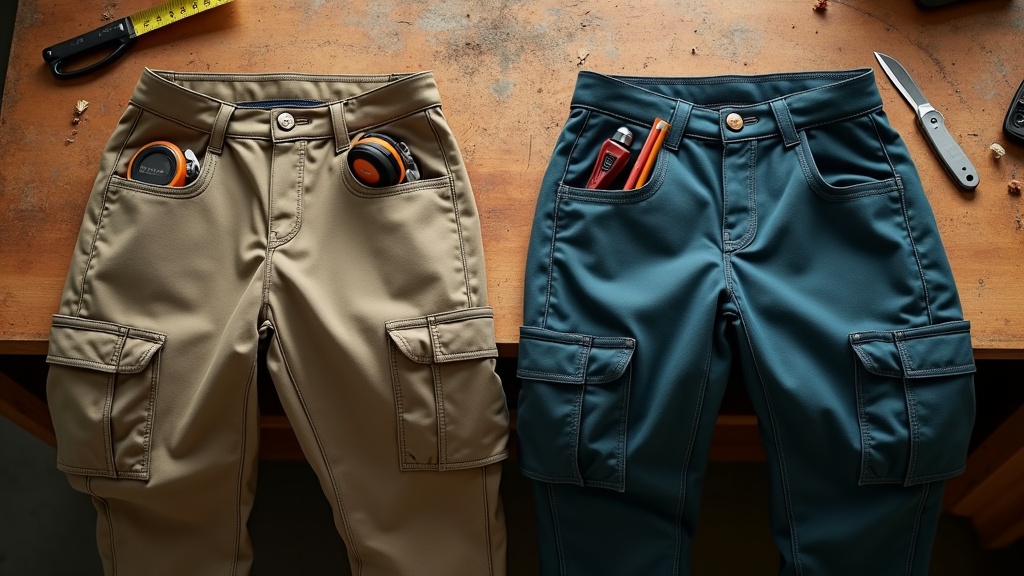
Best Working Cargo Pants for Women in 2025, Ranked by Real-Job Use
These picks are based on fabric specs, construction details, and verified feedback from women in trades, landscaping, warehousing, and construction. No pants that just look tough made this list.
Carhartt Women's Rugged Flex Relaxed Fit Canvas Cargo Pant
The go-to for construction and heavy trades. 7.5 oz canvas with 2% elastane gives you actual stretch without the thin-out problem. Double knees, triple-stitched seams. Not the cheapest, worth every dollar if you're kneeling daily.
Dickies Women's Flex Waist Cargo Pant
Best value at around $35 to $45. 65/35 poly-cotton twill, good for warehouse and light construction. Won't outlast canvas in rough conditions but holds up through a full season of moderate use.
Duluth Trading Women's Dry on the Fly Cargo Work Pant
Built for outdoor and landscaping work in heat. Ripstop moisture-wicking blend, articulated knees, reinforced seat. The lightweight cargo work pants answer for summer crews.
Wrangler Riggs Women's Workwear Cargo Pant
Solid straight leg option with a gusseted crotch and deep cargo pockets. Runs true to size, fits well through the hip without going baggy at the ankle. Good everyday construction pant.
Fit Matters: Wide Leg, Straight Leg, and What Works for Bending and Climbing
Straight leg cargo pants are the safer choice for most job sites. They don't catch on rungs, don't bunch under knee pads, and move predictably when you climb. Wide leg has its place in warehouse and ground-level work where you're not on ladders.
For bending and low work, the gusset matters more than the leg width. A straight leg pant with a diamond gusset will outperform a wide leg pant without one every time.
Did you know?
OSHA reports that slips, trips, and falls account for 20% of general industry injuries. Ill-fitting pants that bunch at the ankle or ride up at the knee contribute directly to that number on active job sites.
Plus Size and Petite Options That Don't Make You Compromise
The workwear industry spent decades treating plus size and petite women like afterthoughts. That's been changing. Plus size working cargo pants for women now come in actual work-grade fabrics, not just upsized fashion cuts.
Carhartt's plus range goes up to 3X and keeps the same reinforced construction as standard sizes. Dickies Plus extends to 24W. For petite working cargo pants for women, Duluth Trading offers a 28-inch inseam in most of their work pant line, and Carhartt carries a 28-inch option in their canvas cargo line.
- Look for brands that offer inseam options, not just waist size
- Plus size: confirm the gusset is included, some brands remove it in extended sizes
- Petite: check that the cargo pocket still hits mid-thigh on a 5'2" or 5'3" frame
- Avoid brands that just crop a standard length and call it petite, the proportions will be off

How Much Should You Spend, and When Is It Worth It
For most working women, $60 to $90 is the right range. Below $40, you're usually getting thin fabric, minimal reinforcement, and pockets that won't survive the year. Above $120, you're paying for specialty features like flame resistance or hi-vis compliance that only specific trades need.
If you're kneeling on tile, concrete, or gravel five days a week, spend the $80. You'll go through two pairs of $35 pants in the time one good pair lasts.
- Under $45: fine for warehouse, light duty, occasional wear
- $60 to $90: solid for construction, landscaping, daily trade work
- $90 to $120: justified for electrical, plumbing, roofing where specific specs matter
- $120 and up: flame-resistant and hi-vis rated, only buy if your job requires it
How to Size, Wash, and Get More Shifts Out of Your Pants
Canvas pants shrink. Wash them once in cold water before wearing and you'll know the real fit. Most duck canvas shrinks 2 to 4% in length and 1 to 2% in the waist on the first wash. Buy accordingly.
For washing: cold water, no fabric softener. Fabric softener breaks down the tight weave that makes canvas and ripstop durable. Tumble dry low or hang dry. High heat accelerates seam wear and can warp the knee reinforcement panels.
- Turn pants inside out before washing to protect the outer finish and color
- Spot clean grease and tar before washing, washing doesn't remove petroleum-based stains, it sets them
- If a seam starts pulling, resew it immediately. A $2 repair now beats a blown-out pant at 7 a.m.
- Rotate between two pairs. Daily washing shortens lifespan faster than daily wear does
One last thing worth saying straight: the best working cargo pants for women are the ones built like workwear from the start, not retrofitted from a men's cut or a fashion line that added a cargo pocket. Buy from brands that make trade gear for a living, check the fabric weight before you order, and don't buy size down hoping they'll stretch into shape. They won't.
