


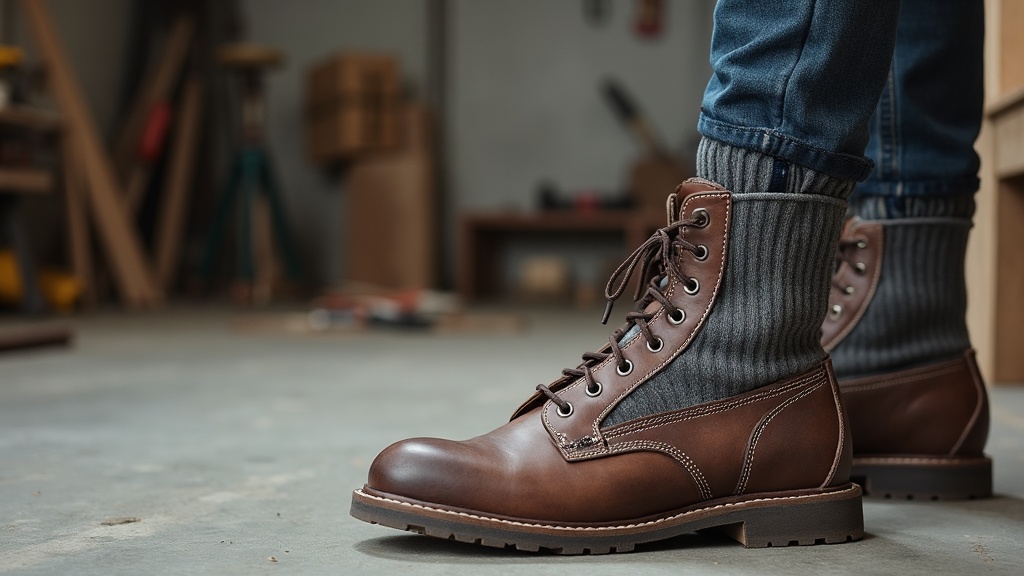
Most guys don't think twice about sock height until they're three hours into a shift and their ankle is getting chewed up by a boot collar. Crew length socks sit right at the bottom of the calf, and that extra inch or two of coverage is exactly what keeps skin off leather all day long.
This covers the full picture: what crew length actually means, how it stacks up against shorter cuts, what fabrics hold up under real work conditions, and which pairs are actually worth your money.
Key points at a glance
- Crew length socks typically hit 6 to 8 inches above the heel, landing just below the calf muscle.
- They outperform ankle and quarter socks in any boot that rises above the ankle bone.
- Cushioning zone placement matters more than overall thickness for all-day comfort.
- Merino wool and nylon blends outlast pure cotton on the jobsite by a significant margin.
- Men's and women's crew socks differ in more than size: arch compression and heel geometry are genuinely different.
- Simple laundry habits can double the lifespan of a good work sock.
Why crew length is worth getting right
What Crew Length Actually Means (No Guesswork)
The term "crew" refers to a specific height range, not a style or brand category. A crew length sock measures roughly 6 to 8 inches from the heel up, ending just below where the calf muscle starts to widen.
That puts the cuff anywhere from two to four inches above the ankle bone, depending on your foot size and leg proportions. On most adults wearing a size 9 to 12, the top of the sock lands right at mid-shin when the sock is properly pulled up.
Mid crew vs. short crew: is there a difference?
Mid crew length socks sit slightly higher than standard crew, often used in athletic contexts. Short crew length socks trim about an inch off the top, landing closer to the ankle bone than mid-shin. Both still qualify as "crew" in most retail sizing, which is why it pays to check the actual inch measurement on the packaging.
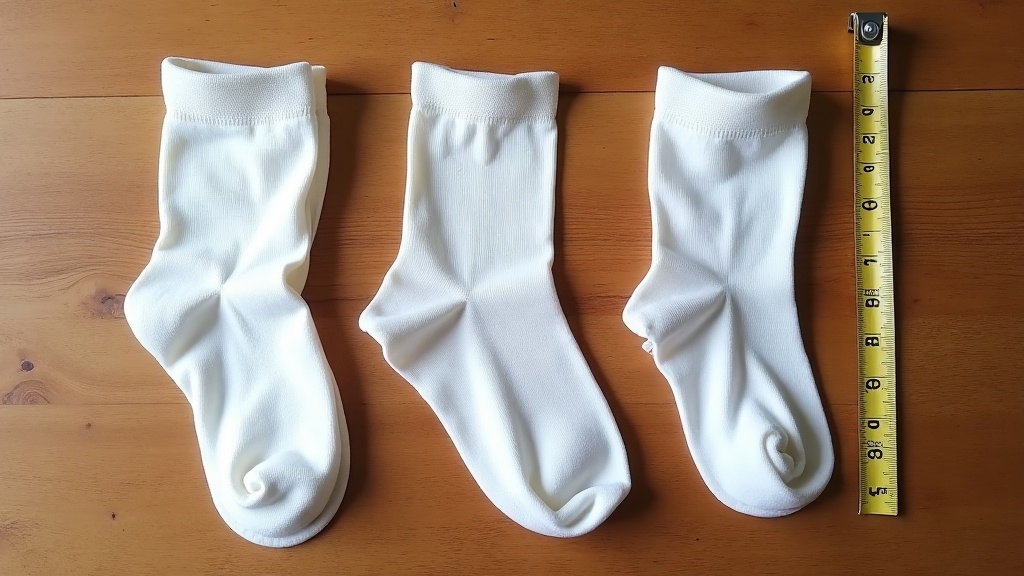
Crew vs Quarter vs Ankle: Which Height Does What
Quarter socks top out right at the ankle bone. They work fine for low sneakers and light activity. The moment you lace up a 6-inch or 8-inch work boot, a quarter sock disappears into the shaft and your skin meets the leather. That's a blister waiting to happen.
Ankle socks are even shorter, designed for athletic shoes with a low collar. They have no place on a construction site or warehouse floor with any real boot on your foot.
Crew length is the minimum viable height for any lace-up work boot. It covers the collar, protects the Achilles, and keeps the sock stable inside the boot all day.
Did you know?
The American Podiatric Medical Association notes that friction blisters are among the most common foot injuries in trade workers, and the primary cause is sock fabric or height mismatch with the boot collar. A sock that covers the collar eliminates the most common friction point entirely.
Why Crew Length Makes Sense for Trade and Warehouse Work
On a jobsite, your feet take more punishment per square inch than almost any other part of your body. Eight, ten, twelve hours of standing on concrete, climbing ladders, or moving pallets creates heat, moisture, and friction that flat-out destroys a thin sock.
Cushioned crew socks built for trades place extra padding at the heel and ball of the foot, exactly where impact is highest. The crew height keeps that padding from shifting forward inside the boot.
For warehouse workers, the added benefit is thermal regulation. A crew sock with a merino or wool blend keeps feet warmer in a refrigerated section and cooler on a loading dock in summer. Cotton alone can't do that.

What to Look For in a Crew Sock That Won't Quit on You
The fabric blend tells you more than the brand name. Here's what the main materials actually do under work conditions.
| Material | Best for | Weakness | Durability |
|---|---|---|---|
| Merino wool blend | All-day temp regulation, odor resistance | Cost, slower drying | High with nylon reinforcement |
| Cotton/poly blend | Budget work socks, light duty | Retains moisture, loses shape faster | Moderate |
| Nylon/spandex blend | Compression, shape retention | Less cushioning on its own | Very high |
| CoolMax / moisture-wick polyester | Hot climates, high-sweat environments | Less insulating in cold | High |
| Pure cotton | Casual use, dry environments | Holds sweat, wears thin quickly | Low for trade use |
Other specs worth checking
- Reinforced heel and toe: nylon threading at wear points adds months of life.
- Arch support band: a woven compression band across the arch keeps the sock from sliding and reduces foot fatigue.
- Flat toe seam: a bulky seam under a steel-toe cap creates a pressure point after hour four. Flat or hand-linked seams are worth the few extra dollars.
- Cuff elasticity: a crew sock that rolls down by lunchtime is just a low sock. Look for spandex in the cuff band.
Read also: Men's Workwear Socks That Actually Hold Up All Shift
Men's vs Women's Crew Length Socks: Real Differences That Matter
It's not just sizing. Women's feet have a different arch curve and a narrower heel relative to foot length, so a women's-specific crew sock is built with a higher, tighter arch band and a shorter heel cup. Wearing men's crew socks on a woman's foot means the heel cup sits too low, and the sock bunches at the ankle inside the boot.
For crew length socks women use on the jobsite, look for brands that actually pattern the sock on a female foot last, not just a scaled-down men's sock. Darn Tough, Farm to Feet, and Wigwam all offer genuine women's work crew cuts.
Did you know?
Darn Tough Vermont backs every sock with an unconditional lifetime guarantee. If any pair wears out, develops a hole, or loses its shape, the company replaces it free. That's not a marketing claim; it's a standing policy. For a trade worker going through several pairs a year, that math adds up fast.
The Best Crew Length Socks Worth Buying Right Now
These are not affiliate picks. They're socks that show up repeatedly in trade forums, union hall recommendations, and honest reviews from people who wear boots for a living.
- Darn Tough Vermont Hiker Micro Crew: merino wool, cushioned sole, built in Vermont, lifetime guarantee. The go-to for serious trade workers who want one sock to handle everything.
- Carhartt Force Cushioned Crew: fast-drying polyester blend, reinforced heel and toe, stays put in high-shaft boots. Priced fairly for a 3-pack.
- Wigwam Merino Comfort Hiker Crew: a softer merino option with good arch support. Works well for women's sizing in a true women's pattern.
- Dickies Dri-Tech Moisture Control Crew: the budget option that actually delivers. Not merino, but the moisture-wicking poly blend keeps feet dry through a full warehouse shift.
- Farm to Feet Asheville Crew: American-made merino, mid-cushion, available in women's specific sizing. A bit harder to find in stores but worth ordering direct.
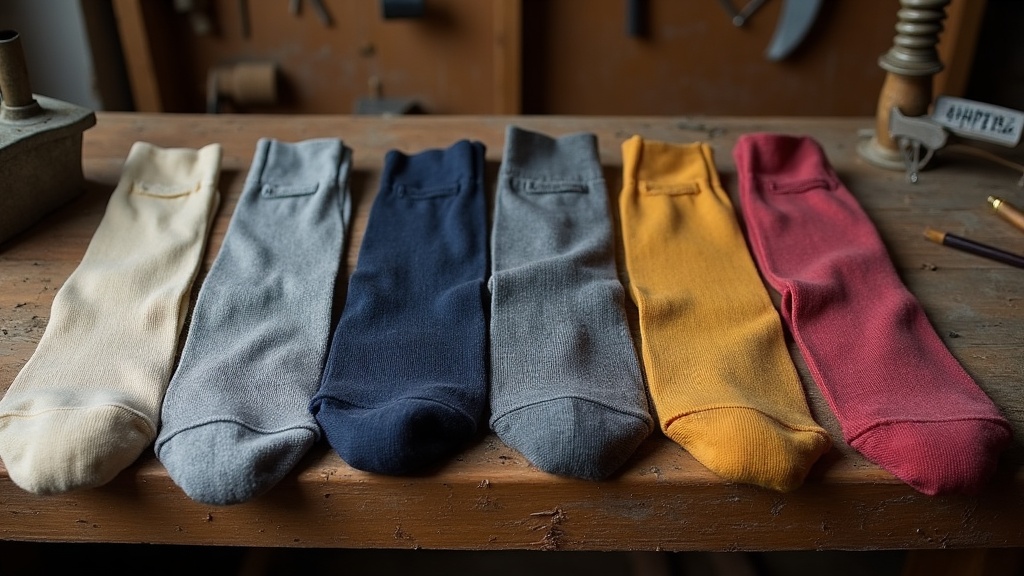
How to Make Work Socks Last Longer (Simple Habits That Pay Off)
A $20 pair of merino crew socks treated carelessly will die faster than a $7 cotton pair handled right. These habits take thirty seconds and add real months to a sock's life.
- Wash in cold water. Hot water breaks down elastic fibers and shrinks wool blends. Cold is always the right call for work socks.
- Air dry when you can. Dryer heat degrades elastane and weakens nylon reinforcing. If you use a dryer, low heat only.
- Rotate your pairs. Wearing the same two pairs every day means they never fully recover their shape. Buy enough to cycle through at least four pairs per week.
- Turn them inside out before washing. The friction zone shifts to the outer surface, where it doesn't matter, instead of grinding down the cushioned interior.
- Never wring them out. Twist-wringing a wet wool sock breaks the fiber structure. Press water out, then hang flat.
What to Do Before You Buy Your Next Pair
Check the cuff height in inches, not just the label. Confirm the heel cup matches your foot type (men's or women's specific). Pick a fabric with at least some nylon content if you're doing trade or warehouse work, pure cotton won't hold up.
If you're buying for the first time, start with one pair of a quality merino blend and one pair of a poly-based option. Wear each for a full shift and pay attention to how your feet feel at hour eight. Your feet will tell you which one to buy in bulk.
Frequently asked questions
What is the exact height of a crew length sock?
Are crew length socks good for steel-toe work boots?
What's the difference between crew and quarter length socks?
Is merino wool really worth the price for work socks?
Do women need specific crew socks for the jobsite, or can they wear men's sizing?
How often should I replace my work crew socks?
To match sock height to your boots, see the guide to boot socks vs crew socks.
