


Work boots don't last forever — and wearing them past their prime is a genuine safety risk. According to the Bureau of Labor Statistics, over 60,000 foot injuries occur in U.S. workplaces every year, many linked to inadequate or worn-out footwear. So how often should you replace work boots? The short answer: every 6 to 12 months, depending on your job. But that range hides a lot. Here's how to know exactly where you fall.
The General Rule: 6 to 12 Months (But It Depends)
No single timeline fits every worker. Replacement frequency depends on three factors: job intensity, terrain, and hours on your feet daily. As a baseline, most safety professionals recommend replacing work boots within this range:
|
Job Type |
Replace Every |
|
Heavy construction / outdoor |
6 months |
|
Manufacturing / warehouse |
6–9 months |
|
Light indoor / retail |
9–12 months |
If you're clocking 8+ hours a day on hard surfaces, lean toward the shorter end. Your boots are working harder than you think.
The Mileage Rule Nobody Talks About

Most manufacturers engineer work boots to last between 300 and 500 miles of active use — after that, the structural integrity starts to break down, regardless of how the boot looks on the outside.
Here's where it gets real: a warehouse worker averaging 5 miles per shift hits that 500-mile mark in as little as 100 working days — roughly 5 months. A construction worker on uneven terrain degrades soles even faster.
This is why calendar-based replacement alone isn't enough. Mileage is a more honest metric. If you're serious about foot protection, track your steps. A basic pedometer or your phone's health app is all you need. When you're approaching 400 miles, start shopping — don't wait for the sole to give out mid-shift.
Check out this guide: Best High Cut Safety Shoes: Expert Picks 2026
7 Signs Your Work Boots Need to Be Replaced Now
Not sure if your boots are done? Don't guess. These are the seven warning signs every worker should know — and none of them require an expert eye.
1. Tread is worn smooth
Run your hand across the outsole. If the tread pattern feels shallow or slick, grip is compromised. On wet or oily surfaces, that's a slip-and-fall waiting to happen.
2. The sole is separating
Any visible gap between the upper and the outsole means water, debris, and hazards can penetrate. Once the bond breaks, no amount of glue offers a reliable long-term fix.
3. Your heels or joints ache after a shift
This is the most overlooked sign. Midsole cushioning compresses permanently over time. If your feet, knees, or lower back hurt more than they used to, your boots have lost their shock absorption — not your body getting older.
4. The upper is cracked or torn
Leather or synthetic uppers that crack, tear, or show holes are no longer providing ankle support or protection from workplace hazards. Aesthetics aside, it's a structural failure.
5. The steel or composite toe is exposed
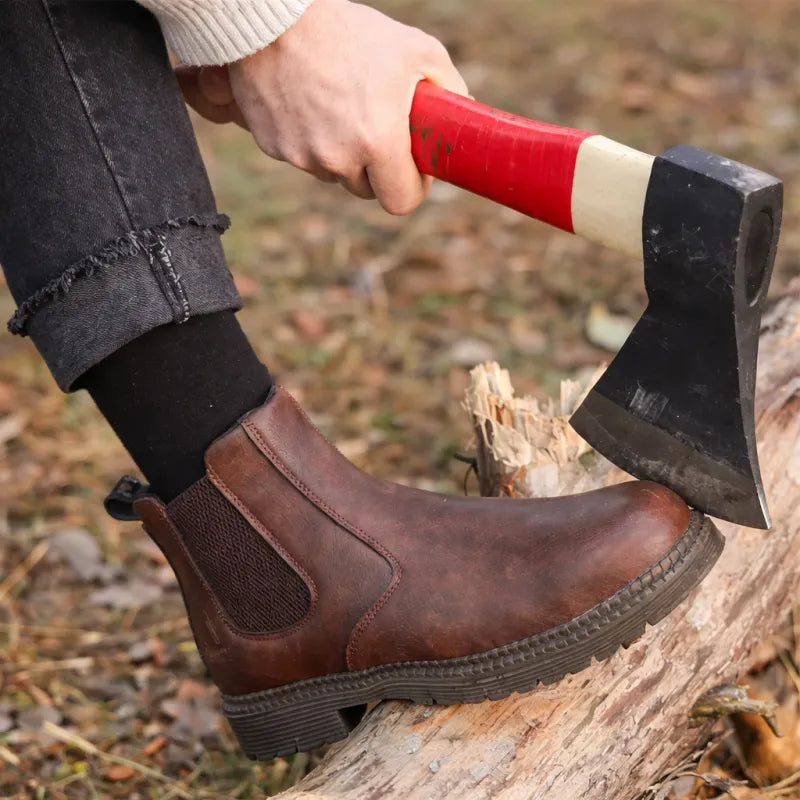
If the toe cap is visible through the material, the boot has failed its primary protective function. This is a non-negotiable replacement trigger — full stop.
6. The boot flexes too easily
Grab the toe and heel and bend the boot. A healthy work boot resists. If it folds with almost no resistance, the internal support structure is gone and impact protection is severely reduced.
7. Waterproofing is completely gone
Wet feet aren't just uncomfortable — they increase blister risk, fungal infections, and in cold environments, hypothermia risk. If re-proofing spray no longer helps, the membrane is beyond saving.
If you're checking two or more boxes on this list, it's time to replace work boots — regardless of how long you've had them.
How to Make Work Boots Last Longer?
Replacing boots every 6 months isn't cheap. The good news: with the right habits, you can push durability without compromising safety.
Rotate between two pairs. This is the single most effective strategy. Alternating between two pairs gives each boot 24 hours to decompress and dry out fully. Midsoles that never recover wear out twice as fast. Two pairs used in rotation will outlast one pair used daily — every time.
Clean them after every shift. Dirt, chemicals, and moisture are the three fastest ways to degrade boot materials. A quick brush-down and wipe after each shift takes two minutes and adds months to the lifespan of your boots.
Store them properly. Keep boots in a cool, dry place away from direct sunlight and heat sources. Heat breaks down adhesives and dries out leather. A boot tree helps maintain shape and prevents creasing that weakens the upper over time.
Condition the leather regularly. For full-grain leather boots, a quality conditioner applied every 2–4 weeks prevents cracking and keeps the material supple without compromising its structure.
Resole before it's too late. A good cobbler can resole quality boots at a fraction of the replacement cost — but only if the upper is still solid. Don't wait until the sole is completely gone.
Check out this guide: Work Boots for Back Pain: Expert Guide to Reducing Discomfort at Work
When It's Time to Replace: Our Top Picks
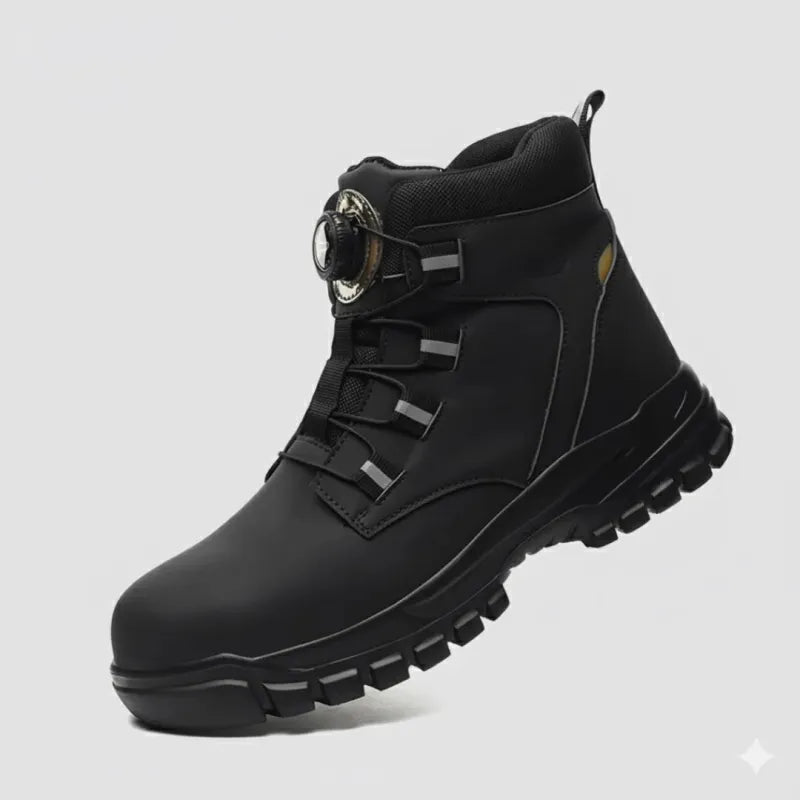
Knowing when to replace work boots is only half the equation — choosing the right replacement is the other. At Mason Clothing, we've curated a selection of work boots built for real job sites: durable construction, proper ankle support, and outsoles engineered to last. Here's what to look for in your next pair:
Full-grain leather upper: resists abrasion, conditions well, and holds structure for months of heavy use.
Slip-resistant outsole: non-negotiable for wet, oily, or uneven surfaces. Look for deep, multidirectional tread patterns that maintain grip well past the 200-mile mark.
Composite or steel toe cap: ASTM-rated impact and compression protection that doesn't compromise on weight or comfort over long shifts.
Cushioned, removable insole: allows you to upgrade to orthotics if needed, and extends the boot's effective lifespan by offloading midsole compression.
Whether you're in construction, warehousing, or any demanding trade, the right pair does more than protect your feet — it protects your productivity and your body over the long haul.
Browse Mason Clothing's full collection of work boots and find the pair built for your trade.
 Your Boots Work Hard — Don't Wait Until They Fail
The rule is simple: replace work boots every 6 to 12 months, adjusted for your job intensity and mileage. Don't rely on looks alone — a boot can appear intact while its midsole is crushed and its grip is gone. Check the seven warning signs regularly, build good care habits, and treat boot replacement as part of your safety routine, not an afterthought. Your feet carry you through every shift. Invest accordingly.
